Section
Design Toolkit for
Design Teaching
The Recovery Demand
and the Educational Supply
-
about_en
DT2 – The Recovery Demand and the Educational Supply: A Design Toolkit for Design Teaching is a research project, an exchange platform, and a repository of knowledge on the role of architectural education in a time marked by multiple crises, which specifically focuses on the pedagogical model of the design studio.
Its aim is to understand how to promote among future architects a critical vision of design that overcomes the traditional separation of specialized knowledge in the field to devise integrated and interrelated answers to those crises.
For this reason, it looks at the specific place where architectural design is taught as the activity of coordination and control of all the processes, practices, and expertise that guide any spatial transformations – namely the design studio.
And assuming the integration of all these factors as the true specialistic knowledge of architectural design, it studies all the procedural characteristics that make the studio an immersive training environment based on non-discursive forms of transmission.
DT2 therefore collects a series of outstanding teaching practices and analyzes the aspects that define their methodological infrastructure – like the organization of the class, the calendar, or the coordination with other courses – to provide the basis for their reformulation according to multiple emerging issues.
DT2 – The Recovery Demand and the Educational Supply: A Design Toolkit for Design Teaching è un progetto di ricerca, una piattaforma di scambio e uno spazio informativo sul ruolo della formazione architettonica in un periodo segnato da molteplici crisi, che si concentra sul modello pedagogico del laboratorio di progettazione.
Il suo obiettivo è capire come promuovere tra i futuri architetti una visione critica del progetto che superi la tradizionale separazione delle conoscenze specialistiche nel campo per immaginare risposte integrate a queste situazioni critiche.
Per questo, DT2 guarda al luogo specifico in cui viene insegnata la progettazione architettonica come attività di coordinamento e controllo di tutti i processi, le pratiche e le competenze che guidano ogni trasformazione spaziale – ovvero il laboratorio di progettazione.
E assumendo l’integrazione di tutti questi fattori come il vero sapere specialistico della progettazione architettonica, il progetto studia tutte le caratteristiche procedurali che rendono il laboratorio un ambiente di apprendimento immersivo basato su forme di trasmissione non discorsive.
DT2 raccoglie quindi una serie di pratiche didattiche notevoli e analizza gli aspetti che ne definiscono l’infrastruttura metodologica – come l’organizzazione della classe, il calendario o il coordinamento con altri corsi – per fornire le basi per la loro riformulazione in base a molteplici domande emergenti.
Partners
Politecnico di Milano
Università degli Studi di Napoli Federico IIPeople
Politecnico di Milano
DAStU Dipartimento di Architettura e Studi Urbani
Jacopo Leveratto (PI)
Greta Allegretti
ABC Dipartimento di Architettura, Ingegneria delle costruzioni e Ambiente costruito
Tommaso Brighenti
Università degli Studi di Napoli Federico II
DiARC Dipartimento di Architettura
Alberto Calderoni (AI)
Marianna Ascolese
Viviana Saitto
Luigiemanuele AmabileDT2 has been funded by the Italian Ministry of University and Research – MUR under the program PRIN 2022
DT2 has been funded by The European Union – Next Generation EU.




-
I risultati della ricerca
Il progetto della didattica del progetto.
I risultati della ricerca
21.11.2025
Politecnico di Milano
Dipartimento di Architettura e Studi Urbani
Dipartimento di Architettura, Ingegneria delle Costruzioni e Ambiente Costruito
Politecnico di Milano
Edificio 5, Aula Castigliano
Piazza Leonardo da Vinci 26, Milanoore 9:30
A cura di
Tommaso Brighenti
Jacopo LeverattoCon
Marianna Ascolese
Alberto Calderoni
Viviana SaittoOrganizzazione
Greta Allegretti
Luigiemanuele AmabileLuogo
With contributions from: Tommaso Brighenti, Jacopo Leveratto, Alberto Calderoni, Marianna Ascolese, Alberto Calderoni, Viviana Saitto, Greta Allegretti, Luigiemanuele Amabile; Viola Bertini, Edoardo Bruno, Carlo Deregibus, Jacopo Galli, Fabio Guarrera, Andrea Iorio, Francesco Martinazzo, Luca Porqueddu, Andrea Valvason; Luca Monica, Carolina Pacchi, Pierluigi Salvadeo, Maria Cerreta, Domenico Chizzoniti, Gennaro Postiglione; Marco Addona, Francesca Casalino, Giulio Delle Sedie, Luca Esposito, Giorgio Lana, Elena Marchiori, Elisa Mondin, Laura…
-
Summer School L′architettura della didattica
Summer School
L′architettura della didattica
22-26.09.2025
Villa Orlandi, Anacapri
Dal 22 al 26 settembre 2025
Villa Orlandi, Anacapri
Isola di CapriA cura di
Alberto Calderoni
con Marianna Ascolese, Tommaso Brighenti, Jacopo Leveratto, Viviana SaittoOrganizzazione
Greta Allegretti, Luigiemanuele Amabile, Maria Masi, Salvatore Pesarino
“L′architettura della didattica” intende esplorare le prospettive offerte dalla ricerca accademica applicata alla costruzione di metodologie per il laboratorio di progettazione architettonica. Cinque workshop tematici – contesti, modi, tempi, spazi, strumenti – offriranno un′occasione di confronto critico per definire contenuti, modelli e strategie capaci di rispondere a specifiche esigenze formative e a domande emergenti.
La Summer School “L′architettura della didattica” sarà il luogo entro cui si intenderà investigare possibili proposte di progetti pedagogici, nello specifico gruppo scientifico disciplinare della progettazione architettonica, da sostanziarsi a partire dalle attività di ricerca di dottorandi, dottori di ricerca e assegnisti. L′obiettivo della Summer School è sollecitare i partecipanti a sviluppare una proposta individuale di un programma didattico – un brief – attraverso l′esplicitazione di modelli di riferimento, modalità applicative, contesti fisici, tempi e strumenti, propri di un laboratorio di progettazione architettonica.Luogo
Come si struttura un laboratorio di progettazione? Quali sono le sue premesse e le metodologie che sottendono la trasmissione di un sapere architettonico condiviso e condivisibile? Quali i suoi strumenti e in che modo utilizzarli per raggiungere gli esiti previsti?
-
The Intelligence Age
The Intelligence Age
Symposium
10.06.2025
DABC Politecnico di Milano
Politecnico di Milano
Aula 16 B 0.1 – Building 16 B
Via Bonardi, 9, 20133, Milanofrom 9:30 to 18:30
Symposium organized by
Elena Manferdini, Tommaso Brighenti, Elvio Manganaro
With contributions from
Alice Barale, Adil Bokhari, Neil Leach, Elena Manferdini,
Areti Markopoulou, Philippe Morel, Ingrid Paoletti,
Pierpaolo Ruttico, Theodore Spyropoulos, Jason Vigneri-BeaneSessions moderated by
Jacopo Leveratto and Elena Manferdini
As artificial intelligence reshapes how architects work, how should architectural education and research adapt? What should a curriculum look like when the profession it prepares students for is being rewritten in real time?
Organized by the Department of Architecture, Building Engineering, and the Built Environment at Politecnico di Milano and supported by DT2 research project, The Intelligence Age is a public symposium dedicated to examining the evolving role of Artificial Intelligence in architectural education and practice. Taking place on June 10th, 2025, the event brings together leading voices from renowned international institutions to foster dialogue, exchange ideas, and question the shifting landscape of design in the age of intelligence.The symposium serves as a platform for meaningful engagement among educators, researchers, and practitioners, offering a day of conversations structured around thematic duets – paired discussions that allow for contrasting and complementary perspectives. This unique format encourages critical reflection and dynamic interaction across institutional and disciplinary boundaries. Participating schools include SCI-Arc, University of Florida, IAAC, AA-DRL, ETH Zurich, PRATT Institute, The Bartlett School of Architecture, Università degli Studi di Milano, and Politecnico di Milano as the host institution. Their collective involvement highlights the global dimension of this discourse and underscores the shared urgency of redefining pedagogy, and practice in light of AI’s increasing influence. By bringing together a diverse and international academic community, The Intelligence Age positions itself as a landmark event for Politecnico di Milano – a leading institution at the forefront of technology, creativity, and architectural education.
Luogo
With contributions from Alice Barale, Adil Bokhari, Neil Leach, Elena Manferdini, Areti Markopoulou, Philippe Morel, Ingrid Paoletti, Pierpaolo Ruttico, Theodore Spyropoulos, Jason Vigneri-Beane
-
Dieter Dietz. Resonance. Protostructures / Protofigures. Dispositions for Emergent Design
Dieter Dietz. Resonance. Protostructures / Protofigures. Dispositions for Emergent Design
Lezione di Dieter Dietz
13.05.2025
DiARC Università degli Studi di Napoli Federico II
Dipartimento di Architettura
Università degli Studi di Napoli Federico II
Aula Rabitti, V piano, scala E
via Forno Vecchio 36, Napoliore 16:00
Seminario organizzato con il contributo del dottorato di ricerca Habit in Transition del Dipartimento di Architettura dell’Università degli Studi di Napoli “Federico II”
Saluti
Massimo Perriccioli
Coordinatore Dottorato Habit
Università degli Studi di Napoli Federico II
Introduzione
Alberto Calderoni
AI PRIN 2022 DT2
Università degli Studi di Napoli Federico II
Lezione di Dieter Dietz
Associate Professor
Director of ALICE Laboratory
École Polytechnique Fédérale de Lausanne
Discussants
Luigiemanuele Amabile
Marianna Ascolese
Gianluigi Freda
Viviana Saitto
Università degli Studi di Napoli Federico IILuogo
Saluti di Massimo Perriccioli. Introduzione di Alberto Calderoni. Lezione di Dieter Dietz. Discussants: Luigiemanuele Amabile, Marianna Ascolese, Gianluigi Freda, Viviana Saitto.
-
Design Teaching for Design Making
Carlana Mezzalira Pentimalli. Quello che stiamo imparando
Lezione di Michel Carlana (IUAV)
Preferisco l’atto del conoscere alla conoscenza
Lezione di Enrico Molteni (Università di Genova)
28.04.2025
DiARC Università degli Studi di Napoli Federico II
Dipartimento di Architettura
Università degli Studi di Napoli Federico II
Aula LT-S1.1
Palazzo Latilla
via Tarsia 31, Napoliore 14:30
Ciclo di seminari a cura di
Luigiemanuele Amabile e Alberto Calderoni
Con gli interventi di
Marella Santangelo, Alberto Calderoni, Luigiemanuele Amabile,
Marianna Ascolese e Viviana SaittoPresentando modalità didattiche e infrastrutture metodologiche che sostanziano la pratica del progettare, il ciclo di seminari intende investigare, attraverso l’analisi delle esperienze di insegnamento, ricerca e professione condotte da alcuni architetti e docenti italiani ed europei, un campo di azione in cui l’insegnamento del progetto di architettura possa configurarsi come uno strumento necessario non soltanto per riconoscere le domande emergenti, complesse e in perenne evoluzione, ma anche per fornire risposte.
Luogo
Con gli interventi di Marella Santangelo, Alberto Calderoni, Luigiemanuele Amabile, Marianna Ascolese e Viviana Saitto
-
Traces: Reading Landscape and Space
Traces: Reading Landscape and Space
Lezione di Uta Graff (TU Munich)
15.04.2025DiARC Università degli Studi di Napoli Federico II
Dipartimento di Architettura
Università degli Studi di Napoli Federico II
Aula Rabitti, V piano
via Fornovecchio 36, Napoliore 14:30
Ciclo di seminari a cura di
Luigiemanuele Amabile e Alberto Calderoni
Con gli interventi di
Marella Santangelo, Massimo Perriccioli, Alberto Calderoni,
Luigiemanuele Amabile, Marianna Ascolese e Viviana SaittoPresentando modalità didattiche e infrastrutture metodologiche che sostanziano la pratica del progettare, il ciclo di seminari intende investigare, attraverso l’analisi delle esperienze di insegnamento, ricerca e professione condotte da alcuni architetti e docenti europei, un campo di azione in cui l’insegnamento del progetto di architettura possa configurarsi come uno strumento necessario non soltanto per riconoscere le domande emergenti, complesse e in perenne evoluzione, ma anche per fornire risposte.
Seminario organizzato con il contributo del dottorato di ricerca Habit in Transition del Dipartimento di Architettura dell’Università degli Studi di Napoli “Federico II”Luogo
Con gli interventi di Marella Santangelo, Massimo Perriccioli, Alberto Calderoni, Luigiemanuele Amabile, Marianna Ascolese e Viviana Saitto.
-
Il progetto della didattica del progetto
Il progetto della didattica del progetto.
Domande per tempi critici
11.11.2024
Politecnico di Milano
Dipartimento di Architettura e Studi Urbani
Dipartimento di Architettura, Ingegneria delle Costruzioni e Ambiente Costruito
Politecnico di Milano
Edificio 5, Aula Castigliano
Piazza Leonardo da Vinci 26, Milanoore 10:00
A cura di
Jacopo Leveratto
Tommaso BrighentiOrganizzazione
Greta Allegretti
Francesco Martinazzo
Andrea ValvasonLuogo
Il progetto della didattica del progetto.Domande per tempi critici11.11.2024 Politecnico di Milano Dipartimento di Architettura e Studi UrbaniDipartimento di Architettura, Ingegneria delle Costruzioni e Ambiente CostruitoPolitecnico di MilanoEdificio 5, Aula CastiglianoPiazza Leonardo da Vinci 26, Milano ore 10:00 A cura di Jacopo LeverattoTommaso Brighenti Organizzazione Greta AllegrettiFrancesco MartinazzoAndrea Valvason ↓ Program.pdf
-
Le diverse forme
Le diverse forme del laboratorio di progettazione.
Offerta formativa e modelli alternativi
26.06.2024
Politecnico di Milano
Dipartimento
di Architettura e Studi Urbani
Politecnico di Milano
Edificio 29 “Carta”, Sala Consiglio, I piano
Piazza Leonardo da Vinci 26, Milanoore 15:00
A cura di
Jacopo Leveratto
Tommaso BrighentiOrganizzazione
Greta Allegretti
Francesco Martinazzo
Andrea ValvasonCon gli interventi di Jacopo Leveratto, Tommaso Brighenti, Greta Allegretti, Francesco Martinazzo e Andrea Valvason e una tavola rotonda con Michela Bassanelli, Francesca Belloni, Giulia Cazzaniga, Federico Di Cosmo, Elvio Manganaro, Giulia Setti, Claudia Tinazzi e Valerio Tolve.
Luogo
Con gli interventi di Jacopo Leveratto, Tommaso Brighenti, Greta Allegretti, Francesco Martinazzo e Andrea Valvason e una tavola rotonda con Michela Bassanelli, Francesca Belloni, Giulia Cazzaniga, Federico Di Cosmo, Elvio Manganaro, Giulia Setti, Claudia Tinazzi e Valerio Tolve.
-
Strategie e prospettive
Strategie e prospettive pedagogiche per il progetto di architettura.
Una generazione a confronto
17.05.2024
DiARC Università degli Studi di Napoli Federico II
Dipartimento di Architettura
Università degli Studi di Napoli Federico II
Aula Rabitti, V piano
via Fornovecchio 36, Napoliore 9:30
A cura di
Marianna Ascolese
Alberto Calderoni
Viviana SaittoOrganizzazione
Luigiemanuele Amabile
Con gli interventi di Marianna Ascolese, Adriana Bernieri, Daniela Buonanno, Alberto Calderoni, Francesca Coppolino, Bruna Di Palma, Orfina Fatigato, Gianluigi Freda, Paola Galante, Viviana Saitto e Giovangiuseppe Vannelli e una tavola rotonda con Roberta Amirante, Nicola Flora, Ferruccio Izzo, Carmine Piscopo, Marella Santangelo, e tutti gli intervenuti.
Luogo
Con gli interventi di Marianna Ascolese, Adriana Bernieri, Daniela Buonanno, Alberto Calderoni, Francesca Coppolino, Bruna Di Palma, Orfina Fatigato, Gianluigi Freda, Paola Galante, Viviana Saitto e Giovangiuseppe Vannelli e una tavola rotonda con Roberta Amirante, Nicola Flora, Ferruccio Izzo, Carmine Piscopo, Marella Santangelo, e tutti gli intervenuti.
-
Kick-off
DT2 Kick-off Meeting
22.02.2024
DiARC Università degli Studi di Napoli Federico II
Dipartimento di Architettura
Università degli Studi di Napoli Federico II
Aula Rabitti, V piano
via Fornovecchio 26, Napoliore 9:30
A cura di
Alberto Calderoni
Viviana SaittoOrganizzazione
Luigiemanuele Amabile
Marianna AscoleseConferenza di apertura del progetto DT2, per iniziare a discutere di didattica del progetto e del progetto della didattica, a proposito della situazione italiana, della prospettiva europea, di cosa sta cambiando e di cosa deve cambiare. Con gli interventi di Roberta Amirante, Lidia Gasperoni e Ilaria Valente, e una tavola rotonda con Domenico Chizzoniti, Nicola Flora, Angelo Lorenzi, Pierluigi Salvadeo, Marella Santangelo e Federica Visconti.
Luogo
Conferenza di apertura del progetto DT2, per iniziare a discutere di didattica del progetto e del progetto della didattica, a proposito della situazione italiana, della prospettiva europea, di cosa sta cambiando e di cosa deve cambiare.
-
I risultati della ricerca
Il progetto della didattica del progetto.
I risultati della ricerca
21.11.2025Politecnico di Milano
Dipartimento di Architettura e Studi Urbani
Dipartimento di Architettura, Ingegneria delle Costruzioni e Ambiente Costruito
Politecnico di Milano
Edificio 5, Aula Castigliano
Piazza Leonardo da Vinci 26, Milanoore 9:30
A cura di
Tommaso Brighenti
Jacopo LeverattoCon
Marianna Ascolese
Alberto Calderoni
Viviana SaittoOrganizzazione
Greta Allegretti
Luigiemanuele Amabile -
Summer School L′architettura della didattica
Summer School
L′architettura della didattica
22-26.09.2025Villa Orlandi, Anacapri
Dal 22 al 26 settembre 2025
Villa Orlandi, Anacapri
Isola di CapriA cura di
Alberto Calderoni
con Marianna Ascolese, Tommaso Brighenti, Jacopo Leveratto, Viviana SaittoOrganizzazione
Greta Allegretti, Luigiemanuele Amabile, Maria Masi, Salvatore Pesarino
“L′architettura della didattica” intende esplorare le prospettive offerte dalla ricerca accademica applicata alla costruzione di metodologie per il laboratorio di progettazione architettonica. Cinque workshop tematici – contesti, modi, tempi, spazi, strumenti – offriranno un′occasione di confronto critico per definire contenuti, modelli e strategie capaci di rispondere a specifiche esigenze formative e a domande emergenti.
La Summer School “L′architettura della didattica” sarà il luogo entro cui si intenderà investigare possibili proposte di progetti pedagogici, nello specifico gruppo scientifico disciplinare della progettazione architettonica, da sostanziarsi a partire dalle attività di ricerca di dottorandi, dottori di ricerca e assegnisti. L′obiettivo della Summer School è sollecitare i partecipanti a sviluppare una proposta individuale di un programma didattico – un brief – attraverso l′esplicitazione di modelli di riferimento, modalità applicative, contesti fisici, tempi e strumenti, propri di un laboratorio di progettazione architettonica. -
The Intelligence Age
The Intelligence Age
Symposium
10.06.2025DABC Politecnico di Milano
Politecnico di Milano
Aula 16 B 0.1 – Building 16 B
Via Bonardi, 9, 20133, Milanofrom 9:30 to 18:30
Symposium organized by
Elena Manferdini, Tommaso Brighenti, Elvio Manganaro
With contributions from
Alice Barale, Adil Bokhari, Neil Leach, Elena Manferdini,
Areti Markopoulou, Philippe Morel, Ingrid Paoletti,
Pierpaolo Ruttico, Theodore Spyropoulos, Jason Vigneri-BeaneSessions moderated by
Jacopo Leveratto and Elena Manferdini
As artificial intelligence reshapes how architects work, how should architectural education and research adapt? What should a curriculum look like when the profession it prepares students for is being rewritten in real time?
Organized by the Department of Architecture, Building Engineering, and the Built Environment at Politecnico di Milano and supported by DT2 research project, The Intelligence Age is a public symposium dedicated to examining the evolving role of Artificial Intelligence in architectural education and practice. Taking place on June 10th, 2025, the event brings together leading voices from renowned international institutions to foster dialogue, exchange ideas, and question the shifting landscape of design in the age of intelligence.The symposium serves as a platform for meaningful engagement among educators, researchers, and practitioners, offering a day of conversations structured around thematic duets – paired discussions that allow for contrasting and complementary perspectives. This unique format encourages critical reflection and dynamic interaction across institutional and disciplinary boundaries. Participating schools include SCI-Arc, University of Florida, IAAC, AA-DRL, ETH Zurich, PRATT Institute, The Bartlett School of Architecture, Università degli Studi di Milano, and Politecnico di Milano as the host institution. Their collective involvement highlights the global dimension of this discourse and underscores the shared urgency of redefining pedagogy, and practice in light of AI’s increasing influence. By bringing together a diverse and international academic community, The Intelligence Age positions itself as a landmark event for Politecnico di Milano – a leading institution at the forefront of technology, creativity, and architectural education.
-
Dieter Dietz. Resonance. Protostructures / Protofigures. Dispositions for Emergent Design
Dieter Dietz. Resonance. Protostructures / Protofigures. Dispositions for Emergent Design
Lezione di Dieter Dietz
13.05.2025DiARC Università degli Studi di Napoli Federico II
Dipartimento di Architettura
Università degli Studi di Napoli Federico II
Aula Rabitti, V piano, scala E
via Forno Vecchio 36, Napoliore 16:00
Seminario organizzato con il contributo del dottorato di ricerca Habit in Transition del Dipartimento di Architettura dell’Università degli Studi di Napoli “Federico II”
Saluti
Massimo Perriccioli
Coordinatore Dottorato Habit
Università degli Studi di Napoli Federico II
Introduzione
Alberto Calderoni
AI PRIN 2022 DT2
Università degli Studi di Napoli Federico II
Lezione di Dieter Dietz
Associate Professor
Director of ALICE Laboratory
École Polytechnique Fédérale de Lausanne
Discussants
Luigiemanuele Amabile
Marianna Ascolese
Gianluigi Freda
Viviana Saitto
Università degli Studi di Napoli Federico II -
Design Teaching for Design Making
Carlana Mezzalira Pentimalli. Quello che stiamo imparando
Lezione di Michel Carlana (IUAV)
Preferisco l’atto del conoscere alla conoscenza
Lezione di Enrico Molteni (Università di Genova)
28.04.2025DiARC Università degli Studi di Napoli Federico II
Dipartimento di Architettura
Università degli Studi di Napoli Federico II
Aula LT-S1.1
Palazzo Latilla
via Tarsia 31, Napoliore 14:30
Ciclo di seminari a cura di
Luigiemanuele Amabile e Alberto Calderoni
Con gli interventi di
Marella Santangelo, Alberto Calderoni, Luigiemanuele Amabile,
Marianna Ascolese e Viviana SaittoPresentando modalità didattiche e infrastrutture metodologiche che sostanziano la pratica del progettare, il ciclo di seminari intende investigare, attraverso l’analisi delle esperienze di insegnamento, ricerca e professione condotte da alcuni architetti e docenti italiani ed europei, un campo di azione in cui l’insegnamento del progetto di architettura possa configurarsi come uno strumento necessario non soltanto per riconoscere le domande emergenti, complesse e in perenne evoluzione, ma anche per fornire risposte.
-
Traces: Reading Landscape and Space
Traces: Reading Landscape and Space
Lezione di Uta Graff (TU Munich)
15.04.2025DiARC Università degli Studi di Napoli Federico II
Dipartimento di Architettura
Università degli Studi di Napoli Federico II
Aula Rabitti, V piano
via Fornovecchio 36, Napoliore 14:30
Ciclo di seminari a cura di
Luigiemanuele Amabile e Alberto Calderoni
Con gli interventi di
Marella Santangelo, Massimo Perriccioli, Alberto Calderoni,
Luigiemanuele Amabile, Marianna Ascolese e Viviana SaittoPresentando modalità didattiche e infrastrutture metodologiche che sostanziano la pratica del progettare, il ciclo di seminari intende investigare, attraverso l’analisi delle esperienze di insegnamento, ricerca e professione condotte da alcuni architetti e docenti europei, un campo di azione in cui l’insegnamento del progetto di architettura possa configurarsi come uno strumento necessario non soltanto per riconoscere le domande emergenti, complesse e in perenne evoluzione, ma anche per fornire risposte.
Seminario organizzato con il contributo del dottorato di ricerca Habit in Transition del Dipartimento di Architettura dell’Università degli Studi di Napoli “Federico II” -
Il progetto della didattica del progetto
Il progetto della didattica del progetto.
Domande per tempi critici
11.11.2024Politecnico di Milano
Dipartimento di Architettura e Studi Urbani
Dipartimento di Architettura, Ingegneria delle Costruzioni e Ambiente Costruito
Politecnico di Milano
Edificio 5, Aula Castigliano
Piazza Leonardo da Vinci 26, Milanoore 10:00
A cura di
Jacopo Leveratto
Tommaso BrighentiOrganizzazione
Greta Allegretti
Francesco Martinazzo
Andrea Valvason -
Le diverse forme
Le diverse forme del laboratorio di progettazione.
Offerta formativa e modelli alternativi
26.06.2024Politecnico di Milano
Dipartimento
di Architettura e Studi Urbani
Politecnico di Milano
Edificio 29 “Carta”, Sala Consiglio, I piano
Piazza Leonardo da Vinci 26, Milanoore 15:00
A cura di
Jacopo Leveratto
Tommaso BrighentiOrganizzazione
Greta Allegretti
Francesco Martinazzo
Andrea ValvasonCon gli interventi di Jacopo Leveratto, Tommaso Brighenti, Greta Allegretti, Francesco Martinazzo e Andrea Valvason e una tavola rotonda con Michela Bassanelli, Francesca Belloni, Giulia Cazzaniga, Federico Di Cosmo, Elvio Manganaro, Giulia Setti, Claudia Tinazzi e Valerio Tolve.
-
Strategie e prospettive
Strategie e prospettive pedagogiche per il progetto di architettura.
Una generazione a confronto
17.05.2024DiARC Università degli Studi di Napoli Federico II
Dipartimento di Architettura
Università degli Studi di Napoli Federico II
Aula Rabitti, V piano
via Fornovecchio 36, Napoliore 9:30
A cura di
Marianna Ascolese
Alberto Calderoni
Viviana SaittoOrganizzazione
Luigiemanuele Amabile
Con gli interventi di Marianna Ascolese, Adriana Bernieri, Daniela Buonanno, Alberto Calderoni, Francesca Coppolino, Bruna Di Palma, Orfina Fatigato, Gianluigi Freda, Paola Galante, Viviana Saitto e Giovangiuseppe Vannelli e una tavola rotonda con Roberta Amirante, Nicola Flora, Ferruccio Izzo, Carmine Piscopo, Marella Santangelo, e tutti gli intervenuti.
-
Kick-off
DT2 Kick-off Meeting
22.02.2024DiARC Università degli Studi di Napoli Federico II
Dipartimento di Architettura
Università degli Studi di Napoli Federico II
Aula Rabitti, V piano
via Fornovecchio 26, Napoliore 9:30
A cura di
Alberto Calderoni
Viviana SaittoOrganizzazione
Luigiemanuele Amabile
Marianna AscoleseConferenza di apertura del progetto DT2, per iniziare a discutere di didattica del progetto e del progetto della didattica, a proposito della situazione italiana, della prospettiva europea, di cosa sta cambiando e di cosa deve cambiare. Con gli interventi di Roberta Amirante, Lidia Gasperoni e Ilaria Valente, e una tavola rotonda con Domenico Chizzoniti, Nicola Flora, Angelo Lorenzi, Pierluigi Salvadeo, Marella Santangelo e Federica Visconti.
-
Atlas
Approaches
-
Learning by teaching
Some words, much more than others, allow us to structure reflections that often run the risk of being taken for granted because they are commonly used or belong to everyday life. Learning and teaching seem, nowadays, to be terms that have lost their meaning; contrary to this trend, however, they preserve the core of the…
-
The architecture of learning
Two different movements are linked to the concepts of teaching and learning. Often used as synonyms, their etymology tells of two distinct predispositions. In the first case, the action focuses on the person who teaches, instructs, shows and trains (gr. DIDAKTIKÓS instructive, from DIDAKTIKÓS which can be taught, Didaxis lesson, and derives from the same…
-
Reconsidering hierarchies and happiness in the project
EB: Jason Hilgefort, founder of L+CC (Land+Civilisation Compositions), since we met at the Shenzhen Biennale in 2019, we have often discussed the value of projects, both in professional practice and in university classrooms, as something that should be broader than architecture itself. In your case, these ideas have also led you to develop local activism…
-
Layering Contexts
Luigiemanuele Amabile in conversation with Maria Conen. Knowing a place, before delving into the complex process of designing architecture, represents one of the first fundamental acts that architects should indulge in. For Maria Conen, observation is a layered practice in which the existing conditions of a place are approached with equal attention, allowing different realities…
-
Teaching from within: architecture as process and practice
Luigiemanuele Amabile in conversation with Thomas Padmanabhan. In a context of multiple crises like the one we are experiencing, architecture has little room to shape public discourse. The contemporary design process – so complex and shaped by countless variables – makes the coexistence of teaching and professional practice one of the few viable ways to explore alternatives…
-
Architecture as social-material practice
Luigiemanuele Amabile in conversation with Niall McLaughlin. What distance, or what proximity, exists between the tangible conditions that architecture must address and the possibilities for speculation within a design studio? This question forms the basis of the interview with Níall McLaughlin, which explores the ways in which a project emerges at the intersection of materials,…
-
Architecture within uncertainty
Luigiemanuele Amabile in conversation with Christoph Grafe. As a historian and theorist of architecture, Christoph Grafe reflects on the design studio as a pedagogical framework in which reuse and adaptation are considered from cultural, aesthetic and technical perspectives. He emphasises the importance of balancing student freedom with a clear, adaptable structure, and highlights the role…
-
Questioning typologies, or the hybrid future of architectural design
Luigiemanuele Amabile in conversation with Andreas Lechner. Moving between theory, practice and pedagogy, Andreas Lechner describes the design studio as a place where architecture engages with reality while retaining its poetic and critical agency. The project is at the heart of this approach, serving as a medium through which ecological urgency, social engagement and everyday…
-
We don’t have all the answers – we explore together
Luigiemanuele Amabile in conversation with Marius Grootveld. Marius Grootveld conceives of the design studio as a collective and cumulative process, in which students develop autonomy within a shared lineage of ideas, rather than through isolated positions. At RWTH Aachen University, each studio builds on the outcomes of previous ones. This allows individual trajectories to emerge…
-
Teaching repetition
Valentina Noce in conversation with Andreas Lechner. VN: The first thing I wanted to talk to you about is my struggle when teaching between two kinds of approaches. The first one is almost like a psychological, psychotherapy approach to students – where you act as a kind of disturbing observer. You let the students do what…
-
Teaching architecture in a fragmented world
Luigiemanuele Amabile in conversation con Wolfgang Brune. Shaped by an awareness of the fragmented nature of the contemporary world, Wolfgang Brune’s approach to teaching places architectural education between urgency and continuity. Environmental responsibility, resource awareness and social issues are acknowledged as inevitable, yet they are approached through a return to a fundamental aspiration: designing buildings…
-
The pedagogy of the complete gesture
The philosophy of the gesture originates within American pragmatism, whose essential characteristic is that it is an anti-dichotomous philosophy, standing against the distinctions between description/norm, body/spirit, mind/brain, theory/practice, and so on – distinctions rooted in Cartesian and Kantian culture. Of course, we are talking about a certain interpretation of Descartes and a certain interpretation of…
-
The design studio as a research program
“Sense of possibility”: without that, the pedagogy of design studios would make no sense, precisely. With the 1993 reform, courses in architectural composition and design began to be called studios because it was recognized that architectural design is learned by doing; but perhaps it was not stated just as clearly that in design studios, doing…
-
Experimental pedagogy and design studio
Rethinking pedagogy at an experimental level means renegotiating a field of themes and practices in order to train architects capable of confronting the challenges of the contemporary world and projecting them into the future. This entails reestablishing a creative balance between the construction sector and architecture as one of the principal inventive practices contributing to…
Schools
-
Rethinking the knowledge of form
Luigiemanuele Amabile in conversation con Nana Biamah Ofosu. Architecture, in Nana Biamah-Ofosu’s account, can no longer be understood through form alone. Drawing on her teaching between Kingston University London and the Architectural Association, she reframes architectural knowledge as a field shaped by identity, history, and lived experience, asking insistently who architecture represents and who it…
-
Boîtes-en-valises. Discontinuous genealogies for Venice, Berlin, New York
Signs of presage Presage is neither a definitive announcement nor a vision shaped by mystical or teleological determinism. A sign that alludes to something not yet revealed, praesagium indicates the possibility of reading in observable facts – which are remnants, interruptions, silences and failures – clues to futures that are potentially already inscribed in the…
-
Transmitting and innovating: the teaching tradition in Venice
The word tradition derives from the Latin tradere, meaning “to hand down” or “to transmit”. Tradition is therefore a word inherent to the role of “educators”, understood in its broadest sense, especially in the teaching of architectural design. Tradition in design is the transmission of knowledge that must take place in the design workshops of…
-
Rigor and synthesis
Luigiemanuele Amabile in conversation with Nuno Valentim Lopes. The interview with Nuno Valentim Lopes outlines a pedagogical position grounded in rigour, continuity, and synthesis, framing the FAUP in Porto as a school where architectural education is built around collective work and a strong foundational formation. The design studio emerges as a shared framework integrating design,…
-
The studio environment
In American schools, particularly those we might define as elite, there has always been – or there was for a long time – a strong emphasis on experimentation, meaning an attempt to push boundaries in order to explore ways and approaches to thinking about architecture that presumably are not immediately applicable in the professional field…
-
Notes for a systematics of the educational project
I have always been deeply interested in discussing pedagogy; I believe it’s crucial to reflect on this topic. Not only from a theoretical standpoint but especially starting from how I personally have addressed practical problems that have arisen in this field across the various universities where I have taught and in relation to the role…
-
The Italian difference in architectural education
Teaching experience in other faculties, in other places, in other countries has indeed been essential for me to understand whether and what the differences are compared to our system. But before addressing this issue, I want to touch on a specifically Italian matter that worries me greatly and concerns the present; a negative difference compared…
Programs
-
Introduction to the project: the IncipitLab experience
The need to establish IncipitLab – coordination of the first-year Architectural Design Laboratories of the three-year, master’s and single-cycle master’s degree courses in Architecture, and three-year and/or master’s degree courses in Construction Engineering-Architecture – stems from a series of teaching experiences gained in this specific academic year, which it was appropriate to reflect on. This…
-
Andante veloce. Regarding two variations in intensity
For better or worse, in the field of architectural education, there is no parameter by which to measure the greater distance between training and profession than that which concerns project timescales. For better, because it must always be remembered that the educational objectives of an architecture degree do not coincide, nor should they coincide, with…
-
Crush-up: collaborations for architectural futures
Luigiemanuele Amabile in conversation with Ignacio Borrego At the Technical University of Berlin, teaching within CoLab conceives of the design studio as an open field of enquiry, rather than a predefined trajectory. Architectural education is framed as an exposure to a variety of questions, methods and tools, enabling students to find their own way through…
-
Designing transitions: transdisciplinary urban and territorial pedagogies
Konstantinos Venis in conversation with Nancy Couling and Tommaso Pietropolli. KV: The selection criteria were the characteristics and curriculum of your programme. It is a transdisciplinary joint programme focusing on design as a tool of synthesis in a transdisciplinary environment, integrating urban studies, postcolonial thought, the Anthropocene, and interdisciplinary approaches in site-specific work across urban…
-
Building narratives for communities
The world of architectural education is becoming more complex with each passing year. At the turn of the millennium, design culture found itself having to face challenges that once seemed far from the world of “bella forma”, of an architecture that, at least in Europe, until not long ago spoke of the autonomy of the…
-
The capacity for (general) vision as a necessary specialism
I will begin with a statement that I know today risks being seen as outdated: the design studio is and must continue to be the “backbone” of architectural studies. […] Not even the recent reform of the degree classes introduced by Ministerial Decrees no. 1648 and no. 1649, respectively for bachelor’s and master’s degrees, in…
-
Coherence and the role of the design studio
Recent history has shown that, in the specific case of the most genuinely original educational experiences in the field of architecture, what defines the character, motivation, specificity, and all the peculiar features of experimental teaching are identified simply with a school, not with a department, and even less with a degree program. On the other…
-
Architecture in a small school
A contribution that seems interesting to me, regarding the experimentation that can be carried out within Design Studios, is the one we have been developing for several years now in the Master’s Degree course active at the Mantua Territorial Campus. […] The course was conceived around a prevailing theme concerning the relationship between architectural design…
-
Shifting identities
I believe that, in order to try to define the role of the design studio in a school of architecture, it is first necessary to ask what the meaning of design is in relation to the current conditions of urban space, and more generally, of inhabited space. These are ever-changing conditions that are shaped by…
-
The project for a new degree program
For the new Master’s degree program in Architecture for Communities, Territories and the Environment at DIARC, we chose to begin by outlining the fields and contexts in which an architect can operate today, beyond traditional areas of action, focusing carefully on the present, on the ongoing social and cultural changes, on humanity and the environment;…
Courses
-
For vertical coordination: Laboratorio34
Laboratorio34 is an educational experiment, conceived and coordinated by Andrea Sciascia, which saw, for the academic years 2022-23 and 2023-24, coordination between the third and fourth year Architectural and Urban Design laboratories (Laboratorio34). This experiment, which aims to bring together a large number of students and teachers around the same theme and project area, draws…
-
Experimental forms of intensive teaching delivery: the WeDARCH Laboratory
Andrea Sciascia, Antonino Margagliotta, Fabio Guarrera, Giuseppe Di Benedetto, Giuseppe Marsala, Luciana Macaluso, Manfredi Leone, Paolo De Marco, Santo GiuntaThe WeDarch Laboratory is an experimental intensive teaching programme designed as an alternative to the traditional Architectural and Urban Design Laboratory model established by the Ministerial Decree of 24 February 1993. The University City of Palermo was chosen as the location for the experiment, a large area crossed by a dense vegetation system, which extends…
-
Rewriting a pre-existing text by composing syntax
The theme of the single-family home has always been a particular area of design experimentation, allowing architects to explore new expressive and linguistic horizons in architecture. It is a field of research that is somewhat isolated, probably because it requires reflection on the place where human thoughts, memories and dreams interact, but at the same…
-
Invention exercises. The project of a house for oneself
Choosing to dedicate the first-year workshops to the theme of house design means immediately placing a fundamental question for the discipline of architecture at the centre of the students’ reflection: the question of the meaning of living. “What does it mean to live?” is an unavoidable and inexhaustible question, for which there is no definitive…
-
Living in the landscape, inhabited by the landscape
The architecture of the house is, in general terms, the theme around which the teaching activities of Architectural Design Laboratory I are structured. This course is conceived as an integrated course that sees the interaction of the disciplines of Architectural Composition with those of Architectural History and Construction Technology. Reflection on that architectural organism that…
-
ἐνιαυτόσ or the long time required to train an architect
“The essence of the architectural problem today is not the search for impossible connections with the past, but the full exploitation, with a free spirit, of the construction possibilities that technical progress has given us. Above all, it is necessary to give soul and aesthetic expressiveness to new building techniques, fully developing their unlimited richness.…
-
Andante veloce. Regarding two variations in intensity
For better or worse, in the field of architectural education, there is no parameter by which to measure the greater distance between training and profession than that which concerns project timescales. For better, because it must always be remembered that the educational objectives of an architecture degree do not coincide, nor should they coincide, with…
-
Exceptions. The case of Thematic Laboratories
The thematic laboratory, in its current form, evolved from a project within the Master’s Degree programme in Architecture Built Environment Interiors (ACI) and its English-language counterpart Architecture Built Environment Interiors (BEI) at the School of Architecture, Urban Planning and Construction Engineering at the Politecnico di Milano. The course, which began in the 2017-2018 academic year,…
-
Three studios 2. Teaching design research
When understood as a research operation, the teaching of the project allows us to advance some reflections on the construction of an idea of space, reflecting on what John Hejduk explained during the exhibition and in the catalogue Education of an Architect: a point of view, regarding the exercise of the Cube Problem: “the student…
-
Designing the teaching of the project
“Designing project teaching” refers to the attempt to equate architectural project teaching strategies with a project itself, which aims to construct a workshop “space” based on a series of assumptions and supporting an idea to be developed at different times and through specific tools. To explore these aspects in greater depth, reference is made below…
-
Living in the laboratory
«Education today is a great obsession. It is also a great necessity». It is not difficult to apply these words, which sparked debate in the 1960s and 1970s on the American educational process, when the right to education and the need to discuss teaching as a matter of social integration were urgent and deeply political…
-
Utilitas, firmitas and venustas
Alberto Bologna in conversation with Andrea Valeriani AV: The first-year workshop is probably the most complex of all those that a teacher has to deal with during the course of study because it has the dual task of teaching students both a design method and the ability to represent and communicate it. How is your Workshop…
-
The first apprenticeship. Between doing and watching others do
The Design Laboratory I welcomes a class of about 80 students enrolled in the first year of the three-year degree course in Architectural Sciences. The course is structured in two semesters with compulsory attendance, the first taught by Vincenzo Moschetti and the second by Fabio Balducci who, with the support of a group of tutors,…
-
The conditions for a “cours préparatoire”
Times and numbers My first reaction concerns the number of students mentioned in the course description. Such a large number makes it difficult to assess the students’ progress – something I consider fundamental – or to carry out a fair evaluation or comparative analysis of the results. At the Politecnico di Milano, we have a…
-
Preparatory work and architectural design
The development of a first-year architectural design workshop programme is in itself a fundamental undertaking. Not only because it represents the student’s first “encounter” with the design experience, but also because, as the term “workshop” suggests, it requires the transmission of knowledge that is not linear in nature. Rather, it is made up of trials,…
-
Material Typologies
Luigiemanuele Amabile in conversation with Tina Gregoric. What does it mean to place material conditions at the origin of architectural education? In this interview, Tina Gregoric presents the design studio as a framework that resists standardisation and must be recalibrated each time in relation to the site, the topic and the scale. Within the condensed…
-
Form is not enough
Luigiemanuele Amabile in conversation with Bernadette Krejs. The architectural design studio is at a critical juncture. As the field of architecture confronts its role in ecological collapse and social inequity, traditional pedagogical approaches centred on form and individual authorship are increasingly being seen as insufficient. Bernadette Krejs of the Institute of Housing and Design at…
-
Precision and experimentation in the design studio
Luigiemanuele Amabile in conversation with Mikael Bergquist Mikael Bergquist envisages the design studio as a shared environment in which architectural knowledge is developed through small groups, pair work and the consistent use of a designated space. At KTH in Stockholm, social issues, materials, technology, sustainability, and working with existing structures are considered alongside the discipline’s…
-
Teaching, conflicts, ecology
Maria Masi in conversation with Miguel Mesa del Castillo Clavel. MM: Your work moves between architectural design, academic research, and intensive teaching activity, and is marked by a consistent interest in the relationship between space, ecologies, and society. How do these experiences influence the structure of your courses, and what relationships do they weave between…
-
The studio in numbers
The role of the design studio within architecture schools is characterized by a dual identity. On one hand, it is a foundational and strongly constitutive element of the educational offering for students, who find in the laboratory the opportunity to engage and challenge themselves with the discipline of design. The design laboratory, in fact, defines…
-
-
Rethinking the knowledge of form
Luigiemanuele Amabile in conversation con Nana Biamah Ofosu.
Architecture, in Nana Biamah-Ofosu’s account, can no longer be understood through form alone. Drawing on her teaching between Kingston University London and the Architectural Association, she reframes architectural knowledge as a field shaped by identity, history, and lived experience, asking insistently who architecture represents and who it is for. Formal and aesthetic languages are interrogated through questions of migration, race, ecology, and material politics, revealing how European cities and their images are deeply entangled with colonial histories and systems of extraction.Rather than reducing architecture to building production, Biamah-Ofosu expands it to include writing, speaking, narration, and critical reflection, arguing that knowledge in architecture must also account for what should not be built. Education, in this sense, becomes a slow and collective process, grounded in dialogue, interdisciplinarity, and generalist formation. Against optimisation and narrow specialisation, she defends time, shared foundations, and curiosity as essential conditions for an architectural practice capable of engaging the complexities of the twenty-second century.
LA: Do you think architecture can still be considered a discipline in which the knowledge of form – its formal and aesthetic aspects, and the representational power of buildings – is the most relevant thing to study? Or should we be focusing elsewhere?
NBO: Starting with your context – the Italian setting and its broader European outlook – that’s interesting to me, especially in terms of questioning: who is European today? Who is here? Why are they here? What does architecture mean to them? What kinds of conceptualizations of architecture and the built environment do they bring?
Personally, I consider myself British, but I’m also Ghanaian – I have African heritage. For me, European identity is complex. So the question of the knowledge of form and the spatial planning of cities should also be critiqued from the perspective of: who is the city for? In London, for instance, the population is far more diverse today than it was 50 years ago, during post-war reconstruction when the city may have been imagined for a particular kind of citizen. According to statistics from around 2020 or 2021, London had more people who were non-white or not born in the UK than white British citizens. That fact alone raises essential questions about urbanism and architectural language.
So, to me, any critique of the knowledge of form should begin by asking: who is this architecture representing? Who is it for? I understand architecture broadly – not just as building-making. In my practice, we design, write, speak about buildings. That breadth of engagement is a compelling way to consider the knowledge of form. Architecture’s form is not just what is built – it includes narratives, histories, and lived experiences. We need to connect these stories to the built environment. If we rely only on formal frameworks, we risk excluding the “why”. We create a practice focused solely on visual or image-driven outcomes, which I believe is increasingly irrelevant.
Especially when we consider identity politics, material resources, the future of our planet – the very foundations of architectural language need to be rethought. For example, the pristine language of concrete is no longer adequate when we are grappling with environmental constraints. We are at odds: the materials we idealize don’t align with the values we now claim to hold. And then there’s the question of migration, of making a home elsewhere. That affects our understanding of form. Historically in Europe, we have privileged a dominant architectural language. But we need to open ourselves to many languages – plural and diverse. We must understand that Western traditions are only one part of a much larger story. Even in European cities like London, the image of the city is indebted to histories of extraction and colonization. Post-war housing was only possible because Britain sourced labour and materials from its colonies. If we understood this better, we might read the built environment quite differently.
The knowledge of form should include these other stories. It shouldn’t be framed purely through a Western lens. And beyond form, we must rethink what we consider “knowledge” in architecture. Is knowledge only useful if it builds something? Especially in Europe, we should perhaps be building less. That may not apply everywhere, of course, but here, yes. We need to connect architecture to identity, material politics, democratic structures. Why aren’t architects more involved in public health, or city governance, or how funds are allocated? We should use our skills more broadly. Why not ecology, infrastructure, systems thinking? The discipline needs to expand beyond designing single buildings.
If we go in that direction, we must also rethink architectural education. We need to engage with other disciplines. That’s where real enrichment lies. And that brings me to a fundamental question: who is the architect of the 22nd century? What do they look like, what do they do, and how do they practice? I think they’ll be very different from their 20th- or even 21st-century counterparts.LA: Earlier, you mentioned European heritage, and how it relates to your own background and teaching context. I’d like to ask: is there anything from the 20th-century architectural schools of thought that you believe remains relevant? Are there models or values that continue to inform your way of teaching today, especially given your experience at both Kingston and the AA?
NBO: Yes. So I studied at Kingston for both my undergraduate and postgraduate degrees – a very solid architectural education. But at the time, questions about identity, race, and how your background affects your understanding of space and architecture weren’t addressed. The education was delivered through a very Western lens, reflecting traditions tied to the European city, the architectural room, the notion of urbanity. Architecture was seen as something purely formal. The architect was the master – almost a god-like figure. But as I matured, especially by connecting more deeply with my cultural heritage, I began to question that. Many cultures understand making and living as deeply intertwined, and that, to me, has greater value.
Lesley Lokko writes in African Space Magicians about how many African languages don’t even have a word for “architect”. They may have words for building, or for a maker, but not “architect”. And the Western profession of architecture is relatively young – only a few hundred years old. After I graduated, I began to realize how much had been left out of my education – particularly in terms of how architecture relates to power, history, and economics. The built environment is not just the product of good design. It’s shaped by political and financial forces. And we should talk more honestly about that. Architecture is not apolitical, and it’s not benign.
As for influences, I started teaching immediately after I graduated. I taught at Kingston for four years and then joined the AA. That was a turning point. The AA felt like a different world – more critical, more open to other ways of thinking. I had been trained in a specific school of thought, and I realized I had never truly had my principles challenged by others. Taking the position at the AA allowed me to do that. I have come to value the unit system in design teaching, which both Kingston and the AA use. I was educated in it, and I still teach within it. I know there’s been criticism in recent years, but I think the model itself is strong. The key is that units must not be run by a single figure. Architectural education should not reproduce the master-apprentice dynamic. I believe units should always be co-taught – at least by two people. That creates dialogue, and that’s crucial.
The course at KNUST (Kwame Nkrumah University of Science and Technology, Ghana) was a four-year degree. For a long time – and I think it may still be true – the first two years were shared by all built environment students: building technologists, architects, urbanists. Only in the third and fourth year did they specialize. I think there’s something valuable in that – in sharing foundational knowledge across disciplines. In a world with polycrises – where problems are not siloed – we can’t rely on closed professions to deliver solutions. We need to learn to speak to each other. What if we shared an educational foundation among planners, architects, building physicists – even public health or ecology specialists? That kind of shared education could build a more productive built environment – and stronger professional collaboration. So yes – I think both the unit system and interdisciplinary foundations are valuable pedagogical models.LA: One of the last things you said was about broadening the base of architectural education while retaining a common ground. There’s been a long debate about the architect as a generalist – someone who knows a bit of everything but doesn’t specialize too deeply. That debate may be over now, given all the new challenges we face, but I wonder – do you think architectural education should still support a generalist approach, rather than pushing students to specialize?
NBO: I think I fall more on the generalist side – especially in the beginning, during the formative years of an architect’s education. So definitely at the bachelor’s level, I believe in a generalist education and in building competency. Those are the two things for me: undergraduate education should be about developing competency – learning the skills of your profession – and approaching it through a generalist lens. Because architecture, in a world that now leans toward specialization and breaks problems into hermetic bubbles, is one of the last spaces where generalism still thrives. And those hermetic bubbles – the gaps between disciplines – are the real danger zones. If you imagine drawing all these disciplinary boxes – the problems often lie in the spaces between them, where no one takes responsibility. We keep further siloing knowledge, and within each silo we break it down even more – so you have people who are highly specialized in one narrow thing. But who helps us talk across the silos? That used to be the architect.
By letting go of that role, I think we have devalued our own skills. As the world moved toward specialization, one of the greatest strengths – and pleasures – of architectural education remained its generalist foundation. It’s still one of the few degrees where you learn a bit of everything. And I don’t think that a bachelor’s in architecture should necessarily produce a person who becomes a building architect in the traditional sense. It’s such a valuable degree precisely because of its pluralistic approach – it teaches you about economics, social issues, culture, politics. It allows you to have real conversations – across fields. I think the generalist has been unfairly demonized – portrayed as someone who knows nothing well. There’s this English phrase – «Jack of all trades, master of none» – but the part that’s often forgotten is: «… but oftentimes better than master of one», That forgotten ending changes everything. And I think it really captures what a good generalist education offers. To me, that’s what architecture provides – or should provide. We have painted the generalist as someone weak, but they are often better positioned than someone who only knows one thing. I also think about Professor Lesley Lokko – a key figure redefining architectural education and the architect’s future role. In her RIBA Gold Medal speech in London, she talked about the idea of the “amateur” – and the root of that word meaning to love. An amateur is someone who practices because they love what they do – not because they seek perfection, but because they want to keep inquiring and growing. That kind of generalist approach values curiosity – and values the amateur. Of course, we need specialisms too. But a world of specialists without common ground is not a good one.LA: I read an interview you gave in 2020 where you described how your students were asked to read and discuss texts – and you said students need time, that they need to slow down. Has anything changed in the last five years? Because it seems architecture, even education, is now heavily focused on optimization, results, schedules. Do you still believe in moving slowly?
NBO: I still think students need time. Everyone needs time, actually. Good things take time. And where better to invest that time than in educating people who will shape our future? I think that interview referred to a second-year student group. That level really needs time: time for conversation, time to take things in, to share, to understand. Time to think out loud, even. And that can’t be done alone. That’s why architecture education suffered so much during the pandemic. Because that kind of time also depends on being in community – in a room together, in dialogue. That conversation isn’t just verbal – it’s also communicated through physical actions, through objects. So it’s about time – and presence. During the pandemic, I felt a real sense of loss for first-year architecture students. I remember my own first year: I came from a fine art background, so I could draw – but I didn’t have the technical skills, the architectural language. It took me a while to figure things out. And I can’t imagine doing that alone, in my bedroom at home, during lockdown. That kind of learning also happens in the studio – by reading, drawing, working together. So now, I’d say: yes, it’s about time, but also about how we spend that time – what we do with it. Are we working cooperatively, in dialogue, or just optimizing? Of course, I do a lot of things remotely – like this interview – and I believe strongly in sharing ideas across borders. That’s essential. But it’s also true that everything I just said about time completely contradicts the neoliberal university model – with its timesheets, timetables, credit conversions. Design studios, for instance, are often given the highest credit load because they are time-intensive. But those numbers – while they might feel important – are also arbitrary. We need to ask: are we really educating, or are we just certifying? There’s a difference between certification and education. The time factor is tricky, and I don’t yet have a clear answer – but it’s something I want to think more about. It opens up other modes of education – ones that aren’t about certification, but about time to think and explore. And for me, thinking is doing – not just cerebral, but also physical, embodied. That’s why I loved teaching in Professor Lesley Lokko’s Biennale College. It offered time to think, to discuss, to explore – but without the pressure of certification. I’m not saying we should eliminate certification. We are a profession, and that matters. But I do think we need to explore more plural forms of education – ones that allow us to create new forms of knowledge, and new forms of form itself.
______________________________________________________________________________________________
Luigiemanuele Amabile – Architect and PhD, research fellow of the project DT2 (UdR Università degli Studi di Napoli “Federico II”).
Nana Biamah Ofosu – Professor at Kingston University London and Architectural Association. -
For vertical coordination: Laboratorio34
Laboratorio34 is an educational experiment, conceived and coordinated by Andrea Sciascia, which saw, for the academic years 2022-23 and 2023-24, coordination between the third and fourth year Architectural and Urban Design laboratories (Laboratorio34). This experiment, which aims to bring together a large number of students and teachers around the same theme and project area, draws on some of the educational characteristics of the Faculty of Architecture in Palermo, based on regulations that preceded the 1993 university reform, which was also based on the desire to bring together students from different years and with different levels of experience.
The cultural focus of the workshop is the theme of ecological transition, now at the centre of debate and policy at international, national and local level. The theme was addressed starting from the recognition of certain unbuilt urban resources, primarily Monte Pellegrino and its Oriental Nature Reserve, and the Parco della Favorita, the ancient Bourbon hunting estate located in the northern part of the city of Palermo. Intended as potential colonising systems, the mountain and the park were interpreted as territorial entities and landscape structures capable of generating new forms of city and urban fabric, in light of the new questions posed by ecological transition: presidia of public space consisting of woods, vegetable gardens and orchards that imply new modifications and interpretations of contemporary city spaces.
The scope of the design experiment was the two areas of the Monte Pellegrino aquifer: the south-east, sandwiched between the mountain and the sea and marked by the large monumental cemetery of Rotoli (for the academic year 2022-23); and the north-western area, where the large green portion of the Parco della Favorita forms an interstice between the mountain and the city of Sacco, the northern residential expansion that marked the construction of the city from the 1970s onwards (for the academic year 2023-24).
The projects identified themes and issues for broader research focusing on the new relationships between nature, architecture and the city, and provided specific responses to the specific needs of each site, while looking to the ecological horizon as a response to a social demand that can no longer be ignored, concerning the changes taking place on the planet.
__________________________________________________________________________________________
Per un coordinamento verticale: il Laboratorio34
Laboratorio34 è una sperimentazione didattica, ideata e coordinata da Andrea Sciascia che ha visto, per gli anni accademici 2022-23 e 2023-24, un coordinamento fra i laboratori di Progettazione Architettonica e Urbana del terzo e del quarto anno (Laboratorio34). Tale sperimentazione – volta a concentrare un elevato numero di studenti e docenti intorno a uno stesso tema e a una stessa area di progetto – recupera alcune peculiarità didattiche della Facoltà di Architettura di Palermo, basate su delle norme ordinamentali che hanno preceduto la riforma universitaria del 1993 che si fondava anche sulla volontà di far lavorare insieme studenti di annualità e con esperienza diversa.
Il laboratorio ha come fulcro culturale la tematica della transizione ecologica, ormai al centro del dibattito e delle politiche in ambito internazionale, nazionale e locale. Il tema è stato affrontato a partire dal riconoscimento di alcune risorse urbane non costruite a partire in primo luogo dal Monte Pellegrino e dalla sua Riserva Naturale Orienta, e dal Parco della Favorita, l’antica tenuta di caccia Borbonica posta nella porzione nord della città di Palermo. Intesi come potenziali sistemi colonizzatori, il monte e il parco sono stati interpretati come entità territoriali e strutture di paesaggio in grado di generare nuove forme di città e di tessuto urbano, alla luce delle nuove domande poste dalla transizione ecologica: presidi di spazio pubblico costituito da boschi, orti e frutteti che implicano nuove modificazioni e interpretazione degli spazi della città contemporanea.
Il campo di applicazione della sperimentazione progettuale sono state le due aree di falda del Monte Pellegrino: quella sud-est, serrata tra il monte e il mare segnata dal grande cimitero monumentale dei Rotoli (per l’anno accademico 2022-23); e quella nord-ovest, in cui l’ampia porzione verde del Parco della Favorita si costituisce come interstizio tra il monte e la città del sacco, l’espansione residenziale nord che ha segnato la costruzione della città a partire dagli anni Settanta del novecento (per l’anno accademico 2023-24).
I progetti hanno individuato temi e questioni di una ricerca più ampia che vede nelle nuove relazioni tra natura, architettura e città il suo centro di riflessione; e hanno dato risposte puntuali alle necessità specifiche di ogni sito, guardando tuttavia all’orizzonte ecologico come risposta ad una domanda sociale non più eludibile che riguarda i cambiamenti in atto nel pianeta.
__________________________________________________________________________________________
Andrea Sciascia – Full Professor in “Composizione architettonica
e urbana”, Dipartimento di Architettura di Palermo (DARCH), Università degli Studi di Palermo.Giuseppe Di Benedetto – Full Professor in “Composizione architettonica
e urbana”, Dipartimento di Architettura di Palermo (DARCH), Università degli Studi di Palermo.Luciana Macaluso – Associated Professor in “Composizione architettonica
e urbana”, Dipartimento di Architettura di Palermo (DARCH), Università degli Studi di Palermo.Giuseppe Marsala – Full Professor in “Composizione architettonica
e urbana”, Dipartimento di Architettura di Palermo (DARCH), Università degli Studi di Palermo.Zeila Tesoriere – Associated Professor in “Composizione architettonica
e urbana”, Dipartimento di Architettura di Palermo (DARCH), Università degli Studi di Palermo. -
Experimental forms of intensive teaching delivery: the WeDARCH Laboratory
Andrea Sciascia, Antonino Margagliotta, Fabio Guarrera, Giuseppe Di Benedetto, Giuseppe Marsala, Luciana Macaluso, Manfredi Leone, Paolo De Marco, Santo GiuntaThe WeDarch Laboratory is an experimental intensive teaching programme designed as an alternative to the traditional Architectural and Urban Design Laboratory model established by the Ministerial Decree of 24 February 1993.
The University City of Palermo was chosen as the location for the experiment, a large area crossed by a dense vegetation system, which extends from the outer suburbs to the edge of the historic centre and is surrounded by heavily urbanised neighbourhoods. A fenced-in enclave, it appears as an “island” with few connections to the surrounding city. The origin of this condition is due to the adherence to the model of campuses as closed and self-sufficient systems; to its location in an area originally outside the city, now reached by late 20th-century urbanisation; and to an underestimation of the role of infrastructure in the life of these settlement systems, which has characterised Palermo’s urban policy choices over the last fifty years.
Among the objectives underlying the WeDARCH Laboratory’s design activities were the study of two general aspects: one of an urban nature and the connections between the campus and the city; the other linked to the internal functioning of the citadel, its open and community spaces, its internal mobility and the possibility of introducing new functions for both teaching and the social life of the community.
The projects therefore expressed the intention to increase the degree of porosity of the university city by working on a complex system of cross-cutting relationships. The aim was to define its boundaries, where the campus interfaces with the surrounding residential neighbourhoods and the western walls of the historic city; to enhance the role of the continuous vegetation system of Parco Cassarà-Fossa della Garofala-Giardino d’Orleans; to strengthen distant relationships with the nearby Civico and Policlinico hospitals, as well as with the Oreto valley.
The reduction of vehicular traffic and artificial surfaces, the implementation of vegetation and the design of gardens, and the introduction of services in addition to those related to education, found their focus in the design of open-air classrooms, which allowed for the development of outdoor teaching and the public and collective use of open spaces for cultural and leisure activities. Finally, the aim of involving students in the design of the spaces and places they inhabit on a daily basis has generated an interesting and authentic process of user participation in the construction of a programme for the use of these places.
The establishment of an investigative committee during the preparation phase, composed of researchers from different disciplinary fields, provided an opportunity to imagine WeDarch in an interdisciplinary key, in which the various disciplines fundamental to the training of architects – from Architectural Design to Urban Design, History, technology and restoration – contributed to defining the general intervention strategies within which the design experimentation would take place.
This was achieved by setting up lectures and seminars aimed at exploring different thematic aspects, with the aim of increasing interaction between students and teachers, giving the different disciplines an active role in the construction of intensive experimentation.
__________________________________________________________________________________________
Forme sperimentali di erogazione didattica intensiva: il LaboratorioWeDARCH
Il Laboratorio WeDarch rappresenta una esperienza sperimentale di didattica intensiva immaginata come alternativa alla forma tradizionale del Laboratorio di Progettazione Architettonica e Urbana erogato secondo il modello previsto Decreto Ministeriale del 24 febbraio 1993.
Come luogo per la sperimentazione è stato scelto la Città Universitaria di Palermo, un’area estesa, attraversata da un sistema vegetale profondo, che dalla periferia esterna penetra sino al bordo del centro storico, e serrata da quartieri fortemente urbanizzati. Enclave recintata, essa si presenta come un’“isola” senza troppe relazioni con la città circostante. L’origine di tale condizione è dovuta alla adesione al modello dei campus intesi come sistemi chiusi ed autosufficienti; alla sua collocazione in un’area originariamente esterna alla città, e oggi raggiunta dalla urbanizzazione di fine Novecento; da una sottovalutazione del ruolo delle infrastrutture nella vita di questi sistemi insediativi, che ha d’altra parte caratterizzato le scelte di politica urbana palermitana degli ultimi cinquanta anni.
Tra gli obiettivi posti alla base delle attività progettuali del Laboratorio WeDARCH vi sono stati lo studio di due aspetti generali: uno di carattere urbano e delle connessioni tra campus e città; l’altro legato al funzionamento interno della cittadella, ai suoi spazi aperti e di comunità, alla sua mobilità interna e alla possibilità di introdurre funzioni nuove sia per la didattica che per la vita sociale della comunità.
I progetti pertanto hanno espresso l’intenzione di incrementare il grado di porosità della città universitaria lavorando su un articolato sistema di relazioni trasversali. Ci si è posto l’obbiettivo di definire i suoi bordi, in cui il campus si interfaccia coi quartieri urbani residenziali circostanti e con le mura occidentali della città storica; di implementare il ruolo del sistema vegetale continuo di Parco Cassarà-Fossa della Garofala-Giardino d’Orleans; di rafforzare le relazioni a distanza con il sistema dei vicini ospedali Civico e Policlinico, nonché con la valle dell’Oreto.
La riduzione della mobilità carrabile e dei suoli artificiali, l’implementazione delle materie vegetali e il disegno di giardini e l’introduzione di funzioni di servizi aggiuntive a quelle della formazione, hanno trovato nella progettazione di aule-agorà all’aperto il focus con cui declinare il tema della didattica en plen air e l’utilizzo pubblico e collettivo dello spazio aperto anche per attività culturali e del tempo libero. Infine, l’obiettivo di coinvolgere gli studenti nella progettazione degli spazi e dei luoghi da essi abitati quotidianamente ha generato un interessante, quanto autentico, processo di partecipazione degli utenti alla costruzione di un programma d’uso di questi luoghi.
L’istituzione di una commissione istruttoria durante la fase di preparazione, composta da ricercatori afferenti a diversi ambiti disciplinari, ha offerto l’opportunità di immaginare il WeDarch in chiave interdisciplinare, in cui le varie discipline fondamentali alla formazione della figura dell’architetto – dalla Progettazione Architettonica, alla Progettazione Urbanistica, alla Storia, alla Tecnologia e al Restauro – hanno concorso alla definizione delle strategie generali di intervento entro cui agire la sperimentazione progettuale.
Ciò si è realizzato istituendo lezioni e seminari finalizzati ad approfondire differenti aspetti tematici, con lo scopo di incrementare il confronto tra i discenti e i docenti, consegnando alle differenti discipline un ruolo attivo nella costruzione della sperimentazione intensiva.
__________________________________________________________________________________________
Andrea Sciascia – Full Professor in “Composizione architettonica
e urbana”, Dipartimento di Architettura di Palermo (DARCH), Università degli Studi di Palermo.Paolo De Marco – Researcher (RtdA) in “Composizione architettonica
e urbana”, Dipartimento di Architettura di Palermo (DARCH), Università degli Studi di Palermo.Giuseppe Di Benedetto – Full Professor in “Composizione architettonica
e urbana”, Dipartimento di Architettura di Palermo (DARCH), Università degli Studi di Palermo.Santo Giunta – Associated Professor in “Composizione architettonica
e urbana”, Dipartimento di Architettura di Palermo (DARCH), Università degli Studi di Palermo.Fabio Guarrera – Researcher (RtdB) in “Composizione architettonica
e urbana”, Dipartimento di Architettura di Palermo (DARCH), Università degli Studi di Palermo.Manfredi Leone – Associated Professor in “Architettura del Paesaggio”, Dipartimento di Architettura di Palermo (DARCH), Università degli Studi di Palermo.
Luciana Macaluso – Associated Professor in “Composizione architettonica
e urbana”, Dipartimento di Architettura di Palermo (DARCH), Università degli Studi di Palermo.Antonino Margagliotta – Associated Professor in “Composizione architettonica
e urbana”, Dipartimento di Architettura di Palermo (DARCH), Università degli Studi di Palermo.Giuseppe Marsala – Full Professor in “Composizione architettonica
e urbana”, Dipartimento di Architettura di Palermo (DARCH), Università degli Studi di Palermo.Pasquale Mei – Associated Professor in “Composizione architettonica
e urbana”, Dipartimento di Strutture per l’Ingegneria e l’Architettura (DIST),
Università di Napoli “Federico II”. -
Introduction to the project: the IncipitLab experience
The need to establish IncipitLab – coordination of the first-year Architectural Design Laboratories of the three-year, master’s and single-cycle master’s degree courses in Architecture, and three-year and/or master’s degree courses in Construction Engineering-Architecture – stems from a series of teaching experiences gained in this specific academic year, which it was appropriate to reflect on. This need arose from the observation that certain teaching methods could generate confusion in the fundamental act of architectural training. What caused this situation? For example, in parallel workshops, we encountered opposing approaches to the fundamentals of teaching Architectural and Urban Composition, which found expression, without any real underlying reasoning, in architectural writings that resorted to manual or digital drawing.
Based on these considerations, Andrea Sciascia, together with Giuseppe Di Benedetto, Antonino Margagliotta and Giuseppe Marsala, created a horizontal coordination within the courses of study of the Department of Architecture in Palermo. The shared need to reflect on the methods of teaching architectural design, in the year students enter this discipline, soon involved the national and international community, giving rise to a network of 23 Italian universities and 3 foreign universities. The opportunity to compare methods and objectives, but above all the desire to create shared educational pathways, took the form of a series of conferences and established a number of common practices, adopted by the schools participating in the network. These included sharing the theme of project exercises and project experimentation sites, as well as choosing manual drawing and cardboard models as specific tools for exploring and representing project exercises.
The measurability of the workshop practices, based on these common assumptions, despite the autonomy of each location, made this experiment comparable in both methods and results. Since 2016, it has been a central moment of reflection on the teaching of architectural design in Italian schools, updating its specific traditions and collectively transforming the ways and forms in which it is delivered.
__________________________________________________________________________________________
L’introduzione al progetto: l’esperienza di IncipitLab
L’esigenza di dare vita aIncipitLab – coordinamento dei Laboratori di Progettazione Architettonica di primo anno dei corsi di studio triennali, magistrali, magistrali a ciclo unico in Architettura, triennali e/o magistrali in Ingegneria edile-Architettura – scaturisce da una serie di esperienze didattiche maturate in questa specifica annualità su cui era opportuno tornare a riflettere. Tale necessità nasceva dall’aver constatato modalità di insegnamento in grado di poter generare uno smarrimento nell’atto fondativo della formazione in Architettura. Da che cosa era generata tale condizione? Ad esempio, nell’avere riscontrato in laboratori paralleli approcci opposti sui fondamenti della didattica della Composizione Architettonica e Urbana che trovavano espressione, senza alcun vero ragionamento di base, in scritture architettoniche che ricorrevano al disegno manuale o a quello digitale.
A partire da queste considerazioni Andrea Sciascia con Giuseppe Di Benedetto, Antonino Margagliotta e Giuseppe Marsala hanno dato vita a un coordinamento orizzontale nei corsi di studio del Dipartimento di Architettura di Palermo. La necessità condivisa di ragionare sui metodi della pedagogia del progetto di architettura, nell’anno di ingresso degli studenti all’interno di questo corpus disciplinare, ha coinvolto ben presto la comunità nazionale e internazionale, dando vita a una rete di 23 università italiane e 3 università straniere. L’opportunità di confrontare metodi e obiettivi, ma soprattutto la volontà di dare vita a percorsi didattici condivisi, si è articolata in una serie di convegni e ha istituito alcune pratiche comuni, adottate dalle scuole aderenti alla rete. Tra queste vi sono state la condivisione del tema degli esercizi di progetto e dei siti delle sperimentazioni progettuali; nonché la scelta del disegno manuale e dei plastici in cartoncino, come strumenti specifici della esplorazione e rappresentazione degli esercizi di progetto.
La misurabilità delle pratiche laboratoriali, a partire da questi assunti comuni, pur nella autonomia di ciascuna sede, ha reso questa sperimentazione confrontabile sia nei metodi che negli esiti; e ha costituito, a partire dal 2016, un momento centrale di riflessione sulla didattica del progetto di architettura nelle scuole italiane, riaggiornandone le tradizioni specifiche e trasformandone collettivamente i modi e le forme della sua erogazione.
__________________________________________________________________________________________
Andrea Sciascia – Full Professor in “Composizione architettonica
e urbana”, Dipartimento di Architettura di Palermo (DARCH), Università degli Studi di Palermo.Giuseppe Di Benedetto – Full Professor in “Composizione architettonica
e urbana”, Dipartimento di Architettura di Palermo (DARCH), Università degli Studi di Palermo.Antonino Margagliotta – Associated Professor in “Composizione architettonica
e urbana”, Dipartimento di Architettura di Palermo (DARCH), Università degli Studi di Palermo.Giuseppe Marsala – Full Professor in “Composizione architettonica
e urbana”, Dipartimento di Architettura di Palermo (DARCH), Università degli Studi di Palermo. -
Learning by teaching
Some words, much more than others, allow us to structure reflections that often run the risk of being taken for granted because they are commonly used or belong to everyday life. Learning and teaching seem, nowadays, to be terms that have lost their meaning; contrary to this trend, however, they preserve the core of the exchange between those who teach and those who learn, verbs that could easily be interchanged with their respective nouns. In French, apprendre means both “to transmit” and “to improve one’s knowledge”, and it is precisely in this important misunderstanding that the relationship between the figures sitting on opposite sides of the table in academic circles lies. In a small volume on methodology, French architect Éric Lapierre began his chapter on teaching with a basic statement: I teach in order to learn. This sentence is fundamental for anyone who decides to work in design, because not only in teaching, but also in any form of composition, when you design, you learn.
Seeing the university space as a natural extension of broader research and considering students as recipients with whom to share experiments should be the basic assumption of the school in order to restart a discussion on architectural theory. Through this interpretation, those who teach verify and understand their own hypotheses, and those who learn have the opportunity to adopt a tool that makes them feel free.
“What has taken us ten or fifteen years of work should take you one or two. But only on condition that we are able to give you a method, a system, an experience so free, so open to new achievements that it puts you completely at ease”.
This type of approach involves a non-linear way of thinking – learning and teaching – where listening, before language itself, is the action to be taken in order to begin applying a method. This listening must be implemented bilaterally: by the student to refine their knowledge and by the teacher to succeed in their intention to have as many experiences as the interlocutors they will have to deal with during their mandate, so as to broaden and deepen both their languages, allowing themselves to be shaken by a seemingly foreign language. This methodology, if applied with great patience and dedication, allows for the possibility of being unique – regardless of the type of more or less sophisticated tools that will be adopted – because it helps to return to reflecting on what authorship can be. At the same time, teachers should be able to provide tools that put learners at ease in managing complexity.
For a long time, the Venice school has trained architects who are sensitive to the transcalarity between disciplines, where the knowledge of urban planning and architecture, restoration, history and engineering were inseparable and coinciding subjects, to the point of being able to generate authentic and, by their very nature, specific works. And it is precisely on this other word, specificity, that it would be appropriate to extend a further thought. At a time in history when image, even more than meaning itself, is what most influences the trajectory of contemporary architecture, the ability to read places and their peculiarities becomes one of the main points from which to start with architectural design, especially in Italy. The misunderstanding that has arisen in recent years between reference and study has led to a theoretical flattening whose legacy seems to have become an endless and repetitive echo of what has already happened in the recent past; for this reason too, starting to learn again, by teaching the most basic issues, would make it easier to return to being able to distinguish originality from the original.
__________________________________________________________________________________________
Imparare insegnando
Alcune parole, molto più di altre, permettono di strutturare delle riflessioni che spesso corrono il rischio di essere date per scontato, perché di uso comune o appartenenti alla quotidianità. Imparare e insegnare sembrano, al giorno d’oggi, termini che hanno perso il loro significato; contrariamente a questa tendenza, però, essi custodiscono il fulcro dello scambio tra chi insegna e chi impara, verbi questi che con facilità potrebbero essere intercambiati rispetto ai reciproci sostantivi. Nella lingua francese apprendre significa contemporaneamente “trasmettere” e “migliorare le proprie conoscenze”, ed è proprio in questo importante fraintendimento che risiede il rapporto tra le figure sedute ai lati opposti del tavolo degli ambienti accademici. In un piccolo volume inerente al metodo, l’architetto francese Éric Lapierre iniziava il suo capitolo sull’insegnamento con una dichiarazione elementare: io insegno per apprendere. È una frase che si pone alle fondamenta di chi decide di occuparsi di progetto, poiché non solo nell’insegnamento, ma anche in qualsiasi declinazione che l’ambito della composizione può custodire, quando si progetta, si impara.
Vedere lo spazio dell’università come una naturale estensione di una ricerca più ampia e considerare gli studenti come dei destinatari con i quali condividere degli esperimenti, dovrebbe essere l’assunto alla base della scuola per ricominciare un ragionamento sulla teoria dell’architettura. Per mezzo di questa chiave di lettura, chi insegna verifica e comprende le proprie ipotesi e chi impara ha la possibilità di adottare uno strumento che lo faccia sentire libero.
«Quello che a noi è costato dieci o quindici anni di lavoro, a voi deve costarne uno o due. Ma solo a condizione che noi riusciamo a dare a voi un metodo, un sistema, un’esperienza così libera, così aperta a nuove conquiste che vi metta assolutamente a vostro agio».
Questo tipo di approccio comporta un modo di pensare – l’apprendere e l’insegnare – di tipo non lineare, laddove l’ascolto, prima dello stesso linguaggio, è l’azione da compiere per iniziare ad applicare un metodo. È un ascolto che deve essere attuato in modo bilaterale: dallo studente per affinare le proprie conoscenze e dal docente per riuscire nell’intento di avere tante sperimentazioni quante gli interlocutori con cui si dovrà confrontare durante il proprio mandato, così da ampliare e approfondire entrambi le proprie lingue, lasciandosi scuotere da una lingua apparentemente straniera. Questa metodologia, se applicata con grande pazienza e dedizione, permette la possibilità di essere unici – questo a prescindere dal tipo di strumenti più o meno sofisticati che verranno adottati – perché aiuta a tornare a riflettere su cosa possa essere l’autorialità. Al tempo stesso, chi insegna dovrebbe essere in grado di fornire degli espedienti capaci di mettere a proprio agio chi sta imparando nella gestione della complessità.
La scuola di Venezia ha formato per molto tempo degli architetti sensibili alla transcalarità tra le discipline, dove i saperi dell’urbanistica e dell’architettura, del restauro, della storia e dell’ingegneria erano materie inscindibili e coincidenti, al punto da riuscire a generare delle opere autentiche e per loro natura specifiche. Ed è proprio su quest’altra parola, la specificità, che sarebbe opportuno estendere un pensiero aggiuntivo. In un momento storico in cui l’immagine, prima ancora degli stessi significati, è quanto maggiormente influenza la traiettoria dell’architettura contemporanea, la capacità di lettura dei luoghi e delle loro peculiarità diviene uno dei punti principali da cui ripartire con il progetto di architettura, soprattutto in Italia. Il fraintendimento avvenuto negli ultimi anni tra referenza e studio ha comportato un appiattimento teorico il cui lascito sembra essere diventato un’infinita e ripetitiva eco di quanto già accaduto nel passato prossimo; anche per questo motivo il ricominciare a imparare, insegnando, le questioni più elementari, faciliterebbe a tornare a essere capaci di distinguere l’originalità dall’originario.
__________________________________________________________________________________________
Michel Carlana – Architect and PhD, Università Iuav di Venezia;
Carlana Mezzalira Pentimalli (Treviso). -
Boîtes-en-valises. Discontinuous genealogies for Venice, Berlin, New York
Signs of presage
Presage is neither a definitive announcement nor a vision shaped by mystical or teleological determinism. A sign that alludes to something not yet revealed, praesagium indicates the possibility of reading in observable facts – which are remnants, interruptions, silences and failures – clues to futures that are potentially already inscribed in the fabric of reality. The teaching of a course on design theories and techniques conducted by the author at the IUAV University of Venice was based on the search for these emerging patterns, conceived as pedagogy. Aspiring to put into practice Hejduk’s yearning for an anti-hierarchical “teaching by osmosis”, the course sought to explore the clues that emerge from unrealised projects, unfinished architecture and spatial destinies that have remained on paper, in constant contamination with the direct experience of the lagoon city. Conceiving the classroom as an environment for dynamic negotiation between archive, street and film set, the project was orchestrated as an experiment in trans-temporal and trans-spatial co-authorship. Following the shared etymology of presagio (omen) and sagace (sagacity), different forms of design intelligence came into play in the reinvention of anticipatory architecture, starting from projects designed or described by different authors for different spaces and times. Borrowing a meaning of the term from other fields of knowledge – from meteorology to marine science – the aspiration of each project to become a projection has translated into a search for signs of presage in those tomorrows foreshadowed yesterday and observed under the ever-uncertain sky of today’s urgencies.
Revenice and Reenactment
An enigma to be deciphered and a production machine, Venice is both a testing ground and a paradigm of the method tested. Like Pierre Restany’s Venetia = Revenice, the island (r)exists in a state of re-proposal and reproduction of past events and paths never taken. Like Thom Andersen’s Los Angeles, the city constantly plays itself, aware of its own simulacrum yet lending itself to the cuts and re-edits with which the camera arbitrarily selects and restores. Within the course, reenactment was therefore neither a mimetic gesture nor a literal project, but a methodological device enabling the completion of a sequence of shifts, deviations and reinventions. Moving from the real and imaginary topographies of the city-archive par excellence, the spatial re-enactment of unresolved traumas and unfulfilled dreams – as forms of knowledge and testing – generated concrete or conceptual configurations that were unprecedented, starting from famous unfinished works or lost and forgotten proposals. Every unrealised project, every intentional or accidental failure, brought back into play through ambiguous space-time, has become a matrix of new possibilities, on the assumption that re-enactment can be seen as an incitement to action and, perhaps, to reaction: a theory and a technique for the project.
The prism and the mirror
In this discussion of method, the instrumental figures of the prism and the mirror, drawn from Jorge Luis Borges, intervene as poles of a question or extremes of an apparent crossroads from which to reflect on the city that hosts the experimental theatre-classroom. Transposed into the field of design, this correspondence implies the recognition of two main actions – reflecting and refracting – connected by a common denominator: vision. In this multiplication of scopic regimes, the spectrum marks the looming danger of catastrophic futures and, at the same time, the range of action of a therapeutic preparation. An almost supernatural image of unrealised projects, it acts as an intermediary that retains latencies and, at the same time, as a diagram that generates analytical figures capable of translating behaviours into observable spectacles – a dynamic confirmed by the common etymological root deriving from spectare. Venice, then, is not only a source of iconic and counter-hegemonic conceptualisations for architecture, but also a locus through which to explore project vehicles such as uncertainty, incompleteness, decontextualisation and anticipation. From a mirror that reflects the real and the imaginary, it is transfigured into a prism that breaks down the project into constituent or potential elements, to make visible what would otherwise remain hidden or to conceal what would risk blinding the vision of omens. The project thus becomes a domain of forces in which each element is reflected in the other traces in the field, re-presenting past grooves and future forms in a multiplication of scopic regimes, or in a garden of forking paths à la Borges – for whom, emblematically, it is the Venetian labyrinth of the island of San Giorgio Maggiore that becomes the model and form of ramified time.
__________________________________________________________________________________________
Boîtes-en-valises. Genealogie discontinue per Venezia, Berlino, New York
Segnali di presagio
Il presagio non è un annuncio definitivo né una visione plasmata da determinismi mistici o teleologici. Segno che allude a qualcosa di non ancora svelato, praesagium indica la possibilità di leggere nei fatti osservabili – che sono resti, interruzioni, silenzi e fallimenti – indizi di futuri potenzialmente già inscrivibili nella trama del reale. Sulla ricerca di questi solchi in fieri, concepita come pedagogia, si è fondato l’insegnamento di un Corso di Teorie e tecniche del progetto condotto da chi scrive all’Università Iuav di Venezia. Aspirando a mettere in atto l’anelito hejdukiano verso un antigerarchico «insegnare per osmosi», il Corso ha inteso sondare le spie che emergono da progetti irrealizzati, architetture incompiute, destini spaziali rimasti sulla carta, in una contaminazione costante con l’esperienza diretta della città di laguna. Intendendo l’aula come ambiente di negoziazione dinamica tra archivio, strada e teatro di posa, il progetto è stato orchestrato come sperimentazione di una coautorialità transtemporale e transpaziale. Seguendo l’etimologia condivisa tra presagio e sagace, diverse forme di intelligenza progettuale sono scese in campo nella reinvenzione di architetture anticipatorie a partire da progetti disegnati o descritti da autrici e autori differenti per differenti spazi e tempi. Mutuando un’accezione del termine da altri campi del sapere – dalla meteorologia alla marina – l’aspirazione di ogni progetto a farsi proiezione si è tradotta nella ricerca di segnali di presagio in quei domani prefigurati ieri e osservati sotto il cielo sempre indeterminato delle urgenze di oggi.
Revenice e Reenactment
Enigma da decifrare e macchina di produzione, Venezia è al contempo campo di prova e paradigma del metodo sperimentato. Come la Venerezia = Revenice di Pierre Restany, l’isola (r)esiste in uno stato di riproposizione e riproduzione di eventi passati e percorsi mai intrapresi. Come la Los Angeles di Thom Andersen, la città costantemente recita se stessa, consapevole del proprio marchio di simulacro eppur prestandosi ai tagli e ai rimontaggi con cui l’arbitrio della cinepresa seleziona e restituisce. Nell’ambito del Corso, il reenactment non è stato, dunque, un gesto mimetico né un progetto alla lettera, ma un dispositivo metodologico abilitante al compimento di una sequenza di spostamenti, deviazioni, reinvenzioni. Muovendo dalle topografie reali e immaginarie della città-archivio per eccellenza, la rievocazione spaziale di traumi irrisolti e sogni irrealizzati – come forme di conoscenza e di messa in prova – ha generato configurazioni concrete o concettuali inedite a partire da incompiuti celebri o proposte perdute e dimenticate. Ogni progetto irrealizzato, ogni fallimento intenzionale o accidentale, rimesso in campo attraverso spazio-temporalità ambigue, è divenuto matrice di nuove possibilità, nell’ipotesi che il rimettere in atto possa configurarsi quale incitazione all’agire e, forse, al reagire: una teoria e una tecnica per il progetto.
Il prisma e lo specchio
In questo discorso sul metodo intervengono le figure-strumento del prisma e dello specchio, attinte da Jorge Luis Borges, come poli di un interrogativo o estremi di un bivio apparente da cui riflettere sulla città che ospita l’aula-teatro di sperimentazione. Trasposta nel campo del progetto, tale corrispondenza implica il riconoscimento delle due azioni principali – riflettere e rifrangere – connesse da un comun denominatore: la visione. In questa moltiplicazione dei regimi scopici, lo spettro segna il pericolo incombente di futuri catastrofici e, insieme, il raggio d’azione di un preparato terapeutico. Immagine quasi soprannaturale di progetti irrealizzati, esso opera come intermediario che trattiene latenze e, allo stesso tempo, come diagramma che genera figure d’analisi capaci di tradurre comportamenti in spettacoli osservabili – una dinamica confermata dalla radice etimologica comune derivante da spectare. Venezia, allora, non è solo fonte di concettualizzazioni iconiche e contro-egemoniche per l’architettura, ma anche locus attraverso cui esplorare veicoli del progetto quali l’incertezza, l’incompletezza, la decontestualizzazione, l’anticipazione. Da specchio che riflette il reale e l’immaginario, essa si trasfigura in prisma che scompone il progetto in elementi costitutivi o potenziali, per rendere visibile ciò che altrimenti rimarrebbe nascosto o celare ciò che rischierebbe di accecare la visione di segnali di presagio. Il progetto diviene così un dominio di forze in cui ogni elemento si riflette sulle altre tracce in campo, ripresentando solchi passati e forme future in una moltiplicazione di regimi scopici, oppure: in un giardino dei sentieri che si biforcano ancora alla Borges – per il quale, emblematicamente, è il labirinto veneziano dell’Isola di San Giorgio Maggiore a farsi modello e forma del tempo ramificato.
__________________________________________________________________________________________
Giorgia Aquilar – Architect, Professor of Architectural Design and Theory, Berlin International University of Applied Sciences.
-
Transmitting and innovating: the teaching tradition in Venice
The word tradition derives from the Latin tradere, meaning “to hand down” or “to transmit”. Tradition is therefore a word inherent to the role of “educators”, understood in its broadest sense, especially in the teaching of architectural design. Tradition in design is the transmission of knowledge that must take place in the design workshops of our architecture schools. In my opinion, as in all applied sciences and arts, there can be no innovation without reference to tradition, that is, without the knowledge and transmission of technical knowledge and standards that are part of the history of architecture.
However, the Latin verb tradere also gives us the verb “to betray”. To betray in the sense of handing over to the enemy, but also to betray in the sense of not continuing the past by imitating it uncritically. To betray by innovating and modifying what has been handed down to us.
The IUAV experienced its first and most important betrayal with the arrival in Venice of Giuseppe Samonà, who, from 1936 – the year he joined as professor of design and monument surveying – began a reform of architectural teaching and a complete redefinition of the discipline inherited from the tradition of the École des Beaux-Arts. The teaching programmes at the then still young University Institute of Architecture in Venice (founded in 1926) were based on the teachings of the Academy of Fine Arts in Venice, from which almost all the teachers came. To break with that tradition, Samonà used the new ideas of the Modern Movement and the work of masters such as Rietveld, Wright and Le Corbusier, without fully embracing them, but rather criticising them. He questioned the dogmatism of the Athens Charter and those figures, contrasting and mixing rationalist aesthetics with subjects such as sociology, anthropology and economics, undermining their fragile and ideological theories. In doing so, he laid the foundations for overcoming passing fads and was able to establish a true and new school of architecture: the Venice School. The characteristic of the post-war IUAV – Samonà became rector of the Institute in 1943 – was to welcome defectors, non-aligned intellectuals from other schools and the Polytechnics of Milan and Turin, as well as unorthodox personalities such as Bruno Zevi and Saverio Muratori.
Samonà also managed to bring Ernesto Nathan Rogers to Venice, albeit only temporarily, who taught CIAM summer courses from 1952 onwards. In Venice, specific courses began to be held and, for the first time, the ancient city was studied. From 1963, after the diaspora of that first group, it was Rogers’ students, those who had been part of the Casabella study centre, who became teachers. I am referring to Gregotti, Rossi and Semerani, who were later joined by Aymonino and Tafuri.
The masters of the IUAV, both Samonà and Rogers, had proposed the recovery of history as an integral part of the project. They based their teaching on knowledge of some key figures in architecture such as Palladio, Schinkel, Semper, Plečnik, Tessenow and Loos. Personally, I believe that referring to these masters, even in our teaching today, is fundamental, both to carry on a tradition that is part of the Venice school and to reconsider it and, in part, betray it, as our masters had done in turn.
In my opinion, the teaching of architectural design cannot be separated from the identification of a place and therefore a context. As architects, we always find ourselves working in a real context and we have to respond to the given conditions when we are faced with a blank sheet of paper, when we have to develop a new project. In the same way, we cannot ignore the need to provide students with an architectural type on which to carry out their work.
__________________________________________________________________________________________
Trasmettere e/è innovare: la tradizione didattica a Venezia
La parola tradizione deriva dal latino tradere, con il significato di “consegnare”, “trasmettere”. Tradizione è dunque una parola connaturata al ruolo degli “educatori”, intendendo questa parola nella sua accezione più ampia, anche e soprattutto nell’insegnamento del progetto architettonico. Tradizione nel progetto è la trasmissione di quei saperi che deve avvenire nei Laboratori di progettazione delle nostre scuole di architettura. A mio avviso, come in tutte le scienze applicate e come in tutte le arti, non può esistere innovazione senza fare riferimento a una tradizione, ovverosia senza la conoscenza e la trasmissione di conoscenze tecniche e di norme che fanno parte della storia dell’architettura.
Dallo stesso verbo latino, tradere, deriva però anche il verbo “tradire”. Tradire nel senso di consegnare al nemico, ma tradire anche nel senso di non dare continuità al passato imitandolo acriticamente. Tradire innovando e modificando ciò che ci è stato tramandato.
Lo Iuav ha vissuto il suo primo e più importante tradimento con l’arrivo a Venezia di Giuseppe Samonà che dal 1936 – anno del suo ingresso come professore di disegno e rilievo dei monumenti – iniziò una riforma dell’insegnamento dell’architettura e una completa ridefinizione della disciplina ereditata dalla tradizione dell’École des Beaux-Arts. I programmi didattici, nell’allora ancora giovane Istituto Universitario di Architettura di Venezia (fondato nel 1926), si basavano infatti sugli insegnamenti dell’Accademia di Belle Arti di Venezia, dalla quale provenivano quasi tutti i docenti. Per tradire quella tradizione, Samonà utilizzò senza accoglierle del tutto, ma anzi criticandole, le nuove istanze del Movimento Moderno e l’opera dei Maestri come Rietveld, Wright e Le Corbusier. Egli mise in dubbio il dogmatismo della Carta d’Atene e quelle figure, contrapponendo a mescolando all’estetica razionalista materie come la sociologia, l’antropologia e l’economia, minando alle basi le loro teorie fragili e ideologiche. Così facendo, pose le basi per superare le mode passeggere e poté fondare una vera e nuova scuola di architettura: la Scuola di Venezia. La caratteristica dello Iuav del dopoguerra – Samonà divenne rettore dell’Istituto nel 1943 – era stata quella di accogliere i transfughi, figure di intellettuali non allineati provenienti da altre scuole e dai Politecnici di Milano e Torino, oltre a personalità non ortodosse come Bruno Zevi e Saverio Muratori.
Samonà riuscì inoltre a portare a Venezia, seppure in modo solo temporaneo, Ernesto Nathan Rogers, che tenne i corsi estivi dei CIAM dal 1952. A Venezia si iniziò inoltre a tenere corsi specifici e a studiare, per la prima volta, la città antica. Dal 1963, ovverosia dopo la diaspora di quel primo gruppo, furono gli allievi di Rogers, quelli che avevano fatto parte del centro studi di Casabella, a diventare docenti. Mi riferisco a Gregotti, Rossi, Semerani cui si aggiunsero poi anche Aymonino e Tafuri.
I maestri dello Iuav, sia Samonà sia Rogers avevano proposto il recupero della Storia come parte integrante del progetto. Avevano basato il loro insegnamento sulla conoscenza di alcune figure cardine dell’architettura come Palladio, Schinkel, Semper, Plečnik, Tessenow, Loos. Personalmente credo che riferirsi a questi maestri, anche nel nostro odierno insegnamento, sia fondamentale, sia per portare avanti una tradizione che è parte della scuola di Venezia, sia per riconsiderarla e in parte tradirla, come avevano fatto a loro volta i nostri maestri.
L’insegnamento del progetto di architettura non può prescindere a mio avviso dall’individuazione di un luogo e quindi di un contesto. Come architetti ci troviamo infatti sempre ad operare in un contesto reale e dobbiamo rispondere alle condizioni date quando ci troviamo davanti al foglio bianco, quando dobbiamo elaborare un nuovo progetto. Allo stesso modo non possiamo prescindere dal fornire agli studenti un tipo architettonico sul quale svolgere il proprio lavoro.
__________________________________________________________________________________________
Giacomo Calandra di Roccolino – Architect, Professor in “Composizione architettonica e urbana”, Università Iuav di Venezia.
-
Rewriting a pre-existing text by composing syntax
The theme of the single-family home has always been a particular area of design experimentation, allowing architects to explore new expressive and linguistic horizons in architecture. It is a field of research that is somewhat isolated, probably because it requires reflection on the place where human thoughts, memories and dreams interact, but at the same time it is industrious and, in some ways, ideal for meditating on issues that closely concern the design of a complete architectural organism. For example: the idea of living, the idea of space, as well as the geometric, proportional, constructive and compositional aspects of form.
It is precisely within this research horizon that the design seminar entitled Designing a single-family home by rewriting a pre-existing structure takes shape, held by the author, with the awareness of operating in the midst of a bumpy path – and therefore even more interesting – fuelled by an intention to translate the search for a balance that combines the architect’s experience with the researcher’s knowledge.
The idea of approaching the design of the house by transforming something that already exists, that has a form and that in some way generates spatiality and expresses materiality, inevitably directs the workshop activity towards the construction of a fundamental point of view on the project based mainly on the acquisition of analysis techniques aimed both at identifying the morphological and spatial orders of the forms found and at recognising their transformative potential. Therefore, designing a house by seeking, from a compositional, constructive and spatial point of view, the consistency and appropriateness of choices that lead to the rewriting of a pre-existing structure is certainly one of the main educational objectives of the course. In this perspective, the following essay aims to outline the methodological reflection underlying the design experience – conducted by a first-year architecture student – by questioning issues that attribute value to the analytical, imaginative and experimental dimensions of knowledge.
Why start designing a house from an existing condition? How are design themes researched and what composition techniques are used to implement them? What is the idea of domestic space underlying the compositional exercise?
__________________________________________________________________________________________
Riscrivere una preesistenza componendo sintassi
Il tema della casa unifamiliare ha costituito da sempre un particolare momento di sperimentazione progettuale grazie al quale esplorare nuovi orizzonti espressivi e linguistici dell’architettura. Un campo della ricerca per certi versi appartato, probabilmente perché impone una riflessione sul luogo in cui interagiscono i pensieri, i ricordi e i sogni dell’uomo, ma al contempo operoso e per certi versi ideale, per meditare su questioni che interessano da vicino la progettazione di un organismo architettonico compiuto. Per esempio: l’idea dell’abitare, l’idea di spazio nonché gli aspetti geometrici, proporzionali, costruttivi e di composizione della forma.
È esattamente in questo orizzonte di ricerca che si delinea il seminario progettuale dal titolo Progettare una casa unifamiliare riscrivendo una preesistenza, tenuto da chi scrive, con la consapevolezza di operare nel mezzo di un percorso accidentato – e per questo ancora più interessante –, alimentato da una intenzionalità proiettata a tradurre la ricerca di un equilibrio in cui si coniuga l’esperienza dell’architetto con il sapere del ricercatore.
L’idea di affrontare il progetto della casa trasformando qualcosa che già esiste, che ha una forma e che in qualche modo genera spazialità ed esprime una materialità, orienta inevitabilmente l’attività laboratoriale verso la costruzione di un punto di vista fondativo sul progetto basato principalmente sull’acquisizione di tecniche d’analisi volte sia all’identificazione di ordini morfologici e spaziali delle forme trovate, sia al riconoscimento del loro potenziale trasformativo. Pertanto, progettare una casa ricercando da un punto di vista compositivo, costruttivo e spaziale, la coerenza e l’appropriatezza di scelte che portano alla riscrittura di una preesistenza è sicuramente uno dei principali obiettivi didattici del corso. In questa prospettiva, il seguente saggio intende delineare la riflessione metodologica alla basa dell’esperienza progettuale – condotta da parte di uno studente iscritto al primo anno di architettura –, interrogandosi su questioni che attribuiscono valore alla dimensione analitica, immaginativa e sperimentale della conoscenza.
Perché intendere il progetto di una casa a partire da una condizione già esistente? Come vengono ricercati i temi progettuali e secondo quali tecniche della composizione vengono messi in atto? Qual è l’idea di spazio domestico sottesa all’esercizio compositivo?
__________________________________________________________________________________________
Nicola Scardigno – Architect and PhD, Researcher, Dipartimento Architettura Costruzione e Design (ArCoD), Politecnico di Bari.
-
Invention exercises. The project of a house for oneself
Choosing to dedicate the first-year workshops to the theme of house design means immediately placing a fundamental question for the discipline of architecture at the centre of the students’ reflection: the question of the meaning of living.
“What does it mean to live?” is an unavoidable and inexhaustible question, for which there is no definitive answer but which every architect must address; an open question which, retaining the fascination of its indeterminacy, returns cyclically to guide thought, themes and strategies, influencing the styles and compositional techniques of architectural design.
“Man exists insofar as he lives,” writes Silvano Petrosino, meaning that living is the distinctive feature of the human species’ way of existing. This verb resonates with a peculiar way of considering existence in relation to the environment in which it takes place. There is ‘an essential link between the concept of place and the category of dwelling,’ and this is why the house is not a den, Petrosino continues metaphorically, i.e., it is not exclusively a space of refuge.
The home contains intimate, secluded rooms designed for contemplation, but it also includes thresholds that open up to the presence of others, guests and visitors; it has windows through which one can look out, interact with the light, the landscape and the street. On the one hand, therefore, the home is “a place of intimacy where it is possible to be naked”, that is, where one can identify and accept oneself in one’s naked essence; on the other hand, it is also a place that, embodied in a spatial and plastic image, represents a way of living, a lifestyle, a way of existing and relating to the environment in which one lives.
The question of residence cannot therefore be reduced, as is often the case, to comfort and functionality, but must also consider and express the other complex dialectics that inform it, such as those between interior and exterior, between individual and society, between artifice and nature.
Understanding the design of a house as an integral work, an expression of an inseparable unity between place, space, type, form and structure, the Architectural Design I A workshop of the ArCoD Department offers students an educational path aimed at achieving the theoretical and practical maturity necessary to tackle the theme of designing a house for themselves.
In this way, the workshop also becomes an opportunity for an initial cultural and disciplinary positioning: an exercise in invention that forces students to confront, albeit in a partial and not yet autonomous way, the question: what does it mean to live?
__________________________________________________________________________________________
Esercizi d’invenzione. Il progetto di una casa per sé
Scegliere di dedicare gli atelier del primo anno al tema del progetto della casa significa porre sin da subito al centro della riflessione degli studenti una questione fondamentale per la disciplina architettonica: l’interrogazione sul senso dell’abitare.
«Cosa significa abitare?» è una domanda ineludibile e inesauribile, per cui non esiste risposta compiuta ma a cui ogni architetto non può sottrarsi; una domanda aperta che, conservando il fascino della sua indeterminatezza, ritorna ciclicamente a orientare il pensiero, i temi e le strategie, a influenzare gli stili e le tecniche compositive del progetto di architettura.
«L’uomo esiste in quanto abita» scrive Silvano Petrosino, intendendo che l’abitare è il tratto distintivo del modo di esistere della specie umana. In questo verbo risuona infatti un peculiare modo di considerare l’esistenza in relazione all’ambiente in cui si svolge. Vi è «un nesso essenziale tra il concetto di luogo e la categoria dell’abitare» ed è questo il motivo per cui la casa non è una tana – continua metaforicamente Petrosino – ovvero non è esclusivamente lo spazio di un rifugio.
La casa contiene stanze intime, appartate e predisposte al raccoglimento, ma include anche soglie che aprono alla presenza dell’altro, dell’ospite, del visitatore; dispone di finestre attraverso cui potersi affacciare all’esterno, dialogare con la luce, con il paesaggio, con la strada. Da un lato, dunque, la casa è «un luogo di intimità in cui è possibile stare in scena nudi», ovvero in cui potersi individuare e accogliere nella propria nuda essenza; dall’altro, è anche un luogo che, incarnandosi in un’immagine spaziale e plastica, rappresenta una maniera di abitare, uno stile di vita, un modo di esistere e di relazionarsi all’ambiente in cui si abita.
L’interrogazione intorno al tema della residenza non può dunque ridursi, come spesso accade, al comfort e alla funzionalità ma deve anche considerare ed esprimere le altre complesse dialettiche che la informano, come quelle tra interno ed esterno, tra individuo e società, tra artificio e natura.
Intendendo il progetto della casa come un’opera integrale, espressione di un’unità inscindibile tra luogo, spazio, tipo, forma e struttura, l’atelier di Progettazione Architettonica I A del Dipartimento ArCoD propone agli studenti un percorso didattico volto a raggiungere la maturità teorico-pratica necessaria a misurarsi con il tema del progetto di una casa per sé. In tal modo, il laboratorio diventa anche l’opportunità per un primo posizionamento culturale e disciplinare: un esercizio d’invenzione che obbliga lo studente a confrontarsi, seppur in un modo parziale e non ancora autonomo, con la domanda: cosa significa abitare?
__________________________________________________________________________________________
Giuseppe Tupputi – Architect and PhD, Professor, Dipartimento Architettura, Costruzione e Design (ArCoD), Politecnico di Bari; Professor, Dipartimento di Ingegneria e Architettura (DIA), Università di Parma.
-
Living in the landscape, inhabited by the landscape
The architecture of the house is, in general terms, the theme around which the teaching activities of Architectural Design Laboratory I are structured. This course is conceived as an integrated course that sees the interaction of the disciplines of Architectural Composition with those of Architectural History and Construction Technology.
Reflection on that architectural organism that constitutes our “first universe” and with which we have a relationship of greater familiarity or even “intimacy” – a house being the first architectural form we are most likely to remember, as well as the most present, since we experience it on an almost daily and often exclusive basis – represents a sort of initiation into architecture for first-year students, and for the writer, it is an invitation to reflect recursively on some of its fundamentals. We therefore want to approach it by trying to abandon the mechanisms of habit and cultivating a questioning attitude through which we can trace its primary and elementary reasons.
Around living
What could be the deeper meaning of a house, or how can the characteristics of domesticity be expressed? These are some of the questions that accompany the study of specific houses and the design of each house. These questions actually involve a general issue, of which the house is probably the most representative form, namely that of living. What it truly means to live is another question that forms the backdrop to the Laboratory’s experience, with the aim of developing an awareness that it is first and foremost a cultural act. It is with this awareness that it is interpreted, embracing Martin Heidegger’s thought, as a “fundamental trait of human existence”, and specifically of “being on earth”, and that a reflection on the architecture of the house is also interpreted transitively, understood as an opportunity “to know man, in his individuality, as well as in relation to others and the world”. Clearly, these questions and issues are difficult for both students and writers, and it is neither possible nor desirable to offer a definitive answer to them; however, their very recognition feeds the “spirit of complexity” that Milan Kundera attributed to the novel, and which could equally be applied to architecture, which is why they are also necessary.
These premises, in fact, place the teaching of the Laboratory on the level of awareness of living and of the relationships that can be established between certain ways of everyday human life and its reference to the world, and a certain idea of home and the forms that correspond to it.
When placed on this level, the architecture of the home requires reflection on the correspondence between the idea that informs it and its constituent forms, which represent the values and rituals of living within a strictly domestic dimension and according to the interpretation of these values and rituals proposed by a human institution, such as a generic family unit. From this point of view, it is investigated with the aim of understanding what it means, for example, to live in a certain house; what its constituent forms and spaces are; what their mutual hierarchies and overall sequences are; what relationships there are between them and the rituals of everyday life; or how spaces intended for collective life or those designed for individual retreat are inhabited.
At the same time, it calls for reflection on the possibility that the idea that informs it and its constituent forms are also representative of a possible vision of the world and the relationships that man, through the home, establishes with it. It is therefore viewed with the aim of understanding, for example, what relationships it establishes with the place that hosts it and according to what principles it is established; or what relationships, and in what way, it can establish between its internal and external spaces.
From this perspective, a number of exemplary houses are examined, referring both to ancient and anonymous masters and to those of the twentieth century, with the aim of recognising “links between forms of thought, possible worldviews, ways of life and design techniques” and thus establishing an initial relationship between the what and the how. In other words, this reading takes place with the aim of understanding the “internal rules” that govern the work of architecture, attempting to retrace the formative process of the architectures investigated and to trace back to the same questions that their authors asked themselves, in order to understand their actions.
__________________________________________________________________________________________
Abitare il paesaggio, abitate dal paesaggio
L’architettura della casa costituisce in termini generali il tema attorno al quale si struttura l’attività didattica del Laboratorio di Progettazione Architettonica I, concepito come un corso integrato che vede l’interazione delle discipline della Composizione Architettonica con quelle della Storia dell’Architettura e della Tecnica delle Costruzioni.
La riflessione su quell’organismo architettonico che costituisce il nostro «primo universo» e con il quale intratteniamo un rapporto di maggiore consuetudine o finanche di «intimità» – essendo una casa la prima forma architettonica di cui molto probabilmente abbiamo memoria, nonché la più presente, poiché di essa ne facciamo un’esperienza pressoché quotidiana e spesso esclusiva – rappresenta per gli studenti del primo anno una sorta di iniziazione all’Architettura, e vuol rappresentare per chi scrive l’invito a una riflessione ricorsiva su alcuni suoi fondamenti. Ad essa, pertanto, ci si vuole avvicinare provando a dismettere i meccanismi dell’abitudine e coltivando una disposizione interrogativa attraverso cui risalire alle sue ragioni prime ed elementari.
Intorno all’abitare
Quale possa essere il significato più profondo una casa, o in che modo si possano esprimere i caratteri della domesticità sono alcune tra le domande che accompagnano lo studio di alcune specifiche case e il progetto di ciascuna casa. Domande che in realtà coinvolgono una questione di ordine generale, di cui la casa ne costituisce probabilmente la forma maggiormente rappresentativa, che è quella dell’abitare. Cosa significhi autenticamente abitare costituisce un’ulteriore domanda che viene collocata sullo sfondo dell’esperienza del Laboratorio, allo scopo di maturare la consapevolezza che esso sia innanzitutto un atto culturale. È con tale consapevolezza che esso viene interpretato, accogliendo il pensiero di Martin Heidegger, come «tratto fondamentale dell’essere dell’uomo», e nello specifico del suo «essere sulla terra», e che transitivamente viene interpretata anche una riflessione sull’architettura della casa, intesa come occasione «di conoscenza dell’uomo, nella sua individualità, così come in relazione agli altri e al mondo». Chiaramente tali domande e questioni sono difficili tanto per gli studenti quanto per chi scrive, e ad esse non è possibile né si vuole offrire una risposta risolutiva; tuttavia, già il loro stesso riconoscimento alimenta quello «spirito di complessità» che Milan Kundera attribuiva al romanzo, e che si potrebbe ugualmente riferire anche ad una architettura, ragion per cui esse sono altresì necessarie.
Tali premesse, di fatto, pongono la didattica del Laboratorio sul piano della consapevolezza dell’abitare, e delle relazioni che è possibile istituire tra alcuni modi della vita quotidiana dell’uomo e del suo riferirsi al mondo, e una certa idea di casa e le forme ad essa corrispondenti.
Se collocata su questo piano, di fatto, l’architettura della casa chiede una riflessione sulla corrispondenza tra l’idea che la informa e le sue forme costitutive di essere rappresentative dei valori e dei riti dell’abitare all’interno di una dimensione propriamente domestica e secondo l’interpretazione che di essi viene proposta da una istituzione dell’uomo, quale un generico nucleo familiare. Da questo punto di vista, essa viene indagata con l’obiettivo di comprendere cosa voglia dire, ad esempio, abitare una certa casa; quali siano le sue forme e i suoi spazi costitutivi; quali le loro reciproche gerarchie e le loro sequenze complessive; che relazioni vi siano tra queste e i riti della quotidianità; o in che modo si abitino gli spazi destinati alla vita collettiva o quelli pensati per il ritiro individuale.
Al contempo essa chiede una riflessione sulla possibilità che l’idea che la informa e le sue forme costitutive siano rappresentative anche di una possibile visione del mondo e dei rapporti che l’uomo, per il tramite della casa, instaura con esso. Ad essa, quindi, si guarda con l’obiettivo di comprendere, ad esempio, quali rapporti stabilisca col luogo che la ospita e secondo quali principii si insedii; o quali relazioni, e in che modo, possa istituire tra i suoi spazi interni e quello esterno. Da questa prospettiva si interrogano alcune case esemplari, riferibili tanto ad antichi ed anonimi maestri quanto a quelli del Novecento, con l’obiettivo di riconoscere «legami tra le forme del pensiero, le possibili visioni del mondo, i modi di vita e le tecniche progettuali» e dunque di istituire una prima relazione tra il cosa e il come. In altri termini, questa lettura si svolge con l’obiettivo di comprendere quelle «regole interne» che governano l’opera di architettura, provando a ripercorrere il processo formativo delle architetture indagate e a risalire alle medesime domande che il suo autore si è posto, per comprenderne l’agire.
__________________________________________________________________________________________
Antonio Nitti – Architect and PhD, Associated Professor in “Composizione Architettonica e Urbana”, Dipartimento Architettura, Costruzione e Design (ArCoD), Politecnico di Bari
-
ἐνιαυτόσ or the long time required to train an architect
“The essence of the architectural problem today is not the search for impossible connections with the past, but the full exploitation, with a free spirit, of the construction possibilities that technical progress has given us. Above all, it is necessary to give soul and aesthetic expressiveness to new building techniques, fully developing their unlimited richness. But to achieve this, it is essential that the architect, understood as the creator of the architectural work, has complete mastery of the technique itself and knows its possibilities and limitations. How else could he express a poetic thought in a language whose words, grammar and syntax he knows little about? Many of the difficulties of the current architectural moment derive precisely from the fact that the rapidity of technical progress has far outstripped the inevitable slowness of the development of the technical preparation of designers. And since this preparation finds its irreplaceable basis in university studies, it can be said that one of the most important and substantial problems facing the field of architecture today is that of the effective organisation of architecture faculties. […] The essence of the problem lies in specifying teaching methods that will give young architects a mastery of statics and all the ancillary techniques of modern construction (heating, air conditioning, lighting) without overburdening the already heavy programmes and drying them up in the cold, mathematical technicality of engineering schools. […] I believe that some good results could be achieved by trying to make the teaching of the various technical disciplines, and those preparatory to them, as conceptual as possible’.
With these words, Pier Luigi Nervi offered his contribution to the orientation of architectural teaching at a specific moment in history when the rapid and progressive affirmation of modernity, including in the field of construction, was able to offer unprecedented, increasingly cutting-edge technological solutions, which nevertheless needed direction in order to lead to the concrete definition of architectural form.
This context is still relevant today, both because it is not possible (or credible) to limit technological innovation and because the “holistic” vision suggested by Nervi has clearly not been fully realised. Or perhaps, above all, because architecture continues to pursue its tendency to engage in theoretical and disciplinary encroachments which, while enriching its vision on the one hand, risk diverting attention from the core of our subject on the other. Of course, the real problem is certainly not the possibility of broadening the perspective of our discipline’s interests – which is absolutely desirable and necessary to fuel research and current practice in the field – but rather the widespread tendency to dogmatically adopt themes, developments and solutions from other fields and contexts of operation and thought from the fragmented specialist knowledge of the contemporary world, in the belief and hope of thus always remaining relevant. Perhaps, instead, we do not fully understand how the relevance of our discipline and its transmission – and therefore its teaching –
consists rather in finding answers to the demands of a reality in continuous and incessant transformation through a unified and syncretic vision that supports the idea that ‘teaching architectural design means teaching a defined system with which to address and solve problems. […] We can only achieve the best analytical results if we have a unified conception of architecture as the ultimate formulation of the physical structure of the world’.
In a famous lecture, Ernesto Nathan Rogers argued that ‘the architect is the integrator par excellence, creating a synthesis between the social, moral, technical and physical worlds and the different worlds that are part of his experience: the architect must know how to integrate these different worlds, these different disciplines, and make them one. He transforms them into one through the great power of his interpretation, his ability to interpret the things he sees or wants to talk about. He must put his personal stamp on the things he does.”
In recent years, precisely around the theme of disciplinary integration, the School of Architecture, Urban Planning and Construction Engineering at the Politecnico di Milano has sought to combine humanistic knowledge with technical and scientific knowledge, in perfect adherence to the ontological approach pursued by our university since its foundation. Therefore, in defining (or redefining, also in the upcoming reform of the LM4 master’s degree courses currently underway and planned for the next academic year) its educational offering, the architectural design workshops have been conceived as moments and places for open discussion between different disciplines that are truly integrated into the architectural project, all operating with the positivistic vision of those responsible for transforming the city and the landscape, with the coordination of the professors of Architectural and Urban Composition and Design (CEAR-09/A). This approach is borrowed from the experience and tradition of integrated workshops already practised in the previous Schools of Architecture and Society (Milano Città Studi) and in particular Civil Architecture (Milano Bovisa), which then came together to form the AUIC School in 2015.
__________________________________________________________________________________________
ἐνιαυτόσ o del tempo lungo nella formazione di un architetto
«L’essenza del problema architettonico è oggi non la ricerca di impossibili collegamenti con il passato, ma il pieno sfruttamento, con animo libero, delle possibilità costruttive che il progresso tecnico ci ha dato. È necessario, soprattutto, dare un’anima e un’espressività estetica alle nuove tecniche edilizie, sviluppandone in pieno l’illimitata ricchezza. Ma per ottenere ciò è indispensabile che l’architetto, inteso come creatore dell’opera architettonica, abbia una completa padronanza della tecnica stessa e ne conosca le possibilità e i limiti. Come potrebbe altrimenti esprimere un pensiero poetico in una lingua della quale mal conosca parole, grammatica e sintassi? Molte difficoltà dell’attuale momento architettonico derivano precisamente dal fatto che la rapidità del progresso tecnico ha di troppo sopravanzato l’inevitabile lentezza di sviluppo della preparazione tecnica dei progettisti. E poiché tale preparazione trova la sua insostituibile base negli studi universitari, si può affermare che uno dei più importanti e sostanziali problemi, tra quanti oggi si presentino in campo architettonico, è quello di un efficace ordinamento delle Facoltà di Architettura. […] L’essenza del problema è nella precisazione di metodi di insegnamento atti a dare ai giovani architetti la padronanza della statica e di tutte le tecniche accessorie di una moderna costruzione (riscaldamento, condizionamento d’aria, illuminazione) senza troppo appesantire i già gravi programmi e inaridirli nel freddo tecnicismo, a base matematica, delle Scuole di Ingegneria. […] Ritengo che qualche buon risultato si potrebbe ottenere cercando di rendere l’insegnamento delle varie discipline tecniche, e di quelle propedeutiche a esse collegate, il più concettuale possibile».
Con queste parole Pier Luigi Nervi offriva il suo contributo verso l’orientamento dell’insegnamento dell’architettura in un preciso momento storico nel quale la rapida e progressiva affermazione della modernità, anche nell’ambito delle costruzioni, era in grado di offrire inedite soluzioni tecnologiche, sempre più all’avanguardia, che pur tuttavia necessitavano di una regia per condurre alla concreta definizione della forma architettonica.
Questo contesto è attuale ancora oggi: sia perché non è possibile (o credibile) limitare l’innovazione tecnologica, sia perché evidentemente non si è del tutto realizzata la visione “olistica” suggerita da Nervi. O forse, soprattutto, perché l’architettura continua a perseguire nella sua tendenza a praticare sconfinamenti teorici e disciplinari che, se da un lato ne arricchiscono la visione, per contro rischiano di allontanare l’attenzione dal centro della nostra materia. Ben inteso, il reale problema non è certamente la possibilità di ampliare il campo prospettico degli interessi della nostra disciplina – fatto assolutamente auspicabile e necessario per alimentare la ricerca e la corrente pratica operativa svolta sul campo – piuttosto la troppo diffusa inclinazione ad assumere dogmaticamente eventuali temi, sviluppi e soluzioni da altri ambiti e contesti operativi e di pensiero dal frammentato sapere specialistico della contemporaneità, nella convinzione e nella speranza di risultare così sempre attuali. Forse invece non si comprende in pieno come l’attualità della nostra disciplina e della sua trasmissione – dunque del suo insegnamento –
consistano piuttosto nel trovare le risposte alle sollecitazioni di una realtà in continua e incessante trasformazione attraverso una visione unitaria e sincretica che sostiene l’idea che «insegnare la progettazione architettonica significa insegnare un sistema definito con cui affrontare e risolvere i problemi. […] Noi potremmo avere i maggiori risultati analitici solo se possediamo una concezione unitaria dell’architettura intesa come formulazione ultima dell’assetto fisico del mondo».In una celebre lezione Ernesto Nathan Rogers sosteneva infatti che «l’architetto è per eccellenza l’integratore, che crea la sintesi tra il mondo sociale, morale, tecnico, fisico e i diversi mondi che fanno parte della sua esperienza: l’architetto deve saper integrare questi diversi mondi, queste diverse discipline e farne una sola. Li trasforma in una sola attraverso la grande forza della sua interpretazione, la sua qualità di saper interpretare le cose che vede o delle quali vuol parlare. Deve dare il suo personale sigillo alle cose che fa».
In questi anni, proprio intorno al tema dell’integrazione disciplinare, la Scuola di Architettura Urbanistica Ingegneria delle Costruzioni del Politecnico di Milano ha inteso coniugare la conoscenza umanistica al sapere tecnico-scientifico, in perfetta aderenza all’indirizzo ontologico perseguito del nostro ateneo sin dalla sua fondazione. Perciò nel definire (o ridefinire, anche nella prossima riforma dei corsi di laurea magistrale LM4 in atto e prevista già per il prossimo anno accademico) la sua offerta formativa, i laboratori di progettazione architettonica sono stati concepiti come momenti e luoghi di aperto confronto tra diverse discipline realmente integrate nel progetto di architettura, e tutte operanti con la visione positivistica di chi è deputato alla trasformazione della città e del paesaggio, prevedendo il coordinamento dei docenti di Composizione e Progettazione architettonica e urbana (CEAR-09/A). Questa impostazione è mutuata dall’esperienza e dalla tradizione dei laboratori integrati già praticata nelle precedenti Scuole di Architettura e Società (Milano Città Studi) e in particolare Architettura Civile (Milano Bovisa), convenute poi solidamente a formare la Scuola AUIC nel 2015.
__________________________________________________________________________________________
Valerio Tolve – Architect and PhD, Researcher, Dipartimento di Architettura e Studi Urbani (DAStU), Politecnico di Milano.
-
Andante veloce. Regarding two variations in intensity
For better or worse, in the field of architectural education, there is no parameter by which to measure the greater distance between training and profession than that which concerns project timescales. For better, because it must always be remembered that the educational objectives of an architecture degree do not coincide, nor should they coincide, with those relating to the professionalisation of students. This is true from a cultural point of view, given that the history of contemporary architecture can be interpreted as a gradual departure from the idea of the workshop, and from a formal point of view, given that the harmonisation of the European higher education system establishes that university education can only be considered as such when it is based on research. And in a bad way, because the project in the broad sense represents a process that, even in the teaching phase, cannot be too abstract in relation to the conditions of production that make it possible. In practice, these conditions are measured in terms of the few days or weeks that pass between the assignment of a task and the presentation of an initial proposal, in a sequence that is then repeated in phases that alternate between short work periods and long pauses while awaiting approval. In the case of the design workshop, however, this is extended to a six-monthly and, in fact, four-monthly cycle which, by long-standing tradition – dating back at least to the Bauhaus – determines the duration of almost all the courses in this specific educational programme. On the one hand, this is for well-established pedagogical reasons, despite the fact that the production conditions mentioned above have changed considerably since that model was developed. On the other hand, for purely organisational reasons, further reinforced in recent years by a process of internationalisation that makes that schedule the only one that is practically feasible. This has resulted in a reduction in the number of possible alternatives to just two available models, which are apparently antithetical but often used at different stages of the same academic curriculum. Namely, the annual workshop, which, albeit to a limited extent, survives mainly in the first year of the three-year course with the aim of giving greater depth to the learning process. And that of intensive teaching on a weekly, bi-weekly or monthly basis, which characterises in particular, and often in optional forms, the last period of the master’s programme in an attempt to bring students closer to the conditions of professional practice that they will soon face.
Much has been written about the effectiveness of this form of teaching, particularly with regard to its professionalising dimension, whether in individual cases of intensive laboratories, curricular workshops or specific summer schools. However, as with architectural teaching in general, less has been written on the basis of a theoretical framework of shared principles and more as a self-produced account of specific experiences, each characterised by different, if not conflicting, evaluation criteria. Nevertheless, the underlying issue appears to be quite clear in any case, always concerning the instrumentality of this model compared to other more established forms, especially in terms of educational objectives. In some cases, for example, intensive teaching can be used to build specific disciplinary skills or to test transversal, human or relational skills. In others, it can be applied to deepen knowledge of an increasingly sectorised and specialised professional reality, or to articulate the path of transformative pedagogy by putting into practice the demands of a constantly evolving social reality. In other words, it can be designed to solve or raise specific problems in a manner that is more or less complementary to the complete, situated and contextual project simulation that generally takes shape in semester-long workshops, leveraging the total immersion determined by this intensity, which, in the final analysis, represents the factor most closely related to the real production conditions that make the project possible and the practices through which it develops. Not to mention that the number of credits awarded in relation to the limited time frame makes it the ideal tool for involving external professionals or international visiting professors who would not be able to accept a semester-long assignment, thus making that relationship even more compelling. All these considerations are also at the basis of the two intensive models that have been in place for several years now for the master’s degrees in architecture at the Politecnico di Milano, the MIAW and MInDS, which are no exception in this sense, at least in terms of their general approach. However, it is useful to analyse them here in a comparative manner in order to highlight some specific characteristics of the two models, which are otherwise quite similar, and to evaluate their effectiveness and generalisability, especially in terms of immersion and relationship with reality, whether social, economic or professional.
__________________________________________________________________________________________
Andante veloce. A proposito di due variazioni dell’intensità
Nel bene e nel male, nel campo della didattica architettonica non c’è parametro rispetto a cui misuri maggior distanza fra formazione e professione di quello che riguarda i tempi del progetto. Nel bene perché, occorre sempre ricordarlo, gli obiettivi formativi di una laurea in architettura non coincidono né devono coincidere con quelli relativi alla professionalizzazione degli studenti. Né dal punto di vista culturale, visto che la storia della contemporaneità in questo campo può essere letta come un progressivo allontanamento dall’idea di bottega, né da quello formale, dato che il percorso di armonizzazione del sistema di istruzione superiore europeo sancisce che la formazione universitaria può essere considerata tale solo quando si basa sulla ricerca. E nel male, però, perché il progetto in senso lato rappresenta un processo che anche in fase di insegnamento non può essere astratto più di tanto rispetto alle condizioni di produzione che lo rendono possibile. Le quali nella pratica si misurano in senso temporale con i pochi giorni o settimane che passano dall’affidamento di un incarico alla presentazione di una prima proposta, in una sequenza poi ripetuta per fasi che alterna tempi contratti di lavoro a lunghe pause in attesa di approvazione. Dilatandosi, invece, nel caso del laboratorio di progettazione in quella scansione semestrale e nei fatti quadrimestrale che per lunga tradizione – risalente almeno alla Bauhaus – determina la durata di quasi tutti gli insegnamenti di questa specifica offerta formativa. Da un lato per ragioni pedagogiche consolidate, anche a dispetto del fatto che dall’elaborazione di quel modello le condizioni di produzione sopra accennate sono notevolmente cambiate. E dall’altro per via di motivi meramente organizzativi, ulteriormente rafforzati negli ultimi anni da un processo di internazionalizzazione che rende quella scansione l’unica praticamente percorribile. Con la conseguente riduzione nel tempo del numero di alternative possibili a due soli modelli disponibili, apparentemente antitetici ma spesso impiegati in momenti diversi dello stesso curriculum accademico. Ovvero, quello del laboratorio annuale che, per quanto esiguamente, sopravvive soprattutto al primo anno del percorso triennale con l’idea di dare maggiore profondità al processo di apprendimento. E quello della didattica intensiva su base settimanale, bisettimanale o mensile che caratterizza in particolare, e spesso con forme opzionali, l’ultimo periodo del percorso magistrale nel tentativo, appunto, di avvicinarsi alle condizioni di una pratica professionale che presto gli studenti si troveranno ad affrontare.
Sull’efficacia di questa forma didattica, e in particolare rispetto alla sua dimensione professionalizzante, è stato scritto molto, si tratti nei singoli casi di laboratori intensivi, di workshop curriculari o di determinate summer school. Anche se, come per la didattica architettonica in generale, se ne è scritto meno in base a un quadro teorico di fondamenti condivisi e più come racconto autoprodotto di specifiche esperienze, caratterizzate, ognuna, da diversi quando non conflittuali criteri di valutazione. Ciò non toglie, però, che la questione di fondo appaia in ogni caso piuttosto chiara, riguardando sempre la strumentalità di questo modello rispetto alle altre forme più consolidate in termini soprattutto di obiettivi formativi. In alcuni casi, per esempio, la didattica intensiva può venire impiegata per costruire competenze specifiche di natura disciplinare, o per mettere alla prova capacità trasversali, umane o relazionali. E in altri può essere applicata per approfondire conoscenze relative a una realtà professionale sempre più settorializzata e specialistica, o per articolare il percorso di una pedagogia trasformativa mettendo in pratica le istanze di una realtà sociale in continua evoluzione. Può essere studiata, in altre parole, per risolvere o sollevare problemi specifici in maniera più o meno complementare rispetto alla simulazione progettuale completa, situata e contestuale che generalmente prende forma nei laboratori semestrali, facendo leva sull’immersività totale determinata da questa intensività che, in ultima analisi, rappresenta il fattore di maggior relazione con le reali condizioni di produzione che rendono il progetto possibile e con le pratiche attraverso cui si sviluppa. Senza contare, inoltre, che il numero di crediti erogati in relazione al lasso di tempo ristretto di erogazione la rende lo strumento ideale per coinvolgere nella didattica anche professionisti esterni o visiting professor internazionali che non potrebbero accettare un incarico semestrale, rendendo, quindi, quella relazione ancora più stringente. Tutte considerazioni, queste, che sono anche alla base dei due modelli intensivi attivati da ormai diversi anni per le lauree magistrali in architettura del Politecnico di Milano, i MIAW e i MInDS, che non fanno eccezione in questo senso, almeno in termini di impostazione generale. Ma che qui è utile analizzare per via comparativa per provare a mettere in luce alcune caratteristiche specifiche relative ai due modelli, peraltro piuttosto simili, e a valutarne l’efficacia e la generalizzabilità, soprattutto in termini di immersività e di rapporto con la realtà, sia essa sociale, economica o professionale.
__________________________________________________________________________________________
Jacopo Leveratto – Architect and PhD, Associated Professor, Dipartimento di Architettura e Studi Urbani (DAStU), Politecnico di Milano; PI of the project DT2 (UdR Politecnico di Milano).
-
Exceptions. The case of Thematic Laboratories
The thematic laboratory, in its current form, evolved from a project within the Master’s Degree programme in Architecture Built Environment Interiors (ACI) and its English-language counterpart Architecture Built Environment Interiors (BEI) at the School of Architecture, Urban Planning and Construction Engineering at the Politecnico di Milano. The course, which began in the 2017-2018 academic year, promotes a teaching approach that focuses on learning by doing through disciplinary workshops in the first two semesters and thematic workshops in the third semester, as the final training stage before choosing the final thesis. A brief introduction is necessary to contextualise not only the aims, expectations and theoretical issues of the master’s degree course, but also the evolution of the thematic workshop in order to understand what is defined in the essay as its exceptional nature.
The degree programme in Architecture, Built Environment and Interiors is a qualification that incorporates educational requirements rooted in polytechnic culture, combining cultural education, research and critical theoretical analysis with a professional focus. The latter remains open to demands arising from a constantly changing environmental, economic and social reality, which have a direct impact on the very concept of the architect. The decision to place the thematic workshop as the final design experience in the third semester of the degree programme has a dual significance: on the one hand, it fits well into the structure of the programme as it allows the two aspects on which it is based, one theoretical and the other professional, to be combined; on the other hand, it allows all the tools and skills learned throughout the course (bachelor’s + master’s) to be perfected and incorporated into the final thesis project. It is necessary to clarify the form of this workshop, which was initially conceived as a disciplinary course and was to be led by a visiting professor (6 CFU) with the addition of related subjects (4 CFU). The course thus offered five alternative thematic workshops (Architecture, Interiors, Restoration, Technology, Urban Planning), allowing students to make a choice based on specific interests developed during their previous experiences.
The exceptional nature of a course
In the 2020-21 academic year, the thematic workshop underwent a number of changes that have defined its exceptional nature and made it a unique experience in the context of national education. Each workshop is based on an equal number of credits (6+6 CFU) and always includes architectural composition (ICAR/14) associated with other disciplines (ICAR/12-16-19-20-21) with the aim of defining a dialogue-based architectural project. As this is a second-level workshop, the symmetry between the disciplines demonstrates the idea of architecture as a complex phenomenon which, through the identification of themes that involve interaction with different actors, completes the student’s training with a methodology typical of the polytechnic heritage. Among the cross-cutting contents, the ability to “read contexts in a multi-scale and multidisciplinary sense, making original technical and cultural choices and expressing consciously oriented points of view with respect to the complexity of reality” stands out. This approach not only enriches the students’ educational path but also promotes an integrated vision of architecture, which is fundamental for addressing contemporary challenges. The synergy between the different disciplines stimulates an innovative and conscious approach, preparing future architects to design solutions that are contextually relevant in the current landscape.
A second exceptional feature lies in the relationship between theory and design practice, which is expressed in the identification of a theme that is capable of meeting different requirements, no longer just a technical exercise but a complexity to be investigated, governed and managed, in line with what Ernesto Nathan Rogers expressed in his essay on “Casabella-Continuità” (1959), where he expresses the need to observe and draw from reality. The dialogue established between the two disciplines allows the project to develop as both an intellectual and technical action. Starting from an initial research phase, we move on to the conceptual definition, which is verified through project development using the classic tools of drawing and modelling in various forms. One of the objectives of the laboratory structured in this way is the ability to manage the complexity of the intervention, which today means dealing with issues related to the reuse of existing heritage, the relationship with the landscape and the environment, and the understanding of phenomena concerning the urban context and its evolution.
__________________________________________________________________________________________
Eccezioni. Il caso dei Laboratori Tematici
Il laboratorio tematico, nella forma che lo caratterizza oggi, nasce come evoluzione di un’esperienza progettuale all’interno del corso di laurea magistrale in Architettura Ambiente Costruito Interni (ACI) e del suo corrispettivo in lingua inglese Architecture Built Environment Interiors (BEI) della Scuola di Architettura Urbanistica Ingegneria delle Costruzioni del Politecnico di Milano. Il corso, che ha preso avvio nell’anno accademico 2017-2018, promuove un’offerta didattica che pone al centro il learning by doing attraverso la proposta di laboratori disciplinari collocati nei primi due semestri e di laboratori tematici nel terzo semestre, quale ultimo momento formativo prima della scelta della tesi finale. È necessario fare una piccola premessa di contestualizzazione non solo sulle finalità, aspettative e questioni teoriche del corso di laurea magistrale, ma anche sull’evoluzione del laboratorio tematico per comprendere quella che viene definita nel saggio come sua eccezionalità.
Il corso di studio in Architettura Ambiente Costruito Interni è una titolazione che accoglie istanze formative che affondano le sue origini nella cultura politecnica in grado di unire formazione culturale, ricerca e approfondimento teorico critico, con l’indirizzo professionale. Quest’ultimo mantiene un’apertura verso richieste che provengono dagli scenari di una realtà in costante mutamento ambientale, economico e sociale e che hanno ricadute dirette sulla concezione stessa dell’architetto. La scelta di collocare il laboratorio tematico come ultima esperienza progettuale nel terzo semestre del corso di studio ha un duplice significato: da un lato ben si inserisce nella costruzione dell’indirizzo in quanto consente di coniugare le due istanze su cui si fonda, una teorica e l’altra professionale e, dall’altro, permette di perfezionare tutti gli strumenti e le competenze apprese nel percorso complessivo (triennale + magistrale) per ricondurle nel progetto di tesi finale. Occorre fare una puntualizzazione sulla forma di questo laboratorio che inizialmente nasceva con una vocazione disciplinare e prevedeva la conduzione da parte di un visiting professor (6 CFU) con un’integrazione di materie affini (4 CFU). Il corso di studio offriva in tal modo cinque laboratori tematici tra loro alternativi (Architettura, Interni, Restauro, Tecnologia, Urbanistica) che permettevano allo studente di attuare una scelta già in funzione di interessi specifici maturati nel corso delle esperienze precedenti.
Eccezionalità di un percorso
Nell’anno accademico 2020-21 il laboratorio tematico subisce alcune modifiche che hanno permesso di definire quell’eccezionalità che lo caratterizza e che lo rende un’esperienza unica nel contesto dell’insegnamento nazionale. Ogni laboratorio è costruito a partire da una parità di crediti (6+6 CFU) e prevede sempre la presenza della composizione architettonica (ICAR/14) associata ad altre discipline (ICAR/12-16-19-20-21) con l’obiettivo di definire un progetto di architettura dialogante. Trattandosi di un laboratorio di secondo livello, la simmetria tra le discipline è la dimostrazione di un’idea di architettura come fenomeno complesso che, attraverso l’individuazione di temi che prevedono un confronto con attori diversi, completa la formazione dello studente con una metodologia tipica dell’eredità politecnica. Tra i contenuti trasversali spicca la capacità di «leggere i contesti in senso multiscalare e multidisciplinare, operando scelte originali, di carattere tecnico e culturale, ed esprimendo, rispetto alla complessità del reale, punti di vista consapevolmente orientati». Questa impostazione non solo arricchisce il percorso formativo degli studenti, ma promuove anche una visione integrata dell’architettura, fondamentale per affrontare le sfide contemporanee. La sinergia tra le diverse discipline stimola, infatti, un approccio innovativo e consapevole, preparando i futuri architetti a progettare soluzioni contestualmente rilevanti nel panorama attuale.
Una seconda eccezionalità risiede nel rapporto tra teoria e pratica progettuale che si esprime nell’individuazione di un tema che sia in grado di ottemperare alle diverse istanze, non più solo un esercizio tecnico ma una complessità da indagare, governare e gestire, in linea con quanto espresso da Ernesto Nathan Rogers nel saggio su «Casabella-Continuità» (1959) dove esprime la necessità di osservare e attingere dalla realtà. Il dialogo che si instaura tre le due discipline consente lo sviluppo del progetto come un’azione sia intellettuale sia tecnica. A partire da una fase di ricerca iniziale si passa alla definizione concettuale che viene verificata attraverso l’elaborazione progettuale utilizzando gli strumenti classici del disegno e del modello nelle diverse forme. Il laboratorio così strutturato ha tra gli obiettivi quello della capacità di gestione della complessità dell’intervento che significa, oggi, occuparsi di temi legati al riuso del patrimonio esistente, al rapporto con il paesaggio e l’ambiente, alla comprensione di fenomeni che riguardano il contesto urbano e la sua evoluzione.
__________________________________________________________________________________________
Michela Bassanelli – Architect and PhD, Researcher (L. 240/10) in “Architettura degli interni e allestimento”, Dipartimento di Architettura e Studi Urbani, Politecnico di Milano.
-
Three studios 2. Teaching design research
When understood as a research operation, the teaching of the project allows us to advance some reflections on the construction of an idea of space, reflecting on what John Hejduk explained
during the exhibition and in the catalogue Education of an Architect: a point of view, regarding the exercise of the Cube Problem: “the student has experienced the architectural value of measurement, as it largely determines the future of the work as a usable object; at the same time, they have had the opportunity to develop a profound discourse on the character of architecture, whose ultimate goal is the production of objects capable of assuming all their characteristic attributes, both in two- and three-dimensional space”.
Starting from this premise, the contribution presents the experience conducted in three second-year workshops – namely, three editions of the Architectural and Urban Composition Workshop 2 integrated with Interior Architecture and conducted as part of the Master’s Degree Course in Architecture 5UE of the Department of Architecture of the University of Naples “Federico II” – proposing a synthesis of spaces, times and tools for teaching carried out in the field of design research.
Vertical and horizontal surfaces. Levels of dialogue
The first space of design investigation is the location of the project which, through direct knowledge, is explored in all its surfaces and in the relative “spatial rooms” that these configure. What happens next is an attempt to recreate and re-propose these settings in the laboratory classroom in an interpretative key, through the creation of large, medium and small-scale models and maquettes, through the elaboration of drawings, diagrams and floor plans, and the use, this time as supports, of horizontal and vertical surfaces for the display of reflections and design progress.
From the city to the laboratory classroom, therefore, the material and immaterial space of dialogue between teacher and student takes shape and, in traversing it, the most significant exchange takes place, a mutual in/out thanks to which, starting from a clear but flexible scheme, the moments of the course are measured and calibrated. In this multifaceted and changing space, the design conceptualisation of the area of study is explored, moving from the idea to the urban-spatial concept. The forms of the project are constructed around the latter, starting with operations that also involve the context and involve the identification of solids and voids, the articulation and pre-dimensioning of forms in space, and the prefiguration of the course of the sections in which the urban ground expresses its altimetric relationship with the architectural volumes.
In this way, flows understood as paths between spatial units, thresholds between interiors and exteriors, compositions between served and serving spaces, modularity of containers and contents, are transposed and analysed to be transformed into overhangs, ground connections, openings, bases and elevations, alternations of light and shadow, in defining the porosity of places as well as of the project.
Finally, the creative process is stimulated by the dialogue itself: students are encouraged to communicate their ideas, to engage in discussion with the teacher and their colleagues, and to contribute to the construction of a dynamic and conversational workspace in which they can design together.
__________________________________________________________________________________________
Tre laboratori 2. La didattica della ricerca progettuale
La didattica del progetto, quando intesa come un’operazione di ricerca, permette di avanzare alcune riflessioni sulla costruzione di una idea di spazio, riflettendo su quanto esplicitato da John Hejduk,
in occasione della mostra e nel catalogo Education of an Architect: a point of view, riguardo l’esercizio del Cube Problem: «lo studente ha sperimentato quale valore architettonico rivesta la misura, in quanto in essa risiede, in buona parte, il futuro dell’opera come oggetto utilizzabile; al tempo stesso ha avuto modo di sviluppare un discorso profondo sul carattere dell’architettura, il cui fine ultimo è la produzione di oggetti capaci di assumere tutti i loro attributi caratteristici, sia nello spazio a due che a tre dimensioni».
A partire da tale premessa, il contributo presenta l’esperienza condotta in tre laboratori del secondo anno – ossia tre edizioni del Laboratorio di Composizione architettonica e urbana 2 integrato con Architettura degli Interni e condotto nell’ambito del Corso di Laurea Magistrale in Architettura 5UE del Dipartimento di Architettura dell’Università di Napoli “Federico II” – proponendo una sintesi di spazi, tempi e strumenti di una didattica operata nell’ambito della ricerca progettuale.
Superfici verticali e orizzontali. Piani dell’interlocuzione
Il primo spazio di indagine progettuale è il luogo del progetto che, attraverso una conoscenza diretta, viene perlustrato in tutte le sue superfici e nelle relative “stanze spaziali” che queste configurano. Ciò che avviene, poi, è il tentativo di ricreare e riproporre in chiave interpretativa tali ambientazioni nell’aula di laboratorio, mediante la creazione di modelli e maquette a grande, media e piccola scala, attraverso l’elaborazione di disegni, diagrammi, planimetrie, e nell’uso, questa volta come supporti, di superfici orizzontali e verticali per l’esposizione delle riflessioni e degli avanzamenti progettuali.
Dalla città all’aula del laboratorio, dunque, si configura lo spazio materiale e immateriale dell’interlocuzione tra docente e studente e, nel percorrerlo, avviene lo scambio più significativo, un in/out vicendevole grazie al quale, a partire da uno schema chiaro ma flessibile, si misurano e si calibrano i momenti del corso. In questo spazio, multiforme e mutevole, si esplora la concettualizzazione progettuale dell’area di approfondimento, giungendo, dall’idea, al concetto urbano-spaziale. Attorno a quest’ultimo si costruiscono le forme del progetto, a partire da operazioni che coinvolgono anche il contesto e vedono l’individuazione di pieni e di vuoti, l’articolazione e il pre-dimensionamento delle forme nello spazio, la prefigurazione dell’andamento delle sezioni in cui il suolo urbano esplicita la sua relazione altimetrica con i volumi architettonici.
In questo modo, flussi intesi come percorsi tra unità spaziali, soglie tra interni ed esterni, composizioni tra spazi serviti e serventi, modularità di contenitori e contenuti, sono trasposti e analizzati per tramutarsi in sbalzi, attacchi a terra, bucature, basamenti e elevazioni, alternanze di luci e ombre, nel definire la porosità dei luoghi così come del progetto.
L’elaborazione ideativa è infine stimolata dall’interlocuzione stessa: gli studenti sono spronati alla comunicazione delle proprie idee, al confronto con il docente e con i colleghi, e contribuiscono alla costruzione di uno spazio di lavoro, dinamico e colloquiale, dentro cui, congiuntamente, si progetta.
__________________________________________________________________________________________
Adriana Bernieri – PhD, Researcher in “Composizione architettonica e urbana”, Dipartimento di Architettura (DiARC), Università degli Studi di Napoli “Federico II”.
-
Designing the teaching of the project
“Designing project teaching” refers to the attempt to equate architectural project teaching strategies with a project itself, which aims to construct a workshop “space” based on a series of assumptions and supporting an idea to be developed at different times and through specific tools. To explore these aspects in greater depth, reference is made below to the work carried out in two editions of the first-year Architectural and Urban Composition Laboratory, integrated with the Design Theory course, in the single-cycle Master’s Degree Course in Architecture at the Department of Architecture of the University of Naples “Federico II”. The space for exchange, the construction of ideas and composition exercises are the foundations of a reflection aimed at reasoning about the spaces, times and tools of teaching in the first-year Laboratory.
The space for exchange
“Schools came into existence when a man under a tree, unaware that he was a teacher, began to discuss his awareness with a few others who did not know they were students”. In this opening statement of a lecture, Louis Kahn emphasises how the educational process is all about the human and dialectical relationship that is generated between human beings who want to share their knowledge. At the same time, Kahn shows how it is the tree that creates the right context for this to happen, defining an opportunity, a space for exchange. Designing the workshop like a tree means trying to build the “space”, understood here in a metaphorical sense, for this “exchange”.
It is certainly essential that the spaces of the teaching laboratory are suitable for carrying out the various activities, but a much more complex issue, as Kahn teaches, is the construction of an “ideal” space within which to effectively implement a fruitful and meaningful exchange of knowledge, experiences and opinions.
In this sense, three assumptions are of great importance in defining this space of “exchange”: the project/reality relationship, the teacher/student relationship, and the thought/process relationship. The first concerns interaction with reality, as posited by Peter Eisenman, understood as rootedness in the territory, but also as a relationship to research issues, which implies a precise choice at the basis of the teaching project: teaching design starting from the necessary confrontation with problems identified in the reality of the city. The second refers to a relationship with the student based on rigorous and strict guidance, but never oppressive, where mutual listening can prevent the student’s subjective component from becoming a mere self-referential expression or, conversely, the student from being exclusively the executor of the teacher’s modus operandi. The third premise emphasises the issue of not seeing the design result as the ultimate goal of the teaching experience, but rather viewing the teaching experience itself as a process that can continue to evolve, recognising that architectural thinking is not an algebraic equation, but is based on a system of approximations that subjects us to incessant verification, testing and progression.
__________________________________________________________________________________________
Progettare la didattica del progetto
“Progettare la didattica del progetto” fa riferimento al tentativo di equiparare le strategie di insegnamento del progetto di architettura a un progetto stesso, che mira a costruire uno “spazio” del laboratorio, che si fonda su una serie di presupposti e che sostiene un’idea da sviluppare in diversi momenti e attraverso specifici strumenti. Per approfondire questi aspetti, si fa di seguito riferimento al lavoro svolto nell’ambito di due edizioni del Laboratorio di Composizione Architettonica e Urbana del primo anno, integrato al corso di Teoria della Progettazione, nel Corso di Laurea Magistrale in Architettura a ciclo unico del Dipartimento di Architettura dell’Università degli Studi di Napoli “Federico II”. Lo spazio dello scambio, la costruzione dell’idea e gli esercizi di composizione rappresentano i fondamenti di una riflessione volta a ragionare su spazi, tempi e strumenti della didattica del Laboratorio del primo anno.
Lo spazio dello scambio
«Le scuole iniziarono a esistere quando un uomo sotto un albero, ignaro di essere un insegnante, cominciò a discutere la sua presa di coscienza con pochi altri, che non sapevano di essere studenti». In questo incipit di una conferenza, Louis Kahn sottolinea come il processo educativo stia tutto nel rapporto umano e dialettico che si genera fra esseri umani che vogliono condividere le proprie conoscenze. Al contempo, Kahn mostra come sia l’albero a generare il contesto propizio affinché questo possa accadere, a definire un’occasione, uno spazio dello scambio. Progettare il laboratorio come un albero significa provare a costruire lo “spazio”, inteso qui in senso metaforico, di questo “scambio”.
Certamente è indispensabile che gli spazi della didattica laboratoriale siano idonei allo svolgimento delle diverse attività, ma questione ben più complessa, come insegna Kahn, è la costruzione di uno spazio “ideale” all’interno del quale riuscire ad attuare in maniera efficace uno scambio proficuo e significativo di conoscenze, di esperienze, di opinioni.
In tal senso, tre presupposti risultano di grande rilevanza nella definizione di questo spazio dello “scambio”: il rapporto progetto/realtà, il rapporto docente/studente, il rapporto pensiero/processo. Il primo riguarda l’interazione con la realtà, così come posta da Peter Eisenman, intesa come radicamento al territorio, ma anche come relazione a questioni di ricerca, che implica una precisa scelta alla base del progetto della didattica: insegnare a progettare a partire dal necessario confronto con problematiche individuate nella realtà della città. Il secondo vuole denotare un rapporto con lo studente fondato su una guida rigorosa e severa, ma mai oppressiva, dove il reciproco ascolto può evitare che la componente soggettiva dell’allievo diventi mera espressione autoreferenziale o, viceversa, che lo studente sia esclusivamente l’esecutore del modus operandi del docente. Il terzo presupposto sottolinea la questione di non vedere il risultato progettuale come fine ultimo dell’esperienza didattica, ma di guardare l’esperienza didattica stessa come un processo che può continuare a divenire, riconoscendo come il pensiero architettonico, non sia un’equazione algebrica, ma sia basato su un sistema di approssimazioni che ci sottopone a un lavoro incessante di verifica, di prove, di progressioni.
__________________________________________________________________________________________
Francesca Coppolino – Architect and PhD, Researcher in “Composizione Architettonica e Urbana”, Dipartimento di Architettura (DiARC), Università degli Studi di Napoli “Federico II”.
-
Living in the laboratory
«Education today is a great obsession. It is also a great necessity». It is not difficult to apply these words, which sparked debate in the 1960s and 1970s on the American educational process, when the right to education and the need to discuss teaching as a matter of social integration were urgent and deeply political issues. Reiterating that, years later, education is both an obsession and a necessity means recognising the urgent need to reflect on the methods and aims of the teaching programme, especially between generations of teachers and students, where access to information has become horizontal and immediate.
The question of how to critically convey architectural design remains an open one. Educating students to read the world with critical awareness and a sense of history means training them to see the infinite richness and ambiguity of concrete reality. Teaching students to observe and interpret still seems to be one of the fundamental missions of the teaching profession, especially when it comes to future architects who, in various ways, will be called upon to intervene in a constantly changing reality.
The experiences carried out in the first-year Design Laboratory represent a first opportunity to reflect on project teaching, on that mixture of thoughts and actions that seek to structure the laboratory as a place of investigation and experimentation.
Feeling in a space
The construction of a laboratory space was one of the first issues that emerged, both in the drafting of the teaching programme and in the consideration of the learning space as a place capable of questioning every aspect of what is already established. The classroom, in its dual physical and metaphorical sense, is understood in this sense as a space for dialogue: the expression of a form of reciprocity between those who teach and those who learn in a renewed reading of positions and roles. On the one hand, the teacher is called upon to recognise the differences of those in front of them and demonstrate the flexibility to remodel the proposed programme; on the other hand, the student is invited to embrace new forms of teaching, even if initially destabilising because they require a deep shared collective commitment. In this sense, the classroom is understood as the space of most radical possibility.
Building a workshop meant first of all questioning the meaning of this space, inhabited by individuals who meet for the first time and find themselves working side by side, sharing time, tools and visions. It was necessary to reflect on the foundations that could sustain this space, namely the need to define certain ways and rules that could be shared and recognised by those who teach and those who learn the project, issues that often become interchangeable between teacher and student. This triggers the need to establish a form of mutual trust between those who teach and those who rely on the transmission of a new form of knowledge, a new way of learning and studying that is, in many cases, extremely different from that learned in secondary schools. This condition is necessary not only to build a shared workspace, but also an environment recognised as a space in which to be together and grow in school.
These two aspects – trust and cooperation – become the necessary basis for defining the laboratory space and for educating the eye and the mind to look at the things around us, the spaces we inhabit, the cities we walk in, the objects we touch and the people we meet. It is through being together in the same space, sharing a collective working base, that we try to refine a particular sensitivity towards the world. These reflections also tie together the topics of the first lectures held within the course, give meaning to the exercises carried out together and are found in the first impressions given back in collective form, where every question is legitimate, every issue is open and no answer is felt to be definitive.
__________________________________________________________________________________________
Abitare il laboratorio
«Education today is a great obsession. It is also a great necessity». Non è difficile attualizzare queste parole che accendevano il dibattito tra gli anni Sessanta e Settanta sul processo educativo americano in cui il diritto allo studio e la necessità di discutere di didattica come questione di integrazione sociale erano questioni urgenti e profondamente politiche. Ribadire che, a distanza di anni, l’educazione è al tempo stesso ossessione e necessità significa riconoscere l’urgenza di una riflessione sulle modalità e le finalità del programma didattico soprattutto tra generazioni, di docenti e studenti, in cui l’accesso alle informazioni è divenuto orizzontale e immediato.
Interrogarsi su come trasmettere – criticamente – il progetto di architettura resta una questione sempre aperta. Educare alla lettura del mondo, con consapevolezza critica e senso storico significa formare uno sguardo capace di cogliere quell’infinita ricchezza e ambiguità della realtà concreta. Insegnare a osservare e interpretare sembrano essere ancora alcune delle missioni fondative del mestiere del docente, specialmente quando si rivolge a futuri architetti che, in diversi modi, saranno chiamati a intervenire su una realtà in continua trasformazione.
Le esperienze condotte nel Laboratorio di Progettazione del primo anno rappresentano una prima occasione di riflessione sulla didattica del progetto, su quella commistione di pensieri e azioni che cercano di strutturare il laboratorio come luogo di indagine e sperimentazione.
Sentirsi in uno spazio
La costruzione di uno spazio-laboratorio è stata una delle prime questioni emerse, tanto nella stesura del programma didattico quanto nella considerazione dello spazio di apprendimento come luogo capace di mettere in discussione ogni aspetto di fatto già consolidato. L’aula, nella sua duplice accezione fisica e metaforica, è in questo senso intesa come spazio del dialogo: l’espressione di una forma di reciprocità tra chi insegna e chi apprende in una rinnovata lettura di posizioni e ruoli. Da un lato, il docente è chiamato a riconoscere le differenze di chi ha di fronte e dimostrare quella elasticità capace di rimodulare il programma proposto; dall’altro lato lo studente è invitato ad accogliere nuove forme di insegnamento, anche inizialmente destabilizzanti perché richiedono un profondo impegno collettivo condiviso. In questo senso, l’aula è intesa come lo spazio di possibilità più radicale.
Costruire un laboratorio ha significato prima di tutto interrogarsi sul senso di questo spazio, abitato da individui che si incontrano per la prima volta e che si trovano a lavorare gomito a gomito, condividendo tempi, strumenti e visioni. È stato necessario riflettere sulle fondamenta che potessero tenere in piedi questo spazio, ovvero sulla necessità di definire alcuni modi e regole che potessero essere condivise e riconosciute da chi insegna e chi apprende il progetto, questioni che spesso diventano interscambiabili tra il docente e lo studente. Si innesca così la necessità di instaurare una forma di fiducia reciproca tra chi insegna e chi si affida alla trasmissione di una nuova forma di sapere, una nuova modalità di conoscenza e di studio che è, in molti casi, estremamente diversa da quella appresa nelle scuole di formazione secondaria. Questa condizione si rivela necessaria non solo a costruire uno spazio di lavoro condiviso, ma anche un ambiente riconosciuto come uno spazio in cui stare insieme e crescere nella scuola.
Questi due aspetti – fiducia e cooperazione – divengono la base necessaria per la definizione dello spazio del laboratorio e per educare lo sguardo e il pensiero a guardare le cose che sono intorno a noi, gli spazi che abitiamo, le città in cui camminiamo, gli oggetti che tocchiamo e le persone che incontriamo. È attraverso lo stare insieme in uno stesso spazio, condividere una base di lavoro in maniera collettiva che si prova ad affinare una particolare sensibilità verso il mondo. Queste riflessioni tengono insieme anche gli argomenti delle prime comunicazioni tenute all’interno del corso, danno senso agli esercizi svolti insieme e si ritrovano nelle prime impressioni restituite in forma collettiva, dove ogni domanda è lecita, ogni questione è aperta e nessuna risposta si avverte come definitiva.
__________________________________________________________________________________________
Marianna Ascolese – Architetta and PhD in Architettura, Researcher in “Composizione architettonica e urbana”, Dipartimento di Architettura (DiARC), Università degli Studi di Napoli “Federico II”.
-
Utilitas, firmitas and venustas
Alberto Bologna in conversation with Andrea Valeriani
AV: The first-year workshop is probably the most complex of all those that a teacher has to deal with during the course of study because it has the dual task of teaching students both a design method and the ability to represent and communicate it. How is your Workshop I structured and how are these two fundamental objectives pursued during the semester?
AB: The fourteen weeks of my Laboratory I follow four phases, which correspond to four intermediate assignments. On the first day, I arbitrarily assign a case study to the working groups (made up of pairs of students): a multi-storey single-family building actually built in recent years. In this way, depending on the total number of students, I have between thirty and thirty-five case studies, all different from each other and located in different parts of the world. In the first three weeks, the groups must redesign the assigned building on a 1:50 scale and build a first physical model, also on a 1:50 scale, of the building on the site where it stands, using information found on the web or by contacting the various studios that designed the projects directly. It is precisely in the same place where the case study is located that each group will then have to think about their own multi-storey single-family building project, starting from the fourth week: the theme is common to all the workshops in the first year of the single-cycle master’s degree course in Architecture. The work is divided into three distinct phases which, in terms of methodology and operation, follow a path dictated by my very personal contemporary reinterpretation of Vitruvius’ triad. Between the fourth and seventh weeks, the project is launched through utilitas, i.e. the development of the programme and the layout of the building. Between the seventh and eleventh weeks, pairs of students develop their work by exploring the complex issues dictated by firmitas: the load-bearing structure is thus designed on the basis of the design hypotheses already put forward in the previous phase and is understood, according to its static values, as a spatial component, as well as a true expressive factor of the architecture that is taking shape. In an additive manner, the process concludes by systematising the decisions made in the utilitas and firmitas phases with reflections on the ornamental value of the envelope: venustas is thus developed by making specific considerations about the finishes and properties of the materials used, starting from the different climatic requirements dictated by the site.
All these phases are developed by simultaneously producing drawings and, above all, 1:50 scale models. At the examination, each working group presents both the case study, progressively refined over the fourteen weeks of Workshop I, with at least two A1 boards, and its own project through at least three A1 boards developed over the course of the three deliveries (one board for utilitas, two for firmitas and three for venustas): each working group brings with it to the exam many study models, in addition to the final ones, all in 1:50 scale.
AV: You rightly mentioned Vitruvius’ triad, one of the fundamental concepts of architectural practice, which you already introduce in the course manifesto: the project first addresses the theme of utilitas, then moves on to firmitas and is then enriched by venustas. Can you summarise how this three-stage design process is structured in relation to the building that the students are asked to design?
AB: In explaining the specific objectives that the project development must meet in each of the three stages, I give the students either a precise list of questions or choices to be made, or exercises and research to be carried out. For utilitas, first of all, I ask each pair of students in the working group to measure each other’s bodies in order to create a “figurino” (a sort of modulor) on a scale of 1:50, which will serve as a dimensional parameter for the spaces they are beginning to design, to be incorporated into the physical models they are building. I then ask this series of questions: how many people (and of what age) make up the family unit for which the planned residence is intended? What spaces (indoor or outdoor) are needed for the various functions envisaged? How can these spaces be made comfortable? What dimensions should these rooms have and how are they connected to each other? What are the ideal dimensions of each room, in relation to the occupation of the human body and fixed furnishings? What natural lighting conditions can make these places comfortable? When addressing firmitas, I specify that the objective is to think of the load-bearing structure as a compositional component of the architecture capable of fulfilling, together with its primary static role, the definition of the spatial and ornamental quality of the building. The choice of structural type to be used must therefore be based on the distribution hypotheses already studied during the utilitas phase. The design expectations of the individual groups normally lead to three families of recurring projects: frames (in reinforced concrete, wood or steel), load-bearing walls (in exposed reinforced concrete, brick or stone masonry, X-LAM wood panels) or vaulted structures. After seeing the architecture that I present and explain in my lectures, many groups also work with spatial trusses, Vierendeel trusses or even thin shells. The design definition of venustas, i.e. the expressive and compositional role played by the building’s envelope (internal and external), is, on the other hand, the result of a process of research into materials and construction systems conducted by each working group on the basis of the specific characteristics that the individual projects have already assumed and starting from the spatial qualities, the formal characteristics defined (and derived) in the definition of utilitas and firmitas, and the climatic characteristics of the reference site. The groups thus seek a series of case studies to use as references for their project, focusing on the type and specific surface finish of the envelopes; this is followed by the identification of construction details that clarify the construction and assembly process of the facades taken as references. The aim is to obtain all the information necessary for an informed and sufficiently detailed 1:50 scale drawing of the envelopes adopted and their surface finishes. In the 1:50 scale model, students are instructed to find a method of representing the construction materials that is capable only of evoking them and communicating their essence, thus avoiding a realistic emulation of them.
__________________________________________________________________________________________
Utilitas, firmitas e venustas
Alberto Bologna in conversazione con Andrea Valeriani
AV: Il Laboratorio del primo anno è probabilmente il più complesso tra tutti quelli che un docente si trova ad affrontare durante il ciclo di studi perché ha il duplice compito di trasmettere allo studente sia un metodo progettuale che la capacità di saperlo rappresentare e comunicare. Com’è articolato il tuo Laboratorio I e in che modo questi due obiettivi fondamentali vengono portati avanti nel corso del semestre?
AB: Le quattordici settimane del mio Laboratorio I seguono quattro fasi, che corrispondono ad altrettante consegne intermedie. Il primo giorno assegno io arbitrariamente ai gruppi di lavoro (formati da coppie di studenti) un caso di studio: un edificio monofamiliare pluripiano effettivamente costruito negli ultimi anni. Così facendo ho, a seconda del numero complessivo degli studenti, dai trenta ai trentacinque casi di studio, tutti diversi tra loro e collocati in parti diverse del mondo. Nelle prime tre settimane i gruppi devono così ridisegnare in scala 1:50 e costruire un primo modello fisico, sempre in scala 1:50, dell’edificio assegnato nel sito su cui questo sorge, a partire dalle informazioni trovate sul web o contattando direttamente i diversi studi, autori dei progetti. Ed è proprio in quello stesso luogo in cui sorge il caso di studio che ciascun gruppo dovrà poi, a partire dalla quarta settimana, pensare al proprio progetto di edificio monofamiliare pluripiano: il tema è comune a tutti i Laboratori del primo anno del corso di laurea magistrale a ciclo unico in Architettura. Lo sviluppo del lavoro si articola in tre distinte fasi che, sul piano metodologico e operativo, seguono un solco dettato dalla mia personalissima rivisitazione in chiave contemporanea della triade vitruviana. Tra la quarta e la settima settimana, il progetto viene avviato attraverso l’utilitas, ovvero la messa a punto del programma e della distribuzione dell’edificio. Tra la settima e la undicesima, le coppie di studenti sviluppano il lavoro esplorando le complesse istanze dettate dalla firmitas: la struttura portante è così pensata a partire dalle ipotesi progettuali già avanzate nella fase precedente ed è intesa, secondo le sue valenze statiche, come componente spaziale, oltre che come vero e proprio fattore espressivo dell’architettura che, intanto, sta prendendo forma. In maniera additiva, il percorso si conclude mettendo a sistema le decisioni prese nelle fasi dell’utilitas e della firmitas con riflessioni sulla valenza ornamentale dell’involucro: la venustas viene così sviluppata compiendo specifici ragionamenti sulle finiture e sulle proprietà dei materiali impiegati, a partire dalle diverse esigenze climatiche dettate dal sito.
Tutte queste fasi vengono sviluppate producendo, in simultanea, disegni e, soprattutto, modelli in scala 1:50. All’esame ciascun gruppo di lavoro presenta così sia il caso di studio, perfezionato progressivamente nell’arco delle quattordici settimane del Laboratorio I, con almeno due tavole A1, sia il proprio progetto attraverso almeno tre tavole A1 sviluppate man mano nel corso delle tre consegne (una tavola per l’utilitas, due per la firmitas e tre per la venustas): ogni gruppo di lavoro porta con sé all’esame molti modelli di studio, oltre a quelli definitivi, tutti in scala 1:50.AV: Hai giustamente parlato della triade vitruviana, uno dei concetti fondamentali della pratica architettonica, che tu introduci già nel Manifesto del corso: il progetto affronta prima il tema dell’utilitas, quindi passa alla firmitas per poi arricchirsi della venustas. Puoi sintetizzarci come si articola concretamente questo processo progettuale in tre fasi in relazione all’edificio che gli studenti si trovano a realizzare?
AB: Nello spiegare a quali specifici obiettivi lo sviluppo del progetto dovrà rispondere in ciascuna delle tre fasi, sottopongo agli studenti o una lista precisa di domande o di scelte da operare o esercizi e ricerche da svolgere. Per l’utilitas, innanzitutto, prescrivo a ciascuna coppia studenti che costituisce il gruppo di lavoro di misurare vicendevolmente i loro corpi, così da fabbricare un “figurino” (una sorta di modulor) in scala 1:50 che servirà quale parametro dimensionale per gli spazi che stanno cominciando a progettare, da inserire man mano all’interno dei modelli fisici che vengono costruiti. Pongo poi questa serie di domande: di quante persone (e di quale età) è costituito il nucleo familiare cui è destinata la residenza in progetto? Di quali spazi (al chiuso o all’aperto) necessitano le diverse funzioni previste? Come questi spazi possono essere resi confortevoli? Quali dimensioni dovranno avere questi ambienti e come vengono connessi tra loro? Quali le dimensioni ideali di ciascuna stanza, rispetto all’occupazione del corpo umano e degli arredi fissi? Quali le condizioni di luce naturale che possono rendere confortevoli tali luoghi? Nell’affrontare la firmitas, specifico che obiettivo è pensare alla struttura portante quale componente compositiva dell’architettura capace di assolvere, insieme al suo primario ruolo statico, anche alla definizione della qualità spaziale ed ornamentale nell’edificio. La scelta della tipologia strutturale da utilizzare dovrà essere quindi orientata a partire dalle ipotesi distributive già studiate nel corso della fase relativa alla utilitas. Le aspettative progettuali dei singoli gruppi normalmente portano a tre famiglie di progetti che ricorrono o a ossature (in calcestruzzo armato, legno o acciaio), setti portanti (in calcestruzzo armato lasciato a faccia vista, murature laterizie o in pietra, pannelli in legno X-LAM) o a strutture voltate. Dopo aver visto le architetture che presento e spiego nelle mie lezioni frontali, capita che molti gruppi lavorino anche con travi reticolari spaziali, travi Vierendeel o, addirittura, gusci sottili. La definizione progettuale della venustas, ovvero del ruolo giocato in chiave espressiva e compositiva dell’involucro (interno ed esterno) dell’edificio è, invece, l’esito di un processo di ricerca su materiali e sistemi costruttivi condotto da ciascun gruppo di lavoro sulla base delle specificità che i singoli progetti hanno già assunto e a partire dalle qualità spaziali, dalle caratteristiche formali definite (e derivate) nella definizione della utilitas e della firmitas e dalle caratteristiche climatiche del sito di riferimento. I gruppi ricercano così una serie di casi di studio da utilizzare come riferimenti per il loro progetto, concentrandosi sulla tipologia e la specifica finitura superficiale degli involucri; ne segue il reperimento di particolari costruttivi che rendano chiaro il processo di costruzione e assemblaggio delle facciate prese come riferimento. Obiettivo è ottenere tutte le informazioni necessarie ad un disegno consapevole e sufficientemente dettagliato alla scala 1:50 degli involucri adottati e delle loro finiture superficiali. Nel modello alla scala 1:50 gli studenti ricevono l’indicazione di trovare un metodo di rappresentazione dei materiali costruttivi in grado solo di evocarli e di comunicare la loro essenza, evitando così una loro emulazione in chiave realistica.
__________________________________________________________________________________________
Alberto Bologna – Qualifica principale, Istituzione di riferimento.
Andrea Valeriani – Architecto and PhD, Associated Professor in “Composizione Architettonica e Urbana”, Dipartimento di Architettura e Progetto (DiAP), Sapienza Università di Roma
-
The first apprenticeship. Between doing and watching others do
The Design Laboratory I welcomes a class of about 80 students enrolled in the first year of the three-year degree course in Architectural Sciences. The course is structured in two semesters with compulsory attendance, the first taught by Vincenzo Moschetti and the second by Fabio Balducci who, with the support of a group of tutors, offer a co-teaching model in which their respective methodological autonomies build a common framework to coordinate objectives and teaching tools with a view to strong pedagogical continuity.
In a context in which the skills required by the professional world are increasingly specialised and fragmented, young learners today find themselves having to navigate a vast archipelago of sectoral knowledge, which hinders the formulation of a clear vision of their educational path, sometimes tending to distance themselves from the discipline of architecture and therefore from the statutes of the project. In this scenario, Design Laboratory I presents itself as a fundamental space in which to acquire not only the techniques and skills necessary to immerse oneself in the teaching of architecture, but also to begin to understand the complex nature of a discipline that oscillates between being a practice and an art, in which techniques, narratives and theories find their foundation. Here, students are guided through an operational learning process already described by Luigi Pareyson, in which “doing” and “observing” are central verbs and where the pedagogical approach is based on the idea that the teaching of architecture does not take place through the simple transmission of notions, but proceeds through the direct and shared experience of the project as a work of cooperative intelligence: the Laboratory thus becomes the place of their first apprenticeship. Over the course of this valuable academic year, the lives that animate the class, between material and immaterial experiences, encounter the notion of inhabited space for the first time, leaving traces of it in the design outcomes.
__________________________________________________________________________________________
Il primo apprendistato. Tra il fare e il veder fare
Il Laboratorio di Progettazione I accoglie una classe di circa 80 tra studentesse e studenti iscritti al primo anno del corso di laurea triennale in Scienze dell’Architettura. Il corso è strutturato in due semestri a frequenza obbligatoria, affidati il primo a Vincenzo Moschetti e il secondo a Fabio Balducci che, con il supporto di un gruppo di tutor, propongono un modello di co-docenza nel quale le rispettive autonomie di metodo costruiscono un impalcato comune, per coordinare obiettivi e strumentari didattici in un’ottica di forte continuità pedagogica.
In un contesto in cui le competenze richieste dal mondo professionale sono sempre più specializzate e frammentate, i giovani discenti si trovano oggi a dover navigare in un vasto arcipelago di conoscenze settoriali, che ostacolano la formulazione di una visione chiara del proprio percorso formativo, talvolta teso a distanziarsi dalla disciplina dell’architettura e quindi dagli statuti del progetto. In questo scenario, il Laboratorio di Progettazione I si presenta come uno spazio fondamentale nel quale acquisire non solo le tecniche e le competenze necessarie a immergersi nel magistero dell’architettura, ma anche per iniziare a comprendere la natura complessa di una disciplina che oscilla tra l’essere una pratica e un’arte, in cui trovano fondamento tecniche, narrazioni e teorie. Qui, le studentesse e gli studenti sono guidati attraverso un processo di apprendimento operativo già descritto da Luigi Pareyson, in cui “fare” e “osservare” sono verbi centrali e dove l’approccio pedagogico si basa sull’idea che l’insegnamento dell’architettura non avvenga attraverso la semplice trasmissione di nozioni, ma proceda per tramite dell’esperienza diretta e condivisa del progetto come opera di una intelligenza cooperativa: il Laboratorio diviene così il luogo del loro primo apprendistato. Nell’arco temporale di questo prezioso anno accademico, le vite che animano la classe, tra esperienze materiali e immateriali, incrociano per la prima volta la nozione di spazio abitato, depositandone le tracce negli esiti progettuali.
__________________________________________________________________________________________
Fabio Balducci – Architect and PhD, Researcher, Dipartimento di Architettura e Progetto (DiAP), Sapienza Università di Roma.
Vincenzo Moschetti – Architect and PhD, Researcher in “Composizione Architettonica e Urbana”, Dipartimento di Architettura e Progetto (DiAP), Sapienza Università di Roma
-
The architecture of learning
Two different movements are linked to the concepts of teaching and learning. Often used as synonyms, their etymology tells of two distinct predispositions. In the first case, the action focuses on the person who teaches, instructs, shows and trains (gr. DIDAKTIKÓS instructive, from DIDAKTIKÓS which can be taught, Didaxis lesson, and derives from the same root Da,Dak with the meaning of to show; from which the Latin dòc-eo “to teach” and disco “I learn” originate), defining a line of separation between those who possess and those who acquire a given knowledge. The second movement, linked to learning (Spanish and Portuguese aprehender “to grasp”, aprender “to learn”; French appréhender “to grasp, to take possession of”, apprendre “to learn”: from the Latin APPREHÈNDERE ‘comp. of the partic. Ad intensive, i.e. indicating, and PREHÈNDERE to take, to grasp, to take possession), arises instead from the body of the individual who brings the surrounding environment to himself, to define symbiosis and cognitive explorations through the mediation of the senses. The active attitude of the second movement is not always compatible with the invasive attitude of the first. These are, in fact, two expansive tendencies: that of learning, which broadens human perception of the world to bring it closer to oneself, and that of teaching, which seeks to inform and tame an external world considered malleable.
It is not easy, therefore, to calibrate the reciprocal action of these two different impulses, nor to understand the correct position of the figures we define as teacher and student. What is certain is that it is desirable to establish a beneficial relationship between them, capable of creating opportunities. We are therefore beginning to understand how the exclusive dialectic between teacher and learner is not sufficient to restore the totality of the conditions that determine the disciplinary maturation of the individual.
In fact, it is necessary to pay particular attention to at least two further important conditions: that concerning the subjects being taught and that linked to the environment in which the training process takes place. In the case of architecture and architectural design, the cognitive dimension is almost boundless, as it encompasses numerous fields of reality, overlaid with those of imagination and creative invention. This does not help to give thematic, strategic and methodological boundaries to the modes and forms of explanatory argumentation. However, the way in which the discipline of architecture immerses itself in space, time and the things of reality, but also within the territories of the imaginary and theory, suggests an alliance between topics and places of learning. An alliance enshrined in the construction of the “learning experience”, which brings together teaching activities, themes and environments. In these terms, experience becomes a training opportunity that acts on a free field, where the roles and weights of the different figures are redefined from time to time. It has the characteristics identified by Humberto Maturana in the early 1970s with the term “autopoiesis” (from the Greek auto, self, and poiesis, creation), meaning a system that continuously redesigns itself and sustains and reproduces itself internally. An autopoietic system can therefore be represented as a network of processes of creation, transformation and destruction of components which, interacting with each other, continuously sustain and regenerate the system itself. It is not, therefore, a rigid normative hierarchy, but the creation of an environment that calibrates the mutual interference of expansive and retractable movements, stimuli and alarms, with the aim of encouraging the triggering and action of experience.
Thinking about teaching based on experience and the encounter between the environment, the teacher and the students is fundamental when it comes to teaching and learning architecture. The art of creating spaces, physical and mental places in which to host the different aspects of life, probably has its main learning method in the integrated and immersive experience of the body and mind. Therefore, it is not only the classroom that activates perceptual and cognitive processes, but reality in its entirety which, within the classroom, in interaction with the teacher, the topics proposed, the exercises and other students (horizontal teaching), finds an opportunity for attention, reflection, interpretation and guidance. In this regard, it is natural to construct a dialogical dimension that facilitates the understanding of the apprentice’s predispositions, interests and vocations, as a basis to be provoked through a discipline, that of design, which, by its very nature, awaits the creative and projective interpretation of the author within a scientific and technological frame of reference.
Teaching leaves room for self-training, the teacher prepares learning environments, observes the signs, silently moves the pieces that, as in an obstacle course, are linked to the acquisition of skills and knowledge through experience and practice. To trigger this self-training mechanism, the teaching space and the experience must be particularly seductive, attracting and invading the bodies and minds of students called upon to offer the intensity of their thinking and doing. Space and experience must stimulate interest which, as Pavel Florensky argues in his book Awe and Dialectic, fuels knowledge and the drive to discover.
__________________________________________________________________________________________
L’architettura dell’apprendimento
Due diversi movimenti si legano ai concetti di didattica e di apprendimento. Spesso utilizzati come sinonimi, il loro etimo racconta di due distinte predisposizioni. Nel primo caso l’azione si concentra su colui che insegna, istruisce, mostra e addomestica (gr. DIDAKTIKÓS istruttivo, da DIDAKTIKÓS che può essere insegnato, Didaxis lezione, e trae dalla stessa radice Da,Dak col senso di mostrare; dalla quale trae origine il lat. dòc-eo ammaestrare e disco imparo) definendo una linea di separazione tra chi detiene e chi acquisisce un dato sapere. Il secondo movimento, quello legato all’apprendere (sp. e port. aprehender afferrare, aprender imparare; fr. Appréhender afferrare, impossessarsi, apprendre imparare: dal lat. APPREHÈNDERE comp. della partic. Ad intensiva, ovvero indicante, e PREHÈNDERE prendere, afferrare, impossessarsi), nasce invece dal corpo dell’individuo che porta a sé il circostante, per definire simbiosi ed esplorazioni conoscitive attraverso la mediazione dei sensi. L’attitudine attiva del secondo movimento non sempre si concilia con quella invasiva del primo. Si tratta infatti di due tendenze espansive, quella dell’apprendere che amplia la percezione umana verso il mondo per portarla a sé, e quella della didattica che cerca di informare e addomesticare un esterno ritenuto plasmabile.
Non è semplice, dunque, calibrare l’agire reciproco delle due diverse pulsioni, né tantomeno comprendere la giusta posizione delle figure che definiamo docente e studente. Certo è che, tra di esse, è auspicabile si instauri una relazione vantaggiosa, capace di creare opportunità. Si inizia, dunque, a comprendere come la dialettica esclusiva tra docente e discente non sia sufficiente a restituire la totalità delle condizioni che determinano la maturazione disciplinare dell’individuo.
È necessario, infatti, porre particolare attenzione ad almeno due ulteriori e importanti condizioni: quella riguardante le tematiche oggetto di apprendimento, e quella legata all’ambiente in cui avviene il processo di formazione. Nel caso dell’architettura e della progettazione architettonica la dimensione conoscitiva è pressoché sconfinata, poiché investe numerosi campi della realtà ai quali sovrappone quelli dell’immaginazione e dell’invenzione creativa. Ciò non aiuta a dare confinamento tematico, strategico e metodologico ai modi e alle forme dell’argomentazione esplicativa. Tuttavia, il modo in cui la disciplina architettonica si immerge nello spazio, nel tempo e nelle cose della realtà, ma anche all’interno dei territori dell’immaginario e della teoria, suggerisce l’alleanza tra tematiche e luoghi di apprendimento. Un’alleanza sancita nella costruzione dell’“esperienza di apprendimento”, che tiene assieme le azioni didattiche, i temi e gli ambienti. L’esperienza, in questi termini, diviene occasione formativa che agisce su un campo libero, dove, di volta in volta, si ridefiniscono ruoli e pesi delle diverse figure. Essa ha le caratteristiche individuate da Humberto Maturana, agli inizi degli anni Settanta, con il termine “autopoiesi”, (dal greco auto, se stesso, e poiesis, creazione), intendendo un sistema che ridisegna continuamente se stesso ed al proprio interno si sostiene e si riproduce. Un sistema autopoietico può quindi essere rappresentato come una rete di processi di creazione, trasformazione e distruzione di componenti che, interagendo fra loro, sostengono e rigenerano in continuazione lo stesso sistema. Non dunque una gerarchia normativa rigida, ma la predisposizione di un ambiente che calibra le interferenze reciproche di movimenti espansivi e retrattili, di stimoli e allarmi, allo scopo di favorire l’innesco e l’azione dell’esperienza.Pensare la didattica a partire dall’esperienza e dall’incontro tra ambiente, docente e studenti, è un dato fondamentale se lo si lega all’insegnamento e all’apprendimento dell’architettura. L’arte di predisporre spazi, luoghi fisici e mentali nei quali ospitare le diverse declinazioni della vita ha, probabilmente, nell’esperienza integrata e immersiva del corpo e del pensiero il suo principale metodo di apprendimento. Pertanto, non sarà solo lo spazio dell’aula il luogo in cui attivare i processi percettivi e cognitivi, ma la realtà nella sua interezza che, all’interno dell’aula, nel confronto con il docente, con i temi proposti, con le esercitazioni e con altri studenti (didattica orizzontale), trova occasione di attenzione, riflessione, interpretazione e indirizzo. Naturale, a tal riguardo, è la costruzione di una dimensione dialogica, che faciliti la comprensione delle predisposizioni, degli interessi e delle vocazioni dell’apprendista, quale base da provocare attraverso una disciplina, quella progettuale, che, per sua natura, attende l’interpretazione creativa e proiettiva dell’autore all’interno di un quadro scientifico e tecnologico di riferimento.
La didattica lascia spazio all’autoformazione, il docente predispone ambienti di apprendimento, osserva i segnali, muove silenziosamente le pedine che, come in un percorso ad ostacoli, si legano all’acquisizione di competenze e conoscenze attraverso l’esperienza e l’esercizio. Per innescare questo dispositivo auto-formante, lo spazio della didattica e quello dell’esperienza devono essere particolarmente seduttivi, devono attirare e invadere il corpo e la mente degli studenti chiamati ad offrire l’intensità del loro pensare e del loro fare. Spazio ed esperienza devono stimolare l’interesse che, come sostiene Pavel Florenskij nel libro Stupore e dialettica, alimenta la conoscenza e la pulsione allo scoprire.__________________________________________________________________________________________
Viola Bertini – Architect and PhD, Researcher (Rtd/B) in “Composizione Architettonica
e Urbana”, Dipartimento di Architettura e Progetto (DiAP), Sapienza Università di RomaLuca Porqueddu – Architect and PhD, Associated Professor in “Composizione Architettonica e Urbana”, Dipartimento di Architettura e Progetto (DiAP), Sapienza Università di Roma
-
Reconsidering hierarchies and happiness in the project
EB: Jason Hilgefort, founder of L+CC (Land+Civilisation Compositions), since we met at the Shenzhen Biennale in 2019, we have often discussed the value of projects, both in professional practice and in university classrooms, as something that should be broader than architecture itself. In your case, these ideas have also led you to develop local activism projects. At this point, I would be curious to know what your first encounter with architecture (or the idea of it) was and how much it influenced you.
JH: If I have to go back a long way, I think of my father, who was a farmer and decided to start working in the construction industry when I was a boy. In the States, model homes are sometimes built for real estate sales, and I remember going to visit them with him and being able to look at all the working drawings. In fact, for me, my first memory is related to architecture as construction. It may seem trivial, but it involved fixing parts of buildings and seeing it as a business activity: perhaps not exactly architecture with a capital A, which we tend to consider unique and representative. The moment I went to the University of Cincinnati to study urban planning was different, but it wasn’t the university as an institution that changed my mind, but rather the shock of beginning to experience city life. At that time, Cincinnati was full of construction sites by Zaha Hadid, Frank Gehry and Morphosis. The school was designed by Peter Eisenman and, beyond his emblematic figure, it was interesting that the large atrium was designed to continuously showcase the work of art, fashion and graphic design students, forcing me to think beyond the discipline of design. So I would say that the encounter took place as an experience of architecture as a space of collision rather than as knowledge that came from the teaching chair.
EB: Is there a point of connection for teaching architectural and urban design?
JH: To answer that, I’ll mention the approach of a colleague of mine at HKU, Thomas Tsang. He studied at Cooper Union. There, as you know, design is understood primarily as a creative process, and he encourages his students to build a functioning musical instrument as their first project. It’s not exactly my approach, but it gives the idea that in both teaching and practice, it would be useful to have a perspective that is, as he himself repeats, less military and often tense in conveying dogmas and perspectives. Personally, I think it is more interesting to see students moving in ten different directions. This leads us to think of the project, whether taught or practised, in a direction that favours systems and relationships over forms. I am aware that these are important, but I prefer to see how students gradually become aware that their “objects” are such because they are driven by external forces, perhaps distant ones, capable of taking unexpected directions. And that’s the same thing we try to do at L+CC.
EB: To achieve this, I think you need to have a certain attitude or, how shall I put it, performance. In the classroom as in the office. Even if you avoid the term pedagogy, I think you need to engage in a certain kind of confrontation.
JH: Actually, I try to avoid terms like pedagogy as much as possible: in the classroom, as in the studio, I am as you see me here, the way I talk or dress. I try to be as casual as possible to give substance to “let’s do this project together” in the most honest way possible: relaxed and at the same time playful (something that cannot be taken for granted in the Asian educational context). Do you know why? Because I believe that setting the right tone for the conversation, avoiding unnecessary seriousness and perhaps laughing together about architecture, allows us to find pleasure in that mess we call the design process. It makes it more inclusive for the interlocutors and, perhaps three times out of ten, by avoiding the embarrassment of initial ideas and judgement, something fantastic emerges even from fragments that seemed irrelevant. In this way, the project is in progress and not focused solely on the emphasis of effective performance: the end-of-semester project presentations that many teachers love are dangerous devices. I find it more useful to help them understand possible turning points while the project is at the centre of a broader and less vertical discussion.
EB: So would you say that your approach is primarily aimed at making your students curious?
JH: I don’t know if I would use the word curiosity. Whether it’s architecture or landscape, I think it’s important at a certain point to get the student to ask themselves, “How on earth do you do these things?”. Obviously, I mean beyond the mere functioning of an object, to realise independently what is the passion that drives you so much that you imagine yourself completely immersed in this profession in the future. Yes, perhaps curiosity and passion are two sides of the same coin, but I would like to draw attention to the fact that often, here in Asia, studying and practising architecture has always meant – I don’t want to exaggerate with stereotypes – connecting to the idea of an industry rather than a creative process. Many of those who enrol just want to build stuff. One of my goals is to try to show them that there is much more to it than that, and when we meet to discuss the project, to try to find, together with them, a way to graft something onto their careers that will benefit them.
__________________________________________________________________________________________
Riconsiderare le gerarchie e la felicità nel progetto
EB: Jason Hilgefort, fondatore di L+CC (Land+Civilitation Compositions) da quando ci siamo incontrati alla Biennale di Shenzhen nel 2019 abbiamo spesso discusso insieme sul valore dei progetti, nella pratica professionale come nelle aule universitarie, come qualcosa che dovrebbe essere più ampio dell’architettura in sé. Spunti che, nel tuo caso, ti hanno anche portato a sviluppare progetti di attivismo locale. A questo punto sarei curioso di sapere quale è stato il tuo primo incontro con l’architettura (o la sua idea) e quanto ti ha influenzato?
JH: Se devo andare molto indietro penso a mio padre che, da contadino, decise di iniziare a lavorare nel settore delle costruzioni quando ero un ragazzo. Negli States talvolta si costruiscono case-modello per la vendita immobiliare e ricordo che andavo a visitarle con lui potendo osservare tutti i disegni esecutivi. Di fatto, per me, il primo ricordo è legato all’architettura come costruzione. Un fatto magari banale che riguarda aggiustarne delle parti, e vederla come un’attività d’impresa: forse non esattamente l’architettura con la A maiuscola che tendiamo a rendere come l’unica e rappresentativa. Diverso è stato il momento in cui sono andato all’Università di Cincinnati per studiare pianificazione urbana: ma non fu l’università come istituzione a farmi cambiare idea, quanto lo shock di cominciare a vivere un’esperienza metropolitana. A quel tempo Cincinnati era piena di cantieri di Zaha Hadid, Frank Gehry e Morphosis. La scuola era poi a firma di Peter Eisenman e, aldilà della sua figura emblematica, era interessante il fatto che il grande atrio era stato pensato per mettere continuamente in scena i lavori di studenti di arte, moda, grafica obbligandomi a riflettere oltre la disciplina del progetto. Quindi direi che l’incontro si è consumato come esperienza che si fa dell’architettura come spazio di collisione piuttosto che di un sapere che proveniva dalla cattedra d’insegnamento.
EB: Esiste un punto di innesto per l’insegnamento del progetto di architettura e urbano?
JH: Per rispondere ti cito l’approccio di un mio collega alla HKU, Thomas Tsang. Ha studiato a Cooper Union. Lì, come sai, il progetto è inteso soprattutto come processo creativo, e lui spinge i suoi studenti a costruire come primo progetto uno strumento musicale, funzionante. Non è esattamente il mio approccio, ma da l’idea che sia nell’insegnamento sia nella pratica, sarebbe utile avere una prospettiva, come lui stesso ripete, meno militare e, spesso, tesa nel trasmettere dogmi e prospettive. Personalmente, penso sia più interessante vedere muovere gli studenti in dieci direzioni diverse. Questo porta a pensare il progetto, insegnato o praticato, in una direzione che preferisce i sistemi e le relazioni alle forme. Sono consapevole che queste siano importanti, ma preferisco vedere come gli studenti assumano progressivamente la consapevolezza che i loro “oggetti” siano tali perché spinti da forze esterne, magari lontane, capaci di prendere direzioni inaspettate. Ed è la stessa cosa che cerchiamo di far succedere da L+CC.
EB: Per ottenere questo mi pare ci sia bisogno di avere una certa attitudine o, come dire, performance. In classe come in ufficio. Anche se eviti il termine pedagogia, mi pare ci sia bisogno di ingaggiare un certo tipo di confronto.
JH: In realtà cerco di evitare il più possibile un termine come pedagogia: in aula come in studio sono come mi vedi qui, il modo in cui parlo o mi vesto. Cerco di essere il più casual possibile per dare consistenza al facciamo questo progetto insieme nella maniera più onesta possibile: rilassata e al tempo giocosa (una cosa non scontata nel contesto educativo asiatico). Sai perché? Perché credo che definire bene il tono della conversazione, evitando serietà inutili e magari ridere insieme del fare architettura, permette di trovare piacere in quel casino che chiamiamo processo progettuale. Lo rende più inclusivo per gli interlocutori e, magari tre volte su dieci, evitando l’imbarazzo delle prime idee, e del giudizio, emerge qualcosa di fantastico anche da frammenti che sembravano irrilevanti. Così il progetto è nel mentre e non concentrato soltanto sull’enfasi della performance ad effetto: le presentazioni di fine semestre dei progetti che molti docenti adorano sono dispositivi pericolosi. Trovo più utile aiutarli a comprendere svolte possibili mentre il progetto è messo al centro di una discussione più ampia e meno verticale.
EB: Quindi diresti che il tuo approccio è soprattutto rivolto a rendere curiosi i tuoi studenti?
JH: Non so se userei la parola curiosità. Che sia architettura o paesaggio, credo che sia importante ad un centro punto far accadere che la studentessa o lo studente si chieda: «come diavolo si fanno queste cose?». Ovviamente intendo oltre al mero funzionamento di un oggetto, realizzare in maniera autonoma quale è la passione che ti fa muovere talmente tanto da immaginarti in futuro completamente immerso in questa professione. Si, forse curiosità e passione sono due facce della stessa medaglia, ma vorrei portare l’attenzione al fatto che spesso, qui in Asia, studiare e fare architettura ha sempre voluto dire – non vorrei esagerare con stereotipi – connettersi all’idea di un’industria piuttosto che a un processo creativo. Molti di coloro che sono iscritti vogliono solo costruire roba. Un obiettivo che mi pongo e di provare a dimostrare che c’è ben di più, e nell’incontro con il progetto provare a trovare, con loro, un innesto tutto a favore della loro carriera.
__________________________________________________________________________________________
Edoardo Bruno – Architect and researcher in “Composizione architettonica e urbana” at Dipartimento di Architettura e Design (DAD), Politecnico di Torino
Jason Hilgefort – Urban planner and architect, founder of Land+Civilisation Compositions (Rotterdam, Hong Kong and Shenzhen)
-
The conditions for a “cours préparatoire”
Times and numbers
My first reaction concerns the number of students mentioned in the course description. Such a large number makes it difficult to assess the students’ progress – something I consider fundamental – or to carry out a fair evaluation or comparative analysis of the results. At the Politecnico di Milano, we have a maximum of fifty students: in my case, I also experimented with individual exercises in the first part and the development of a project proposal in groups of two in the second. But it is a year-long course, which allows us to appreciate the improvement that takes place between the first and second semesters.
However, the pedagogical question remains, and it does not only concern architecture: every introductory course requires, above all, a process of maturation, human before even as a designer. This aspect is linked to the transition from secondary school to university, where a purely cognitive experience gives way to a didactic dimension of doing. This means, first and foremost, being proactive, a fundamental aspect of university studies. The model of some Anglo-Saxon schools, where the maximum number of students is fifteen, is welcome, otherwise the transition from a higher education class to such a large teaching laboratory risks being a shock. Students may not find a point of reference in the teacher, who is unable to guide them through a process of critical maturation. This is an aspect that I would not skimp on.
Exercises and disciplines
The other observation basically concerns what we mean by design exercises. I must say that I have thought about this at length over the years, and I have sometimes been tempted to imagine courses in the early years consisting solely of exercises. I was often perplexed about whether a student could develop a “real” project in the first year, but then, over time, I had to change my mind. If certain conditions are met, and above all if it can be guaranteed that the workshop will focus on design practice and continuous exercises, as was the case in the History and Design Workshop experiment with architecture history lecturers at the Polytechnic University of Turin, then it is possible to achieve interesting results. In Milan, four credits for representation are included in the first-year workshop, and in the first semester, both drawing and character courses are offered in parallel: this ensures a continuous link between design and the analysis of architectural form and typology, as well as effective practice of basic representation techniques.
In reality, the first year could be seen as a single large workshop bringing together several teachers, where design, history and drawing are held together. If we really want to improve the training of architects in Italian schools, we should have the courage to impose a cours préparatoire, a pre-training or, if you prefer, a preparatory course: a whole year based on architectural drawing, observation of architecture and in-depth reflections based on the experience, including personal experience, that we have in space. To this I would add lessons in architectural history and a critical and in-depth study of texts, starting from a basic bibliography that stimulates, first and foremost, the ability to read space. Students should appreciate from the outset the importance of patience, based on individual practice consisting of exercises and practice: they should also understand that drawing itself is a dimension of pleasure, a concept that, if not internalised by students on their own from the outset, is difficult to convey later on.
Exercise and project
Following the course structure described by Edoardo, I believe that every small exercise should be considered a project. At the same time, the exercise is designed to stimulate experimentation, to allow students to practise a specific aspect of architecture. The cours préparatoire mentioned above could take the form of an annual course of composition exercises: it could begin by comparing architectural composition with artistic and musical composition. The problem is that this would result in an overly formalistic approach that could lead to the project exercise being understood as a completely abstract operation. The project exercise cannot ignore the fact that its purpose is to generate a space that will ultimately be experienced. This aspect underlines how important it is to include the concept of the experience of architecture in a pedagogical programme.
The difference between design and exercise is that in the latter we select only one dimension of architecture. For example, I ask my students to select a public space to which they are personally attached and to take photographs from a progressive distance based on a number of previously identified privileged routes. The space of the square functions, somewhat like Camillo Sitte’s, as an enclosure, allowing students to exercise their perceptive abilities. The tools are simple – it is not a project to transform the square – but it triggers the relationship between spaces and human movement. It serves to raise awareness that when you design architecture, it will be perceived in motion. In a process of initiation into design studies, demonstrating that architecture is made up of rich experiences, based on many perspectives, is a fundamental point in becoming aware that the complexity of space has an anthropological dimension that transcends the fetishism of the project in and of itself.
__________________________________________________________________________________________
Le condizioni per un cours préparatoire
Tempi e numeri
La mia prima reazione riguarda il numero di studenti che emerge dalla descrizione del corso. Un numero così elevato non permette agilmente di apprezzare l’avanzamento degli studenti – un aspetto per me fondamentale – né consentire una valutazione serena o un’analisi comparata degli esiti. Al Politecnico di Milano abbiamo un massimo di cinquanta studenti: anche nel mio caso ho sperimentato esercizi individuali nella prima parte e lo sviluppo di una proposta progettale a gruppi di due nella seconda. Ma è un corso annuale, e questo permette di poter apprezzare un miglioramento che avviene tra il primo e il secondo semestre.
Però la questione pedagogica rimane e non riguarda solo l’architettura: ogni corso di iniziazione richiede soprattutto un percorso di maturazione, umana prima ancora che da progettista. Un aspetto che si lega al passaggio dalle scuole superiori all’università, dove da un’esperienza solo conoscitiva si raggiunge una dimensione didattica del fare. Vuol dire essere prima di tutto proattivi, un aspetto fondamentale negli studi universitari. Ben venga il modello di alcune scuole anglosassoni dove il numero massimo è di quindici studenti, altrimenti il passaggio da una classe dell’istruzione superiore ad un laboratorio didattico così esteso, rischia di essere uno shock. Potrebbero non trovare un punto di riferimento nel docente, il quale non riesce a guidare lo studente all’interno di un percorso di maturazione critica. Un aspetto del quale non farei economia.
Esercizi e discipline
L’altra osservazione riguarda fondamentalmente cosa intendiamo con esercizi di progetto. Su questo, devo dire, ho riflettuto a lungo negli anni, e talvolta sono stato tentato nell’immaginare corsi ai primi anni costituiti solo da esercitazioni. Spesso ero perplesso riguardo al fatto che uno studente potesse sviluppare un “vero” progetto al primo anno, ma poi con il tempo mi sono dovuto ricredere. Se alcune condizioni sono garantite, e soprattutto se si può garantire che al centro del laboratorio ci sia una pratica progettuale e una continua esercitazione, come avveniva nell’esperimento del Laboratorio di Storia e Progetto con docenti di Storia dell’Architettura al Politecnico di Torino, allora è possibile raccogliere risultati interessanti. A Milano al primo anno sono inseriti, all’interno del laboratorio, quattro crediti di rappresentazione e, al primo semestre, sono presenti in parallelo sia i corsi di disegno che di caratteri: questo garantisce un rimando continuo tra la progettazione e l’analisi della forma e della tipologia architettonica, e una effettiva pratica delle tecniche di rappresentazione di base.
In realtà il primo anno potrebbe essere inteso come un unico grande laboratorio che riunisce più docenti, dove progetto, storia e disegno sono tenuti insieme. Se si volesse davvero migliorare la formazione degli architetti nelle scuole italiane, dovremmo avere il coraggio di imporre un cours préparatoire, una pre-formazione o, se si preferisce, un corso propedeutico: un anno intero basato sul disegno architettonico, sull’osservazione dell’architettura e su approfondite riflessioni basate sull’esperienza, anche personale, che viviamo nello spazio. A cui aggiungerei insegnamenti di storia dell’architettura e uno studio critico e approfondito di testi partendo da una bibliografia di base che sappia stimolare, prima di tutto, la capacità di saper leggere lo spazio. Gli studenti dovrebbero apprezzare fin dal primo momento l’importanza della pazienza, basata su una pratica individuale fatta di esercizio e pratica: capire altresì che il disegno stesso è una dimensione di piacere, un concetto che, se non interiorizzato dagli studenti, da soli e fin dall’inizio, difficilmente può essere trasmesso in seguito.
Esercizio e progetto
Seguendo la struttura del corso descritto da Edoardo, ritengo che ogni piccolo esercizio vada considerato come un progetto. Al tempo stesso l’esercizio è pensato per stimolare la sperimentazione, per far esercitare lo studente in un determinato aspetto dell’architettura. Il cours préparatoire di cui sopra potrebbe svolgersi come un corso annuale di esercizi di composizione: potrebbe iniziare dalla comparazione della composizione architettonica con quella artistica e musicale. Il problema è che ne deriverebbe un approccio troppo formalista che potrebbe far intendere l’esercizio di progetto come un’operazione del tutto astratta. L’esercizio progettuale non può ignorare che la sua finalità è quello di generare uno spazio che sarà, in ultima istanza, vissuto. E questo aspetto sottolinea quanto sia importante inserire il concetto dell’esperienza che si fa dell’architettura in un percorso pedagogico. La differenza tra progetto ed esercizio è che nel secondo selezioniamo una sola dimensione dell’architettura. Ai miei studenti chiedo per esempio di selezionare uno spazio pubblico, a cui sono personalmente legati, e scattare a distanza progressiva delle fotografie sulla base di alcuni percorsi privilegiati, precedentemente individuati. Lo spazio della piazza funziona, un po’ alla Camillo Sitte, come un recinto, e consente di esercitare le proprie capacità percettive. Gli strumenti sono semplici – non è un progetto di trasformazione della piazza – ma scatena il rapporto tra gli spazi e il movimento umano. Serve a far prendere coscienza che quando progetti un’architettura questa verrà percepita in movimento. In un processo di iniziazione agli studi di progettazione, dimostrare che l’architettura è fatta di esperienze ricche, basate su molte prospettive, è un punto fondamentale nel prendere coscienza che la complessità dello spazio ha una dimensione antropologica che trascende il feticismo del progetto in sé e per sé.
__________________________________________________________________________________________
Pierre-Alain Croset – Professore ordinario di Composizione Architettonica e Urbana, Dipartimento di Architettura e Studi Urbani (DAStU), Politecnico di Milano
-
Preparatory work and architectural design
The development of a first-year architectural design workshop programme is in itself a fundamental undertaking. Not only because it represents the student’s first “encounter” with the design experience, but also because, as the term “workshop” suggests, it requires the transmission of knowledge that is not linear in nature. Rather, it is made up of trials, attempts and inexorable failures: a path where knowledge is acquired that is also made up of tactics.
To exclude this fact, namely that this first encounter is an integral part of a dedicated pedagogical approach, is a methodological error that requires adjustments that bring the sciences and theories of design closer to its broader mission of knowledge transfer.
For this reason, the course has been conceived as a preparatory stage in the career of those who have decided to enrol in a faculty of architecture. It is worth remembering that this choice does not necessarily mean that they will embark on a career as a designer in the future. Educating first (πρό-pró, παιδεύω-paideúō) in order to move forward means developing a strategy to enable students to move consciously towards that particle within the term project that relaunches the future, questions the possible, and transforms reality on the basis of individual choices: a responsibility that has more to do with design as “collective ethics”, as Luigi Snozzi suggests, rather than framing it as a series of irreducible dogmas. In this sense, we want to emphasise the stimulus of curiosity as the first and fundamental step in enabling students to develop their own design culture.
The pedagogical hypothesis underlying the workshop was precisely this: is there a preparatory stage before the design? And if so, what is the distinction? The first question is answered by the expected outcomes of the course, which largely concerned the student’s ability to learn the very first communicative code of an architectural project so that it respects, at least, the coherence between the parts through the conscious use of representation tools. This issue should not be confused with geometric correctness, which pertains to the disciplines of drawing, but rather with the transmission of meaning through the orderly arrangement of information. As Cézanne reminds us, “Representer, c’est-à-dire interpréter non reproduire” (To represent is to interpret, not to reproduce).
Learning, therefore, that a different arrangement – where the design choice is understood as a responsible and individual act – is equivalent to obtaining a certain transformation of reality: a process that may not correspond to initial expectations. This is why, for example, the act of measuring has taken on the characteristics and tones of a mantra repeated to students ad nauseam. It was given the experiential interpretation that Louis Kahn gives it – “a man with a book walks towards the light. / A library begins in this way. / That man will not walk more than 15 metres to reach an electric light” – to avoid reducing it to a mere quantitative fact. Or, as Aldo Van Eyck suggests in admitting that “what is the right size is at once large and small, much and little, near and far, simple and complex, open and closed, and will also always be at once part and whole, capable of embracing unity and diversity together”.
The second essentially concerned clarifying, from the outset, that the workshop would not develop projects, but project exercises. The distinction is not trivial, and should not be confused with minimising the expectations of the educational experiment. Any sign that aims, in its transposition onto paper, to legitimise a transformation of reality is certainly to be considered a project, but it is the set of surrounding rules and the contingency in which it is placed that radically modify its development. Instead, the students were given a series of exercises with well-defined rules, in specific locations, whose settlement principles were explored in depth by external experts, with the sole aim of resolving a definable issue that they were asked to adhere to from the very first signs. This work combined imitation with archaeology, so that observation was close to discovering an increasingly convincing solution. That surprise in giving form certainly does not exhaust the project, but for the students it meant experimenting with how certain compositional principles can reduce the spectrum of possible solutions as well as overcome the horror vacui of the sheet of paper in front of them.
Within this perspective, the workshop operated in full awareness of the digital transition and the applications of artificial intelligence in which we all find ourselves, designers and students included. If a few years ago it was the hyper-archive of images available online that aroused the suspicion that individual and intellectual reflection on the project was giving way to the obsessive devouring of ever-available forms, now those same images on the web have become the data that allow endless cycles of recombination. Precisely for these reasons, the issues that precede the design itself, the ability to select or even instruct choices in some way, have taken on a deeper meaning: only through knowledge of how to manipulate a code is it possible to convey a precise design intention. Otherwise, delegating to the machine takes on the characteristics of a sort of acquiescence, the results of which, even considering the debate on the progressive decentralisation of the figure of the architect as a single and autonomous author, negate the very idea of forms of learning about design, as well as its nature as an object that has to do with exchange.
__________________________________________________________________________________________
Propedeutica e progetto architettonico
La messa a punto di un programma di laboratorio di progettazione architettonica al primo anno è di per sé un’operazione fondativa. Non soltanto perché rappresenta il primo “incontro” tra lo studente e l’esperienza del progetto, ma oltremodo per il fatto stesso che impone, come suggerito dal termine laboratorio, una trasmissione di conoscenza che non è di per sé lineare. Piuttosto fatta di prove, tentativi, inesorabili fallimenti: un percorso dove si acquisisce una conoscenza che è fatta, anche, di tattiche.
Escludere questo fatto, ossia che questo primo incontro sia parte integrante di un dedicato approccio pedagogico, rappresenta un errore di metodo, il quale necessita di aggiustamenti che avvicinano le scienze e le teorie del progetto alla sua missione più ampia di trasmissione dei saperi.
Per questa ragione, il corso è stato immaginato come una parantesi propedeutica della carriera di chi che ha deciso di iscriversi ad una facoltà di architettura. Scelta che, ed è bene ricordarlo, non equivale ad intraprendere in futuro il percorso della professione del progettista. Istruire prima (πρό-pró, παιδεύω-paideúō) per muovere in avanti, significa mettere a punto una tattica per poter consentire allo studente di muoversi, consapevolmente, verso quella particella dentro il termine progetto che rilancia al futuro, interroga il possibile, trasforma il reale sulla base di scelte individuali: una responsabilità che ha che fare più con il progetto come «etica collettiva», come invita Luigi Snozzi, piuttosto che inquadrarlo come una serie di dogmi irriducibili. In questo senso si vuole dare rilievo allo stimolo della curiosità come il primo e fondamentale passo per consentire allo studente di sviluppare una propria cultura progettuale.
L’ipotesi pedagogica alla base del laboratorio è stata proprio questa: esiste una propedeutica prima del progetto? E se è così, quale è la distinzione? La prima questione trova risposta negli esiti attesi del corso, i quali hanno riguardato, in larga misura, la capacità da parte dello studente di apprendere il primissimo codice comunicativo di un progetto di architettura affinché rispetti, perlomeno, la coerenza tra le parti attraverso l’uso consapevole degli strumenti di rappresentazione. Una questione che non è da confondersi con la correttezza geometrica, la quale afferisce alle discipline del disegno, ma di trasmissione di significati attraverso la disposizione ordinata di informazioni. Come ci ricorda Cézanne, «Representer, c’est-à-dire interpretér non reproduire».
Apprendere, quindi, che una diversa disposizione – dove la scelta progettuale è intesa come atto responsabile e individuale – equivale ad ottenere una determinata trasformazione della realtà: processo che potrebbe non corrispondere alle attese iniziali. Ragione per cui, a titolo di esempio, l’atto del misurare ha assunto i caratteri e i toni di un mantra ripetuto agli studenti fino allo sfinimento. Gli è stata data quella lettura esperienziale che ne fa Louis Kahn – «un uomo con un libro va verso la luce. / una biblioteca inizia in questo modo. / Quell’uomo non percorrerà più di 15 metri per raggiungere una luce elettrica» – per evitare di ridurla a mero dato quantitativo. O ancora secondo quanto suggerisce Aldo Van Eyck nell’ammetter che «ciò che è della giusta misura è al tempo stesso grande e piccolo, molto e poco, vicino e lontano, semplice e complesso, aperto e chiuso, e sarà inoltre sempre al tempo stesso parte e tutto, capace di abbracciare unità e diversità insieme».
La seconda ha riguardato essenzialmente nel chiarire, fin dal principio, che nel laboratorio non si sarebbero sviluppati progetti, ma esercizi di progetto. La distinzione non è banale, e non è da confondere con il minimizzare le aspettative dell’esperimento didattico. Qualsiasi segno che ambisce, nella sua trasposizione su carta, a legittimare una trasformazione sul reale è da considerarsi certamente un progetto, ma è l’insieme delle regole al contorno e la contingenza in cui è calato a modificarne radicalmente lo sviluppo. Agli studenti sono stati invece affidati una serie di esercizi con regole ben definite, in luoghi determinati, i cui principi insediativi sono stati approfonditi da esperti esterni, con il solo obiettivo di risolvere una questione perimetrabile a cui veniva chiesto di aderire fin dai primi segni. Un lavoro atto a combinare l’imitazione con l’archeologia, cosicché l’osservazione risultasse essere in prossimità alla scoperta di una soluzione sempre più convincente. Quella sorpresa nel dare forma che di certo non esaurisce il progetto, ma per gli studenti ha significato sperimentare come alcuni principi compositivi possano ridurre lo spettro delle soluzioni possibili così come superare l’horror vacui del foglio che hanno di fronte.
All’interno di questa prospettiva, il laboratorio ha operato in piena coscienza della transizione digitale e degli applicativi dell’intelligenza artificiale entro cui ci troviamo tutti, progettisti e studenti inclusi. Se qualche anno fa era l’iper-archivio delle immagini reperibili online a destare il sospetto che la riflessione individuale, e intellettuale, sul progetto lasciasse il posto alla divorazione ossessiva di forme sempre a disposizione, ora quelle stesse immagini sulla rete sono diventate i dati che permettono cicli di ricombinazione senza fine. Proprio per queste ragioni le questioni che anticipano il progetto stesso, la capacità di saper selezionare o ancora istruire in qualche modo le scelte, hanno assunto un significato più profondo: solo attraverso la conoscenza di come manipolare un codice è possibile trasmettere una precisa intenzione progettuale. Altrimenti la delega alla macchina assume i tratti di una sorta di arrendevolezza, i cui esiti, anche considerando il dibattito di una progressiva decentralità della figura dell’architetto come autore singolo ed autonomo, negano l’idea stessa delle forme di apprendimento del progetto, così come della sua natura di oggetto che ha a che fare con lo scambio.
__________________________________________________________________________________________
Edoardo Bruno – architetto e ricercatore in Composizione architettonica e urbana, Dipartimento di Architettura e Design (DAD), Politecnico di Torino
-
Layering Contexts
Luigiemanuele Amabile in conversation with Maria Conen.
Knowing a place, before delving into the complex process of designing architecture, represents one of the first fundamental acts that architects should indulge in. For Maria Conen, observation is a layered practice in which the existing conditions of a place are approached with equal attention, allowing different realities to surface without being ranked or simplified. Her teaching trains students to recognise these overlapping situations through photography, research, close reading and dialogue, treating context as an active field that participates in shaping the project. From this position, form arises from what is encountered rather than being imposed, and the studio becomes a shared environment in which ways of looking are collectively built. The result is a pedagogy that links academic work and professional practice through a sustained exercise in attentiveness, where design emerges from what precedes it rather than from predetermined intentions.
LA: To begin: could you describe how you typically organize your design studio? Are there particular characteristics of your approach that you consider specific to the ETH context – or to your own architectural vision – when compared to other institutions?
MC: I can say that the teaching is not really influenced by the place where we teach. It’s really something that comes from a deep interest we have in architecture – and also in the whole environment we live in. That’s how we approach teaching: it’s always about thinking in a very holistic way about the project. So it’s not only about the object – it’s really about everything around it too. I’d say that’s not linked to the university; it’s also something we do in the office. The work we do in the office is, in that sense, very much linked to the vision – or perhaps the attitude – that we try to teach. Maybe it’s an attitude of understanding the site before starting the project. So, in that sense, I can just talk about the teaching – and I’d say that, in recent years, it always revolves around both existing structures and contexts. By contexts I mean: the soil, the plants, the trees, the animals and the inhabitants – everything that is already on site – and all of it is as important as the built structure. So we always look at things through multiple layers, not just the layer of the constructed world that we usually look at in architecture. I’d say something very important in our teaching is this layering of elements, which we try to analyze at the beginning of the project. It’s what we call “Ways of Looking”.
LA: I found it really interesting that you used the word “attitude” or “behavior”, in the Italian academic context – and this reflects my own education – architectural pedagogy has long been shaped by traditions emphasizing form-making, typology, the role of the city and the authority of architectural knowledge. In contrast, your description seems to point toward a more interpretive, responsive mode of engagement. So I’d like to ask: do you think the architect’s knowledge of form – the ability to shape and manipulate form – is still central today? Or should we begin to question and perhaps decenter that kind of authorship in favor of other priorities?
MC: I think space remains fundamental – creating and shaping space is how we live. It’s about protection, feeling at home and creating atmosphere. I was also very influenced by Aldo Rossi and that strong way of looking at form and his belief that form could solve everything. I still think form is important – but form should really react to what’s already there on site. An overly formalistic approach often overlooks what already exists. It assumes that you arrive somewhere and impose your vision. I think we can’t and shouldn’t work that way anymore, because so much is already here. We need to continue these stories. Often there’s already quality in those spaces – sometimes hidden. That’s why it’s essential to understand the context. Maybe the generation before mine would say, “concept before context”. But for me, it’s the opposite. Especially with the ecological questions, the biodiversity crisis, species loss… we can’t just arrive, do something, and leave again. That’s too easy… And this complexity we face today – we can’t solve it with purely formal tools. Form is important and it can be the most beautiful part of the design process – but it arrives after the reading of the context. The buildings we design are often meant to stay for a very long time – therefore it’s important to be thoughtful about the design and construction. But I wouldn’t separate so strictly anymore between inside and outside. I’m very interested – as I said – in the exterior being as important as the interior. And by exterior, I don’t just mean the line that separates inside and outside – the façade – I mean the outdoor spaces and their relationship to the building. When you start thinking this way, you also have to ask: how important is the building itself? Because you build not only into the earth but into the world’s fabric – its materials, ecologies, and human networks – and in the end, the building is only a small part of that. So where do you put the focus? What are the most important things to take into account? If you only think from a formal point of view, you are centering everything around the human being standing in front of the building. But in today’s globalized world, we can’t think like that anymore. There are too many other layers involved. Materials come from somewhere; they carry footprints, they affect not just your site but the entire ecosystem. That’s the fundamental difference, I’d say, from a purely object-based way of thinking about architecture.
LA: From what you describe, it seems that you encourage students to engage with complexity – to work across multiple layers of observation and analysis. Could you explain how you introduce this in the early phases of the studio? Do you have specific methods or pedagogical tools to help students develop a critical understanding of context – beyond the purely physical?
MC: Yes – the idea of “ways of looking” is always present in the first phase of the project. We always start by asking, how should we look at the site to understand its different layers? We work a lot with photography – because I think it’s a great way to capture an existing context. It allows for personal interpretation. Each photograph can express your own way of seeing– not just a quick snapshot, but a deliberate act: how do you frame something? How close do you go? How bright or dark is the picture? What do you include or exclude in your frame? We often ask students to take two photographs of the site – one that speaks to the architecture and one that relates to the broader context. These two become the starting point for discussion. This is complemented by material from archives, interviews with local people, and also with three main lenses: the sociological (who’s there, how they live), the ecological (what plants, animals, species are present), and the political-economic dimension (what forces shape the site and its uses). That’s how we start the project. Then – depending on the semester – we add a fourth layer: references from architecture. For instance, in the last two semesters, we worked on the theme of “In and Out.” It focused on the section and the threshold between interior and exterior – what does the façade do? How open or closed is it? What happens at ground level, where the building meets the earth? The students had to draw a section from an existing housing project. That became the first way of entering the topic. Interestingly, many of them brought questions from that section analysis into their own projects – even if they were working with a different site. That’s how we do the analysis, and it plays a fundamental role in the studio. Then you begin to talk about space, about form, and so on – but these grow naturally from everything that came before.
LA: The way you approach “context” is particularly rich – not as a static backdrop but as something layered and active. In fact, we could say that we no longer speak of a single “context”, but of many. Each project might engage environmental, social, political, and historical dimensions, all perceived differently by those who inhabit them. In this light, I’d like to ask about the relationship between your academic teaching and professional practice. You are a partner in a well-known office in Zurich. Do you structure your design studios similarly to how you work in the office? Or do you apply what you learn in the academic context to your practice? Is there a reciprocal influence between these two domains?
MC: Yes, my partner, Raoul Sigl, and I used to teach together, and teaching and practice are very linked. In the office, projects last five to ten years; at school, only 14 weeks. So the depth and rhythm are completely different. In the office, we often hit limits – regulations, clients, costs – that can restrict experimentation and innovation. At the university, we have more freedom and access to researchers from many fields – engineers, ecologists, urban theorists and sociologists. We collaborate, learn, and explore perspectives we couldn’t in practice. In return, these discoveries feed back into the practice…
LA: Your mention of clients and competitions makes me think of the difficult realities many young architects face after graduation. In your view, how can emerging students-practitioners develop the critical awareness to choose which projects or clients to accept – especially at the beginning of their careers, when opportunities may be limited? What strategies or forms of ethical positioning would you recommend to young architects trying to remain true to their values?
MC: In Switzerland, we have a very open competition system – young offices can enter competitions and shape their own path. But it’s still not an easy path to follow. In that sense, teaching critical thinking is an important part of my work at ETH: be proactive, but stay critical. Question things. Choose consciously where you work and with whom you collaborate.
LA: In Italy, architectural education still places a strong emphasis on the disciplinary identity of architecture as a civic art – and on its compositional dimension. We don’t typically speak of “architectural design” as in Anglo-American contexts, but rather of architectural composition. This reflects a certain cultural continuity and an idea of architecture that is at once artistic, formal, and civic. What is your view on the relevance of “composition” today? Does the idea of architectural composition still have meaning in a context where reuse, transformation, and adaptation often replace invention?
MC: I still talk a lot about composition and proportion. When it comes to reusing elements, such as windows, doors, and fragments from other buildings, it’s all about how things fit together. However, this is not about starting from scratch, as in the Beaux-Arts tradition. It’s about creating something new with what’s already there – often in a less formal way and guided by the existing context. Reuse also demands a deep understanding of the elements of architecture: what is a column? What does it mean spatially to place a pillar? How does it relate to a beam? These questions remain central – just approached differently. Ultimately, construction is always about combining materials in meaningful ways, and this still matters. In our office and studio, we constantly discuss composition in terms of space, urban relationships and materials. At the same time, we are rethinking elements of architecture. Is a staircase still a meaningful architectural feature? Or has it become an exclusive feature, inaccessible to many? We need alternatives. Take the step as a threshold, for example – once a symbol of transition, it now poses accessibility issues. We are rethinking how buildings interface with the public realm. Some elements evolve, while others – such as the column – remain unchanged. I still admire Palladio’s villas. In Villa Cornaro, for example, four columns do not touch the wall yet still define the entire room. No furniture is needed – the columns create the space. These references still have much to teach us. The key is to avoid copying them blindly. Learn from them and reinterpret them. That’s what I believe.
LA: You mentioned earlier the increasing importance of working with reused materials and existing elements. Do you see this as a return to questions of proportion, jointing, tectonics – in short, composition – but approached through different means? And if so, how does that influence the way you frame the studio projects?
MC: No, it shouldn’t be fixed. We usually work in existing structures, so something is already there – and that’s very different from starting with a blank page. We’ve done new-build projects in studio as well, but when, for example, we work on housing, you already think about what it means to live in an apartment – and what it means to live in its surrounding context. You work at both levels. I can’t say we move from large scale to small scale – it’s more of a mix. The layering I mentioned earlier helps students work at different scales at the same time: developing spatial ideas while also dealing with broader themes. That process eventually forms a vision. I have also seen other studios start from one-to-one elements and build outward – that works too. Personally, I tend to begin from stories we find on site and carry those into the architecture. That story might start with a detail – a one-to-one element – or with something else entirely: a calculation, a material, an encounter. I don’t follow one doctrine.
LA: Maybe just a last quick question. It seems that you give a lot of space for students to bring in their own references, to build their own layers of knowledge and reach their own final design. How important is this freedom? How do you think it relates to the collective structure of the design studio? In other words: how do students bring their personal trajectory into a shared space?
MC: That’s a good and complicated question. I would say – and I want to be precise here – being a good teacher means having a real conversation with your students. You guide them, but you also let them follow your line of thought. It’s not about saying “this is right” or “this is wrong”. It’s about dialogue – explaining your position, repeating that discussion. In that sense, it’s not completely free. Not everything is possible. Even in the references we choose – for example, the photographers we ask students to study – we set a very specific framework. We say: take photographs in the spirit of this particular photographer, because we believe it’s a productive way to learn how to frame and observe. It’s a big internal discussion before every semester to select the references. The same goes for choosing the site; that already reflects a specific attitude we want to transmit. We also give lectures, short workshops, and invite guests. In the end, we’re building a kind of environment – a space – and within that space, students can move, swim, navigate, find their own position. And then, through weekly discussions, we draw together, reflect together. That’s how students develop their projects and their own way of thinking. They start to understand the reasons behind their decisions. It’s a shared process involving the whole teaching team. We spend a lot of time thinking about the students’ projects. I think that’s part of the responsibility of a good teaching team: to take time and support students throughout their journey. They should understand the reasons behind what they are doing. Of course, some students find their own path more quickly, and you just guide them a little. Every student is different – in their abilities, their timing, their process – and you have to work with that. It’s a way of communicating and building trust. In the end, students should be able to stand by their project and explain it clearly – that’s when you really learn critical thinking, which is another key idea we emphasize in the studio. It’s about finding your own voice. There’s a wonderful book by bell hooks called Teaching Critical Thinking – it’s one of my favourites. It covers everything: how to teach, how to respond, how to resist. I found it deeply impressive.
LA: Throughout our conversation, what struck me is how often metaphors of voice and conversation emerged – dialogue among students, within your team, with the site, and with architectural history. It seems that dialogue itself is central to your approach, both in education and in practice.
MC: Exactly, yes – that’s very true.
___________________________________________________________________________________________
Stratificare contesti
Luigiemanuele Amabile in conversation with Maria Conen.
Conoscere i luoghi, prima di entrare nel vivo dell’atto del progettare, rappresenta una delle prime azioni fondamentali che l’architetto compie. Per Maria Conen, l’osservazione rappresenta una pratica stratificata in cui le condizioni dei luoghi vengono affrontate tutte con la stessa attenzione, lasciando emergere possibili configurazioni derivanti non da gerarchie quanto da questioni tangibili. La sua didattica invita gli studenti a riconoscere queste sovrapposizioni attraverso la fotografia, la ricerca, la lettura ravvicinata e il dialogo, considerando i contesti come un campo attivo che contribuisce alla realizzazione del progetto. In questo processo, la forma emerge da ciò che si incontra, anziché essere imposta, e il laboratorio di progettazione diventa uno spazio condiviso in cui gli sguardi si allenano e costruiscono collettivamente. Ne deriva una pedagogia che si configura come un esercizio continuo di attenzione, in cui il progetto si fonda su ciò che lo precede e non su intenzioni precostituite.
LA: Come organizzi solitamente il tuo laboratorio di progettazione? Ci sono aspetti del tuo approccio che ritieni siano specifici del contesto dell’ETH di Zurigo o che siano più direttamente riconducibili al tuo modo di concepire il progetto rispetto a quello di altre scuole?
MC: Penso che l’insegnamento del progetto non sia realmente influenzato dalla sede in cui si insegna. Piuttosto, il progetto viene strutturato a partire da un interesse profondo che nutriamo per l’architettura e, più in generale, per l’ambiente in cui viviamo. Questo è il nostro approccio alla didattica: cerchiamo sempre di pensare al progetto in modo olistico. Non ci interessa solo il risultato finale, ma anche tutto ciò che lo circonda. Questo metodo di lavoro non è legato soltanto all’insegnamento universitario, ma è qualcosa che pratichiamo anche nella nostra attività professionale. In ufficio, ciò che portiamo avanti è strettamente connesso alla visione, o forse all’attitudine e al comportamento che cerchiamo di trasmettere nell’insegnamento: un processo che prevede la conoscenza e la comprensione del sito prima di avviare qualunque ragionamento progettuale. In questo senso, negli ultimi anni, la nostra didattica ruota sempre attorno alle strutture esistenti e ai contesti stratificati. Per “contesti” intendo tutto ciò che è già presente sul sito e che ha la stessa importanza della struttura in progetto. Guardiamo quindi alle cose attraverso più strati, più layer, non soltanto attraverso la lente dell’ambiente costruito, che solitamente domina lo sguardo architettonico. Un aspetto centrale del nostro insegnamento è proprio questa stratificazione degli elementi che cerchiamo di analizzare all’inizio del progetto. È ciò che chiamiamo “Ways of Looking”.
LA: Trovo particolarmente interessanti i termini “attitudine” e “comportamento” che usi. Nel contesto accademico italiano, la pedagogia del progetto di architettura è stata a lungo influenzata da tradizioni che enfatizzano il ragionamento sulla forma, sul tipo e sul ruolo delle questioni urbane e del progetto della città, nonché sul ruolo dell’architetto nella costruzione della cultura urbana. La tua descrizione sembra invece orientarsi verso una modalità di relazione più interpretativa e reattiva. Alla luce di ciò, pensi che la conoscenza delle questioni formali da parte dell’architetto, intesa come capacità di modellare e manipolare la forma, sia ancora centrale oggi o ritieni che sia necessario iniziare a metterne in discussione la centralità, decentrando questo tipo di capacità a favore di altre priorità?
MC: Ritengo che la questione dello spazio resti fondamentale, in quanto la sua creazione e modellazione influisce sul modo in cui viviamo. È importante capire come sentirsi protetti e come creare un’atmosfera specifica. Sono stata fortemente influenzata da Aldo Rossi e dal suo modo di concepire la forma, nonché dalla sua convinzione che la forma potesse risolvere molte questioni. Continuo a pensare che gli aspetti formali siano importanti, ma devono interagire con ciò che è già presente sul sito. Un approccio eccessivamente formalistico tende spesso a trascurare ciò che esiste già, presupponendo di arrivare in un luogo e imporre la propria visione. Oggi non è più possibile né auspicabile lavorare in questo modo, perché esiste già molto e bisogna lavorare in continuità con le storie già in atto. Nei luoghi esistono spesso qualità nascoste ed è per questo che comprendere il contesto diventa essenziale. Forse la generazione che mi ha preceduto avrebbe detto concetto prima di contesto, ma per me è l’opposto. Alla luce delle questioni ecologiche, della crisi della biodiversità e della perdita di specie, non possiamo più limitarci a intervenire e poi abbandonare i luoghi a se stessi. La complessità che ci troviamo ad affrontare oggi non può essere risolta con strumenti esclusivamente formali. La forma è importante e può rappresentare l’aspetto più interessante del processo progettuale, ma arriva solo dopo aver compreso i contesti. Gli edifici che progettiamo sono destinati a durare a lungo, pertanto è necessario prestare attenzione sia al processo che alla costruzione. Non mi interessa separare l’interno dall’esterno, ma lavorare affinché abbiano la stessa importanza. Per “esterno” non intendo solo il confine tra l’interno e l’esterno (la facciata), ma anche gli spazi aperti e la loro relazione con l’edificio. Quando si inizia a ragionare in questi termini, diventa inevitabile interrogarsi anche sull’importanza dell’edificio in sé, perché costruire significa intervenire non solo sul suolo, ma anche sul tessuto del mondo, fatto di materiali, ecosistemi e reti sociali. Alla fine, l’edificio rappresenta solo una piccola parte di questo insieme. Dove si colloca allora il fulcro del progetto e quali sono gli aspetti realmente prioritari? Se si ragiona esclusivamente dal punto di vista formale, si tende a concentrarsi esclusivamente sull’impatto visivo dell’edificio, ma nel mondo globalizzato di oggi non è più possibile ragionare in questi termini, perché le stratificazioni coinvolte sono molteplici. I materiali provengono da luoghi specifici, portano con sé delle impronte e producono effetti che non riguardano solo il sito, ma l’intero ecosistema. Questa, a mio avviso, è la differenza fondamentale rispetto a un modo di pensare l’architettura come puro oggetto.
LA: Questo processo sembra incoraggiare gli studenti a confrontarsi con la complessità, lavorando su più livelli di osservazione e analisi. Potresti illustrare come introduci questo approccio nelle fasi iniziali del laboratorio? Utilizzi metodi o strumenti specifici per aiutare gli studenti a sviluppare una comprensione critica del contesto che vada oltre la sua dimensione puramente fisica?
MC: Sì, l’idea dei “ways of looking” è sempre presente a partire dalle prime fasi del progetto. Iniziamo sempre chiedendoci come osservare il sito per comprenderne i diversi strati. Lavoriamo molto con la fotografia perché la consideriamo uno strumento eccellente per cogliere alcune condizioni dei contesti esistenti e perché consente un’interpretazione personale. Ogni fotografia può esprimere un modo di vedere proprio, non come uno scatto rapido, ma come un atto deliberato: come inquadrare qualcosa, quanto avvicinarsi, quanto l’immagine deve essere luminosa o scura, cosa includere o escludere dal campo visivo. Di solito chiediamo agli studenti di realizzare due fotografie del sito: una che parli dell’architettura e una che si riferisca a un contesto più ampio. Queste fotografie diventano il punto di partenza della discussione. A questi si affiancano materiali d’archivio, interviste agli abitanti e tre approfondimenti specifici: quello sociologico, che riguarda chi c’è e come vive; quello ecologico, che considera le presenze vegetali e animali; e quello politico-economico, che indaga le forze che modellano il sito e i suoi usi. È da qui che parte il progetto. Successivamente, in base al semestre, aggiungiamo ulteriori livelli di approfondimento costituiti da riferimenti architettonici. Ad esempio, negli ultimi due semestri abbiamo lavorato sul tema “In and Out”, concentrandoci sulla sezione e sulla soglia tra interno ed esterno: cosa fa la facciata, quanto è aperta o chiusa e cosa accade al piano terra nel punto in cui l’edificio incontra il suolo. È stato chiesto agli studenti di disegnare una sezione di un progetto residenziale esistente e questo è diventato il primo modo per affrontare il tema. In modo interessante, molti di loro hanno poi tradotto le questioni emerse da quell’analisi della sezione nei propri progetti, anche se occupati su siti diversi. Questo è il modo in cui svolgiamo l’analisi e il suo ruolo nel laboratorio è fondamentale. Solo successivamente si comincia a parlare di spazio, forma e così via, ma questi aspetti crescono in modo incrementale a partire da tutto ciò che li ha preceduti.
LA: Da quanto descritto, il concetto di contesto assume un significato piuttosto diversificato. Non viene considerato come uno sfondo statico, ma come uno spazio stratificato e dinamico, tanto che non si parla più di un singolo contesto, ma di molti contesti intrecciati tra loro. Ogni progetto può coinvolgere dimensioni ambientali, sociali, politiche e storiche percepite singolarmente dai vari abitanti. In quest’ottica, vorrei chiederti del rapporto tra la tua attività accademica e la tua pratica professionale. Strutturi i tuoi laboratori di progettazione nello stesso modo in cui lavori nel tuo studio? Oppure ciò che impari nel contesto accademico lo applichi alla pratica professionale? C’è un’influenza reciproca tra questi due ambiti?
MC: Sì, io e il mio partner, Raoul Sigl, abbiamo spesso insegnato insieme. La nostra attività didattica e la nostra pratica professionale sono strettamente connesse. In ufficio, i progetti vanno avanti per cinque-dieci anni, mentre a scuola durano solo 14 settimane. Quindi, il ragionamento e il ritmo sono completamente diversi. In ufficio, spesso ci confrontiamo con una serie di limiti – regolamenti, clienti, costi – che possono rendere sterili alcuni aspetti della sperimentazione e dell’innovazione. All’università, invece, ci muoviamo con maggiore libertà e ci confrontiamo con ricercatori di vari ambiti: ingegneri, ecologisti, urbanisti e sociologi. Collaboriamo, impariamo e esploriamo prospettive che non potremmo avere nella pratica. Queste scoperte, poi, si riflettono nel nostro lavoro in studio.
LA: Il riferimento che fai a clienti e concorsi richiama le difficili condizioni che molti giovani architetti si trovano ad affrontare dopo la laurea. Dal tuo punto di vista, come possono gli studenti e i giovani professionisti sviluppare una consapevolezza critica che li aiuti a scegliere i progetti e i clienti da accettare, soprattutto nelle fasi iniziali della carriera, quando le opportunità sono limitate? Quali strategie o forme di posizionamento etico suggeriresti a chi cerca di rimanere fedele ai propri valori?
MC: In Svizzera esiste un sistema di concorsi molto aperto che consente anche agli studi giovani di partecipare e di costruirsi un percorso. Nonostante ciò, non è comunque una strada semplice. In questo senso, insegnare il pensiero critico è una parte importante del mio lavoro all’ETH: bisogna essere propositivi, ma anche critici. Mettere in discussione le cose. Scegliere consapevolmente dove lavorare e con chi collaborare.
LA: In Italia, la formazione architettonica continua a insistere con forza sull’identità disciplinare dell’architettura come arte civica e sulla sua dimensione compositiva. Non si parla di architectural design, come nei contesti anglo-americani, ma piuttosto di composizione architettonica, espressione di una continuità culturale e di un’idea di architettura che unisce volontà artistica, ricerca formale e impegno civico. Qual è, a tuo avviso, l’importanza del concetto di composizione oggi? In un contesto in cui l’invenzione non è più la priorità, ma il riuso, la trasformazione e l’adattamento sono i veri protagonisti, come può evolvere la composizione architettonica?
MC: Continuo a parlare molto di composizione e proporzione. Quando si tratta di riutilizzare elementi come finestre, porte o frammenti provenienti da altri edifici, la questione riguarda il modo in cui le varie parti si assemblano tra loro. Tuttavia, non si tratta di ripartire da una tabula rasa, come nella tradizione dei Beaux-Arts, ma di creare qualcosa di nuovo a partire da ciò che già esiste, lasciandosi guidare dal contesto più che dalla ricerca di una configurazione formale specifica. Il riuso richiede anche una profonda conoscenza degli elementi architettonici: che cos’è una colonna, cosa significa collocare spazialmente un pilastro e come si relazionano le travi. Queste questioni restano centrali, ma vengono affrontate in modo diverso. In definitiva, costruire significa sempre combinare i materiali in modo che essi determinino nuovi significati. Nel mio studio e nel laboratorio che dirigo, discutiamo costantemente di composizione in termini di spazio, relazioni urbane e materiali. Allo stesso tempo, proviamo a ripensare alcuni elementi dell’architettura. Una scala è ancora un elemento significativo o si è trasformata in una soluzione architettonica esclusiva e inaccessibile per molti? Sono necessarie delle alternative. Basti pensare ai gradini, che spesso fungono da soglia e che, sebbene un tempo simboleggiasse il passaggio, oggi pone problemi di accessibilità. Dobbiamo ripensare il modo in cui gli edifici si relazionano con lo spazio pubblico. Alcuni elementi evolvono, mentre altri, come la colonna, per esempio, restano invariati. Continuo ad ammirare le ville di Palladio. A Villa Cornaro, per esempio, quattro colonne non toccano la parete, eppure definiscono l’intero ambiente. Non servono arredi: sono gli elementi verticali a costruire lo spazio. Questi riferimenti hanno ancora molto da insegnarci. La chiave è non copiarli in modo acritico, ma imparare da essi e reinterpretarli. Questo è ciò in cui credo.
LA: In precedenza hai accennato all’importanza crescente del lavoro con materiali riutilizzati ed elementi esistenti. Vedi in questo un ritorno alle questioni legate alle proporzioni, alla consonanza tra i materiali e alla tettonica, in altre parole alla loro composizione, ma affrontate con strumenti e modalità contemporanee? In tal caso, in che modo questo orientamento incide sull’impostazione dei progetti di laboratorio?
MC: No, non credo, è qualcosa di diverso. Lavoriamo spesso all’interno di strutture esistenti e questo ci permette di confrontarci con qualcosa di già esistente, cosa molto diversa dal partire da una pagina bianca. Abbiamo affrontato anche progetti di nuova costruzione in laboratorio, ma quando, per esempio, lavoriamo sull’abitare, riflettiamo immediatamente su cosa significhi vivere in un appartamento nel contesto che lo circonda, operando su entrambi i livelli contemporaneamente. Non direi che si procede dal più grande al più piccolo, ma piuttosto si tratta di una combinazione di entrambi. La stratificazione di cui parlavo prima aiuta gli studenti a lavorare su varie scale contemporaneamente, sviluppando idee legate allo spazio e, allo stesso tempo, confrontandosi con temi più ampi. Questo processo finisce per costruire una visione. Altri laboratori partono da elementi in scala 1:1 e sviluppano il progetto a partire da essi, e questo metodo funziona altrettanto bene. Personalmente, tendo a iniziare dalle storie che recuperiamo dal sito e a inserirle nell’architettura. Queste storie possono partire da un dettaglio, da un elemento in scala 1:1 o da qualcosa di completamente inaspettato, come un calcolo strutturale, un materiale o un incontro fortuito. Non seguo una sola dottrina.
LA: Un’ultima domanda. Sembra che nel tuo laboratorio venga lasciato molto spazio agli studenti per introdurre riferimenti personali, costruire livelli di conoscenza individuali e arrivare a una proposta finale autonoma. Quanto è importante questa libertà e come si relaziona con la struttura collettiva del laboratorio di progettazione? In altre parole, in che modo le traiettorie individuali si inseriscono in uno spazio di lavoro condiviso?
MC: È una domanda importante e complessa. Direi che essere un buon docente significa instaurare una conversazione reale con gli studenti. Bisogna guidarli, ma anche lasciar loro la possibilità di seguire il filo del proprio ragionamento. Non si tratta di stabilire cosa è giusto o sbagliato, ma di costruire un dialogo, spiegare la propria posizione e tornare sui temi della discussione nel tempo. In questo senso, non si ha libertà totale, perché non tutto è possibile. Anche nella scelta dei riferimenti, per esempio dei nomi di artisti o fotografi che chiediamo agli studenti di studiare, selezioniamo da un ambito molto preciso. Chiediamo agli studenti di scattare fotografie ispirandosi a un determinato autore, perché riteniamo che sia un modo produttivo per imparare a inquadrare e osservare. Dietro a queste scelte c’è sempre una lunga preparazione interna prima di ogni semestre. Lo stesso vale per la scelta del sito, che riflette un’attitudine specifica che intendiamo trasmettere. Organizziamo inoltre lezioni, brevi workshop e invitiamo ospiti esterni. In definitiva, creiamo un ambiente in cui gli studenti possano muoversi, orientarsi e trovare la propria posizione. Attraverso le discussioni settimanali, disegniamo e riflettiamo insieme e, in questo modo, gli studenti sviluppano i propri progetti e affinano il proprio modo di pensare, iniziando a comprendere le ragioni delle proprie scelte. Si tratta di un processo condiviso che coinvolge l’intero gruppo docente e dedichiamo molto tempo a riflettere sui progetti degli studenti. Ritengo che questa sia una responsabilità fondamentale di un buon team didattico: prendersi il tempo necessario per accompagnare gli studenti nel loro percorso e aiutarli a comprendere le ragioni delle proprie scelte. Alcuni trovano la propria strada più rapidamente e necessitano solo di un orientamento leggero, mentre altri hanno bisogno di più tempo. . Ogni studente è diverso per capacità, tempi e processi, e occorre lavorare su queste differenze. È un modo per comunicare e costruire fiducia. Alla fine, gli studenti dovrebbero essere in grado di sostenere il proprio progetto e di spiegarlo con chiarezza: è in quel momento che si allena davvero la predisposizione verso un pensiero critico, che rappresenta forse l’esito più interessante del laboratorio. Si tratta di trovare la propria voce. Amo molto il libro di bell hooks, Teaching Critical Thinking, perché affronta in modo profondo il tema dell’insegnamento, del rispondere e del resistere, e l’abbiamo trovato estremamente incisivo.
LA: Nel corso della nostra conversazione, ho notato che ricorrono spesso metafore legate alla voce e alla conversazione: dal dialogo tra gli studenti a quello all’interno del tuo gruppo di lavoro, fino al confronto con il sito e con la storia dell’architettura. In conclusione, sembra che il dialogo occupi una posizione centrale nel tuo approccio, sia nella didattica che nella pratica professionale. MC: Esattamente, sì, è proprio così.
_____________________________________________________________________________________________
Luigiemanuele Amabile – Architect and PhD, research fellow of the project DT2 (UdR Università degli Studi di Napoli “Federico II”).
Maria Conen – Professor for Architecture & Housing, ETH Zürich; Conen Sigl Architects / Zurich.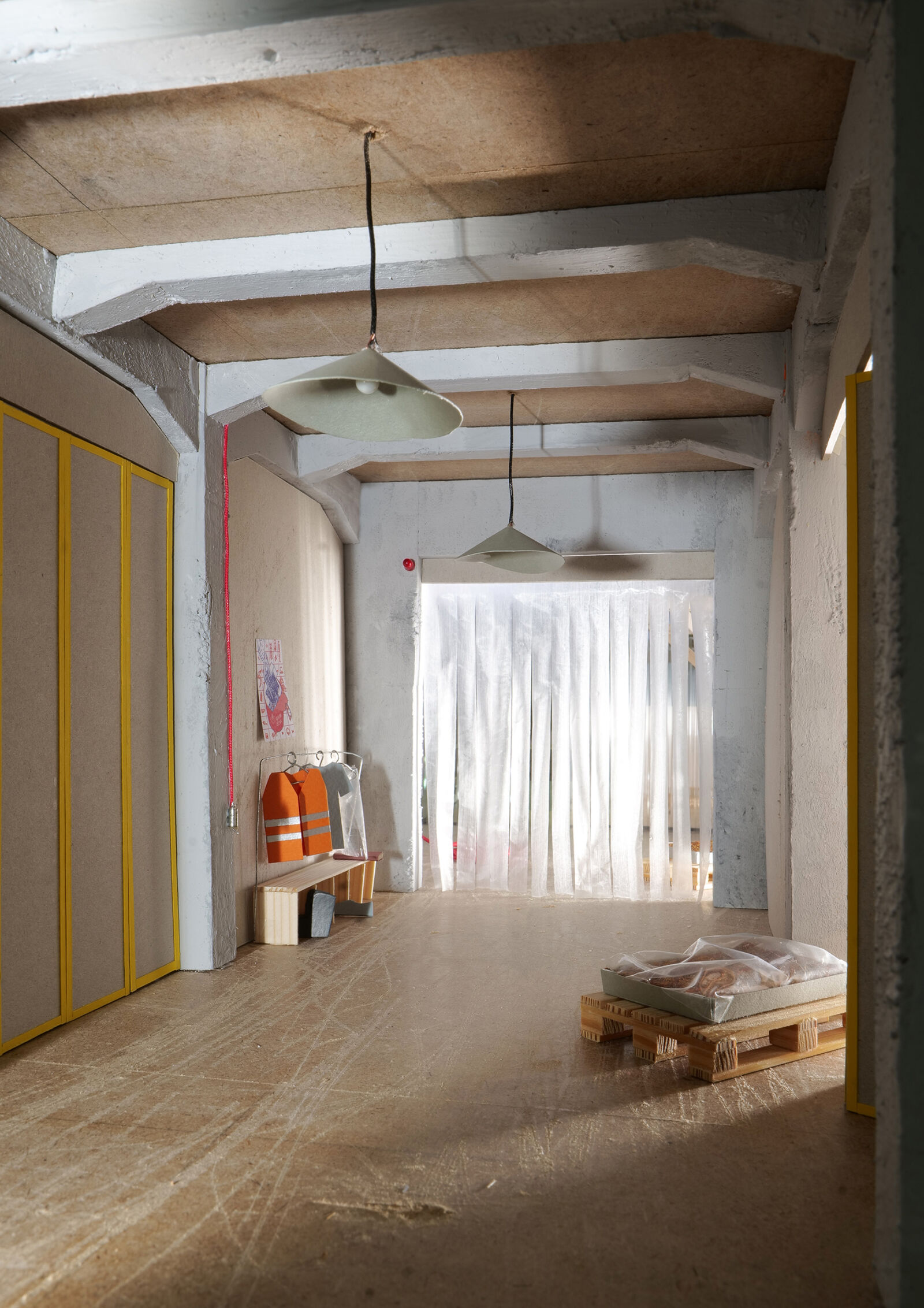
8502 BL, Bözingenstrasse 23 K, Sem Project FS24, Lucca Blum & Noah Schweizer, Living in Cycles (view 2). 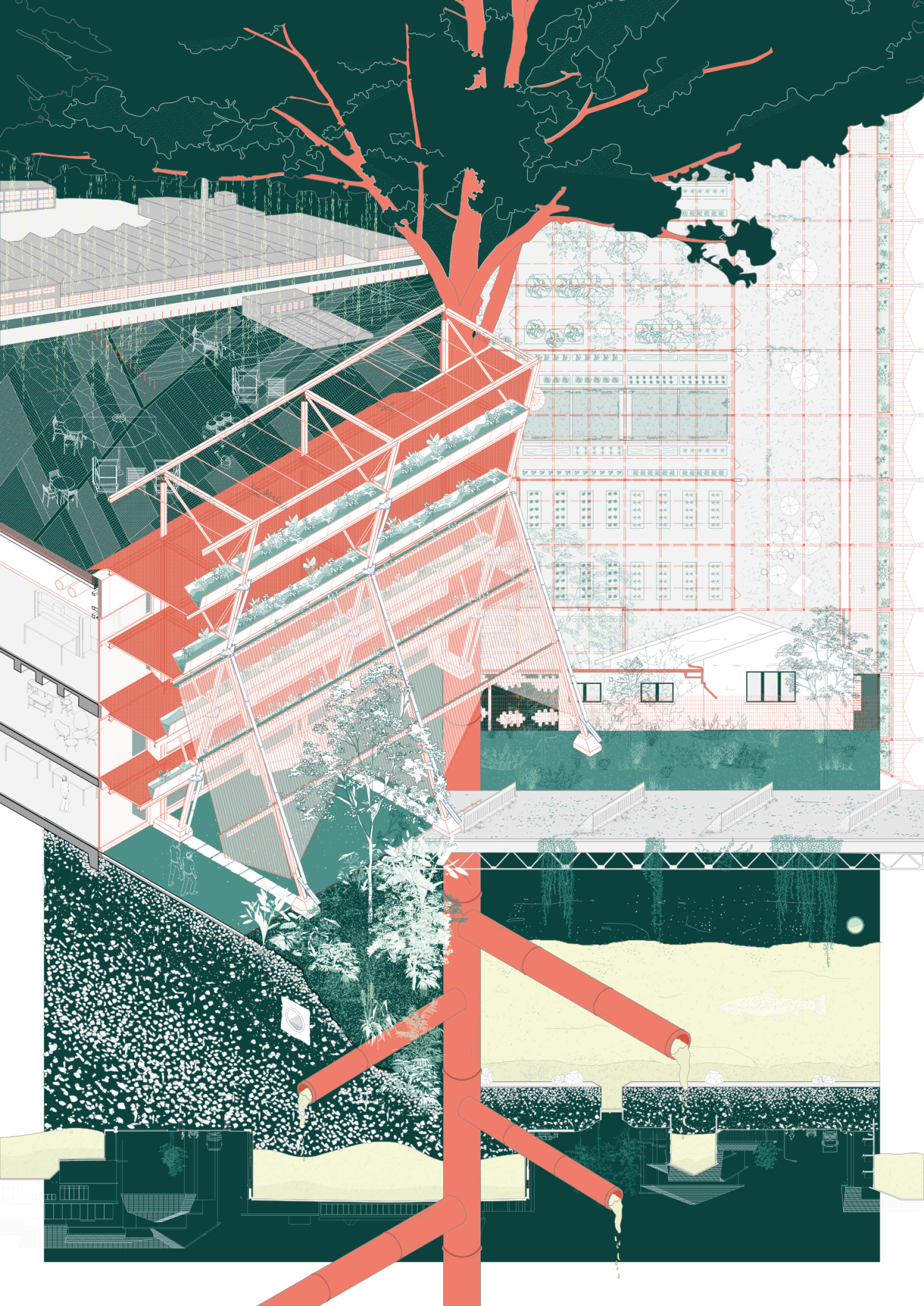
2503 BL, Salzhausstrasse, Master Thesis FS24, Renia Bode, Synthesis Project. 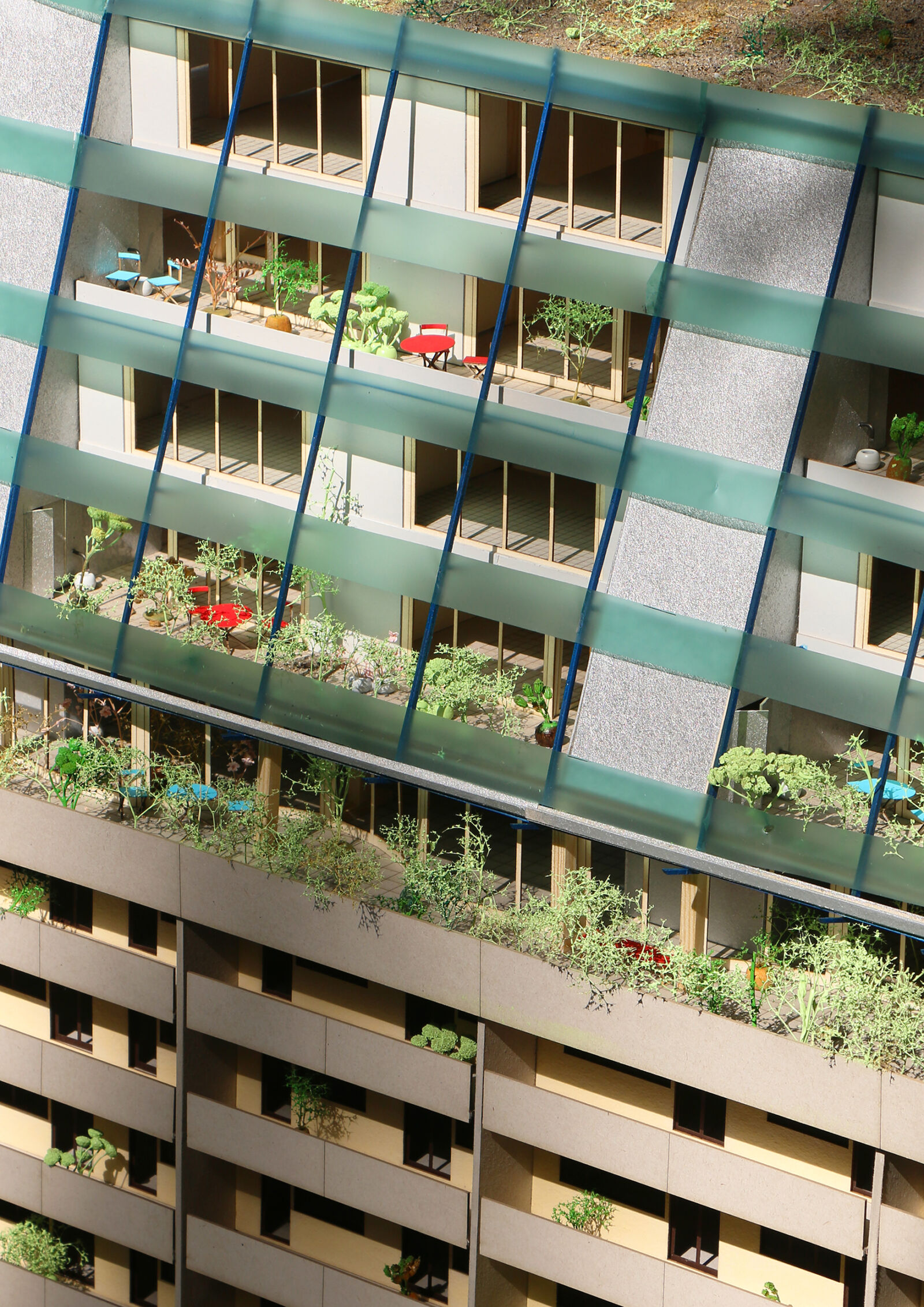
8404 Winterthur, Guggenbühlstrasse 2 + 4, Master Thesis FS25, Paula Schaufelbühl, Bird’s View. 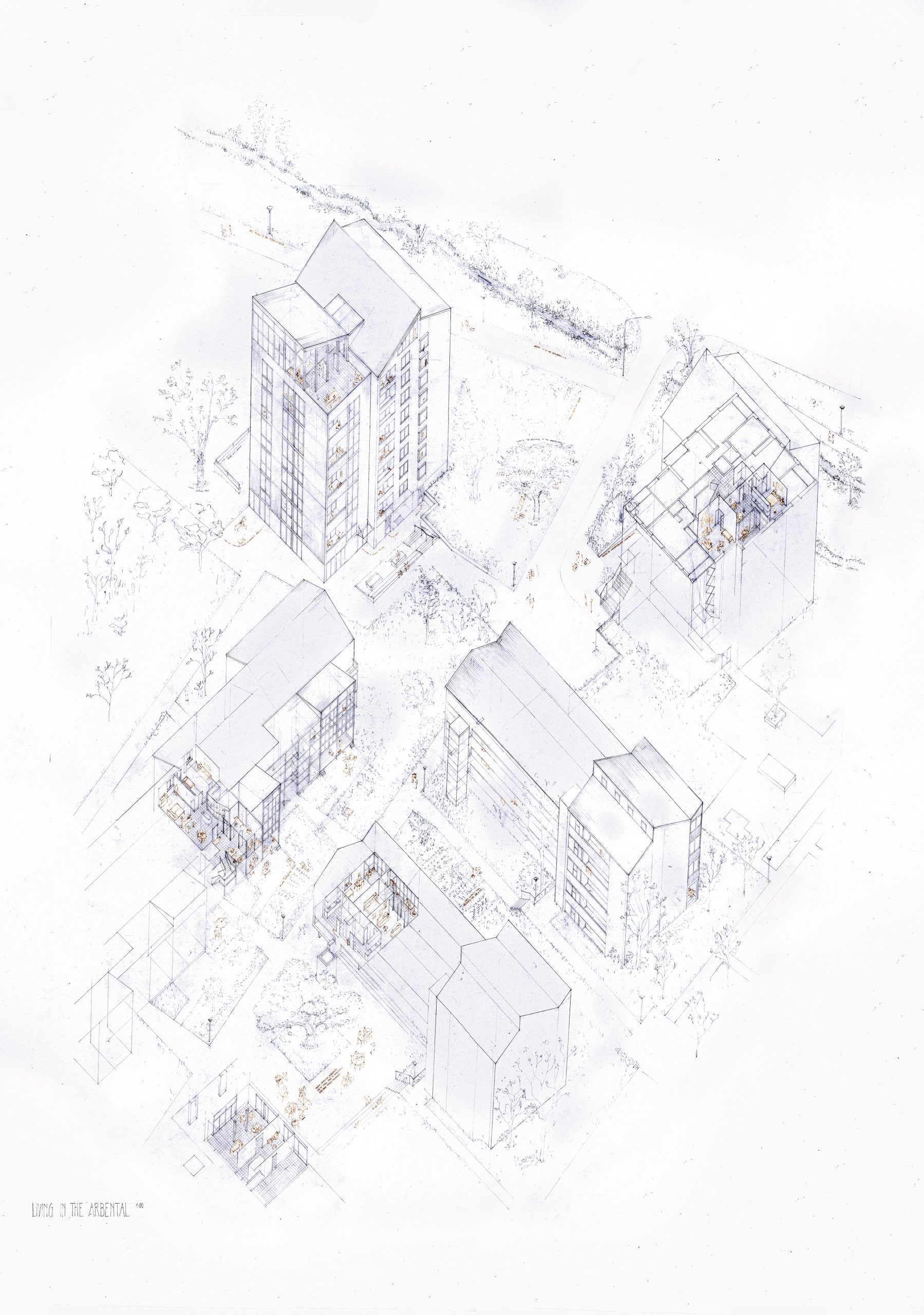
8045 ZH, Friesenberg, Diploma FS23, Natalia Pieroni, Axonometric drawing. 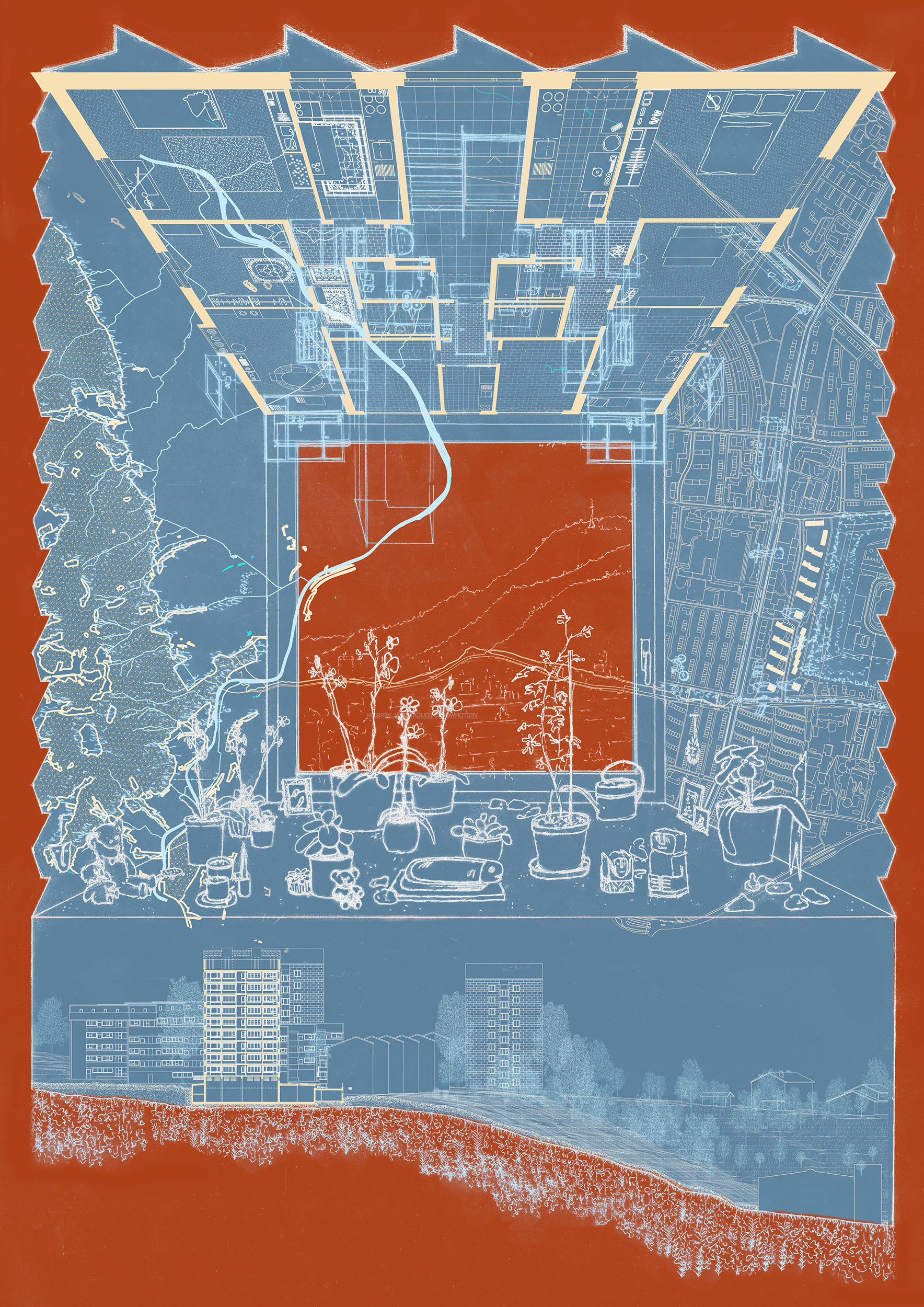
8045 ZH, Friesenberg, Diploma FS23, Natalia Pieroni, Research drawing. 2503 BL, Salzhausstrasse, Master Thesis FS24, Renia Bode, Synthesis Project. 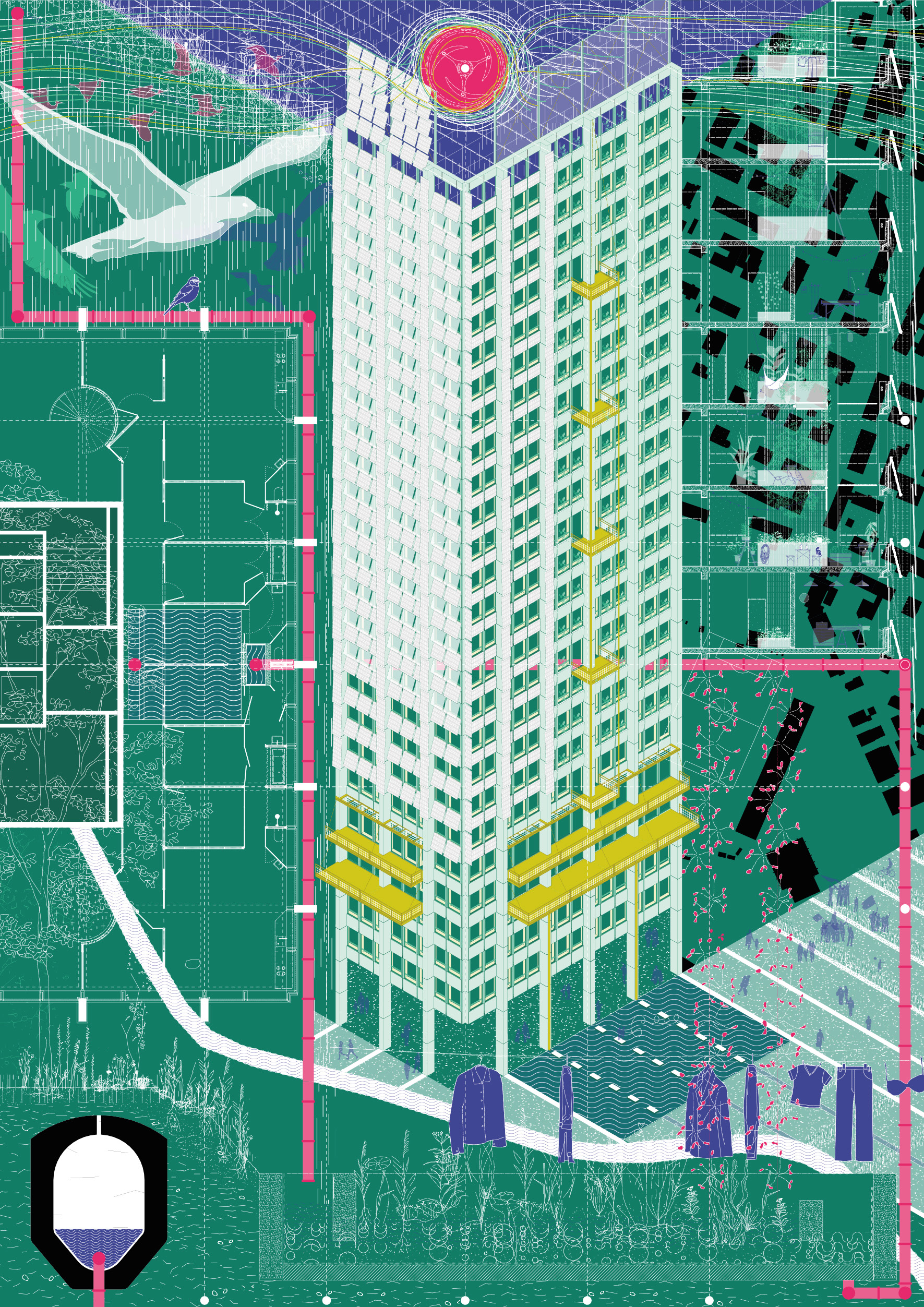
8046 ZH, Neuwiesenstrasse 15, Master Thesis FS25, Yannick Fortiguerra, Synthesis Final. 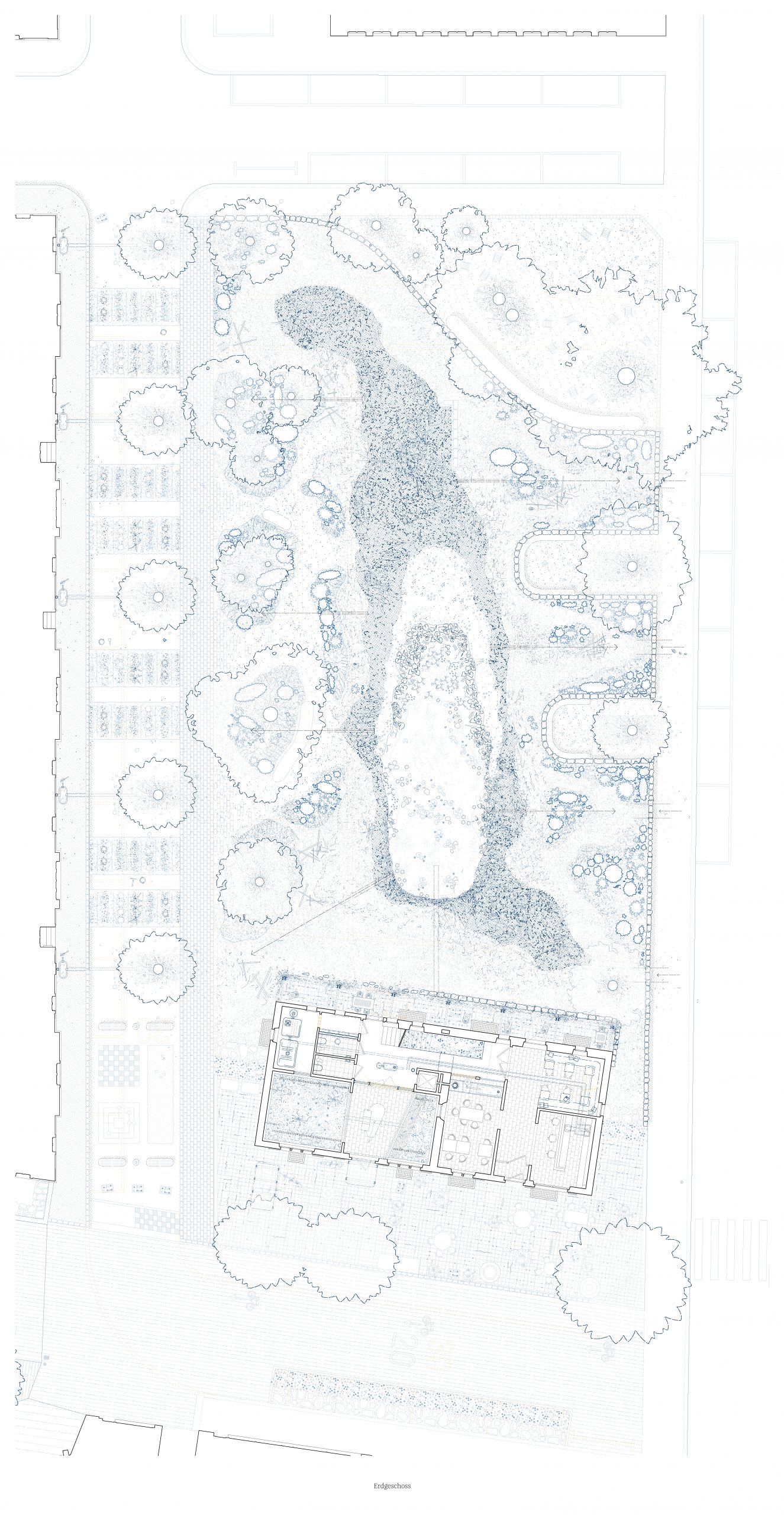
8001 ZH, Bärengasse, Sem Project HS23, Shirley Rellstab, Gilles Reust & Roman Winteler, Drawing 01. 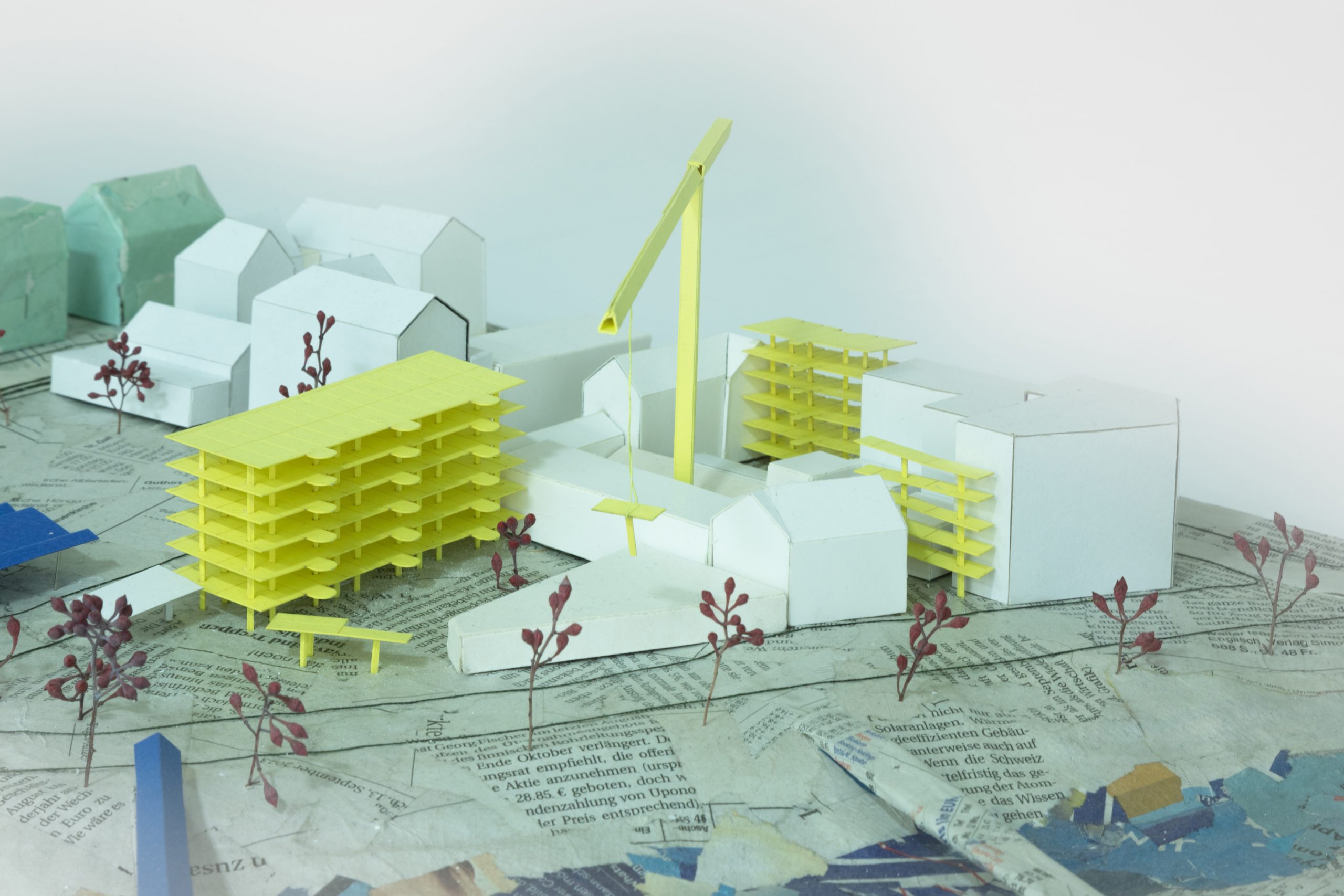
8001 ZH, Bahnhofplatz, Master Thesis HS23, Pauline Sauter, Site Model. 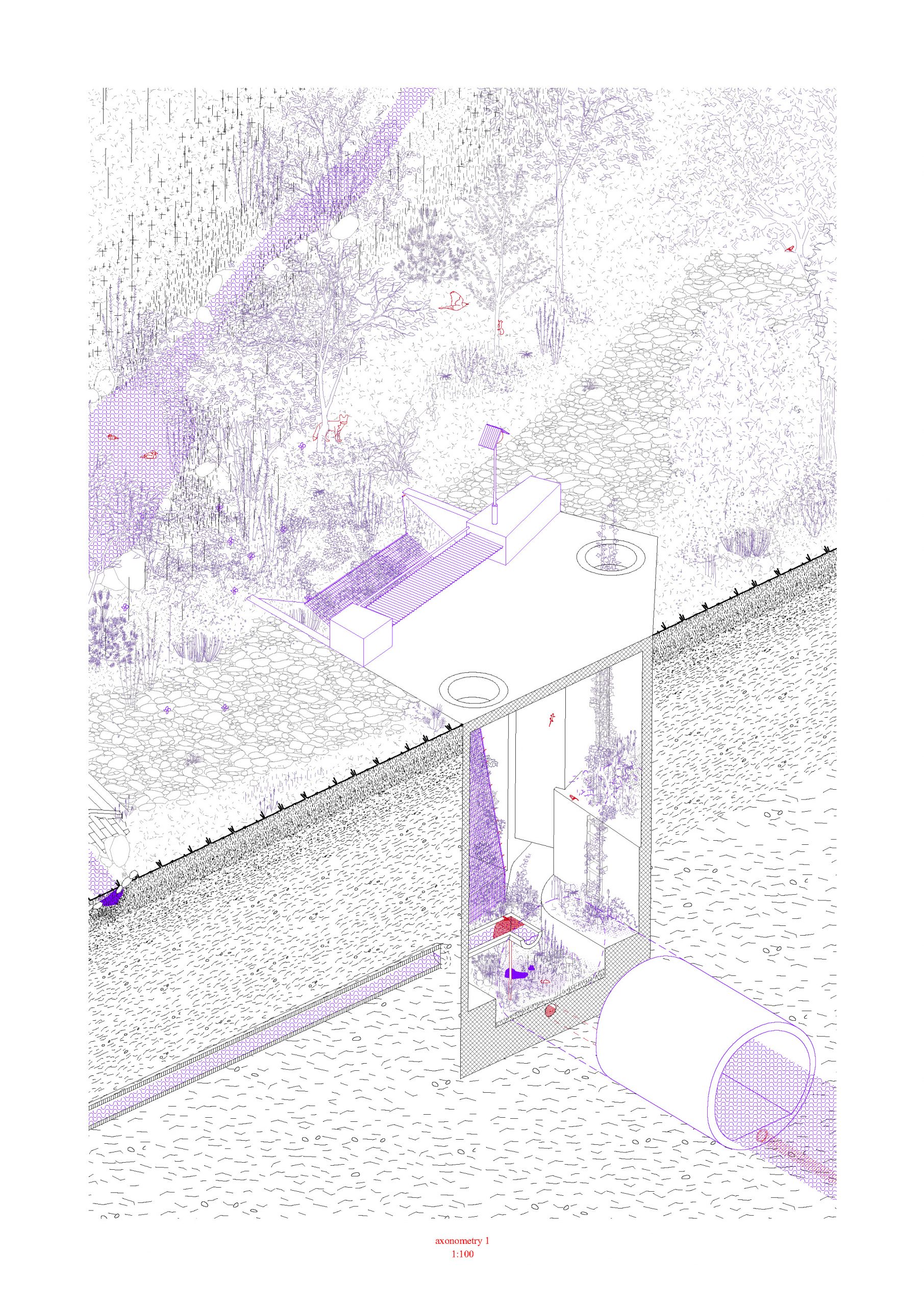
8032 ZH, Carmenstrasse, Sem Project HS23, Luana Stadtmann, Marin Lercher & Yannick Fortiguerra, Drawing detail 01. 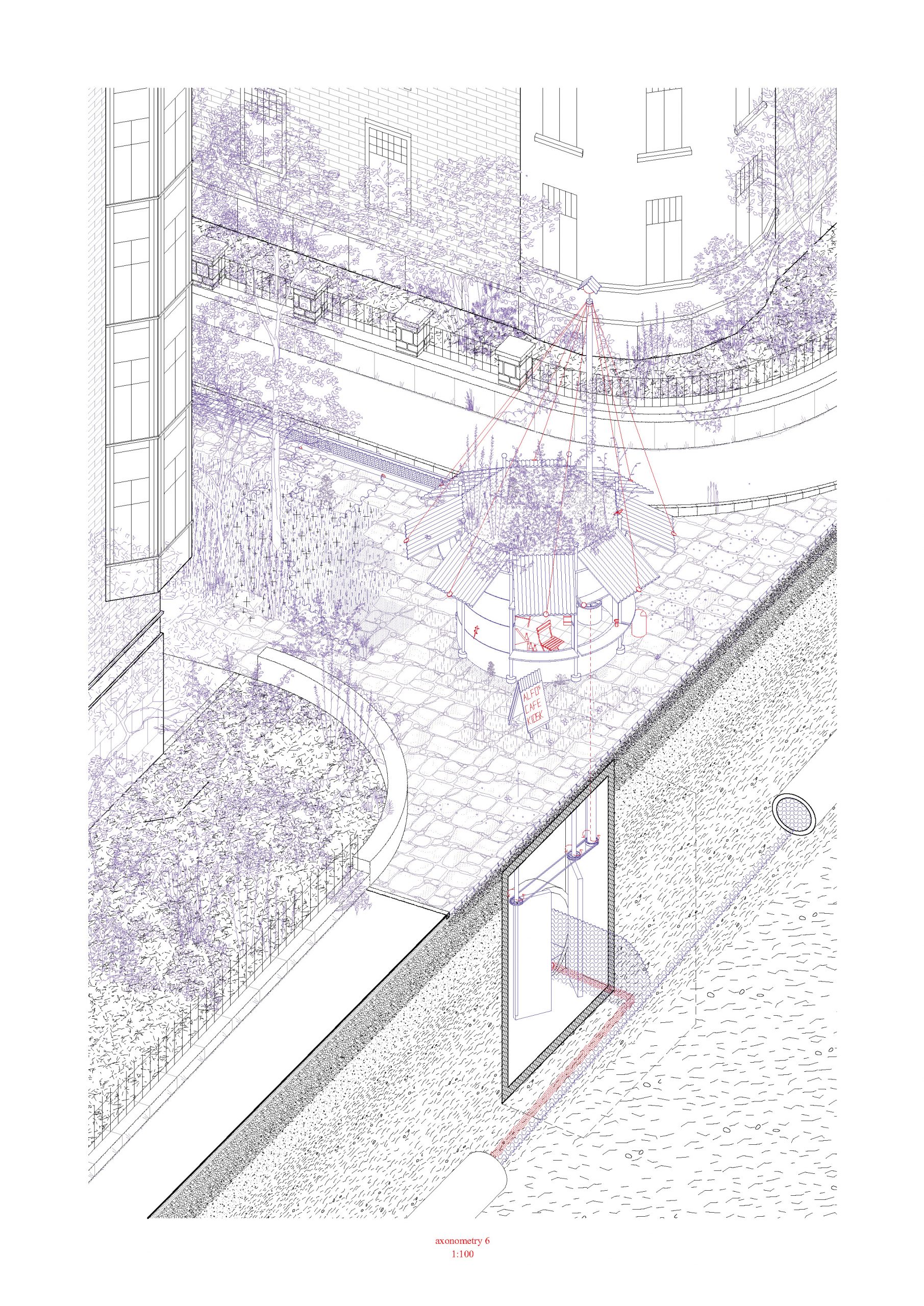
8032 ZH, Carmenstrasse, Sem Project HS23, Luana Stadtmann, Marin Lercher & Yannick Fortiguerra, Drawing detail 06. -
Material Typologies
Luigiemanuele Amabile in conversation with Tina Gregoric.
What does it mean to place material conditions at the origin of architectural education? In this interview, Tina Gregoric presents the design studio as a framework that resists standardisation and must be recalibrated each time in relation to the site, the topic and the scale. Within the condensed semesters at TU Wien, the studio adheres to precise rhythms of work and discussion, while remaining open to various pedagogical approaches, ranging from research trips to on-site experimentation and one-to-one prototyping. Gregoric’s approach transforms circularity and adaptive reuse from abstract concepts into a lived responsibility, grounded in direct engagement with space and matter. Gregoric rejects purely formal approaches to design in favour of a foundational education rooted in material knowledge, cultural awareness and ecological responsibility. Practice and teaching continuously inform one another, revealing how construction realities and institutional frameworks shape architectural action. Material typologies thus function not as formal classifications, but as operative tools for understanding contemporary conditions.
LA: In light of current debates on architectural pedagogy, could you outline how you conceive and structure a design studio – addressing organizational frameworks, pedagogical objectives, and the ensemble of methodological tools – and indicate which pressing epistemological or societal challenges you consider most urgent for studio-based learning today?
TG: Yeah – thank you for your question. I don’t believe in one universal strategy. I believe that every topic, theme, and site demands a tailor-made design studio. I have been teaching within this context of TU Wien for more than ten years – design studios – and I had to adapt my previous teaching methods to a large university. The context in Ljubljana or London, at the AA where I studied and briefly taught in both institutions, is very different. There, you build a vertical design studio where students stay with you for more than one semester. At TU Wien, each semester essentially starts from scratch. You present a topic, a brief, and from a large pool of students, you get a series of applications. Then, of course, you begin this journey. Over these ten years, we have dealt with significant differences in scale, topics, and contexts – and there is no single recipe.
Let’s start from the most recent, which was the most radical. Last year we became very involved in adaptive reuse. But last year we managed, through collaboration with external institutions, to define a bioregional design strategy, a design studio called Biofabrique Vienna, that was initiated by Wirtschaftsagentur Wien and Atelier LUMA with TU Wien as the executive partner. It was in collaboration with Luma Arles, which has become a kind of laboratory – showing, in one-size-fits-all recipe.LA: Immersing students in one-to-one prototyping, as you did with Biofabrique Vienna, must alter the way they later navigate professional practice – in your observation, how does that lived material experience influence their ethical stance and decision-making once they leave the university?
TG: What students learned from that was: yes, you can have the agenda of circularity, bioregional approaches, and adaptive reuse – these are all familiar topics. But if you’re given the opportunity to physically inhabit and work within the very space you are proposing to transform – working directly on-site, sourcing and assembling materials on site – the entire process and outcome change dramatically. It completely shifts students’ mindset and sense of responsibility. Because they were inhabiting the space – the existing building they aimed to adapt into something else – they were living and working in the place they had to change. And it wasn’t something abstract. We used it throughout the entire semester. It wasn’t just about the brief or the methodology; it’s also about the location in which you can teach and the platform you offer students to work on. And especially at a large university like TU Wien – where we don’t have shared studio spaces for students – this was a major shift.
LA: Building on the Biofabrique case, how does that pedagogical experience compare with other studios you have directed, and which cross-cutting methodological principles or evaluative metrics remain constant across such diverse formats?
TG: What was not much different from all the other studios is that – as probably influenced by my Anglo-Saxon education 25 years ago at the AA in London – we always structure the design studio around mid-presentations and final presentations, with a strong emphasis on discourse and discussion. That is a key strategy. And of course, we also integrate a series of workshops, where in the same space – whether here or somewhere else – you truly work together as a team of students. What is unique to TU Wien is that it’s very intense but also a very short period of time because it’s only four months. More or less, with two weeks of holidays – either at Christmas or Easter – it totals 14 weeks. So we really plan each week strategically: what is the task, what is the expected output. It’s a weekly structured methodology in each of the design studios.
LA: The studios you have conducted have operated in very different contexts and conditions across Europe. How do you prepare students to engage with such heterogeneous rural or urban scenarios?
TG: Over the last ten years, we have explored a wide range of topics: healthcare architecture, nanotourism (a coined term describing a creative critique of the current environmental, social, and economic downsides of conventional tourism, as a participatory, locally oriented, bottom-up alternative, ndr), adaptive reuse in general. For over a decade now, we have also been rethinking the countryside. Naturally, the countryside north of Vienna is very different from the countryside in Istria on the Adriatic coast, or from the Alpine lakes in Austria. Understanding these contexts deeply – covering not only in spatial terms, but also regional, cultural, political, and economic specificities – is essential. We always combine projects with intensive excursions.
For example, when we started studying healthcare architecture, we focused on Denmark. After an intense research phase – probably around 2018 – we realized Denmark was already among the most progressive countries in healthcare design. Since healthcare architecture typically takes about ten years to fully develop, we wanted to study it in depth. These intensive excursions at the beginning of a design studio, where participants experience the typology or topic is experienced one-to-one, have been one of the decisive ways to engage with the project. For instance, during our healthcare studies, we visited Nord Architects’ Cancer Center, the Patients’ Hotel, and the Hospice – also by Nord Architects. These visits helped us understand strategies used in high-end hospitals, children’s hospitals, and smaller typologies. Ultimately, we worked on three specific sites in Copenhagen.
Another example involves redefining the pedagogy of a creative university – a concept for an Open Design Academy where art, design, and architecture would once again be taught cohesively, rather than as separate disciplines. Visiting Nantes to see Lacaton & Vassal’s architectural school and the Art Academy, a radical adaptive reuse project, was crucial. It allowed students to radically rethink what architecture or an Open Design Academy could be. Since we had sites in those two European countries, the students needed to understand the community and local context, how people were approaching those topics locally. We needed to spend time there, which we do that, we pair with local architects.
We also launched a series called Odd Lots, starting at the end of the COVID period. The theme of odd lots was inspired by Gordon Matta-Clark’s Fake Estates, where in the 1970s purchased these bizarre, oddly shaped, super small plots across New York – mostly in Queens – thought to be impossible to develop. We asked the question: given that we already build too much in Europe and don’t need more new buildings – since we already have plenty of empty structures already exist – are there opportunities in Vienna’s odd lots compared to other cities, despite efforts to densify urban centers? After all, Vienna is still expanding significantly with new housing, one of the few European capitals doing so extensively. We collaborated with various schools and another city. The first was Odd Lots: Vienna–Ljubljana, then moving to Vienna–Brussels, Vienna–Barcelona, and Vienna–Berlin. Through these collaborations, working with local schools, universities, and architects, we aimed to explore an alternative model of urban development – trying to curb the ongoing production of poorly planned urban masterplans that result in low-quality architecture. This is currently happening in Vienna’s new developments. After four years, we organized an intense symposium and an exhibition last year in Vienna, bringing together key protagonists from these cities so that urban planners, decision-makers, and the public could see that this isn’t just the architects’ perspective, but a broader conversation about treating cities and spaces.LA: How do you navigate the tension between academic speculation and real-world implementation when engaging stakeholders?
TG: It’s about how the entire structure – how we initiate and approve new projects, how decision-making works – defines the urban condition. That’s why we invited the chief architect of Brussels, for example, to discuss their approach. Because the Brussels method, including their competition culture and planning tools, is completely different. My thesis was that, thanks to 15 or 20 years of competitions, institutional commitment, and leadership from figures like the chief architect, Belgium has created an entirely new architectural culture – not because Belgian architects are inherently more talented, but because young architects had opportunities to secure commissions and rethink the fundamental questions being asked.
LA: Considering the expanding hybridity of representational media in architectural research, to what extent do you prescribe or curate the instruments of inquiry – drawings, physical and digital models, computational simulations, narrative artefacts – and how do these choices shape the epistemic trajectory and critical outcomes of student projects?
TG: Yes, great question. We follow a specific template for research and output scale. For example, during starting excursions, like in Barcelona, students are given tasks to conduct targeted research while visiting architectural offices or touring important buildings. Each group might examine elements like entrances, fences, windows, and doors – key architectural features – and prepare detailed reports. Afterward, they present their findings to the class. This process uses structured templates to support group learning.
In contrast, their creative responses – such as in our New York trip – are entirely open in technique, tied to themes or sites we’ve explored related to Fake Estates and Odd Lots. They choose their medium freely, with the only requirement being a specific, precise model in a defined scale. But we don’t prescribe the material for the model. We don’t require a uniform type – what we focus on clarity and accuracy.
Similarly, for visualizations, we avoid hyper-realistic renderings. Instead, we favor collage or other representational methods that encourage critical thinking about materials. For instance, in the ‘Prefab’ studio, students select a material at the start of the semester – like rammed earth, CLT, or prefab concrete – and develop their project around its properties and techniques. Different materials require distinct design approaches.
While we give some freedom of expression, certain parts of the work – research, line drawings, and specific representational elements – are strictly defined. We maintain a balance, neither authoritarian nor entirely open. This flexibility sometimes surprises juries. We also organize all research in a structured format, including final materials, to streamline the publishing or exhibition process.LA: That structured yet collaborative approach seems crucial. But given how quickly architectural practice evolves – with new tools, materials, and societal demands – how do you see the role of foundational teaching versus adaptability? Should curricula prioritize core principles, or is flexibility the new imperative?
TG: My own educational experience from the mid-90s to around 2002 aligns with this. During that period, digital architecture and parametric design began to take shape. By the time I visited the AA in 2000, these tools were already quite advanced. So, by the time it reached Die Angewandte a few years later, it was already outdated, which I found hard to accept because it focused solely on form. Even back in 2000 at the AA, we were sceptical, seeing it as a narrow focus on formal exploration. Testing these methods from various perspectives made us realize they are just tools. What troubled me most – having graduated in architecture and been involved in research and practice here in Ljubljana – was the idea of teaching architecture as merely formal experimentation. I believed that was fundamentally wrong in 2000. Now, 25 years on, we still question this, which seems strange to me. Especially since digital tools don’t account for material properties. You might start designing a shape resembling chewing gum, then search for a material to bend into that form, but that approach is flawed. Many materials simply cannot do that. Genuine parametric, contextual, and responsive design has existed since the 1960s, just not in a purely formal sense. Looking at Serge Chermayeff or Giancarlo De Carlo provides strong examples of what parametric architecture can be – beyond just shapes.
LA: You reject formalist digital design, yet computational tools are ubiquitous. Are there ways to teach design thinking that aligns with your material-first approach–for instance, through bio-inspired systems or fabrication constraints?
TG: I believe that teaching architecture only through formal experimentation is problematic, and this view has persisted for a long time. Instead, education should emphasize responsibility – understanding what already exists. This includes cultural and historical layers, like those in Italy, or environmental factors. The world isn’t unlimited. It’s only in the past decade or so that ecology has become a more mainstream concern. Of course, during the 1970s energy crisis, it was briefly a topic, but after oil prices fell, it was forgotten. Now, it’s finally taken seriously again. Ultimately, the aim of architectural education is to teach students to think critically. They must develop the ability to think conceptually while considering community, ecology, materials, and all contextual layers. It’s not just about creating a visual language that reflects themselves or their group. Architecture is a collective endeavour, and we’re only now beginning to truly grasp that.
LA: Given the enduring tension between generalist formation and early specialization within European architectural curricula, what is your position on balancing broad disciplinary literacy with domain-specific expertise, and how might curricula be recalibrated to prepare graduates for an increasingly complex professional and research landscape?
TG: I believe architecture is a very different field of study compared to, let’s say, mathematics, physics, or even art. In school, you engage with art, but you have almost no exposure to architecture before entering university. The first three years of architecture should focus solely on foundational knowledge – understanding resources, culture, and the history of architecture. You should ask: Why was something built in Athens differently than in Rome? You need to grasp that. Or why, in your own region or city, buildings were constructed in a certain way – who made those decisions and why? Of course, you must also learn the basic structural principles to build your general knowledge. You should also be introduced to urban and architectural history. However, our education – like many others – was biased. Modernism was glorified and not critically examined as it should have been. Postmodernism came and went, but honestly, that doesn’t matter much now. The key is understanding that styles aren’t the main point. What truly matters is understanding the conditions – at a specific time and place – that shaped a particular architectural response. The question is: What are the conditions today? What is the situation in a particular region, city, country, or even a small place? That’s what you need to respond to.
LA: What shifts would you advocate for in current architectural education to bridge the gap between material experimentation and the realities of contemporary construction practices?
TG: We shouldn’t teach students to be solely problem solvers. We should teach them to question the problem itself. If a student can’t challenge a competition brief – if they can’t come to me or my team and say, “What you are asking isn’t relevant because of this and this” – then we have failed to teach them how to think critically. And without that skill, wherever they specialize in their 50-year-long careers, they’ll become obedient, and they won’t change anything that truly matters. So yes – they need to be resilient. They have to be highly adaptable. But they also need a solid foundation, a base of knowledge, in order to be able to respond effectively. I genuinely appreciate the fluidity of architectural education in Europe – where you might start your bachelor’s degree in one place and finish your master’s in another. At TU Wien, many of our master’s students come from abroad. We’ve developed a strong bachelor’s program with my colleagues at the Institute of Architectural Design, so we expect students in their fourth year – the first year of master’s – to know the fundamentals. But of course, only about half have completed their bachelor’s here. The rest come from various backgrounds. And that’s wonderful – it fosters exchange and diversity. Erasmus programs are extraordinary. The only challenge is when students come from schools where the base isn’t strong – where they haven’t learned the necessary tools or architectural culture – they’re at a disadvantage. Architecture remains a relatively young discipline. And I believe you shouldn’t be entitled to design freely until you understand what you’re building on. Otherwise, it’s just ignorance. Students also need to be much better educated about material knowledge. They should be engaging more with design students and encouraging cross-disciplinary exchange. I’ve always admired the culture that existed in Italy in the 60s – at least from the outside – with figures like Bruno Munari, Andrea Branzi, and the Castiglioni brothers. The way they taught and discussed design didn’t matter whether it was a lamp or a city. Or think of Ernesto Nathan Rogers, writing from the spoon to the city. That’s the ideal I believe in. We should still teach students to design both the spoon and the city. Only by understanding all the scales – how one influences the others up and down – can you truly grasp what design entails. If we don’t foster this generalist perspective, then creating specialists might actually generate more problems. than solutions.
LA: Your description of alternating roles – from intensive studio mentoring to strategic advisory oversight – invites reflection on academic leadership models; could you elaborate on how these shifts in engagement influence learning cultures, staff development, and knowledge production within your institute?
TG: In our department, we have about ten people. Ten teachers plus me as the chair. This means that in some design studios, I’m one of two or three instructors, and I’m very involved. I see the students every other week, and we dive deeply into their projects. In other studios, my role is more like an advisor to the team – one or two of my staff prepare the brief, and I challenge them as they develop the methodology, references, and research structure. I only see the students’ work at the midterm and final. I switch between two very different roles, and both are important. But in some studios, when I’m more directly involved, I get much quicker feedback from the students – and they get it from me.
LA: Drawing on your dual engagement in professional practice and academic research, how do practice-based insights reciprocally inform your studio pedagogy, and conversely, in what ways does scholarly inquiry within the university milieu reshape the agendas and methodologies of your architectural practice?
TG: Yes – it’s obviously an exchange. I started teaching the same year we launched our practice. So I have always done both simultaneously. That means I have accumulated practical experience – from construction sites and legislation to detailing and building materials – that directly influences how I teach. For example, a few years ago, we won a competition for a new Science Center in Ljubljana. It was an international competition. We aimed to incorporate a circular approach in our design – low-tech, resource-saving, open-ended. But we faced serious challenges during the execution phase – not because of the design itself, but because of legislation. Public procurement makes it very difficult to use new materials that aren’t officially certified. We wanted to propose certain assemblies or techniques that lack standard certifications. The tender system actually works against circularity. And that was a huge lesson for me.
LA: When legislation stifles innovation, should studios train students to hack those systems–or to advocate for policy change? It seems you do this through a deep knowledge of materials and the technologies and techniques behind them.
TG: I brought my experience back to the studio. The students need to understand that sometimes, even with good intentions, the system itself can be the main obstacle. This is especially true regarding materiality. Our practice has always had a strong focus on materials. From our first building – because we came from the AA – we aimed to show that architecture isn’t just digital but about construction and real materials. Of course, theoretical architecture matters, but when it comes to building, it’s about brick, stone, concrete, or wood. If you don’t understand how these materials behave – if you haven’t worked with them – you shouldn’t be designing with them.
My ideal is every student visits a sawmill. For example, in 2016, we did the Slovenian Pavilion at the Venice Biennale, emphasizing this. We built an inhabited structure inside the Arsenale – a curated library-home – and the goal was to create a space for people to linger, share knowledge, and experience open-source learning. We worked solely with untreated wood. The entire studio visited the sawmill. I had experience with that because my father owns a forest, but for most students, it was their first time. Understanding how wood is cut, treated, and its properties is vital, just like clay and bricks. Early in our careers, we experimented with brick and unfired clay, and we’ve incorporated that into our current work. Last year, someone asked me: «Why, as a professor of architectural typology, are you so focused on materials?” I responded simply: all architecture is material. Without rethinking typology through materials, your experiments – digital or physical – may miss future realities.
Beyond materials, we strongly value interdisciplinarity. We tell students they must collaborate with other creatives, artists, and material researchers; staying in a bubble isn’t enough. For example, in Ljubljana, we redesigned Slovenska Cesta to be nearly traffic-free, allowing only buses. We redefined the pavers used for sidewalks, collaborating with a company to develop those pavers and later, for the Science Center, to create a recycled version. That industry collaboration revealed how existing systems can be “hacked” to become more ecological. I also bring this approach to students because practice provides feedback – both on what worked and what didn’t. Revisit a housing project from five years ago and speak with its residents – that’s the real test.LA: This process may be likened to a scenario where students are encouraged to engage with a continuous cycle of feedback that is enabled by practice. This entails a process of reflection and refinement, which involves revisiting and subsequently reintroducing elements into the studio environment.
TG: Again, we have built around a thousand affordable housing units. That scale provides a lot of feedback, which can be shared in teaching – not just about what your intentions were but also about the real outcomes. You learn what you missed, what failed, and what surprised you. That’s why I value collaborations like the one we now have with BC Architects. We invited them as long-term guest professors. They have gathered knowledge over 15 years of practice – something you can learn in school. You learn it by doing. What’s beautiful now is that in Europe, due to the urgency of the ecological agenda, people are much more willing to share what they’ve discovered. It’s no longer about hoarding knowledge. Designers and architects want to share methods, results, and even mistakes so others can build on them. Only then can we collectively create a real shift in architecture practice. And I have to say, what I enjoy most – when I have the rare opportunity – is working with first-year students or those in their very first semester. When you’re just starting your architectural journey, you are open to everything. You haven’t yet built resistance or preconceptions. If you set high standards from the start, foster a critical mindset, and give students real motivation, then you can do magic. But if from the beginning they are guided toward a banal, client-serving mindset – even with public clients – then you lose them. Another challenge we face is the quality of public clients in Europe. It’s not just commercial clients who lack culture or architectural awareness; public ones often do too. It’s extremely important how we define architects’ roles and responsibilities at the start of their education. We should motivate students not only to aspire to be the next Otto Wagner or an iconic figure – which is fine, of course – but also to understand the potential of working on the client side, whether in Vienna, a small town, or their own village. As a well-educated architect, you can achieve extraordinary things in those roles by asking the right questions and identifying the true potential of that land, community, or place. So yes – a lot of ambition, and not enough time. But for me, teaching is something I truly love. I get goosebumps just thinking about it because it’s a rare opportunity – where you can share and inspire more people than in practice alone. Your office might complete one great housing project, but with your students, you can influence the quality of many public spaces and neighbourhoods if they carry that mindset forward. That’s what I want to see – when our students succeed in creating something meaningful in their own contexts. That’s the biggest reward. That’s why I try to stay connected, remaining active both in practice and teaching, and bringing questions from the university back to the office and vice versa. It’s all connected.
______________________________________________________________________________________________
Tipologie Materiali
Luigiemanuele Amabile in conversazione con Tina Gregoric.
In che modo le condizioni fisiche e materiali dei manufatti possono essere alla base della formazione architettonica? In questa intervista, Tina Gregoric presenta il laboratorio di progettazione come un dispositivo che resiste alla standardizzazione e che deve essere ricalibrato ogni volta in relazione al luogo, al tema e alla scala. Nei semestri intensivi del TU Wien, il laboratorio segue ritmi precisi di lavoro e di discussione, rimanendo al tempo stesso aperto a diverse impostazioni pedagogiche che spaziano dalle ricerche sul campo alla sperimentazione in situ e alla realizzazione di prototipi in scala 1:1. L’approccio di Gregoric trasforma i concetti di circolarità e riutilizzo adattivo da astratti a consapevolezze situate, fondate su un confronto diretto con lo spazio e la materia. Gregoric rifiuta gli approcci puramente formalisti al progetto, rivendicando una formazione di base radicata nella conoscenza dei materiali, nella consapevolezza culturale e nella responsabilità ecologica. La pratica e la didattica si alimentano a vicenda, mostrando come le condizioni costruttive e i quadri istituzionali orientino l’azione architettonica. Le tipologie materiali assumono quindi il ruolo di strumenti operativi per comprendere le condizioni del presente piuttosto che di semplici classificazioni formali.
LA: Alla luce dei dibattiti attuali sull’insegnamento del progetto, come sono organizzati i laboratori di progettazione che conduci? Quali obiettivi didattici ti prefiggi e quali strumenti utilizzi? Quali urgenze epistemologiche o sociali ritieni siano oggi più pressanti da affrontare in un laboratorio?
TG: Non credo esista una strategia universale. Ogni tema, luogo e contesto richiede un laboratorio costruito su misura. Insegno alla TU Wien da più di dieci anni e, in questo arco di tempo, ho dovuto adattare i metodi che utilizzavo in precedenza alla scala e al funzionamento di una grande università. Il contesto di Lubiana o quello dell’Architectural Association di Londra, dove ho studiato e insegnato per un periodo, sono molto diversi. Lì gli studenti sono organizzati in laboratori verticali e li seguiamo per più di un semestre. Alla TU Wien, invece, ogni semestre rappresenta un nuovo inizio. Si presenta un tema, si prepara un brief e, da un bacino molto ampio di studenti, arrivano le candidature. Da quel momento inizia il vero percorso. In questi dieci anni abbiamo condotto esperienze su scale, temi e contesti diversi e non siamo in grado di definire un’unica ricetta. Partirei dall’esperienza più recente, che è stata anche la più radicale. Lo scorso anno ci siamo concentrati molto sul riuso adattivo. Grazie a una collaborazione con istituzioni esterne, siamo riusciti a definire una strategia di progetto bioregionale: un laboratorio chiamato Biofabrique Vienna, promosso da Wirtschaftsagentur Wien e Atelier LUMA, con TU Wien come partner operativo. Il progetto è stato sviluppato insieme a Luma Arles, che oggi è una vera e propria officina in grado di dimostrare che non esiste una soluzione applicabile a ogni evenienza.
LA: immergere gli studenti in prototipi in scala uno a uno, come nel caso di Biofabrique Vienna, influenza inevitabilmente il modo in cui poi si approcceranno alla progettazione nella pratica professionale. In base alla tua esperienza, in che modo approfondire gli aspetti materici incide sull’atteggiamento etico e sui processi decisionali una volta fuori dall’università?
TG: Quello che gli studenti hanno imparato è che, anche affrontando temi ormai ampiamente riconosciuti come la circolarità, le questioni legate ai materiali bioregionali e il riuso adattivo, se c’è la possibilità di abitare fisicamente e lavorare nello spazio che si sta progettando di trasformare, intervenendo direttamente sul posto e cercando e assemblando i materiali sul posto stesso, l’intero processo evolve in modo radicale. L’approccio didattico cambia completamente e il senso di responsabilità che gli studenti sviluppano è molto maggiore. Il fatto di occupare concretamente quello spazio da trasformare in qualcosa d’altro permetteva di aggiungere agli aspetti presi in considerazione dal progetto la vita delle persone che lo occupavano. Non parlo in astratto: abbiamo occupato lo spazio per tutto il semestre. Non si è trattato solo della costruzione di un brief o dell’impostazione metodologica, ma anche del luogo in cui si insegna e degli strumenti messi a disposizione degli studenti. In un ateneo grande come il TU Wien, dove non esistono spazi di laboratorio condivisi, questa modalità ha rappresentato un cambiamento profondo.
LA: Partendo dall’esperienza di Biofabrique, in che modo l’impostazione didattica si confronta con gli altri laboratori che hai diretto e quali principi metodologici o criteri di valutazione trasversali permangono in formati così diversi?
TG: Ciò che non è cambiato molto rispetto agli altri laboratori è che, probabilmente anche a causa dell’influenza della mia formazione anglosassone di venticinque anni fa presso l’Architectural Association di Londra, strutturo sempre il laboratorio attorno a critiche intermedie e finali, e attribuisco importanza fondamentale alla discussion collettiva. È una strategia fondamentale. A ciò si aggiungono una serie di workshop in cui, nello stesso spazio, qui o altrove, si lavora davvero insieme come gruppo di studenti. La specificità del TU Wien è che tutto avviene in modo molto intenso, ma in un arco di tempo estremamente breve, dato che il semestre dura solo quattro mesi. Togliendo due settimane di pausa tra le festività natalizie e la pausa primaverile, rimangono quattordici settimane effettive. Per questo motivo, pianifichiamo ogni settimana in modo preciso, indicando i compiti e gli esiti attesi. In ciascun laboratorio, adottiamo una metodologia scandita settimana per settimana.
LA: I laboratori che avete condotto si sono mossi in contesti e condizioni molto lontane fra loro e in tutta Europa. Come prepari gli studenti a confrontarsi con queste scenari rurali o urbani tanto eterogenei?
TG: Negli ultimi dieci anni abbiamo affrontato tantissimi temi: le architetture per la salute, il nanoturismo (un termine nato come critica agli effetti ambientali, sociali ed economici del turismo convenzionale e che propone un’alternativa partecipativa, locale e dal basso) e, naturalmente, il riuso adattivo. Da oltre un decennio stiamo anche ripensando il significato di lavorare in un paesaggio rurale. È evidente che la campagna a nord di Vienna non ha nulla a che vedere con quella dell’Istria sulla costa adriatica o con i laghi alpini in Austria. Comprendere a fondo questi contesti, nelle loro dimensioni spaziali, ma anche culturali, politiche, economiche e regionali, è fondamentale. Per questo motivo, affianchiamo sempre il progetto a viaggi di studio e sopralluoghi molto precisi. Per esempio, quando abbiamo iniziato a occuparci di architetture per la salute, abbiamo focalizzato la nostra attenzione sulla Danimarca. Dopo un’approfondita fase di ricerca, verso il 2018, abbiamo capito che la Danimarca era già uno dei paesi più all’avanguardia nel campo del progetto di strutture sanitarie. Considerato che il ciclo di costruzione di una architettura del genere richiede circa dieci anni, era evidente che avremmo dovuto approfondirla molto. Le escursioni all’inizio del laboratorio, che permettono agli studenti di vivere in prima persona un tipo o un tema, sono uno dei modi più incisivi per entrare nel progetto. Durante questo percorso, abbiamo visitato il Cancer Center di Nord Architects, il Patients’ Hotel e l’Hospice, tutti progettati dallo stesso studio. Queste visite ci hanno permesso di analizzare le strategie adottate negli ospedali di fascia alta, negli ospedali pediatrici e nelle strutture di piccole dimensioni. Alla fine, abbiamo lavorato su tre siti specifici a Copenaghen.
Un altro caso riguarda la ridefinizione delle modalità di insegnamento di un’università, un possibile modello di Open Design Academy in cui arte, design e architettura possano tornare a essere insegnate insieme e non come discipline separate. La visita alla scuola di architettura e all’Accademia d’arte di Lacaton & Vassal, un progetto radicale di riuso adattivo, è stata cruciale. Questo ha permesso agli studenti di ripensare in modo radicale il ruolo dell’architettura nella definizione di tale tipo. Poiché avevamo siti in quei due paesi europei, gli studenti hanno dovuto imparare ad ascoltare le esigenze della comunità e il contesto locale e il modo in cui questi temi venivano affrontati sul posto. Per questo motivo, abbiamo trascorso del tempo sul posto collaborando con architetti locali.
Abbiamo anche avviato una serie chiamata Odd Lots, nata verso la fine del periodo del COVID. Il tema trae ispirazione dai Fake Estates di Gordon Matta-Clark, che negli anni Settanta acquistò a New York, soprattutto nel Queens, piccoli lotti irregolari e apparentemente impossibili da sviluppare. Ci siamo quindi chiesti: dato che in Europa costruiamo già troppo e non abbiamo bisogno di nuovi edifici, visto che ci sono già moltissime strutture vuote, perché non cercare opportunità negli strani e irregolari lotti rintracciabili a Vienna? Nonostante i tentativi di densificare i centri urbani, Vienna continua a espandersi con nuovi quartieri residenziali, una condizione ormai rara tra le capitali europee. Abbiamo collaborato con diverse scuole e città, ogni volta diverse. Il primo ciclo ha visto la partecipazione di Vienna-Ljubljana, poi Vienna-Bruxelles, Vienna-Barcellona e Vienna-Berlino. Attraverso queste collaborazioni con scuole, università e architetti locali, abbiamo cercato di esplorare un modello alternativo di sviluppo urbano, provando a contrastare la costante produzione di masterplan scarsamente pianificati che generano architettura di bassa qualità. È ciò che sta accadendo oggi nelle nuove espansioni di Vienna. Dopo quattro anni, abbiamo organizzato un simposio e una mostra a Vienna, riunendo le figure chiave di tutte queste città, affinché urbanisti, decisori pubblici e cittadini potessero rendersi conto che non si trattava solo della prospettiva degli architetti, ma di una conversazione più ampia sul modo in cui trattiamo le città e gli spazi.LA: Come ti muovi tra la dimensione più esplorativa della progettazione accademica e le condizioni reali di attuazione quando il lavoro del laboratorio si intreccia con interlocutori e contesti concreti?
TG: La questione riguarda il modo in cui l’intera struttura gestionale, ovvero il modo in cui attiviamo e approviamo i nuovi progetti e il funzionamento dei processi decisionali, determina la condizione urbana. Per questo motivo, abbiamo invitato, per esempio, il chief architect di Bruxelles a discutere del loro approccio. Il metodo di Bruxelles, che spazia dalla cultura dei concorsi agli strumenti di pianificazione, è molto specifico. In quindici o venti anni di concorsi, uniti a un impegno istituzionale costante e alla guida di figure come il chief architect, il Belgio è riuscito a costruire una cultura architettonica completamente nuova. Non perché gli architetti belgi siano più talentuosi di altri, ma perché le generazioni più giovani hanno avuto l’opportunità di ottenere incarichi e di ripensare in modo approfondito le domande da cui partire.
LA: Considerata la crescente ibridazione dei mezzi di rappresentazione nella ricerca architettonica, in che misura definisci o selezioni gli strumenti dell’indagine – disegni, modelli fisici e digitali, simulazioni computazionali, artefatti narrativi – e in che modo queste scelte orientano la traiettoria epistemica e gli esiti critici dei progetti degli studenti?
TG: Impostiamo un format preciso per gli elaborati di ricerca e per i disegni di progetto. Durante i viaggi di studio, gli studenti vengono suddivisi in gruppi di indagine mirati e hanno l’opportunità di imparare dagli studi di architettura e di visitare edifici significativi. Ogni gruppo analizza elementi quali ingressi, recinzioni, finestre e porte, dettagli fondamentali del lessico architettonico, e prepara una documentazione approfondita. Solo dopo, presentano il loro lavoro al resto del gruppo. Si tratta di un processo scandito dall’utilizzo di modelli di riferimento che sostengono l’apprendimento collettivo. Le loro risposte progettuali, invece, sono completamente aperte a tecniche diverse, a condizione che siano legate ai temi esplorati nelle Fake Estates e negli Odd Lots. Gli studenti scelgono liberamente il proprio mezzo espressivo, con l’unico vincolo di realizzare un modello preciso a una scala definita. Non imponiamo un tipo di materiale né un metodo specifico: ciò che conta è la chiarezza e l’accuratezza. Lo stesso vale per le visualizzazioni. Evitiamo i rendering iperrealistici e preferiamo i collage o altre modalità di rappresentazione che incoraggino uno sguardo critico sulla materia. Nel laboratorio Prefab, per esempio, ogni studente sceglie un materiale all’inizio del semestre – terra battuta, legno lamellare incrociato (CLT) o calcestruzzo prefabbricato – e sviluppa l’intero progetto a partire dalle sue proprietà e dalle tecniche di lavorazione. Materiali differenti implicano approcci progettuali diversi. Pur concedendo una certa libertà espressiva, alcune parti del lavoro, come la fase di ricerca, i disegni a linee e altri elementi specifici di rappresentazione, sono definite in modo rigoroso. Cerchiamo di mantenere un equilibrio tra precisione e apertura alle possibilità dei singoli. A volte, questa elasticità sorprende i critici invitati. L’intero corpus di ricerche è organizzato in un formato strutturato, compresi gli elaborati finali, così da rendere più agevole il processo di pubblicazione e di allestimento.
LA: Trovare un punto tra organizzazione del Corso e l’autodeterminazione degli studenti è fondamentale. Ma, considerando la rapidità con cui l’architettura sta cambiando – nuovi strumenti, tecnologie, esigenze sociali e culturali – come immagini oggi il rapporto tra gli insegnamenti di base e la capacità di adattamento alle contingenze? I curricula dovrebbero privilegiare la trasmissione dei principi fondativi della disciplina o la flessibilità è diventata l’imperativo dominante?
TG: La mia formazione, dalla metà degli anni Novanta fino ai primi anni Duemila, si inserisce esattamente in questo periodo di transizione. In quel periodo, l’architettura digitale e il design parametrico stavano iniziando a emergere. Quando nel 2000 sono arrivata all’AA, l’uso di questi strumenti era già molto avanzato. Così, quando qualche anno dopo questo approccio è arrivato alla Die Angewandte, quella fase era già superata. Fu difficile accettare il fatto di concentrarsi esclusivamente sul raggiungimento di una forma. Anche all’AA, nel 2000, eravamo piuttosto scettici, perché lo consideravamo un esercizio troppo limitato alla dimensione formale. Mettere alla prova questi metodi da angolazioni diverse ci ha fatto capire che si trattava semplicemente di strumenti. Dopo essermi laureata in architettura e aver cominciato a lavorare tra ricerca e professione a Lubiana, ciò che mi preoccupava di più era l’idea di insegnare l’architettura come pura sperimentazione formale. Già allora mi sembrava un errore. Oggi, a venticinque anni di distanza, ci ritroviamo a interrogarci sulle stesse cose e trovo che sia una strana ricorrenza. Questo soprattutto perché gli strumenti digitali non integrano le proprietà dei materiali. A volte si disegna una forma che sembra gomma da masticare e poi si cerca un materiale che possa essere piegato in quel modo. Questo approccio è fallace. Semplicemente, molti materiali non possono farlo. Il vero design parametrico, contestuale e reattivo esiste dagli anni Sessanta, ma non si presentava come un esercizio formale. Serge Chermayeff o Giancarlo De Carlo mostrano in modo molto eloquente cosa possa essere un’architettura parametrica, al di là delle forme.
LA: Rifiuti un approccio digitale formalista, eppure gli strumenti computazionali sono ormai onnipresenti. Esistono dei metodi per insegnare il progetto in linea con la tua idea di partire dalla materia, per esempio attraverso sistemi bio-ispirati o vincoli legati ai processi di fabbricazione?
TG: Sono ancora convinta che insegnare l’architettura come pura sperimentazione formale sia un approccio problematico e questa convinzione mi accompagna da tempo. L’educazione dovrebbe mettere al centro il senso di responsabilità, a partire dalla comprensione di ciò che già esiste, dalle stratificazioni culturali e storiche, come nel caso dell’Italia, fino alle condizioni ambientali. Le risorse del mondo non sono infinite. Solo nell’ultimo decennio l’ecologia è diventata un tema diffuso. Negli anni ‘70, durante la crisi energetica, se ne parlò per un breve periodo, ma poi, con il calo dei prezzi del petrolio, il tema fu accantonato. Oggi, finalmente, è tornata a essere una questione presa sul serio. In definitiva, l’obiettivo della formazione in architettura è insegnare agli studenti a pensare in modo critico. Devono sviluppare una capacità concettuale che tenga insieme aspetti sociali, ecologici, materiali e le stratificazioni culturali che emergono dai contesti che affrontano. Non si tratta di costruire un linguaggio visivo che rifletta soltanto sé stessi o le proprie idee. L’architettura è un impegno collettivo e forse solo ora stiamo iniziando a comprenderlo davvero.
LA: Considerata la relazione ancora molto presente nei percorsi europei di formazione tra un approccio generalista e una specializzazione disciplinare, qual è la tua posizione riguardo al bilanciamento tra un modello di formazione ampio e la necessità di sviluppare competenze mirate? In che modo i curricula potrebbero essere ripensati per preparare i laureati a un panorama professionale e di ricerca sempre più complesso?
TG: Credo che l’architettura sia un ambito di studio molto diverso dalle scienze, come la matematica o la fisica, o persino dall’arte. A scuola si entra in contatto con l’arte, ma quasi mai con l’architettura prima dell’università. Per questo motivo, i primi tre anni dovrebbero concentrarsi esclusivamente sulle basi: la comprensione delle risorse, della cultura e della storia dell’architettura. Bisogna chiedersi perché ad Atene si costruiva in un modo e a Roma in un altro. Oppure perché gli edifici nella tua regione o nella tua città sono stati costruiti secondo determinate logiche e chi ha preso quelle decisioni e per quali ragioni. Naturalmente, è necessario anche apprendere i principi strutturali fondamentali per sviluppare un sapere generale e confrontarsi con la storia urbana e architettonica. Tuttavia, la nostra formazione, come molte altre, è parziale. Il modernismo veniva celebrato e raramente messo in discussione. Il postmodernismo è arrivato e poi è svanito, ma oggi, a dire il vero, non ha più alcuna importanza. La questione non è lo stile. Ciò che importa davvero è comprendere le condizioni che, in un determinato momento e in un luogo specifico, hanno prodotto una determinata risposta architettonica. La domanda allora è: quali sono le condizioni attuali? Quale situazione caratterizza una regione, una città, un paese o persino un luogo molto piccolo? È a questo che dovremmo imparare a rispondere.
LA: Quali trasformazioni ritieni siano necessarie nell’insegnamento del progetto per colmare il divario tra la necessità di sperimentazione e le condizioni concrete dell’industria delle costruzioni odierna?
TG: Dovremmo formare degli studenti che non siano meri risolutori di problemi. Dovremmo insegnare loro a mettere in discussione i problemi: se uno studente non riesce a interrogare le questioni affrontate da un brief di concorso e non è in grado di trasmetterci l’inadeguatezza di alcune delle nostre richieste, allora significa che non gli abbiamo trasmesso strumenti sufficienti a formare un pensiero critico autentico. Se non possiedono questa capacità, qualunque specializzazione sceglieranno nei cinquant’anni della loro futura carriera, finiranno per diventare soltanto dei dipendenti obbedienti, incapaci di incidere dove conta davvero. È necessario che siano resilienti e sappiano adattarsi. Ma è necessaria anche una solida base di conoscenze, un fondamento chiaro, per poter rispondere in modo consapevole. La flessibilità della formazione degli architetti in Europa va protetta. Qui è possibile iniziare il percorso di laurea triennale in un luogo e concludere il master in un altro. Alla TU Wien, molti dei nostri studenti magistrali provengono dall’estero. Insieme ai colleghi dell’Institute of Architectural Design, abbiamo costruito un corso di laurea triennale molto attraente, per cui ci aspettiamo che, al primo anno della magistrale, gli studenti conoscano già le basi. Naturalmente, solo la metà di loro ha completato qui il percorso di laurea triennale; gli altri provengono da percorsi molto diversi. Questo è un valore aggiunto, perché genera scambio e diversità. Il programma Erasmus dà sempre risultati straordinari. L’unica difficoltà si verifica quando arrivano studenti che provengono da scuole in cui le basi non sono solide e in cui non hanno acquisito gli strumenti e la cultura architettonica necessari. In questi casi, partono svantaggiati. L’architettura è una disciplina relativamente giovane e non si può pretendere di progettare liberamente senza aver compreso la materia su cui si sta costruendo. In caso contrario, si tratta di semplice ignoranza. Gli studenti dovrebbero anche avere una conoscenza più approfondita dei materiali. Sarebbe utile che lavorassero di più a stretto contatto con gli studenti di design, favorendo un vero scambio interdisciplinare. Ho sempre ammirato, almeno da fuori, la cultura italiana degli anni Sessanta, con figure come Bruno Munari, Andrea Branzi e i fratelli Castiglioni. Il modo in cui insegnavano e discutevano di progetto non faceva distinzione tra una lampada e una città. Pensiamo, per esempio, a Ernesto Nathan Rogers che scriveva: «Dal cucchiaio alla città». È un ideale in cui credo profondamente. Dovremmo continuare a insegnare agli studenti a progettare sia il cucchiaio sia la città. Solo comprendendo tutte le scale e il modo in cui ciascuna influisce sulle altre, dal piccolo al grande e viceversa, si può davvero capire cosa significhi progettare. Se non coltiviamo questa visione d’insieme, rischiamo che la formazione di specialisti generi più problemi che soluzioni.
LA: La dinamica che alterna momenti di partecipazione diretta nel laboratorio a fasi di supervisione più strategica solleva questioni sul modello di leadership accademica. In che modo queste diverse modalità di coinvolgimento incidono sulle culture dell’apprendimento, sulla crescita del personale docente e sui processi di produzione della conoscenza all’interno dell’istituto?
TG: In istituto siamo in dieci. Ci sono dieci docenti, più me che coordino la struttura. Ciò significa che in alcuni laboratori di progettazione sono una delle due o tre persone che guidano il corso e il mio coinvolgimento è molto diretto. Vedo gli studenti a settimane alterne e insieme approfondiamo determinati aspetti dei loro lavori. C’è un dialogo continuo. In altri casi, invece, assumo il ruolo di advisor: uno o due colleghi preparano il syllabus e io cerco di affinare la metodologia proposta, i riferimenti scelti e la strutturazione della fase di ricerca. In questi casi, vedo i progetti degli studenti solo a metà e alla fine del loro percorso. Mi muovo tra due funzioni molto diverse, ma entrambe necessarie. Quando però sono più presente, lo scambio con gli studenti è immediato e la rapidità con cui circolano i feedback diventa un elemento fondamentale per l’apprendimento.
LA: Considerando il costante intreccio tra pratica professionale e attività di ricerca accademica, in che modo le conoscenze maturate nei progetti in cantiere orientano la didattica di laboratorio? E, al contrario, come le forme di indagine sviluppate in ambito universitario contribuiscono a ridefinire agende e metodologie della pratica architettonica?
TG: Certo, si tratta evidentemente di uno scambio continuo. La mia attività didattica è iniziata nello stesso anno in cui è stato avviato lo studio professionale e le due dimensioni si sono sempre sviluppate in parallelo. Nel tempo si è accumulata un’esperienza pratica che spazia dai cantieri alla legislazione, dal dettaglio costruttivo ai materiali, e tutto ciò ha un impatto diretto sulla didattica. Qualche anno fa, per esempio, abbiamo vinto un concorso internazionale per la realizzazione di un nuovo Science Center a Lubiana. L’impostazione progettuale mirava a un approccio circolare, low-tech, attento alle risorse e aperto alle possibilità di evoluzione, ma durante la fase esecutiva sono emerse difficoltà sostanziali non legate al progetto in sé, bensì al quadro normativo. Nei lavori pubblici è molto difficile introdurre materiali che non abbiano ancora una certificazione ufficiale. Nel progetto erano stati proposti assemblaggi e tecniche che non rientravano negli standard previsti e il sistema degli appalti si è rivelato, di fatto, contrario ai principi della circolarità. È stata una lezione significativa.
LA: Quando la normativa diventa un freno all’innovazione, i laboratori di progettazione dovrebbero spingere gli studenti a «forzare» quei sistemi o a promuovere un cambiamento delle politiche? Sembra che nei vostri corsi ciò avvenga anche attraverso una conoscenza approfondita dei materiali, delle tecnologie e delle tecniche costruttive.
TG: Ho riportato questa esperienza direttamente nel laboratorio. Gli studenti devono comprendere che, talvolta, anche con le migliori intenzioni, è il sistema stesso a costituire l’ostacolo principale, soprattutto quando si tratta di materiali. Nella pratica progettuale, l’attenzione alla materia è sempre stata centrale. Fin dal nostro primo edificio, anche sotto l’influenza dell’AA, abbiamo cercato di mostrare che l’architettura non è soltanto digitale, ma riguarda la costruzione e i materiali reali. La speculazione teorica progettuale ha certamente un valore, ma quando si costruisce bisogna fare i conti con i materiali: mattoni, pietra, calcestruzzo o legno. Se non si conoscono le caratteristiche di questi materiali e non si è mai lavorato con essi, non si dovrebbe nemmeno pensare di progettare con essi.
Il mio ideale sarebbe che ogni studente visitasse una segheria. Nel 2016, per esempio, abbiamo voluto insistere su questo aspetto per il Padiglione sloveno alla Biennale di Venezia. All’interno dell’Arsenale abbiamo realizzato una piccola architettura abitabile, una biblioteca-casa concepita come luogo in cui soffermarsi, condividere conoscenze ed esperire un apprendimento aperto. Si è lavorato esclusivamente con legno non trattato. Tutto il laboratorio ha visitato la segheria. Io avevo già dimestichezza con quel mondo, perché mio padre possiede un terreno ricco di alberi, ma per la maggior parte degli studenti si trattava di una prima esperienza. Comprendere come il legno viene tagliato, lavorato e quali siano le sue proprietà è essenziale, così come lo è per l’argilla o il mattone. All’inizio della nostra attività professionale, abbiamo sperimentato con i mattoni e l’argilla cruda e questo approccio ha influenzato il nostro lavoro attuale. L’anno scorso qualcuno mi ha chiesto: «Perché, in qualità di docente di tipologie architettoniche, ti concentri così tanto sui materiali?» La mia risposta è stata semplice: tutta l’architettura è materia. Se non si ripensa la tipologia attraverso la materia, le sperimentazioni, siano esse digitali o fisiche, rischiano di non tenere conto delle condizioni future.
Oltre all’attenzione ai materiali, attribuiamo grande importanza all’interdisciplinarità. Spieghiamo agli studenti che devono collaborare con altre figure creative, come gli artisti e i ricercatori dei materiali, perché non è sufficiente restare chiusi in una bolla. A Lubiana, per esempio, abbiamo riprogettato la strada Slovenska Cesta, rendendola quasi interamente pedonale e riservando l’accesso ai soli autobus. Le lastre per i marciapiedi sono state progettate in collaborazione con un’azienda che ci ha poi supportato nella realizzazione di una versione riciclata destinata al Science Center. Collaborare con le industrie ha dimostrato che è possibile aggirare i sistemi esistenti per ottenere risultati più ecologici. Questo approccio lo trasferiamo anche agli studenti, perché la pratica fornisce un riscontro costante su ciò che ha funzionato e su ciò che non ha funzionato. Tornare dopo cinque anni in un edificio residenziale e parlare con chi lo abita rappresenta, in definitiva, la verifica più autentica.LA: Nel processo che descrivi, agli studenti viene richiesto di confrontarsi con un ciclo continuo di feedback attivato dalla pratica. Ciò implica un percorso di riflessione e affinamento che prevede il ritorno sui progetti e la successiva reintroduzione di elementi nell’ambiente di laboratorio.
TG: Un altro esempio: abbiamo realizzato circa mille alloggi a prezzi accessibili. Una scala simile genera una quantità significativa di riscontri che possono essere condivisi nell’insegnamento, non solo rispetto alle intenzioni iniziali, ma anche rispetto agli esiti reali. Si impara ciò che è sfuggito, ciò che non ha funzionato e ciò che ha sorpreso. Per questo motivo, ritengo che collaborazioni come quella che abbiamo oggi con BC Architects siano preziose. Li abbiamo invitati a ricoprire il ruolo di docenti. Sono portatori di un sapere costruito in quindici anni di pratica, un sapere che non viene insegnato a scuola. Lo si apprende facendo. Ciò che apprezzo particolarmente, nel contesto europeo attuale, è che l’urgenza dell’agenda ecologica rende le persone molto più propense a condividere le conoscenze acquisite. Non si tratta più di custodire ciò che si scopre. Progettisti e architetti desiderano condividere metodi, risultati e persino errori, affinché altri possano trarne vantaggio. Solo così è possibile generare un cambiamento reale nella pratica architettonica. Devo dire che, quando ne ho l’occasione, ciò che apprezzo di più è lavorare con gli studenti del primo anno e del primo semestre. All’inizio del percorso di architettura si è aperti a tutto, senza resistenze o preconcetti. Se si fissano standard elevati fin dall’inizio, si coltiva un atteggiamento critico e si offre una motivazione autentica, si possono ottenere risultati davvero sorprendenti. Se, invece, fin dalle prime fasi, si indirizzano gli studenti verso una mentalità banale, orientata esclusivamente alla soddisfazione del cliente, anche quando si tratta di un cliente pubblico, allora si rischia di perderli. Un’altra questione riguarda la qualità dei committenti pubblici in Europa. Non solo la committenza commerciale spesso manca di cultura e consapevolezza architettonica, ma anche quella pubblica non fa eccezione. Per questo motivo, è fondamentale definire le responsabilità e il ruolo degli architetti fin dall’inizio del loro percorso formativo. Bisognerebbe motivarli non solo a diventare il prossimo Otto Wagner o una figura iconica, un’aspirazione legittima, naturalmente, ma anche a riconoscere il valore di lavorare per la committenza, sia a Vienna, sia in una piccola città, sia nel proprio Paese. Un architetto con una solida formazione può ottenere risultati straordinari anche in questi ruoli, se è in grado di porre le domande giuste e di individuare il potenziale di un luogo, di una comunità o di un territorio. Sì, c’è molta ambizione e poco tempo. Ma l’insegnamento è qualcosa a cui dedico molta passione. Pensare a questo mi emoziona, perché si tratta di un’occasione rara che mi permette di condividere e ispirare un numero di persone molto maggiore rispetto a quanto potrei fare con la sola pratica professionale. Uno studio può realizzare un grande edificio residenziale, ma è attraverso gli studenti che è possibile influenzare la qualità di molti spazi pubblici e quartieri, a condizione che si mantenga questa mentalità. Questo è ciò che desidero: vedere gli studenti creare qualcosa di significativo nei contesti in cui andranno a operare. È la soddisfazione più grande. Per questo motivo, cerco di rimanere in contatto con entrambe le dimensioni, lavorando sia nel campo della professione che in quello dell’insegnamento e portando le domande dell’università nel mio studio, così come riporto in università ciò che emerge dalla pratica. Tutto è collegato.
______________________________________________________________________________________________
Luigiemanuele Amabile – Architect and PhD, research fellow of the project DT2 (UdR Università degli Studi di Napoli “Federico II”).
Tina Gregoric – Professor of Architecture and Head of the Department for Building Theory and Design (Gebäudelehre und Entwerfen), Institute of Architecture and Design at TU Wien; architect and cofounder of the architectural practice Dekleva Gregoric architects (co-founded with Aljosa Dekleva in 2003)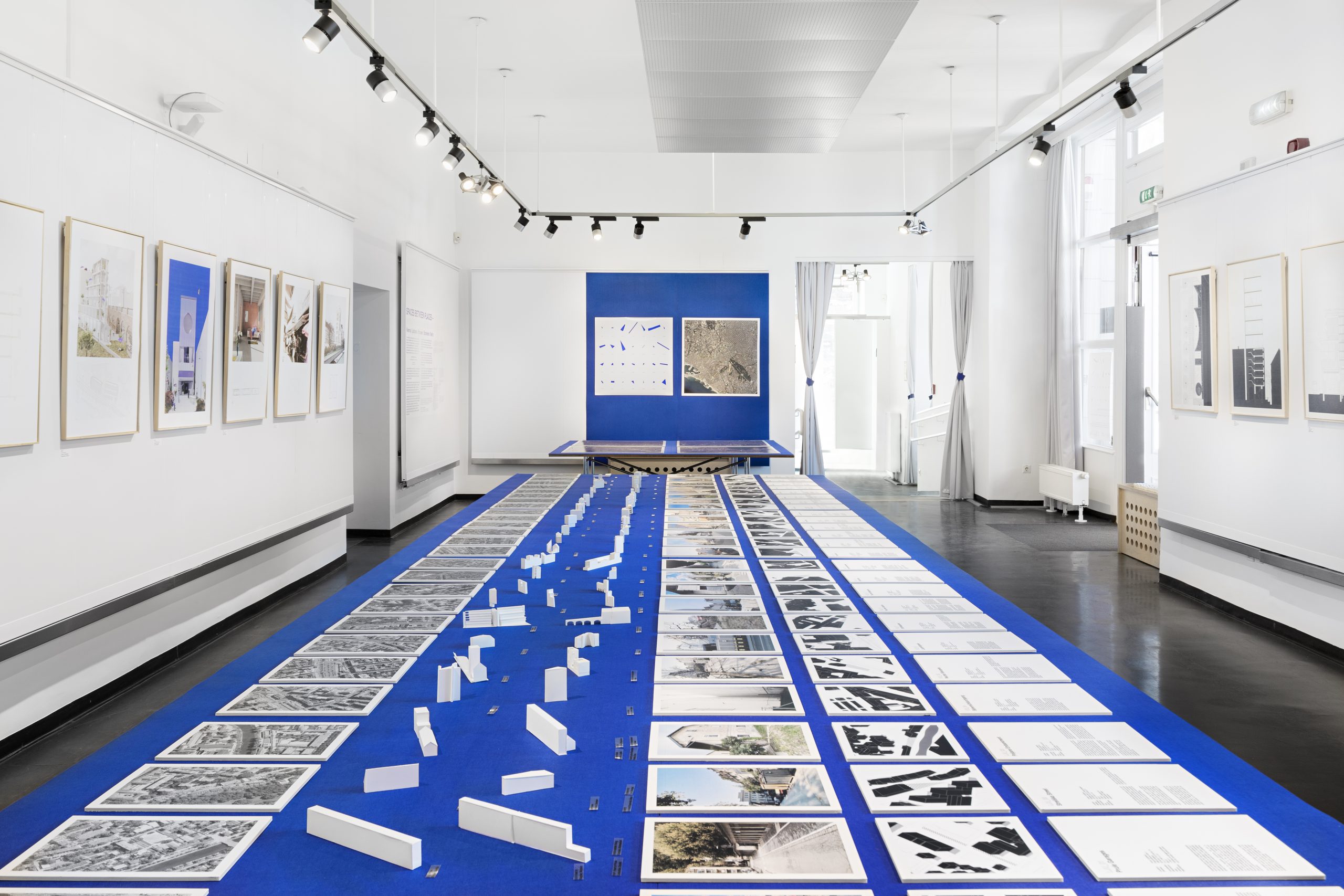
Odd Lots in five cities – Spaces between Places, exhibition & symposium, June 2024, Planungswerkstatt Wien. Copyright: Paul Sebesta 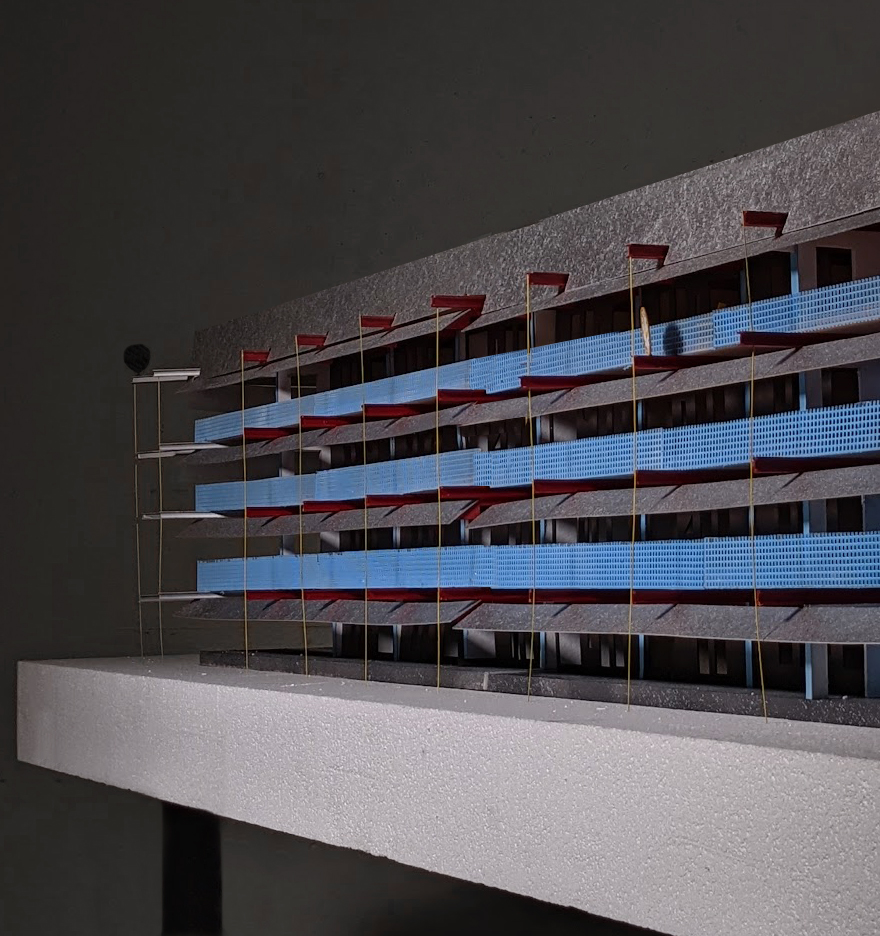
Odd Lots models – Spaces between Places, exhibition & symposium, June 2024, Planungswerkstatt Wien. Copyright: Paul Sebesta 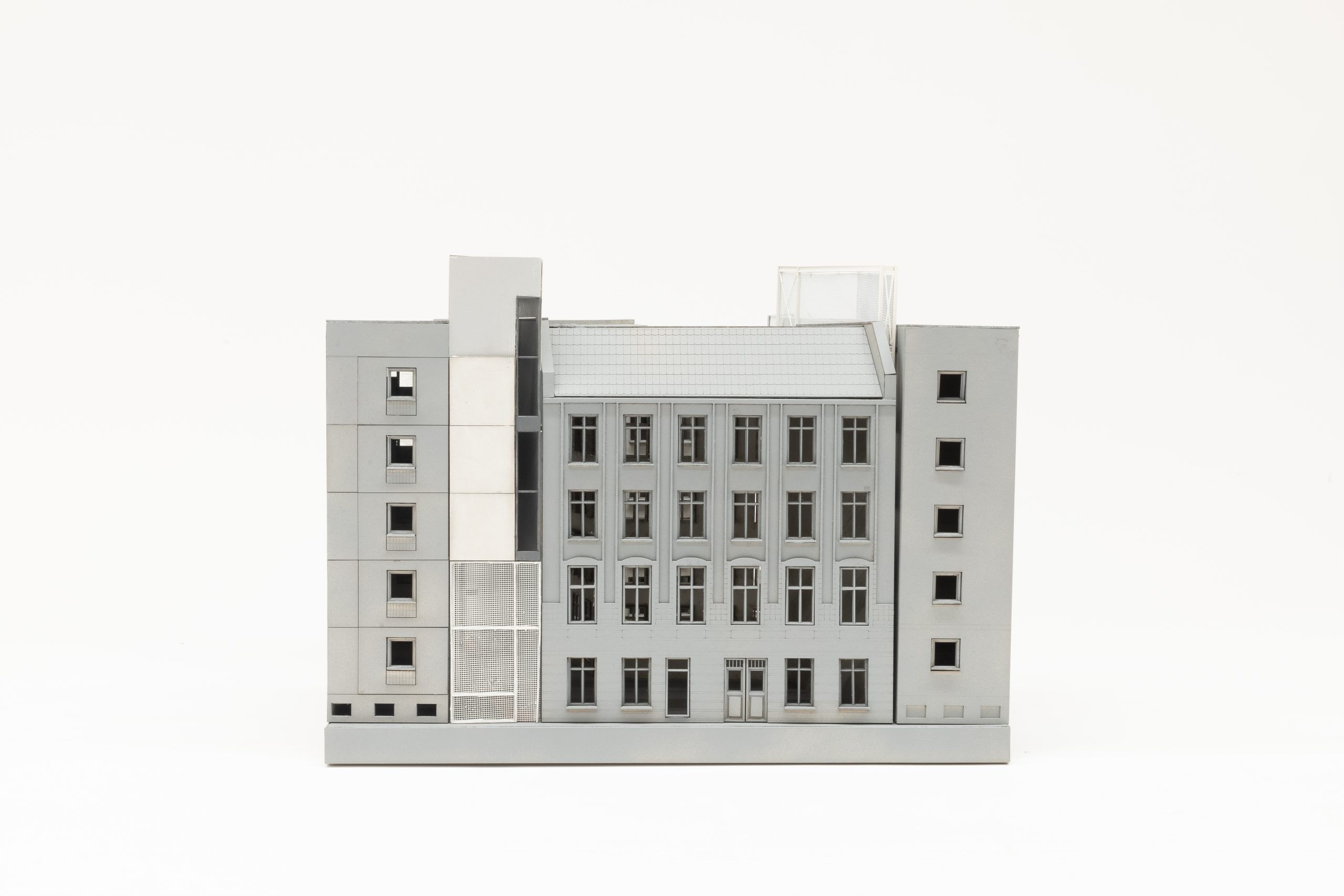
Facundo Ceretta and Mihály Sibinger: Linienstraße 196 ½ – Odd Lots: Vienna/Berlin. design studio 2023/24 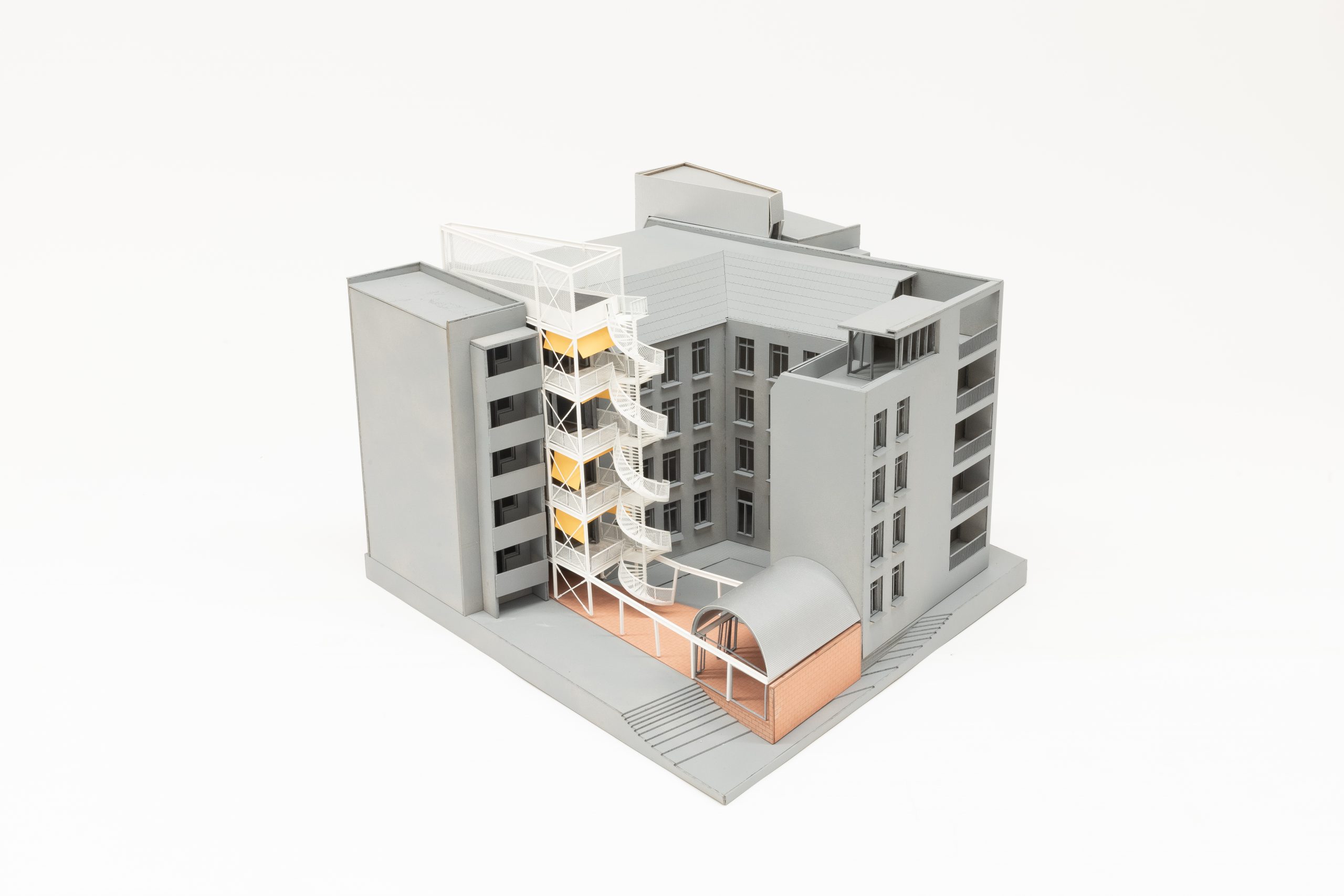
Facundo Ceretta and Mihály Sibinger: Linienstraße 196 ½ – Odd Lots: Vienna/Berlin. design studio 2023/24 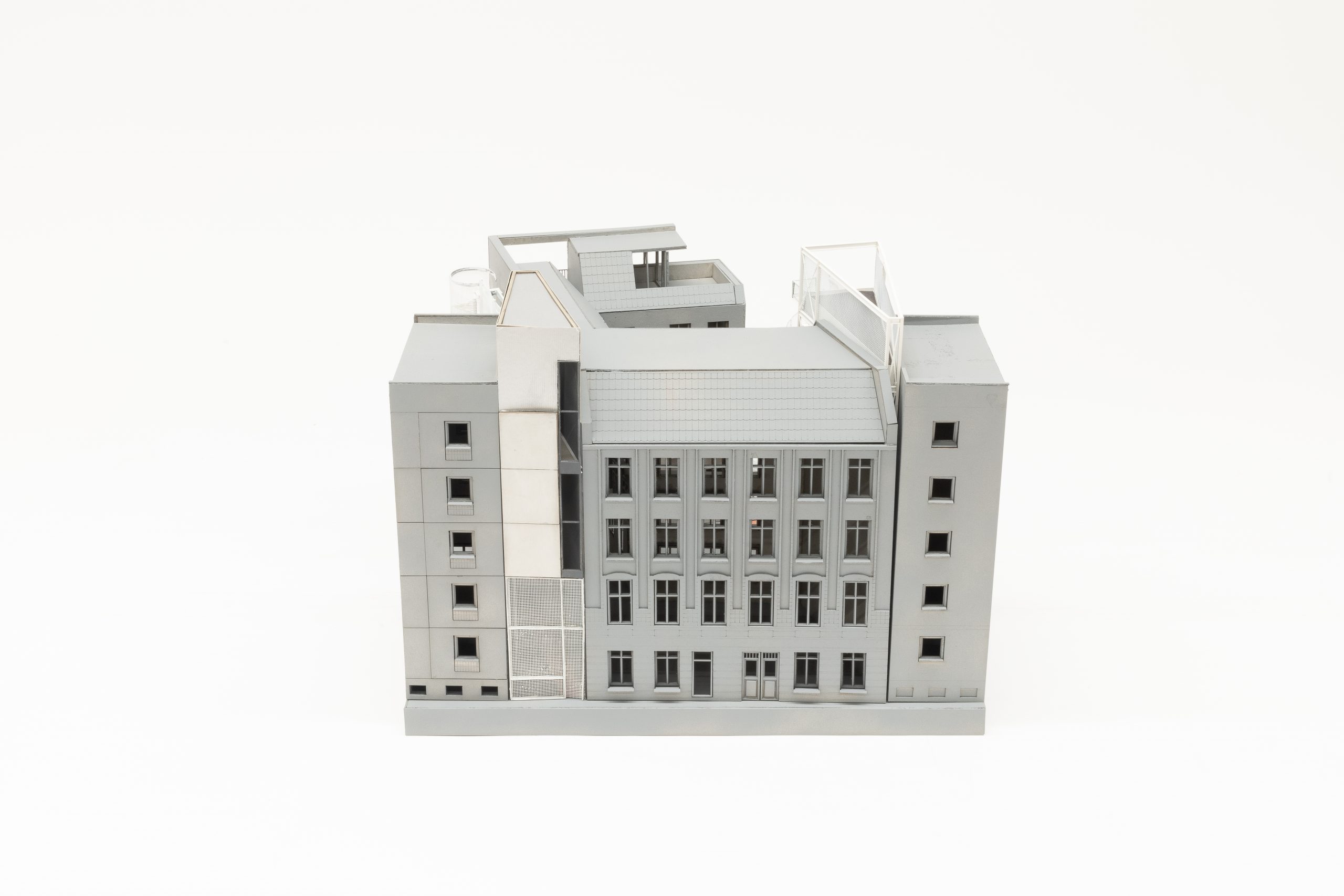
Facundo Ceretta and Mihály Sibinger: Linienstraße 196 ½ – Odd Lots: Vienna/Berlin. design studio 2023/24 -
Teaching from within: architecture as process and practice
Luigiemanuele Amabile in conversation with Thomas Padmanabhan.
In a context of multiple crises like the one we are experiencing, architecture has little room to shape public discourse. The contemporary design process – so complex and shaped by countless variables – makes the coexistence of teaching and professional practice one of the few viable ways to explore alternatives and envision possible futures. Thomas Padmanabhan, who collaborates in education with his partner in practice Oliver Lutjens, seeks to stimulate imagination, empowering students to construct a tangible world through architectural design. This highlights the critical role of bridging architecture schools and professional practice, fostering a collaborative approach that balances intuition and control, imagination and pragmatism – while embracing the diverse contributions the world offers architecture, and how architecture might meaningfully respond.
—
LA: How do you organise your design studio?
TP: No, we felt that the problem with the typical studio design is that you approach a project from the outside – and only very late in the process do you become fully immersed and begin to see the project from within. We wanted to invert that process: to create an “inside view” as early as possible and work from within quickly. We said: let’s put intuition at the beginning. Intuition takes you far. Then, as a second step, you analyse your own intuition. We believe intuition is powerful because it carries an inherent intelligence that helps you synthesize seemingly contradictory aspects of a project – say, the façade and the plan, or urbanism and form. When you do that, you get results. You get plans, you get models. Sometimes, in the second step, you need time to rationalize and understand why you did something – not necessarily to change it.
LA: Would you say that a great deal of intelligence and sensitivity is embedded in that initial intuitive act?
TP: Exactly. And in the second step, you slow down and analyse what you did – and draw it. We often insisted, for example, that students not treat their sketches as just diagrams. We told them, «It’s not a diagram, it’s the design». Sometimes we asked them to scan their sketch and redraw it because it contained far more information than they realized: proportions, relationships between parts, elements, even line weight – everything carried meaning. We kept revisiting that initial sketch many times during the process. It helps students dive into their project quickly and reduces the anxiety that creative people – students, professionals alike – often feel at the start. After three weeks, each student has a project. That’s comforting. Everything after that is just development. So they’re not left wondering, «Do I have something, or do I have nothing?».
LA: Through this approach, you’re also emphasising the importance of process.
TP: Yes, we deeply believe in process – doing many small steps, one at a time. The smaller the step, the clearer your thinking. It’s like in a scientific experiment: if you change just one variable, you can evaluate its impact. But if you change three things at once, you won’t know why the outcome is good or bad.
LA: It looks like you are pushing for artistic intuition at the beginning, but then applying a kind of control – almost scientific – later on?
TP: I wouldn’t even say scientific – more empirical. And also discursive. Because architecture is a public, communal art. When you bring subjective material into the studio, you’re placing it in a sort of small society – the studio – which stands for the larger society. Student peers will ask, «Why did you do this here?» or «Why that there». Suddenly, the project is understood as communal, not just individual. And showing that these two aspects – individual and communal – aren’t contradictory is crucial. We believe you can only do something good for others if it’s also good for you.
LA: At ETH Zurich, there has been an ongoing discussion about the relationship between architectural education and practice. What you’re describing seems to reflect that alignment. Could you elaborate on how you manage that relationship?
TP: For us, it comes naturally. Both in teaching and in practice, it’s a collaborative process. Initially, it was just Oliver Lutjens and me, but now we have a larger team. And for us, the project conversation is the heart of everything. We sit at the table and talk, work physically on the model, on the plan. We literally print plans and draw on them by hand – using white-out, pen, whatever. It’s not abstract sketching; it’s physical, tangible work. And when you work like that – on the artifact of the plan – anyone in the team can contribute. It’s not about the genius line or some individual vision. I can work on one corner, a colleague on another, and it all gets layered together and integrated back into CAD. What we try to teach – something we weren’t taught ourselves – is to take one step at a time. Whatever you know, draw it, build it, visualize it. Then look at it, reflect, and take the next step.
LA: That brings something else to mind. What are the key differences between how you were taught and how you approach teaching today? You’ve studied in several places and worked with major figures – how has that influenced your studio methodology?
TP: That’s a very interesting question. Oliver and I had quite different educations. He would probably speak about the influence of Hans Kollhoff, whose teaching had a huge impact on his understanding of process, seriousness, and precision. I studied in Aachen. At the time, the teaching was structured mostly around the profession, but lacked cultural depth. I felt that right from my first year. I was lucky to study with Jan Pieper, who brought a sense of anthropology to architectural history. His teaching opened up a world of meaning and possibility. But there was also a kind of nihilistic view of the profession in some of the rest of the curriculum. Later, I studied in Rome with Paolo Angeletti. He wasn’t a particularly prominent designer, but he was a deeply thoughtful figure – rooted in history but attuned to the present. Then at Cornell, where I did my master’s, I worked with Arthur Ovaska (Hans Kollhoff’s former partner), Simon Ungers, and Lee Hodgden – one of the last of the Texas Rangers. That environment was imaginatively rich. But I only saw the connection between cultural ambition and built work when I joined Diener & Diener. There, Roger Diener exemplified how serious and sensitive a creative search could be. Even though their buildings look confident and stable, the process was full of doubt and fragility. That was eye-opening for us.
LA: It’s fascinating how these diverse cultural and educational influences have shaped your approach. Would you say your practice operates on the same ethical foundation as your teaching? How do you maintain that alignment?
TP: I wouldn’t say we’re better than others, but we try. In our practice, we address issues like the cost of housing, urbanism, social responsibility. We’re also interested in the societal implications of architectural language. In teaching, we want to empower students. Of course, we also transmit values, but we want them to be confident and articulate. As practitioners, we learn to absorb many external demands. We believe in inclusive architecture – not exclusive. That means not purifying or distancing ourselves from life, but including everything. That inclusivity reflects what kind of society we want to live in. And it helps students become agile – not opportunistic, but flexible. We teach architecture as an affirmative profession, not a critical one. We want students to see every building as a contribution, not a commentary.
LA: Do you intentionally place more emphasis on affirmation and encouragement, even while recognising the necessity of making critical choices?
TP: Exactly. Design still requires tough decisions and hard work. But we think society today – especially in pluralistic democracies – is more open to diversity than our field is. So why shouldn’t architecture reflect that richness? We see it as a good thing.
LA: It seems you think that one of the most important aims of today’s design studio is to cultivate an attitude of engagement and the ability to navigate the complexities of architecture and time.
TP: I’d say we need more joy. The joy of moving through the world openly, working with what you’re given. Sure, in Switzerland we’re often privileged, but freedom as an architect isn’t given – it’s discovered. You find it in the cracks: a law changes, a site opens a possibility, a client makes room for something new. Anselm Stalder, a Swiss artist, speaks about deficit spaces. These are the gaps in a shifting world, spaces that open up, where new things can happen. In architecture, it’s the same. Program, budget, law – none of them are stable anymore. So you have to be curious and alert to find those openings.
LA: You’ve consistently worked as a visiting professor. Was this a conscious decision? How has that influenced your approach to education?
TP: We like teaching together, and permanent positions sometimes don’t allow that. But the experience has been incredibly enriching. Changing schools, cities, and meeting new people forces you to adapt your teaching. Every school has its strengths and weaknesses. For example, at TU Munich, students had a strong foundation in urbanism and the city – but that strength sometimes meant they avoided questioning things. So we had to push them. At Harvard GSD, the students were incredibly fast and talented, but there was no common base to build on. Still, we found the diversity enriching.
LA: Could it be that this visiting model actually supports the kind of teaching you value? Would the freedom and adaptability be harder to maintain in a permanent role?
TP: Exactly. The longer you teach, the more you need to structure and conceptualize your ideas. But with permanence, you also build shared knowledge with students and colleagues. At Harvard, we only taught every second semester, so there was little continuity. Maybe we’d have to theorize more if we were in one place full-time. But even then, we’d still want to keep the strong connection between our practice and our teaching.
LA: I believe that too. Thank you so much.
______________________________________________________________________________________________
Insegnare dall’interno: l’architettura come pratica e processo
Luigiemanuele Amabile in conversazione con Thomas Padmanabhan.
In un contesto di molteplici crisi come quello attuale, l’architettura dispone di spazi sempre più ristretti per riuscire a influenzare il dibattito pubblico. Il processo progettuale, oggi, reso complesso da una crescente quantità di variabili, fa della compresenza tra l’insegnamento del progetto di architettura e pratica professionale una delle poche condizioni attraverso cui esplorare alternative e immaginare futuri possibili. Thomas Padmanabhan, che si occupa di insegnamento insieme al co-fondatore del loro studio Lütjens Padmanabhan, Oliver Lütjens, crede che sollecitare l’immaginazione, mettendo gli studenti in condizione di avvicinarsi alla concretezza dell’architettura attraverso il progetto, si una postura necessari. Essa richiede una relazione ravvicinata tra scuola e professione, capace di sostenere un approccio collaborativo che tenga in equilibrio intuizione e controllo di plurimi aspetti, tra capacità d’immaginazione e pragmatismo, accogliendo la pluralità delle sollecitazioni che il mondo offre all’architettura e interrogando le modalità con cui essa può rispondere in modo significativo.
LA: Come organizzate i vostri laboratori di progettazione?
TP: Nella nostra esperienza, ci siamo resi conto che, nella forma consueta del laboratorio, il progetto viene affrontato dall’esterno e solo in una fase piuttosto avanzata si riesce davvero a entrarci e a vederlo dall’interno. Abbiamo cercato di invertire questa traiettoria, producendo il prima possibile una condizione di visione interna e lavorando a partire da essa. All’inizio poniamo sempre l’intuizione. L’intuizione ha una forza autonoma. L’analisi di quanto prodotto arriva in un secondo momento. Pensiamo che l’intuizione sia espressione di un’intelligenza incarnata che è in grado di tenere insieme aspetti anche contraddittori di un progetto, come, ad esempio, le facciate e la pianta, o l’impianto urbano e la configurazione volumetrica. In questo modo, il progetto prende forma: si tracciano piante, emergono modelli. Talvolta, nella fase di analisi, è necessario prendersi del tempo per capire il perché di una scelta, senza che questo implichi necessariamente la sua correzione.
LA: Diresti che in quell’atto intuitivo iniziale è già contenuta una grande quantità di intelligenza e sensibilità?
TP: Sì, nella fase analitica si rallenta per valutare ciò che è stato fatto ridisegnandolo. Abbiamo insistito molto, per esempio, sul fatto che gli schizzi non sono semplici diagrammi, ma un vero e proprio materiale di progetto. Talvolta abbiamo chiesto loro di scansionare e ricalcare i propri schizzi, perché contenevano molte più informazioni di quante se ne percepissero inizialmente: proporzioni, relazioni tra le parti e presenze formali. È possibile rintracciare un significato persino nella densità del tratto. Abbiamo fatto riferimento a quello schizzo più e più volte nel corso del processo. Questo ha permesso agli studenti di entrare rapidamente nel progetto e di ridurre l’ansia che spesso si prova nella fase iniziale. Dopo tre settimane, ognuno stava già lavorando a uno schema di progetto. Questo passaggio è rassicurante. Tutto ciò che segue è solo soggetto a sviluppo. Non si resta più nell’incertezza: «Ho qualcosa in mano oppure niente?».
LA: Attraverso questo metodo sembra che attribuiate un peso rilevante al processo.
TP: Assolutamente sì, diamo molta importanza al processo, inteso come una serie di piccoli passi. Più il passo è ridotto, più il pensiero risulta chiaro. È simile a ciò che accade in un esperimento: se si modifica una sola variabile, allora è possibile valutarne l’effetto; se se ne modificano tre contemporaneamente, non si riesce più a distinguire da quale di esse provenga il risultato.
LA: Da ciò che descrivete, sembra che in una prima fase incoraggiate l’intuizione, per poi applicare, in una seconda, un certo livello di controllo. È corretto?
TP: Non parlerei di un controllo, quanto piuttosto di un approccio empirico e, allo stesso tempo, discorsivo. L’architettura è un’arte pubblica e condivisa. Quando uno studente porta in aula un materiale soggettivo, lo introduce in una piccola comunità, rappresentata dal laboratorio di progettazione, che a sua volta rappresenta un campione della società su scala più ampia. Gli studenti degli altri corsi si fermano a chiedere: «Perché hai fatto così in questo punto?». In questo modo, il progetto si configura come qualcosa che appartiene alla collettività e non come uno sforzo esclusivamente individuale. È importante mostrare che queste due dimensioni non sono in contraddizione. Siamo convinti che sia possibile fare qualcosa di valido per gli altri solo se è valido anche per chi lo produce.
LA: All’ETH di Zurigo è in corso una discussione continua sul bilanciamento tra formazione e pratica professionale, tra ciò che si insegna e ciò che poi si fa effettivamente. Quello che descrivi sembra invece riflettere la compresenza delle due dimensioni. Come gestite il rapporto tra formazione e pratica professionale? Tra questi due mondi?
TP: Per noi si tratta di un atteggiamento che ci risulta naturale. Sia nell’insegnamento che nella pratica, lavoriamo attraverso un processo collaborativo. All’inizio eravamo solo io e Oliver, mentre ora abbiamo un gruppo più ampio. Il fulcro del nostro lavoro rimane sempre la conversazione sul progetto. Ci sediamo allo stesso tavolo e interveniamo direttamente sul modello e sulla pianta. Stampiamo le piante e le modifichiamo con bianchetto, penne e colori diversi. Non si tratta di uno schizzo astratto, ma di un lavoro concreto che ha delle ricadute reali. In questo modo, chiunque nel gruppo può contribuire. Non esiste il tratto geniale di un singolo individuo. Io posso lavorare su un angolo, un collega su un altro, e poi tutto si stratifica e si reintegra infine nel disegno digitale. Cerchiamo di trasmettere qualcosa che noi stessi non abbiamo ricevuto in forma esplicita: procedere un passo alla volta. Qualunque cosa si conosca, la si disegna, la si costruisce e la si rende visibile. Poi la si osserva, la si discute e si compie il passo successivo.
LA: Quali sono, a vostro avviso, le principali differenze tra la formazione che avete ricevuto e il modo in cui insegnate oggi? Avete studiato in contesti diversi e con docenti molto diversi tra loro. In che modo queste esperienze hanno influenzato il vostro metodo?
TP: In effetti, io e Oliver abbiamo ricevuto formazioni piuttosto diverse. Lui sicuramente farebbe riferimento all’influenza di Hans Kollhoff che ha inciso in modo significativo sulla sua comprensione del processo progettuale insegnandogli l’importanza della serietà e della precisione. Io, invece, ho studiato alla RWTH di Aquisgrana. All’epoca, l’insegnamento era orientato soprattutto alla professione, ma piuttosto povero dal punto di vista culturale. Me ne sono reso conto già dal primo anno. Ho però avuto la possibilità di seguire le lezioni di Jan Pieper, che ha riportato la storia dell’architettura a una prospettiva antropologica e ha aperto alla possibilità di attribuire un senso al progetto. Una parte del programma di studi, invece, sosteneva una visione più nichilista della professione. In seguito, ho studiato a Roma con Paolo Angeletti. Non era una figura particolarmente attiva nel dibattito disciplinare, ma era molto lucido, ben radicato nella storia e attento al presente. Poi, durante il master a Cornell, ho lavorato con Arthur Ovaska (che era stato socio di Kollhoff), con Simon Ungers e con Lee Hodgden, uno degli ultimi dei Texas Rangers. Lì il clima era molto aperto all’immaginazione. Tuttavia, ho compreso il legame tra ambizione culturale e costruzione solo quando sono entrato a far parte dello studio Diener&Diener. Roger Diener mi ha insegnato che la ricerca progettuale può essere rigorosa e sensibile allo stesso tempo. Anche se gli edifici apparivano molto equilibrati negli esiti, il processo progettuale era costellato di dubbi. Questo passaggio è stato decisivo per me.
LA: È interessante notare come queste influenze, complementari tra loro, abbiano contribuito a definire il vostro modo di lavorare. Si può affermare che lo studio e la didattica si basino sullo stesso impianto etico? In che modo riuscite a mantenere questa coerenza di intenti?
TP: Non direi che siamo migliori di altri, ma cerchiamo di assumerci le nostre responsabilità. Nella pratica, ci confrontiamo con questioni quali il costo dell’abitare, gli aspetti urbani e le caratteristiche sociali dell’architettura. Ci interessano anche le implicazioni linguistiche, ovvero il modo in cui le forme architettoniche contribuiscono alla costruzione del senso comune. Nella didattica, invece, cerchiamo di mettere gli studenti nelle condizioni di agire e di acquisire fiducia nel proprio lavoro. È evidente che proviamo a trasmettere dei valori, ma l’obiettivo è che questi possano essere elaborati in modo autonomo. Nella professione si impara ad assorbire molte sollecitazioni esterne e questo richiede elasticità. Cerchiamo un’architettura inclusiva, non esclusiva. Non ci interessa purificare o separare l’architettura dalla vita, ma lavorare con ciò che esiste. Questa impostazione, che accoglie la complessità, riguarda anche il tipo di società in cui desideriamo vivere. Siamo convinti che l’insegnamento debba sostenere queste prospettive, rendendo gli studenti più capaci di riconoscere gli spazi di possibilità, ma anche di non essere opportunisti. Insegniamo l’architettura come pratica affermativa, non come critica del mondo. Crediamo che ogni edificio sia un contributo, non un commento.
LA: Quindi, ponete intenzionalmente maggiore enfasi sull’affermazione e sull’incoraggiamento degli studenti, pur riconoscendo la necessità di compiere scelte critiche.
TP: Esattamente. Il progetto richiede comunque decisioni difficili e un lavoro rigoroso. Tuttavia, riteniamo che la società contemporanea, soprattutto nelle democrazie pluraliste, sia più aperta alla diversità rispetto al nostro ambito disciplinare. Perché l’architettura non dovrebbe riflettere questa ricchezza? Per noi è un valore.
LA: Dalle tue parole emerge la volontà di individuare, tra gli obiettivi principali dei vostri laboratori di progettazione, l’invito ad affrontare con coinvolgimento e accogliere con entusiasmo la complessità dell’architettura e del nostro tempo.
TP: Direi che abbiamo bisogno di più gioia. La gioia di affrontare il mondo con uno sguardo ampio e di lavorare con ciò che ci viene fornito. È vero, in Svizzera partiamo spesso da condizioni privilegiate, ma la libertà per un architetto non è qualcosa di scontato: va scoperta. La si trova negli interstizi, negli scarti, nei punti di flessione in cui una normativa cambia, in un sito che offre possibilità inedite o quando un committente lascia spazio a deviazioni non convenzionali. L’artista svizzero Anselm Stalder parla di spazi di deficit: varchi che si aprono in un mondo in movimento, in cui possono accadere cose nuove. In architettura accade lo stesso. Programmi, budget e normative: nulla è stabile in modo definitivo. Per riconoscerli, servono curiosità e attenzione.
LA: Avete spesso lavorato come professori a contratto in diverse scuole. È stata una scelta? In che modo questa condizione ha influenzato il vostro approccio alla didattica?
TP: Insegnare insieme ci appassiona, e le posizioni permanenti non sempre lo consentono. Queste esperienze sono state comunque molto formative. Cambiare scuola, città e contesti e incontrare persone diverse ci ha costretti ad adattare continuamente il nostro modo di insegnare. Ogni scuola ha i suoi punti di forza e i suoi limiti. Alla TU Munich, per esempio, gli studenti avevano una solida base sui temi della città e sull’urbanistica, ma proprio questa loro forza talvolta li portava a non mettere in discussione ciò che avevano già acquisito. Abbiamo dovuto spingerli oltre i loro limiti. Gli studenti di Harvard GSD, invece, erano molto rapidi e talentuosi, ma mancava una base comune da cui partire. Tuttavia, questa eterogeneità si è rivelata molto utile.
LA: Si può affermare che questo modello itinerante sostenga il vostro modello di insegnamento? Sarebbe più difficile mantenere questa libertà in un solo luogo?
TP: Probabilmente sì. Più a lungo si insegna nello stesso luogo, più si sente la necessità di strutturare e concettualizzare ciò che si fa. Allo stesso tempo, però, una posizione permanente permette di costruire un sapere condiviso con gli studenti e i colleghi. Ad Harvard, invece, insegnavamo solo a semestri alterni, quindi la continuità era limitata. Forse, se restassimo nello stesso posto a tempo pieno, potremmo dedicare più tempo agli aspetti teorici. In ogni caso, vorremmo mantenere un legame forte tra la pratica professionale e l’insegnamento.
______________________________________________________________________________________________
Luigiemanuele Amabile – Architect and PhD, research fellow of the project DT2 (UdR Università degli Studi di Napoli “Federico II”).
Thomas Padmanabhan – Architect at Lütjens Padmanabhan Architekt*innen.
Studio Lütjens Padmanabhan, Harvard University Graduate School Of Design, Geometry, Order, and Mannerism, Spring 2021, Alejandra Avalos Guerrero 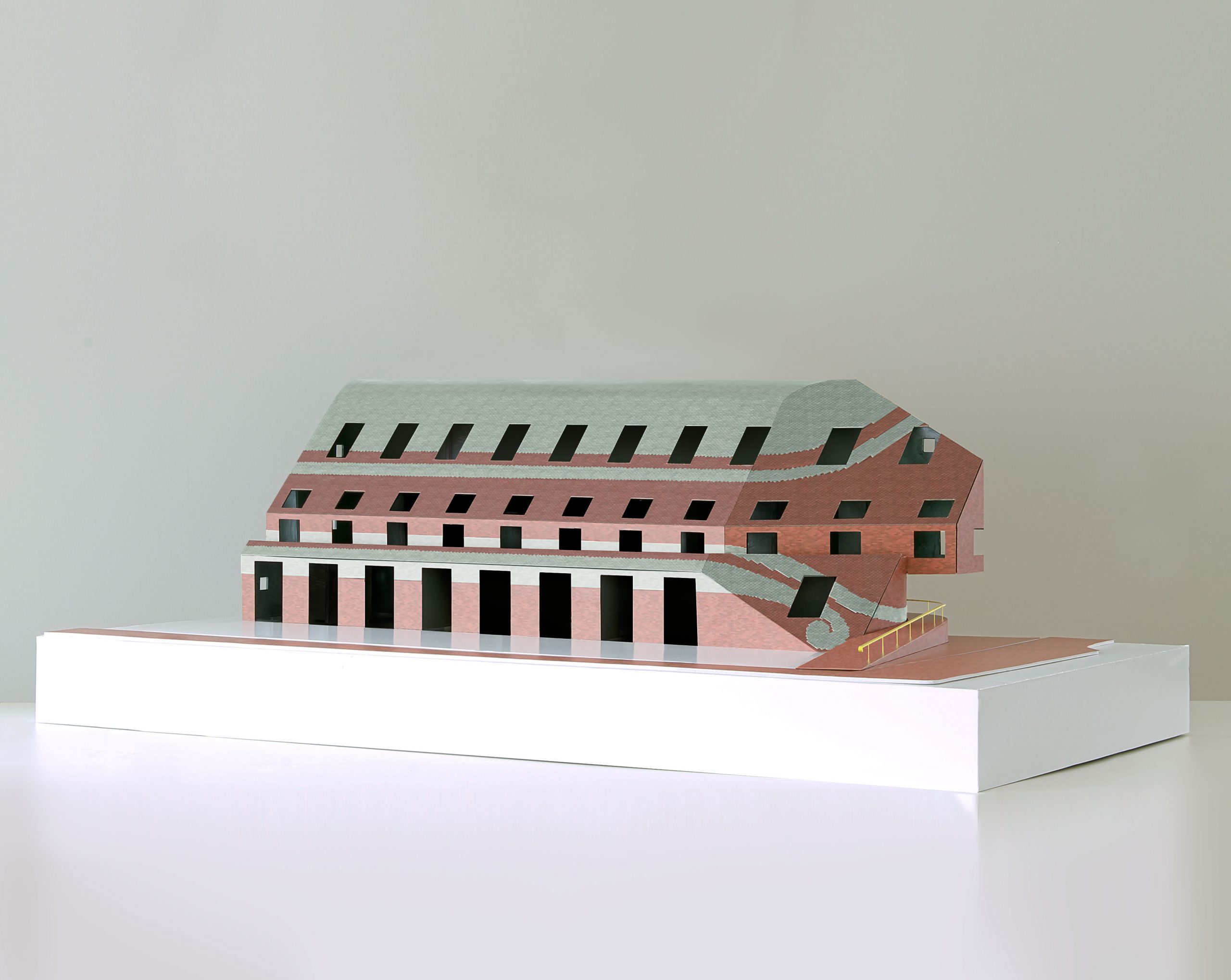
Studio Lütjens Padmanabhan, Harvard University Graduate School Of Design, Geometry, Order, and Mannerism, Spring 2021, Matt Catrow. Studio Lütjens Padmanabhan, Harvard University Graduate School Of Design, Utopia: Forms of Community, Spring 2022, Jonathan Levine. 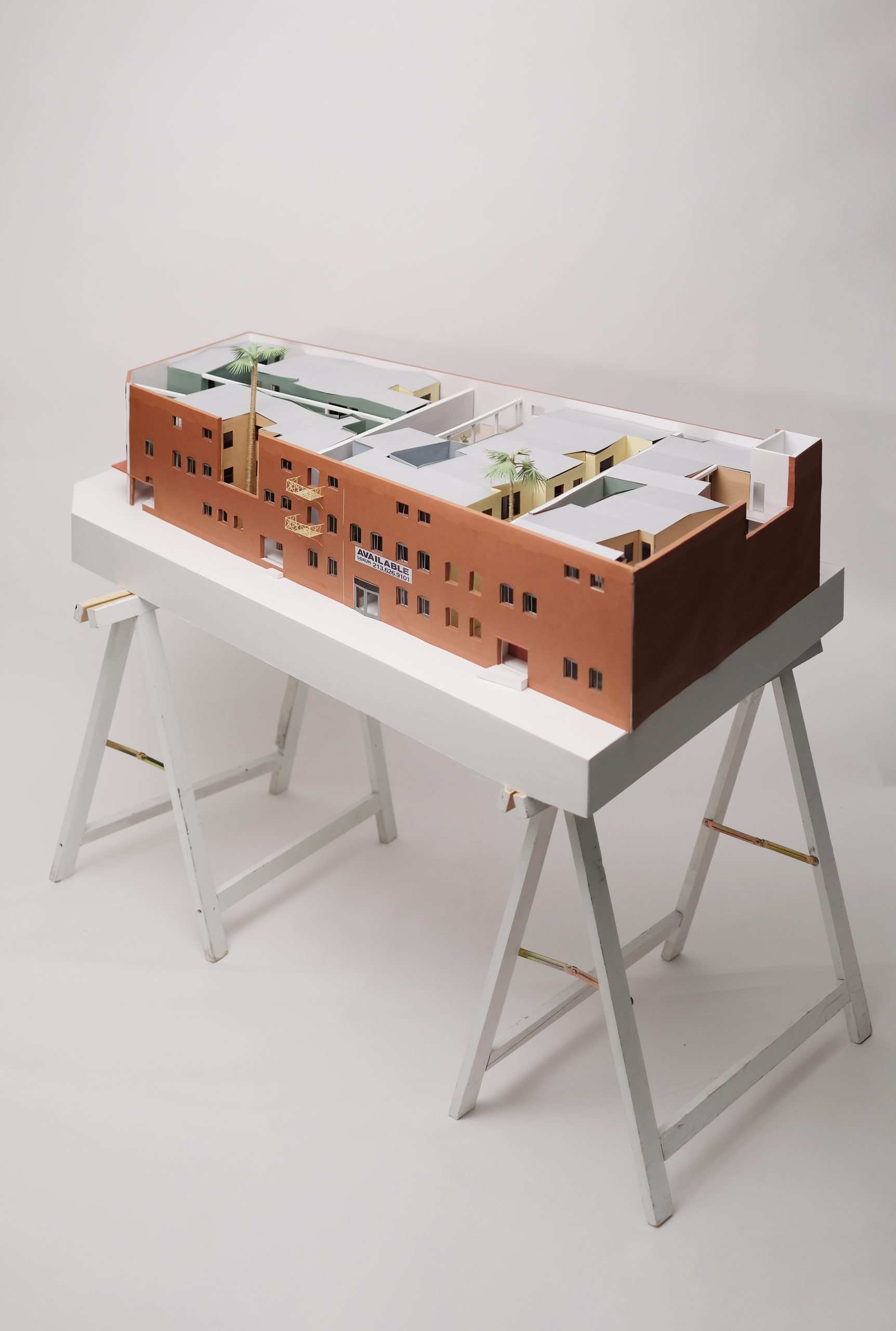
Studio Lütjens Padmanabhan, Harvard University Graduate School Of Design, Voices of Change, Spring 2023, Maggie Musante. 
Studio Lütjens Padmanabhan, Harvard University Graduate School Of Design, Voices of Change, Spring 2023, Isadora Panjaitan. -
Architecture as social-material practice
Luigiemanuele Amabile in conversation with Niall McLaughlin.
What distance, or what proximity, exists between the tangible conditions that architecture must address and the possibilities for speculation within a design studio? This question forms the basis of the interview with Níall McLaughlin, which explores the ways in which a project emerges at the intersection of materials, techniques, social expectations and imaginative possibilities. At the same time, it considers the relationship between professional practice, which is characterised by constraints, responsibilities and tight deadlines, and the academic studio, where one can broaden their perspective and explore hypotheses that have not yet found a place in everyday work. McLaughlin presents these two spheres as interdependent parts of a single formation process, in which technical precision and speculative openness coexist to contribute to the development of a project-based community.
LA: In your opinion, how should a contemporary architectural design studio be structured in terms of its work over an academic semester and its day-to-day practices? Which tools should it prioritise? In particular, I am curious to know whether physical models, hand-drawn sketches, digital renderings, immersive simulations, data-driven parametric analyses, or some combination of these, should predominate. Could you illustrate your stance by describing concrete routines within your own practice and teaching, noting how each chosen medium either reveals or conceals specific dimensions of architectural enquiry?
NM: I certainly would not restrict myself to any single medium. Whatever one is using at a given moment – whether making a model, drawing by hand or working digitally – is simply a window through which the proposal is observed. Each window reveals some things and screens others. The aim of the studio is to sustain a constructive, critical conversation with every student about which medium he or she is employing and what is expected from it, so that no-one slips into the lazy habit of supposing that one medium will always do the same job. What matters is to cultivate an informed understanding of what each tool can offer at that precise stage of the project. Contemporary students – and indeed colleagues in my office – gravitate toward digital platforms, yet even there we continually move in and out of different techniques, asking ourselves what we are seeking and which instrument will serve the investigation best. While recognising the advantages of screen-based representation, I press back and remind everyone of the haptic, corporeal character of design: the eye, the mind and the hand operate in a feedback loop, so that drawing – especially drawing together – is as bodily as it is mental. The critical attitude, not a dogmatic preference, must govern our engagement with whatever media are at hand.
LA: Building upon this premise and considering the accelerating temporal, economic and regulatory pressures shaping contemporary practice, I would like to examine the issue of pace and depth in studio work. To what extent should slower, more contemplative modes of production, such as extended material model-making, iterative hand-sketching, lengthy peer critiques and other forms of deliberate reflection, be preserved and protected within the academic studio environment? Or should architectural pedagogy embrace the brisker tempo and data-rich workflows imposed by twenty-first-century professional life, thereby preparing students to work fluently within the constraints and deadlines they will face after graduation?
NM: One must reject the cliché that digital media inhibit reflection whereas analogue media guarantee it. Reflection depends on how we use a medium, not on the medium itself. In our office we move constantly between media but always in response to the question: “What are we trying to discover right now?”. The same conversation underpins our teaching. It is true that commercial, legal and temporal pressures leave little space for speculation in practice, which is why an office has to carve out such space deliberately. Designing together, for me, is a way of establishing a small society within the practice – a collegiate culture in which each member feels an intellectual, emotional and creative responsibility toward the others. We draw together in order to think, work and create together, thereby building the community our projects require. One cannot expect those benefits to arise passively; they must be planned for – just as one should model the relationship between education and practice so that each continually reinforces the other, rather than allowing an unhealthy separation to develop between “idealistic” education and “compromised” practice. Students begin being architects in the first year, and practising architects should continue educating themselves throughout their careers.
LA: Your remarks naturally invite a closer examination of the relationship between academic speculation and professional constraints. In light of the competing pedagogical philosophies – some of which advocate rigorous immersion in the pragmatic realities of legislation, budgeting, construction feasibility, and site-specificity, while others champion unbridled conceptual exploration – how far should the material exigencies of architecture, in your judgment, permeate the university studio? Conversely, to what extent should academic settings protect students from immediate economic or regulatory pressures, thus allowing for speculative freedoms that could subsequently enter practice as innovative paradigms?
NM: Posing the issue as though “reality” leaks into an otherwise sealed vessel – the studio – is itself misleading. The studio is already a form of reality, albeit one that ought to be examined critically for the ways in which it resembles and differs from other realities. In both education and practice an architect is continually required to acquire new skills, assimilate new knowledge and think flexibly and speculatively about new ways of operating, all the while remaining grounded in architecture’s vocation as a social-material practice. The unfortunate division that has arisen over the past half-century – whereby architectural education in universities is often recast as a branch of the humanities – obscures that vocation. I am not opposed to educating architects within universities, but I oppose the uncritical adoption of an academic template that fails to recognise architecture’s particular modes of teaching and learning.
LA: Even accepting that critique, might one nonetheless posit that the university studio affords a distinctive formation of freedoms – temporal, conceptual, ethical – less readily available within commercial practice? Or does your model of continuous dialogue between education and practice render such a dichotomy obsolete, implying that both realms should be understood instead as mutually corrective and mutually enriching arenas within a single lifelong process of architectural formation?
NM: In my model of continuity every stage of an architect’s life, whether as student or practitioner, offers distinct freedoms and imposes distinct obligations. The idea that university life is pure freedom and professional life pure obligation is a deeply unhealthy misconception. Education should produce work that challenges professional norms and values while simultaneously engaging with the realities that practitioners confront daily. I am equally critical of the notion that graduates should be “oven-ready” for practice and of the converse tendency for academia to alienate itself from practice; both extremes are counter-productive. Skills and values are interdependent – indeed inseparable – and both must be cultivated throughout one’s career.
LA: A recurring theme in your previous answers is the idea of the studio as a small, cooperative society, where drawing serves as both a cognitive tool and a social bond. Could you elaborate on how individual authorship is balanced against collective endeavour within that society, with reference to specific pedagogical exercises you have devised? In other words, how do you reconcile each student’s freedom to chart a unique intellectual and creative path with the need to participate empathetically, and even critically, in collaborative design?
NM: Throughout my teaching career I have set collective projects whose primary purpose is to teach students to rely on one another. We may work with cohorts of sixteen or eighteen students; the opening exercise obliges them to communicate and depend upon one another, and if, at a certain point, they begin teaching each other, I half-jokingly say that I could sit back and smoke a cigar, because the enterprise has achieved its goal of mutual education. One such project, Drawing Together, developed with Yeoryia Manoloupoulou, with whom I taught Unit 17 at the Bartlett School of Architecture at University College London between 1999 and 2019, is documented in Jonathan Hill’s Designs on History: The Architect as a Physical Historian. In that workshop we walked an island every day and drew together every evening in an open, collaborative process; the experience rewired how the students perceived one another. Within any studio cohort every student is seeking an individual voice yet does so in the company of friends, colleagues, critics and competitors, with teachers conducting the ensemble. Ideally the hierarchy evolves into an ecosystem in which roles differ, but no-one is deprived of agency – rather like musicians improvising together. That, for me, is a good teaching studio.
LA: Within this ecosystem, the question arises as to whether it is more important to transmit concrete skills (drawing, model making, structural reasoning, specification writing) or to instil broader dispositions – critical curiosity, ethical judgement, collaborative empathy – towards architectural problems.
NM: I resist separating the two. As one acquires skills one simultaneously acquires values; to uphold those values with genuine integrity one must possess the requisite skills. I am particularly concerned with the architect’s authority within the construction process, for it is part of the architect’s duty to bind the project team together. Builders can read drawings like X-rays: they see what you know and what you do not. A good construction drawing tells them not only how the building will look but how it will be made and what problems might arise during assembly. If those matters have been thought through, the builder feels in safe hands. Such integrated skills ought to be taught to every architect, yet they are too often neglected.
______________________________________________________________________________________________
L’architettura come pratica sociale-materiale
Luigiemanuele Amabile in conversazione con Niall McLaughlin.
Quale distanza, o quale prossimità, esiste tra la concretezza delle condizioni di realtà che l’architettura si trova ad affrontare e la speculazione che può svilupparsi all’interno di un laboratorio? L’intervista a Níall McLaughlin prende forma attorno a questo interrogativo, seguendo il modo in cui il progetto si costruisce nell’incontro tra materiali, tecniche, aspettative sociali e possibilità immaginative. In parallelo emerge il rapporto fra la pratica professionale, segnata da vincoli, responsabilità e tempi serrati, e il laboratorio di progettazione, dove lo sguardo può dilatarsi e mettere alla prova ipotesi che ancora non trovano posto nel lavoro quotidiano. McLaughlin descrive questi due ambiti come parti interdipendenti di una stessa formazione, in cui precisione tecnica e apertura speculativa convivono e contribuiscono insieme alla costruzione di una comunità di progetto.
LA: In che modo dovrebbe essere strutturato oggi un laboratorio di progettazione? Qual è il rapporto tra l’organizzazione del lavoro lungo il semestre e le pratiche quotidiane che ne definiscono il funzionamento? Che strumenti utilizzare, e quali far prevalere tra modelli fisici, schizzi a mano, render digitali, simulazioni, analisi parametriche? E come questi, all’interno delle routine consolidate della tua pratica professionale e della tua attività didattica hanno rivelato, oppure occultato, dimensioni specifiche dell’investigazione architettonica?
NM: Nella mia pratica didattica e professionale non mi sono mai limitato a un solo medium, perché qualunque strumento utilizzato in uno specifico momento – che si tratti di un modello, di un disegno a mano o di un prodotto digitale – costituisce, in ogni caso, una finestra attraverso cui osserviamo la proposta di progetto. Una finestra che mette in luce alcuni aspetti ma che ne oscura inevitabilmente altri. Il punto essenziale del lavoro lungo il semestre laboratoriale consiste nel mantenere con ogni studente una conversazione critica, costruttiva, attraverso gli strumenti utilizzati e sulle aspettative che essi portano con sé, in modo da evitare che si formi l’illusione per cui si crede che uno stesso strumento assuma, ogni volta, la stessa funzione conoscitiva. Ciò che conta davvero è sviluppare una comprensione informata e consapevole di ciò che i mezzi disponibili all’architetto possono offrire rispetto alle specifiche fasi del progetto. Gli studenti più giovani, come del resto anche i miei colleghi, tendono naturalmente a preferire gli strumenti di produzione digitale. Ma anche in quegli ambienti ci muoviamo continuamente tra tecniche diverse, interrogandoci sugli obiettivi della nostra ricerca e su quale strumento possa sostenere al meglio l’indagine. Pur riconoscendo i vantaggi della rappresentazione su schermo, insisto spesso nel richiamare l’attenzione sul carattere aptico e corporeo del progetto di architettura, perché l’occhio, la mente e la mano operano sempre insieme in un circuito di reciproca influenza. Il disegno, soprattutto quando viene svolto collettivamente, è un’azione che opera sul piano sia fisico che mentale, e questa dimensione non può essere trascurata. È dunque una postura critica, e non una preferenza dogmatica per un particolare strumenti, a guidare il nostro rapporto con gli strumenti che abbiamo a disposizione.
LA: Considerate le pressioni economiche e normative e le continue emergenze che caratterizzano la pratica professionale odierna, fino a che punto è opportuno mantenere e tutelare all’interno del laboratorio universitario modalità di lavoro più lente e riflessive? Ad esempio, la costruzione di modelli, lo schizzo, le revisioni collettive e altre forme di riflessione e discussione? Oppure la didattica dell’architettura dovrebbe adeguarsi al ritmo più serrato e ai flussi di lavoro imposti dalla professione contemporanea, preparando gli studenti ad affrontare con naturalezza i vincoli e le restrizioni che incontreranno dopo la laurea?
NM: A mio avviso, è necessario respingere l’idea secondo cui gli strumenti digitali ostacolerebbero la riflessione, mentre quelli analogici la favorirebbero. La riflessione, infatti, non dipende dallo strumento in sé, ma dal modo in cui lo si utilizza. Nel mio ufficio passiamo continuamente da uno strumento all’altro e la scelta dipende sempre dalla domanda che ci poniamo in quel momento, ovvero da ciò che stiamo cercando di scoprire e capire. La stessa impostazione guida il mio modo di insegnare. È vero che le pressioni commerciali, normative ed emergenziali della pratica professionale riducono lo spazio per la speculazione, ed è proprio per questo che un ufficio deve ritagliarsi intenzionalmente tale spazio. Per me, progettare insieme significa costruire, all’interno della pratica professionale, una piccola società, una cultura collegiale in cui ciascuno si sente responsabile, dal punto di vista intellettuale, emotivo e creativo, nei confronti degli altri membri del gruppo. Disegnare insieme significa pensare insieme, lavorare insieme e creare insieme, dando forma alla comunità che ogni progetto richiede. Nulla di tutto ciò accade spontaneamente: questo processo va progettato con attenzione, così come va progettata la relazione tra insegnamento e pratica professionale, affinché si rafforzino a vicenda. È dannoso alimentare una frattura tra una formazione percepita come idealistica e una pratica percepita come compromessa. Gli studenti iniziano a essere architetti già dal primo anno e gli architetti praticanti devono continuare a formarsi per tutta la vita professionale.
LA: Restiamo sul rapporto tra speculazione accademica e vincoli derivanti dalla realtà. Alla luce delle molteplici modalità con cui si insegna il progetto, notiamo che alcune sono orientate a un’immersione rigorosa nelle realtà pragmatiche della legislazione, dei budget, della fattibilità costruttiva e della specificità dei siti, mentre altre sono rivolte a un’esplorazione concettuale più libera. Secondo te, fino a che punto le esigenze concrete dell’architettura dovrebbero permeare il laboratorio di progettazione? Inoltre, in che misura l’ambiente accademico dovrebbe proteggere gli studenti dalle pressioni economiche e normative immediate, consentendo forme di speculazione che potrebbero poi entrare a far parte della pratica professionale sotto forma di paradigmi innovativi?
NM: Formulare la questione come se la “realtà” filtrasse dentro un contenitore altrimenti sigillato, il laboratorio, è già fuorviante. Il laboratorio è infatti una forma di realtà che richiede però di essere esaminata criticamente per capire in che modo assomigli o differisca da altre realtà. Nella formazione e nella pratica, un architetto è continuamente chiamato ad acquisire nuove competenze, ad assimilare nuovi saperi e a pensare in modo flessibile e speculativo su possibili nuove modalità operative, rimanendo però ancorato alla vocazione dell’architettura come pratica sociale e con ricadute materiali. La divisione che si è prodotta negli ultimi cinquant’anni, piuttosto infelice, per cui l’educazione architettonica nelle università è stata spesso ripensata come una branca delle discipline umanistiche, oscura questa sua natura. Non sono contrario alla formazione degli architetti all’interno delle università, ma mi oppongo all’adozione acritica di un modello accademico che non riconosce le modalità di insegnamento e apprendimento proprie dell’architettura.
LA: Ammessi i limiti imposti dalla distinzione che hai appena criticato, si può comunque sostenere che il laboratorio di progettazione offra un insieme di libertà – temporali, concettuali ed etiche – difficilmente reperibili nella pratica professionale? Oppure il modello di continuità che proponi tra formazione ed esercizio rende irrilevante questa dicotomia, suggerendo che entrambi gli ambiti debbano essere intesi come spazi reciprocamente correttivi e complementari all’interno di un unico percorso formativo che accompagna l’architetto per tutta la vita?
NM: Nel modello di continuità che ho descritto, ogni fase della vita di un architetto, sia da studente che da professionista, offre libertà specifiche e impone obblighi specifici. L’idea che la vita universitaria sia associata esclusivamente alla libertà e quella professionale esclusivamente all’obbligo è un fraintendimento dannoso. La formazione dovrebbe produrre lavori capaci di mettere in discussione norme e valori professionali, ma anche di confrontarsi con le realtà che i progettisti affrontano quotidianamente. Sono critico sia verso l’idea che i laureati debbano essere immediatamente “pronti all’uso” nel mondo del lavoro, sia verso la tendenza opposta dell’accademia a isolarsi dalla pratica professionale, perché entrambi gli estremi sono controproducenti. Competenze e valori sono interdipendenti e, anzi, inseparabili, e devono essere coltivati lungo l’intero arco della carriera.
LA: Nelle tue risposte ricorre l’idea del laboratorio come una comunità in vitro, in cui il progetto funziona sia come strumento cognitivo sia come legame sociale. In questo contesto, come si bilancia l’autorialità individuale con l’impegno collettivo? Come hai sperimentato questa tensione negli esercizi di progetto? Pensi sia possibile conciliare la libertà di ciascuno di seguire un proprio percorso intellettuale e creativo con la necessità di partecipare in modo empatico e critico a un processo di progettazione condiviso?
NM: Nel corso della mia attività didattica, ho spesso proposto progetti collettivi pensati per insegnare agli studenti a fare affidamento gli uni sugli altri. Quando lavoro con gruppi di sedici o diciotto studenti, l’esercizio iniziale li costringe a comunicare e a dipendere gli uni dagli altri. Spesso, iniziano a darsi lezioni a vicenda e io scherzosamente dico che potrei sedermi e fumare un sigaro, perché l’obiettivo dell’impresa, ovvero l’educazione reciproca, è stato raggiunto. Un esempio è il progetto Drawing Together, sviluppato con Yeoryia Manoloupoulou e presentato nel volume di Jonathan Hill, Designs on History: The Architect as a Physical Historian, in cui ho insegnato la Unit 17 alla Bartlett School of Architecture dell’University College London dal 1999 al 2019. In quel workshop, abbiamo esplorato un’isola diversa ogni giorno e abbiamo disegnato insieme ogni sera, in un processo aperto e collaborativo che ha trasformato il modo in cui gli studenti percepivano gli altri membri del gruppo. In ogni coorte del laboratorio, ogni studente cerca la propria autonomia espressiva, ma lo fa sempre in compagnia di amici, colleghi, critici e concorrenti, con i docenti che guidano il processo. L’assetto ideale è un ecosistema in cui i ruoli sono diversi, ma nessuno è privato della propria agency, in una dinamica simile a quella dei musicisti che improvvisano insieme. Per me, questo è ciò che definisce un buon laboratorio di progettazione.
LA: All’interno di questo ecosistema, emerge la questione del rapporto tra competenze concrete, come il disegno, la costruzione e le competenze strutturali, e disposizioni più ampie quali la curiosità, il giudizio etico e l’empatia collaborativa nell’affrontare i problemi dell’architettura. Qual è il loro equilibrio ideale nella formazione? NM: Preferisco non separare questi due ambiti. Acquisendo competenze, si acquisiscono simultaneamente anche valori e, per sostenerli con autentica integrità, è necessario possedere le competenze che li rendono operativi. Mi interessa in particolare che gli studenti sviluppino l’autorevolezza che l’architetto deve possedere nel processo costruttivo, perché è suo compito tenere insieme la squadra di progetto. Gli esecutori leggono i disegni come se fossero delle radiografie: vedono ciò che sai e ciò che non sai. Un buon disegno costruttivo non solo comunica l’aspetto finale dell’edificio, ma anche il processo di costruzione e i possibili problemi che potrebbero verificarsi durante il montaggio. Se queste questioni sono state affrontate e comprese, chi costruisce si sente in buone mani. Competenze di questo tipo dovrebbero essere insegnate a ogni architetto, eppure sono troppo spesso trascurate.
______________________________________________________________________________________________
Luigiemanuele Amabile – Architect and PhD, research fellow of the project DT2 (UdR Università degli Studi di Napoli “Federico II”).
Niall McLaughlin – founder of Níall McLaughlin Architects and Professor of Architectural Practice at the Bartlett School of Architecture, University College London.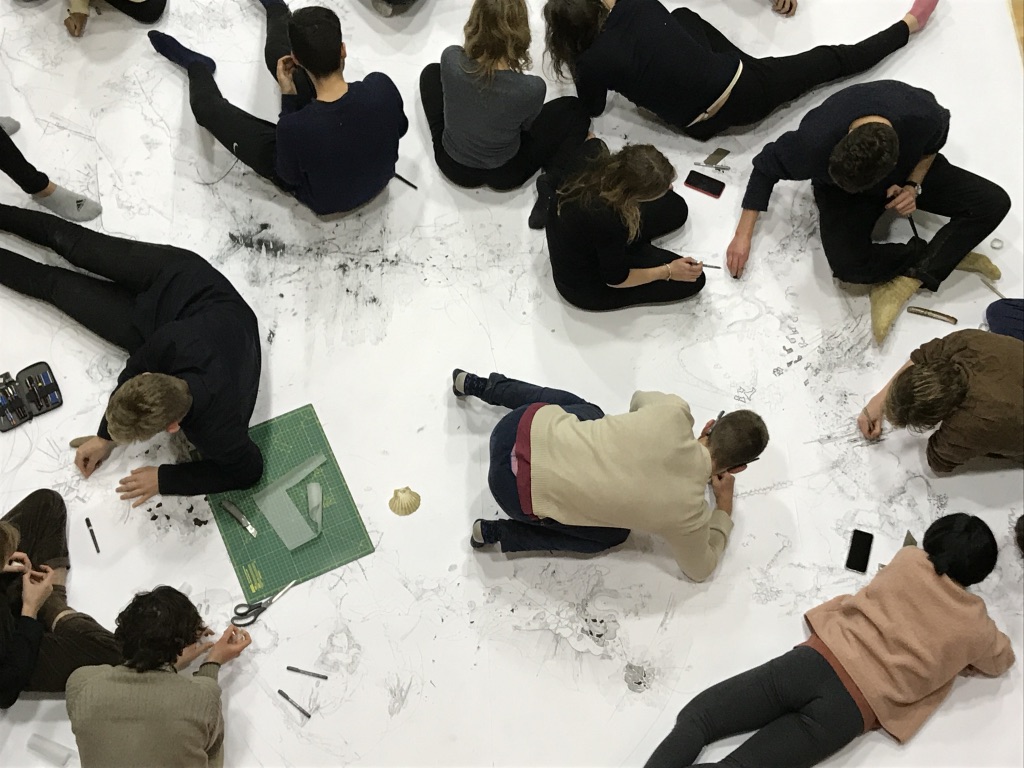
Niall McLaughlin and Yeoryia Manoloupoulou, Unit 17, Bartlett School of Architecture at University College London, 2018, Drawing Together at Orkney 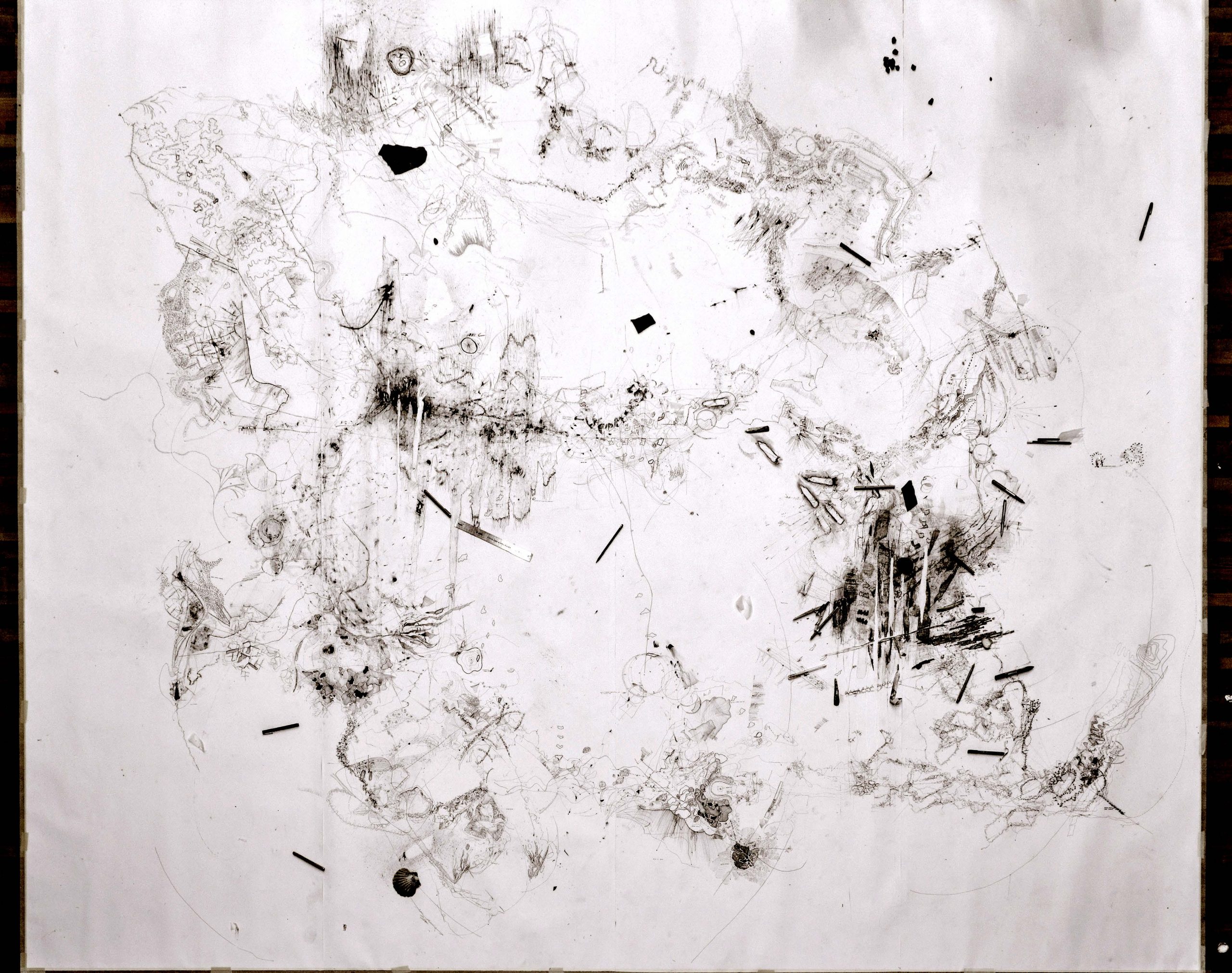
Niall McLaughlin and Yeoryia Manoloupoulou, Unit 17, Bartlett School of Architecture at University College London, 2018, Drawing Together at Orkney 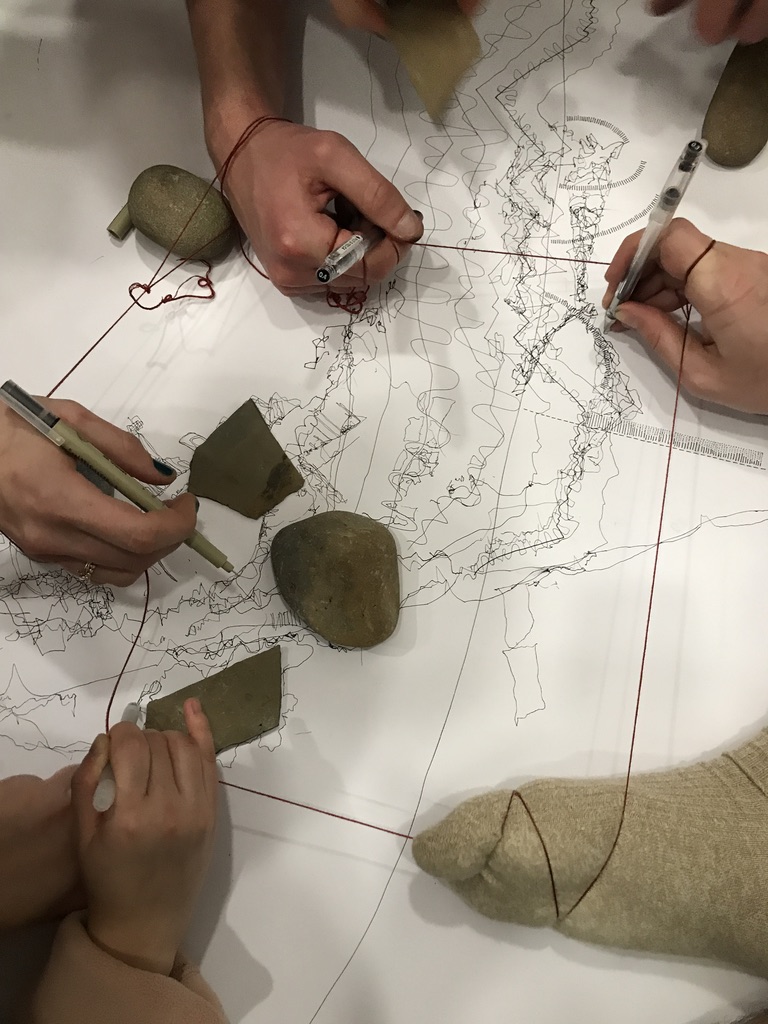
Niall McLaughlin and Yeoryia Manoloupoulou, Unit 17, Bartlett School of Architecture at University College London, 2018, Drawing Together at Orkney 
Niall McLaughlin and Yeoryia Manoloupoulou, Unit 17, Bartlett School of Architecture at University College London, 2018, Drawing Together at Orkney Niall McLaughlin and Yeoryia Manoloupoulou, Unit 17, Bartlett School of Architecture at University College London, 2018, Drawing Together at Orkney 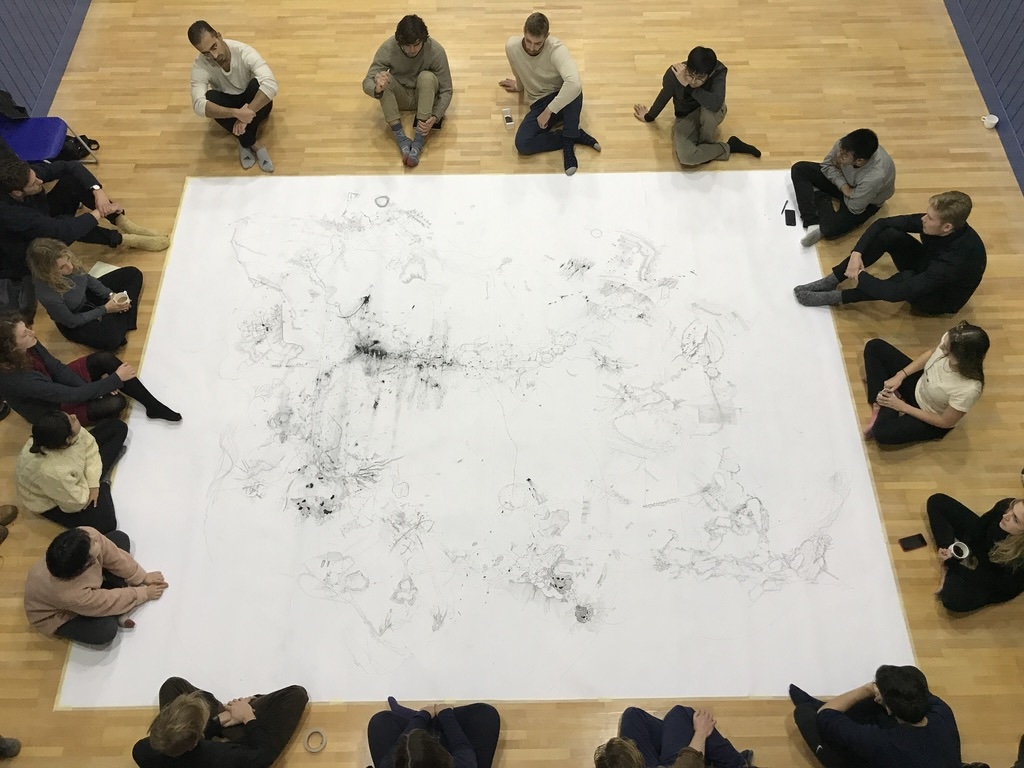
Niall McLaughlin and Yeoryia Manoloupoulou, Unit 17, Bartlett School of Architecture at University College London, 2018, Drawing Together at Orkney -
Rigor and synthesis
Luigiemanuele Amabile in conversation with Nuno Valentim Lopes.
The interview with Nuno Valentim Lopes outlines a pedagogical position grounded in rigour, continuity, and synthesis, framing the FAUP in Porto as a school where architectural education is built around collective work and a strong foundational formation. The design studio emerges as a shared framework integrating design, drawing, history, and construction. This fosters student autonomy through sustained dialogue with teachers and disciplines, rather than through early specialisation. Contemporary issues such as climate, housing, and built heritage are addressed within this generalist framework, reinforcing an understanding of architecture as a practice that can encompass complexity, responsibility, and project thinking.
LA: What do you think makes FAUP in Porto unique compared to other European schools you’ve been in contact with?
NV: I believe that FAUP is one of the last strongholds of the Beaux-Arts approach to education in contemporary Europe. Rather than focusing on individual figures, our teaching is centred around collectivity. There are no design studios tied to specific professors; instead, all students in the same year work on the same theme. Students use hand-drawing techniques and are not permitted to use computers until their third year. Some might call this approach outdated, but I believe it ensures a certain quality by shaping well-rounded architects who are capable of tackling diverse tasks with an autonomous design vision. The course structure follows well-defined pedagogical trajectories – design, drawing, history, theory and construction – ensuring methodological rigour. If there’s one aspect I’d improve, it would be to deepen the focus on existing built heritage. Following university reforms, attention to these themes has diminished, making way for a more condensed curriculum. I believe it would be beneficial to reintroduce modules on reuse and historical heritage management during the first three years without making them isolated, specialised courses. In answer to your question, if I had to pinpoint FAUP’s distinctive trait, I would say it is the classical training of the architect as author. You might wonder if there are still studios tied to renowned architects today; they have almost entirely disappeared. However, this doesn’t mean that this kind of foundational training isn’t valuable in any field. Architects are masters of generality, not specialists, and their strength lies in solid design training. Design, as we know, is synonymous with synthesis.
LA: How does your school position itself in relation to contemporary issues such as the climate and housing crises?
NV: Five years of education isn’t enough time to cover all topics in depth. One of the main challenges is selecting which themes to address. In my opinion, sustainability and the climate crisis should be integrated into existing courses such as Design and Construction rather than creating specialised courses that chase every new trend or urgency. I’d prefer these topics to be treated as specific aspects of broader subjects rather than becoming isolated specialisations. This is an important distinction. We’re not engineers; we don’t train narrowly focused technicians. When it comes to built heritage, for example, specialists often produce questionable results precisely because they lack an articulated, comprehensive vision of design. This is why, even when addressing current issues, we must adopt a broad perspective on architecture, rather than viewing it in fragments.
LA: How does collaboration between the different disciplines of design, construction and structures translate into the practical management of the design studio?
NV: The real potential lies in aligning student assignments. During the second semester, for example, the Design and Construction departments could assign the same theme, enabling students to apply their structural and design knowledge simultaneously. The biggest challenge is horizontal coordination: getting colleagues with different teaching methods to work together requires careful planning, flexibility and a great deal of professional generosity. When we succeed, the result is a design process rich in integrated insights, where the technical and creative dimensions reinforce each other.
LA: Do you think the spatial configuration of FAUP’s building, designed by Álvaro Siza, influences the learning experience?
NV: I consider it an open book of architecture, where every corner and construction detail is worthy of careful examination. The atelier spaces, which vary in size and relationship with the outdoors, encourage drawing, surveying and modelling. This reduces the need to leave the classroom to find useful examples to observe and incorporate into projects. The presence of rooftop gardens and sheltered outdoor spaces fosters informal discussion and student interaction. However, the spatial system has started to show some issues lately; the building was designed for 600 students, but now hosts around 1,000. The high density of students and studios makes collective work less fluid.
LA: What is the role of faculty members, and how are students expected to manage their own growth independently?
NV: Autonomy is crucial. Design studios require students to manage their time and tools effectively, and to develop initial design solutions independently. At the same time, interaction with professors, who I regard as invaluable sources of knowledge, is irreplaceable. The exchange provides validation, generates critical suggestions and guides personal choices. In an era of unlimited access to information, direct engagement with faculty remains essential for students’ professional and cultural growth.
LA: If you could change something about the organisation of the design studios, what would it be?
NV: I’d recommend rationalising lecture and studio work periods by creating structured overlaps between design and technical-scientific activities. This integration would reduce unproductive gaps and enhance the seminar model. I’d also propose incorporating themes such as working with existing heritage more frequently, as it seems fundamental for our times.
_______________________________________________________________________________________________
Rigore e sintesi
Luigiemanuele Amabile in conversazione con Nuno Valentim Lopes.
L’intervista a Nuno Valentim Lopes illustra un approccio didattico basato su rigore, continuità e capacità di sintesi e descrive l’esperienza della FAUP di Porto come una scuola in cui la formazione architettonica si costruisce attraverso la condivisione di uno spazio collettivo, unita a una solida formazione di base. Il laboratorio di progettazione emerge come un dispositivo condiviso che integra progettazione, disegno, storia e costruzione, favorendo l’autonomia dello studente attraverso un confronto costante con i docenti e con temi generali piuttosto che attraverso una specializzazione forzata. Le questioni contingenti del contemporaneo, come il clima, l’emergenza abitativa e il patrimonio costruito, vengono affrontate all’interno di questa prospettiva generalista, rafforzando l’idea che l’architettura sia una pratica capace di tenere insieme complessità, responsabilità civica e qualità del progetto.
LA: Rispetto alle scuole europee con cui ha avuto contatti, quale pensa sia la specificità della FAUP di Porto?
NV: Ritengo che la FAUP rappresenti uno degli ultimi bastioni dell’insegnamento beaux-arts nell’Europa contemporanea. La nostra didattica non si fonda sulle figure quanto sulla collettività; non ci sono design studio legati ai singoli docenti, ma tutti gli studenti dello stesso anno lavorano al medesimo tema. Gli studenti utilizzano il disegno a mano e non possono usare il computer fino al terzo anno. Questo modo di fare, che alcuni definirebbero anacronistico, è a mio avviso è una garanzia di un certo tipo di qualità: forma architetti completi, capaci di affrontare svariati compiti con una visione progettuale autonoma. La struttura del corso è scandita da traiettorie pedagogiche ben definite – progettazione, disegno, storia, teoria e costruzioni – che garantiscono rigore metodologico. Se c’è un aspetto che migliorerei, riguarda l’approfondimento di questioni relative al patrimonio costruito esistente. Dopo le riforme dell’insegnamento universitario, l’attenzione ai temi del costruito esistente si è ridotta, cedendo il passo a un programma più condensato. Penso sia opportuno reintrodurre moduli dedicati al riuso e alla gestione del patrimonio storico all’interno del primo triennio di studi, senza però confluire in corsi specialistici isolati. Per rispondere alla domanda, se devo identificare un tratto distintivo della FAUP, direi che è proprio la formazione classica dell’architetto-autore. Ti chiederai se ci siano ancora oggi studi legati a grandi autori. Sono quasi del tutto scomparsi. Eppure, questo non significa che quel tipo di formazione di base non possa tornare utile in qualsiasi campo. L’architetto è un maestro della generalità, non è uno specialista, e la sua forza si basa su una solida formazione progettuale. E il progetto, come sappiamo bene, è sinonimo di sintesi.
LA: In questo contesto, come si posiziona la sua scuola rispetto a temi contemporanei quali l’emergenza climatica e abitativa?
NV: Cinque anni di formazione sono pochi per affrontare tutti gli argomenti in modo esaustivo. Questa è una delle principali difficoltà: la selezione dei temi da trattare. Secondo me, la sostenibilità e l’emergenza climatica possono – e devono – essere affrontate all’interno degli insegnamenti esistenti, come Progettazione e Costruzioni, senza creare corsi specialistici che assecondano ogni nuova urgenza o novità. Preferirei che questi temi venissero trattati come specificità all’interno di insegnamenti più ampi piuttosto che diventare oggetto di specialismi. Si tratta di una distinzione importante. Noi non siamo ingegneri, non formiamo tecnici puri e specializzati. Quando si parla di patrimonio costruito, ad esempio, gli specialisti spesso rischiano di produrre risultati discutibili proprio perché mancano di una visione complessa e articolata del progetto. Per questo motivo, anche quando affrontiamo temi attuali, dobbiamo farlo mantenendo una prospettiva che guardi all’architettura in modo ampio e non frammentato.
LA: In che modo la collaborazione tra le diverse discipline – Progettazione, Costruzioni e Strutture – si traduce nella gestione pratica del laboratorio di progetto?
NV: Il vero potenziale risiede nell’allineamento delle consegne degli studenti: durante il secondo semestre, Progettazione e Costruzioni attribuiscono lo stesso tema, permettendo agli studenti di applicare simultaneamente conoscenze strutturali e progettuali. La sfida più grande è la gestione orizzontale: far dialogare colleghi con abitudini didattiche proprie richiede programmazione, flessibilità e una buona dose di generosità professionale. Quando ci riusciamo, il risultato è un processo progettuale ricco di approfondimenti integrati, in cui la dimensione tecnica e quella creativa si rafforzano a vicenda.
LA: Pensa che la configurazione spaziale dell’edificio della FAUP, progettato da Alvaro Siza, influisca sull’esperienza di apprendimento?
NV: Lo considero un vero e proprio “libro aperto” di architettura: ogni angolo, ogni dettaglio costruttivo rappresenta un elemento da sottoporre ad attento esame. Gli spazi degli atelier, diversificati per dimensione e relazione con l’esterno, favoriscono il disegno, il rilievo e la modellazione, riducendo di fatto la necessità di allontanarsi troppo dagli stessi spazi delle aule per riuscire a rintracciare esempi utili da osservare e riportare nei propri progetti. La presenza di giardini pensili e spazi esterni protetti favorisce il confronto informale e le occasioni di incontro tra gli studenti. Tuttavia, il sistema degli spazi comincia a presentare, negli ultimi tempi, anche qualche criticità: l’edificio era progettato per seicento studenti, ma oggi ne ospita circa mille. L’elevata densità di studenti e laboratori rende meno agevole il lavoro collettivo.
LA: Qual è il ruolo del corpo docente e in che modo gli studenti sono chiamati a gestire in modo autonomo la propria crescita?
NV: L’autonomia è fondamentale: i design studio richiedono che gli studenti imparino a gestire tempi e strumenti e a elaborare individualmente le prime soluzioni progettuali. Allo stesso tempo, il confronto con i docenti – che considero a tutti gli effetti come dei libri da cui attingere conoscenze – è insostituibile: lo scambio offre conferme, genera suggerimenti critici e indirizza scelte personali. In un’epoca in cui l’accesso all’informazione è illimitato, la relazione diretta con il docente resta un fattore imprescindibile per la crescita professionale e culturale dello studente.
LA: Se potessi modificare qualcosa nell’organizzazione dei design studio, cosa suggeriresti?
NV: Consiglierei di razionalizzare i periodi di lezione e di lavoro in atelier, creando sovrapposizioni stabilite di attività progettuali e tecnico-scientifiche. Questa integrazione ridurrebbe i tempi improduttivi e valorizzerebbe il modello seminariale. Inoltre, proporrei di inserire con maggiore frequenza temi come il lavoro sul patrimonio esistente, che mi sembra fondamentale per il nostro tempo.
_______________________________________________________________________________________________
Luigiemanuele Amabile – Architect and PhD, research fellow of the project DT2 (UdR Università degli Studi di Napoli “Federico II”).
Nuno Valentim Lopes – Associated Professor FAUP, Porto; researcher at CEAU and BIOPOLIS; founder of Nuno Valentim Architecture.
Casa dos Repuxos, schizzi di progetto, Miguel Paixão, 2023 
Casa dos Repuxos, Immagine della proposta del parco e del percorso pubblico, Miguel Paixão, 2023 
Casa dos Repuxos, Immagine della proposta del parco e del percorso pubblico, Miguel Paixão, 2023 
Casa dos Repuxos, Immagine della proposta della piattaforma di osservazione delle rovine, Miguel Paixão, 2023 
Aqueduto de Bonjóia:Riscoperto del sostrato archeologico, analisi dei lavori eseguiti sulla parte non porticata dell’acquedotto, Alexandra Gouveia Santos, Ana C. Gomes, Luís Miguel Costeira, Miguel Sanchez, Pedro Penalva, Pierre Ribeiro, Miguel Paixão, 2023 
Bonjóia: recupero della memoria architettonica e riprogettazione dello spazio pubblico, schizzi di studio, Luís Miguel Costeira, 2023 
Bonjóia: recupero della memoria architettonica e riprogettazione dello spazio pubblico, pianta con demolizioni e nuove costruzioni, Luís Miguel Costeira, 2023 
Bonjóia: recupero della memoria architettonica e riprogettazione dello spazio pubblico, sezione trasversale e sezione longitudinale, Luís Miguel Costeira, 2023 
Bonjóia: recupero della memoria architettonica e riprogettazione dello spazio pubblico, sezione trasversale e sezione longitudinale, Luís Miguel Costeira, 2023 
Bonjóia: recupero della memoria architettonica e riprogettazione dello spazio pubblico, dettaglio dell’ipotesi di sistema costruttivo, Luís Miguel Costeira, 2023 
Bonjóia: recupero della memoria architettonica e riprogettazione dello spazio pubblico, vista di progetto, Luís Miguel Costeira, 2023 -
Form is not enough
Luigiemanuele Amabile in conversation with Bernadette Krejs.
The architectural design studio is at a critical juncture. As the field of architecture confronts its role in ecological collapse and social inequity, traditional pedagogical approaches centred on form and individual authorship are increasingly being seen as insufficient. Bernadette Krejs of the Institute of Housing and Design at TU Wien reimagines the studio as a space of unlearning, where feminist, collective and more-than-human approaches destabilise architecture’s entrenched hierarchies. Through experimental formats that merge research, spatial practice, and political accountability, her work addresses a fundamental question: Can the studio become a site of refusal and transformation rather than replication?
LA: Architectural education often clings to traditional frameworks – form, composition, canonical knowledge – while contemporary crises demand new ways of thinking. In your work, you seem to confront this tension directly: How would you define the role of a design studio today? And how have you translated that vision into your teaching, particularly in addressing urgent ecological, social, and political dimensions of practice?
BK: I’m based in the Institute of Housing and Design, which is part of a large Architecture Faculty of the TU Wien. I teach design studios at both bachelor and master levels, but more recently mostly at master level. Last year, together with a colleague, we ran a studio focused on interrogating what a design studio should be, which topics we should work on, who’s empowered to teach, what becomes visible, what remains invisible. We asked: under what conditions does architectural knowledge transfer happen? The studio developed into a spatial practice. It wasn’t just theoretical – it culminated in an exhibition with actual spatial interventions. So I believe critical thinking is deeply tied to spatial practice. As for what should be addressed in a design studio today – well, the list is endless. Especially in today’s context of polycrisis and climate breakdown, our entire profession – and especially the building sector – is causing harm. We need a fundamental shift in both practice and education. If we used to understand architecture as adding something to the world, we now have to rethink resources, labour, and social relations. The design studio is one of the most important spaces we have in education to test and debate these questions. It’s not just about describing the world’s problems, like the humanities might, but about bringing that criticality into architectural practice itself – through drawings, models, texts, and spatial projects. We shouldn’t pretend to produce “solutions” in the traditional sense anymore. In a time of continuous transformation – rising energy costs, housing shortages, migration, inequality – our task isn’t to offer final answers but to explore multiple possibilities for different groups of people and more-than-human actors. A design studio should be a testing ground for alternatives. And of course, architecture still deals with form, but that’s only one part. We need to connect form to social, economic, ecological, and technological questions. That’s where things get complex – and interesting. I also think we need to break disciplinary boundaries. Last semester, we worked with texts by Paul B. Preciado. He writes about his own body, not about space, but the process of transformation he describes is exactly what we’re doing as architects: crossing thresholds. Preciado says transformation isn’t weakness – it’s power. That was a revelation to me.
LA: How do you then organize your design studios in practice? Do you have structured discussions or readings? How do you navigate between theory and project work?
BK: Yes, I think we need to expand our idea of what a studio is. It starts with references: which knowledge do we engage with? Which people do we quote? We’re still stuck in a Western, white, male, European canon. We try to introduce less established references – inviting scholars from inside and outside academia. This semester, for instance, we’re working with image-based AI tools to explore ideas of home. We also reflect on authorship and collaboration. One student worked on five different projects with unclear authorship – it wasn’t about individual ownership, but collective energy. It was incredibly powerful. Another key element is creating conditions for knowledge-sharing. Students already bring in a lot of knowledge, often ahead of our generation. But traditional academic structures (hierarchies, lecture halls, who gets to speak) make it hard to share. We try to change that. For example, we began the semester with students designing their own cushions – deciding how they wanted to sit in the space. Some ended up back on chairs, but starting from that gesture helped democratize the environment. We also created a feminist glossary – Claiming Spaces Queer-Feminist Glossary – to make sure everyone could understand and access the language being used. And yes, we ate together a lot. It helps shift the dynamic. Students also hosted sessions, and we wrote a code of studio conduct together, inspired by one from TU Munich. We agreed on shared values. We worked outside the university too – intervening in public housing spaces in Vienna. And we encouraged students to propose urgent topics. One explored trans-inclusive space, another mapped the environmental footprint of the design studio – materials, electricity, data. It was wide-ranging but grounded in real engagement.
LA: In your previous answer, you emphasized process. Instead, how do you approach form? What role does it play, especially in relation to your critical framework?
BK: Form is essential. Design is our core practice. Space surrounds everything we do – urban scale, landscape, housing. It’s always about form. But we can’t talk about form in isolation. I’m deeply rooted in housing, and form has to be discussed in connection with economics, affordability, social dynamics. There’s a great book by a Design Academy Eindhoven student called Who Can Afford to Be Critical? It asks: how do we take good ideas out of our academic bubble and into real-world conditions? How do we create joyful, generous housing for the 99%? I’m also part of a feminist collective called Claiming Spaces. For me, feminist design means spatial justice. It’s about who has access, whose needs are considered, and also how we integrate non-human actors – plants, light, noise. And joy matters too. I’m not advocating for minimal, cheap-but-bad spaces. Design should be generous, experimental, and joyful. We explored queer spatial practices, shared living models, reduced energy use, etc. I also believe we need to expand our vocabulary to include care, repair, solidarity – not just aesthetics.
LA: I was also thinking about the physicality of studio spaces, especially with regard to feminist theory and embodiment. How do you see the body in relation to the design process and learning environment?
BK: Excellent question. In architectural education, we’re often detached from the body – it’s all about the intellect. But knowledge is always situated. Donna Haraway writes that knowledge is partial and embodied, and we must make that situatedness transparent. For whom do we design? And who are we, as designers? Which worlds can I imagine – and which can’t I, because I’m not part of them? Reclaiming the body in design is powerful. We experience space bodily. That’s why joy, touch, and materiality matter. Modernism valued certain materials, shapes, colors. But what about knitting? That’s a spatial practice too. At the same time, it’s hard. These ideas weren’t part of my education either. We’re still figuring it out. Speaking from the body is still unpopular in architecture, but it holds unique knowledge. Unfortunately, our institutional spaces don’t support this much. There’s a lack of studio space at TU Wien. Students can’t easily work together unless they rent external studios – which raises issues of class and access. Finding a place to think, work, and be present is a political issue too.
LA: Do you see Austria – or Vienna specifically – approaching these questions differently compared to other places?
BK: I’d say I’m in a minority at my school. I have a bit of freedom in my postdoc position to shape my own studios. There’s good student engagement, and we’re part of international networks – from Harvard to ETHZ – but my approach isn’t mainstream. Still, there’s a growing feminist movement to rethink the profession. Charlotte Malterre-Barthes wrote a manifesto with 10 points: stop building, fix the schools, reform the office. As educators, we have a role in rethinking what and how we teach.
LA: Is there a minimum framework that you’re required to follow as a studio teacher?
BK: In the bachelor’s program, yes – it’s very regulated. But the master’s is much more open. Students choose among many studios. Personally, I’m focused on how we live together – from the planetary scale down to the home. The home is familiar to everyone, so it’s a good place to test ideas, even in experimental formats. Currently, we’re working with AI. I don’t know if it’s useful yet – sometimes the glitches are the most interesting part. But it’s an experiment, and the studio should allow room for failure. To me, research means being able to describe what you’re doing and make it accessible to others. That’s the goal: to find language and clarity even when working experimentally.
_______________________________________________________________________________________________
La forma non è abbastanza
Luigiemanuele Amabile in conversazione con Bernadette Krejs.
Lo studio di progettazione architettonica è a un punto critico. Mentre il campo dell’architettura si confronta con il proprio ruolo nel collasso ecologico e nelle disuguaglianze sociali, gli approcci pedagogici tradizionali, centrati sulla forma e sull’autorialità individuale, sono sempre più percepiti come insufficienti. Bernadette Krejs dell’Istituto di Housing e Design della TU Wien reimmagina lo studio come uno spazio di dis-apprendimento, dove approcci femministi, collettivi e più-che-umani destabilizzano le gerarchie radicate dell’architettura. Attraverso formati sperimentali che fondono ricerca, pratica spaziale e responsabilità politica, il suo lavoro affronta una domanda fondamentale: lo studio può diventare un luogo di rifiuto e trasformazione, anziché di mera replica?
LA: L’educazione architettonica resta spesso legata a strutture tradizionali – forma, composizione, conoscenze canoniche – mentre le crisi contemporanee richiedono nuovi modi di pensare. Nel tuo lavoro, sembri confrontare direttamente questa tensione: come definiresti il ruolo di uno studio di progettazione oggi? E come hai tradotto questa visione nel tuo insegnamento, in particolare nell’affrontare le dimensioni ecologiche, sociali e politiche urgenti della pratica?
BK: Lavoro all’Institute of Housing and Design, che fa parte della grande facoltà di architettura della TU Wien. Insegno studi di progettazione sia a livello di bachelor che di master, ma più recentemente soprattutto a livello master. L’anno scorso, insieme a una collega, abbiamo condotto uno studio incentrato sull’interrogare cosa dovrebbe essere uno studio di progettazione, su quali temi dovremmo lavorare, chi ha il potere di insegnare, cosa diventa visibile, cosa rimane invisibile. Ci siamo chieste: in quali condizioni avviene il trasferimento di conoscenza architettonica? Lo studio si è trasformato in una pratica spaziale. Non era solo teorico – è culminato in una mostra con interventi spaziali reali. Quindi credo che il pensiero critico sia profondamente legato alla pratica spaziale. E per quanto riguarda ciò che dovrebbe essere affrontato in uno studio oggi – beh, l’elenco è infinito. Soprattutto nel contesto attuale di policrisi e collasso climatico, la nostra intera professione – e in particolare il settore edilizio – sta causando danni. Serve un cambiamento radicale nella pratica e nell’educazione. Se prima intendevamo l’architettura come un’aggiunta al mondo, ora dobbiamo ripensare risorse, lavoro e relazioni sociali. Lo studio di progettazione è uno degli spazi più importanti che abbiamo nell’educazione per testare e discutere queste questioni. Non si tratta solo di descrivere i problemi del mondo, come potrebbe fare l’ambito umanistico, ma di portare quella criticità nella pratica architettonica stessa – attraverso disegni, modelli, testi e progetti spaziali. Non dovremmo più fingere di produrre “soluzioni” nel senso tradizionale. In un’epoca di trasformazione continua – aumento dei costi energetici, carenza di alloggi, migrazioni, disuguaglianze – il nostro compito non è offrire risposte definitive, ma esplorare molteplici possibilità per diversi gruppi di persone e attori più-che-umani. Lo studio dovrebbe essere un terreno di sperimentazione per le alternative. E certo, l’architettura ha ancora a che fare con la forma, ma è solo una parte. Dobbiamo collegare la forma alle questioni sociali, economiche, ecologiche e tecnologiche. È lì che le cose si complicano – e diventano interessanti. Penso anche che dobbiamo superare i confini disciplinari. Lo scorso semestre abbiamo lavorato con testi di Paul B. Preciado. Scrive del proprio corpo, non dello spazio, ma il processo di trasformazione che descrive è esattamente ciò che facciamo come architetti: attraversare soglie. Preciado dice che la trasformazione non è debolezza – è potere. Per me è stata una rivelazione.
LA: Come organizzi allora concretamente i tuoi studi di progettazione? Ci sono discussioni strutturate o letture? Come ti muovi tra teoria e progetto?
BK: Sì, penso che dobbiamo ampliare la nostra idea di cosa sia uno studio. Tutto inizia dalle fonti: quali saperi attiviamo? Quali autori citiamo? Siamo ancora bloccati in un canone occidentale, bianco, maschile, europeo. Cerchiamo di introdurre riferimenti meno consolidati – invitando studiosi dentro e fuori dall’accademia. Questo semestre, ad esempio, stiamo lavorando con strumenti di intelligenza artificiale basati su immagini per esplorare l’idea di casa. Riflettiamo anche sull’autorialità e la collaborazione. Una studentessa ha lavorato su cinque progetti diversi con autorialità poco chiara – non si trattava di proprietà individuale, ma di energia collettiva. È stato molto potente. Un altro elemento chiave è creare le condizioni per la condivisione della conoscenza. Gli studenti portano già con sé molti saperi, spesso più aggiornati della nostra generazione. Ma le strutture accademiche tradizionali (gerarchie, aule, chi ha diritto di parola) rendono difficile condividerli. Cerchiamo di cambiare questo. Per esempio, abbiamo iniziato il semestre con gli studenti che disegnavano i propri cuscini – decidendo come volevano sedersi nello spazio. Alcuni sono finiti di nuovo sulle sedie, ma partire da quel gesto ha aiutato a democratizzare l’ambiente. Abbiamo anche creato un glossario femminista – il Claiming Spaces Queer-Feminist Glossary – per garantire a tutti l’accesso al linguaggio usato. E sì, abbiamo mangiato molto insieme. Aiuta a cambiare la dinamica. Anche gli studenti hanno condotto delle sessioni, e abbiamo scritto insieme un codice di condotta dello studio, ispirandoci a uno della TU Monaco. Abbiamo concordato dei valori condivisi. Abbiamo lavorato anche fuori dall’università – intervenendo in spazi di edilizia popolare a Vienna. E abbiamo incoraggiato gli studenti a proporre temi urgenti. Una studentessa ha esplorato lo spazio trans-inclusivo, un’altra ha mappato l’impronta ambientale dello studio – materiali, elettricità, dati. È stato molto vario, ma con un coinvolgimento reale.
LA: Nella tua risposta precedente hai sottolineato il processo. Come ti rapporti invece con la forma? Che ruolo ha, in relazione al tuo quadro critico?
BK: La forma è essenziale. La progettazione è la nostra pratica centrale. Lo spazio ci circonda sempre – scala urbana, paesaggio, abitazione. È sempre questione di forma. Ma non possiamo parlare di forma in isolamento. Io sono profondamente legata al tema dell’abitare, e la forma va discussa in relazione all’economia, all’accessibilità, alle dinamiche sociali. C’è un bel libro di uno studente della Design Academy Eindhoven che si chiama Who Can Afford to Be Critical? Si chiede: come possiamo portare le buone idee fuori dalla bolla accademica e dentro le condizioni del mondo reale? Come possiamo creare abitazioni gioiose e generose per il 99%? Faccio anche parte di un collettivo femminista che si chiama Claiming Spaces. Per me il design femminista significa giustizia spaziale. Si tratta di chi ha accesso, di cui bisogni vengono considerati, e anche di come integriamo attori non-umani – piante, luce, suoni. E la gioia è importante. Non sto sostenendo spazi minimalisti, economici ma scadenti. Il design dovrebbe essere generoso, sperimentale e gioioso. Abbiamo esplorato pratiche spaziali queer, modelli di coabitazione, riduzione dei consumi energetici, ecc. Credo anche che dobbiamo ampliare il nostro vocabolario per includere cura, riparazione, solidarietà – non solo estetica.
LA: Pensavo anche alla fisicità degli spazi dello studio, soprattutto in relazione alla teoria femminista e all’embodiment. Come vedi il corpo in relazione al processo progettuale e all’ambiente di apprendimento?
BK: Bella domanda. Nell’educazione architettonica siamo spesso distaccati dal corpo – si privilegia l’intelletto. Ma il sapere è sempre situato. Donna Haraway scrive che la conoscenza è parziale e incarnata, e che dobbiamo rendere questa situatezza trasparente. Per chi progettiamo? E chi siamo noi, come progettisti? Quali mondi posso immaginare – e quali non posso, perché non ne faccio parte? Reclamare il corpo nella progettazione è potente. Lo spazio lo viviamo con il corpo. Per questo gioia, tatto e materialità sono importanti. Il Modernismo valorizzava certi materiali, forme, colori. Ma che dire del lavoro a maglia? Anche quella è una pratica spaziale. Allo stesso tempo, è difficile. Neanche la mia formazione includeva questi temi. Li stiamo ancora esplorando. Parlare dal corpo è ancora impopolare in architettura, ma racchiude un sapere unico. Purtroppo, gli spazi istituzionali non lo supportano molto. Alla TU Wien c’è poca disponibilità di spazi di studio. Gli studenti non possono facilmente lavorare insieme a meno che non affittino studi esterni – il che solleva questioni di classe e accesso. Trovare uno spazio per pensare, lavorare ed essere presenti è anche una questione politica.
LA: Vedi l’Austria – o Vienna in particolare – affrontare queste domande in modo diverso rispetto ad altri luoghi?
BK: Direi che sono in minoranza nella mia scuola. Ho un po’ di libertà nella mia posizione post-doc per strutturare i miei studi. C’è un buon coinvolgimento da parte degli studenti, e facciamo parte di reti internazionali – da Harvard a ETHZ – ma il mio approccio non è quello dominante. Tuttavia, c’è un movimento femminista crescente che vuole ripensare la professione. Charlotte Malterre-Barthes ha scritto un manifesto con 10 punti: smettere di costruire, riformare le scuole, cambiare gli studi. Come docenti, abbiamo un ruolo nel ripensare cosa e come insegniamo.
LA: Hai dei vincoli minimi da seguire come docente di studio?
BK: Nel programma di bachelor, sì – è molto regolato. Ma il master è molto più aperto. Gli studenti scelgono tra molti studi. Personalmente, mi concentro su come viviamo insieme – dalla scala planetaria fino alla casa. La casa è familiare a tutti, quindi è un buon punto di partenza per testare idee, anche in formati sperimentali. Al momento stiamo lavorando con l’IA. Non so ancora se sia utile – a volte gli errori sono la parte più interessante. Ma è un esperimento, e lo studio dovrebbe lasciare spazio all’errore. Per me fare ricerca significa saper descrivere quello che si fa e renderlo accessibile agli altri. Questo è l’obiettivo: trovare un linguaggio e una chiarezza anche lavorando in modo sperimentale.
_______________________________________________________________________________________________
Luigiemanuele Amabile – Architect and PhD, research fellow of the project DT2 (UdR Università degli Studi di Napoli “Federico II”).
Bernadette Krejs – Architect and researcherm, research area of housing and design (Forschungsbereich Wohnbau und Entwerfen), Institut für Architektur und Entwerfen, TU Wien.
Poster of the Design Studio, image: Palace of Un/Learning 
Collective Dinner, 2023, Photo: Palace of Un/Learning 
Learning environment out of the institution, Claiming Gemeindebau, 2023, Photo: Palace of Un/learning 
Camping and sharing knowledge at Kafkarna, UMPRUM Prague, 2023, Photo: Palace of Un/Learning 
Radical Cute Revue of Un/Learning, Technical University Vienna, 2023, Photo: Paul Sebesta 
Designing collectively, Technical University Vienna, 2023, Photo: Paul Sebesta 
Camping and sharing knowledge at Kafkarna, UMPRUM Prague, 2023, Photo: Palace of Un/Learning 
Learning environment out of the institution, Claiming Gemeindebau, 2023, Photo: Palace of Un/learning -
Architecture within uncertainty
Luigiemanuele Amabile in conversation with Christoph Grafe.
As a historian and theorist of architecture, Christoph Grafe reflects on the design studio as a pedagogical framework in which reuse and adaptation are considered from cultural, aesthetic and technical perspectives. He emphasises the importance of balancing student freedom with a clear, adaptable structure, and highlights the role of the physical studio space, which should operate more like a laboratory or workshop than a finished interior. Grafe argues that formal and aesthetic knowledge remains central to architecture, not as an autonomous pursuit, but as a factor that influences how buildings are perceived and valued. From this perspective, architectural education and design pedagogy operate as specific modes of knowledge production that can advance enquiry through uncertainty and articulate a coherent cultural position, even within increasingly hybrid disciplinary contexts.
LA: Which challenges in our built and natural environments should today’s architectural design studios engage with?
CG: Reuse and adaptation of buildings – as cultural, aesthetic, and technical questions; the needs and preferences of a culturally diverse society; regional appropriateness; the value of labour in building, and the value of the workers.
LA: How should a design studio to be structured, and what methods or tools best support its aims?
CG: The studio should strike a balance between giving students enough freedom in their work and offering them a framework that helps them achieve both their personal goals and those of the studio as a whole. The pedagogical structure should be simple and transparent, yet adaptable as the project unfolds.
LA: In what ways does the quality of the physical studio space shape the learning experience, and why does this matter?
CG: The physical space is of great importance. It should be airy, not too warm, and well-ventilated – ideally with operable windows and generous natural light. Crucially, it must not feel too perfect; it should have the character of a laboratory or even an industrial workshop.
LA: Is architecture – as “knowledge of form” – still a self-contained discipline?
CG: Yes. Architecture is not only about the knowledge of form, but formal-aesthetic questions remain essential and at its core. Most buildings fall out of favour not because of structural or functional failure, but because they cease to be liked. In spaces that do not look or feel right, people feel miserable – and may act accordingly.
LA: What legacies do the 20th-century schools of architectural thought leave us?
CG: That’s a very large question, given the multitude of schools of thought. Generally, the most valuable traditions are those that treat students seriously and grant them freedom. A school should transcend mere aesthetic preference; it must articulate a clear, if implicit, cultural stance.
LA: As architectural education increasingly intersects with disciplines like the hard sciences, anthropology, or art, what unique contribution can design pedagogy make to these hybrid practices?
CG: Architectural design is a vital mode of knowledge generation with its own epistemological traditions. The design process moves forward despite incomplete information, embracing uncertainty. This approach can enrich disciplines that traditionally depend on linear, fully-known processes of inquiry.
_______________________________________________________________________________________________
Architettura nell’incertezza
Luigiemanuele Amabile in conversazione con Christoph Grafe.
Christoph Grafe, storico e teorico dell’architettura, riflette sul laboratorio di progettazione come su un dispositivo pedagogico in cui il riuso e la trasformazione dell’esistente vengono affrontati come questioni di natura culturale, estetica e tecnica. Sottolinea la necessità di un equilibrio tra la libertà degli studenti e una struttura chiara e adattabile, nonché il ruolo dello spazio fisico del laboratorio, che dovrebbe funzionare più come un laboratorio o un’officina che come un interno compiuto. Grafe ribadisce che la conoscenza formale ed estetica resta centrale per l’architettura, non come ambito autonomo, ma come condizione che incide sul modo in cui gli edifici vengono percepiti e valutati. In questa prospettiva, la pedagogia del progetto si configura come una forma specifica di produzione della conoscenza, capace di procedere anche nell’incertezza e di articolare una posizione culturale riconoscibile all’interno di contesti disciplinari sempre più ibridi.
LA: Quali sono i temi più urgenti che un laboratorio di progettazione architettonica dovrebbe affrontare oggi?
CG: Il riuso e la trasformazione degli edifici intercettano diverse questioni: culturali, estetiche e tecniche; i bisogni e le aspirazioni di una società culturalmente diversificata; la ricerca dell’appropriatezza all’interno di un contesto regionale; il valore del lavoro nell’industria delle costruzioni e il riconoscimento del lavoro degli architetti.
LA: Come dovrebbe essere strutturato un laboratorio di progettazione e con quali metodi e strumenti?
CG: Il laboratorio deve trovare un equilibrio tra il concedere agli studenti una libertà di movimento nel loro lavoro e offrigli di un quadro di riferimento che li aiuti a raggiungere sia i loro obiettivi come individui e quelli dell’intero design studio inteso come collettività. La struttura pedagogica deve essere organizzata in maniera chiara e trasparente, ma al contempo deve essere in grado di adattarsi ai diversi momenti del progetto man mano nella sua evoluzione.
LA: Quanto conta la qualità dello spazio fisico del laboratorio nell’esperienza di apprendimento?
CG: Lo spazio fisico è di grande importanza. Dovrebbe essere arioso, non troppo caldo e ben ventilato – idealmente con finestre apribili e abbondante luce naturale. Fondamentale, inoltre, che non risulti troppo “perfetto”: dovrebbe avere il carattere di un laboratorio o persino di una officina industriale.
LA: L’architettura – intesa come scienza della forma – è ancora una disciplina autonoma?
CG: Sì. Ma l’architettura non riguarda solo la conoscenza delle questioni formali ed estetiche, sebbene esse restino essenziali e rappresentino il suo nucleo. La maggior parte degli edifici non diventa obsoleta a causa di problemi strutturali o di funzionalità, ma piuttosto perché non incontra più i gusti delle persone. Negli spazi che non appaiono adeguati o che non fanno sentire “a posto”, le persone provano disagio. E possono comportarsi di conseguenza.
LA: Cosa ereditiamo dai maestri e dalle scuole che ci hanno preceduto?
CG: È una domanda molto ampia, dato l’ampio panorama di scuole di pensiero da cui discendiamo. In generale, le tradizioni più preziose e che hanno lasciato tracce più fertili sono quelle che hanno messo al centro la libertà degli studenti e che hanno considerato il loro ruolo con serietà. Una scuola dovrebbe trascendere l’utilizzo del gusto e della mera preferenza estetica come criterio di giudizio e articolare una posizione culturale chiara, anche se implicita.
LA: L’educazione al progetto di architettura si intreccia sempre più con discipline come le scienze dure, l’antropologia o l’arte. Quale contributo può offrire la pedagogia del progetto a queste pratiche ibride?
CG: Il progetto architettonico è un processo che genera conoscenza ed è caratterizzato da metodologie epistemologiche distintive. Il processo di progetto, a differenza di altri casi, prosegue nonostante la mancanza di informazioni e dati completi ed esaustivi, accogliendo l’incertezza come un fattore intrinseco. Tale approccio può contribuire all’arricchimento di discipline che tradizionalmente dipendono da processi di indagine lineari e strutturati.
_______________________________________________________________________________________________
Luigiemanuele Amabile – Architect and PhD, research fellow of the project DT2 (UdR Università degli Studi di Napoli “Federico II”).
Christoph Grafe – Architect, professor of Architectural History and Theory, University of Wuppertal -
Questioning typologies, or the hybrid future of architectural design
Luigiemanuele Amabile in conversation with Andreas Lechner.
Moving between theory, practice and pedagogy, Andreas Lechner describes the design studio as a place where architecture engages with reality while retaining its poetic and critical agency. The project is at the heart of this approach, serving as a medium through which ecological urgency, social engagement and everyday complexity are negotiated, rather than as a mere formal exercise. At TU Graz, the studio becomes a field of “continual building”, attentive to existing structures, latent resources, and extended life cycles of buildings. A methodology informed by historical consciousness and material imagination values experimentation while remaining anchored in rigour and responsibility. Architecture is understood as an inherently spatial form of knowledge capable of synthesising technical, cultural and ecological dimensions. In a context shaped by commodified images and disciplinary hybridisation, Lechner ultimately asks how architectural education can cultivate critique, care, and repair through the project itself.
LA: What challenges related to the built and natural environment should an architectural design studio confront today?
AL: I consider myself a hybrid practitioner – someone who deliberately navigates and often blurs the boundaries between theory, practice, and pedagogy. Yet no matter how broad the investigative field, the architectural project itself remains central: it is the primary medium through which we articulate and test our ideas. I am guided by a spirit of bricolage, integrating diverse influences – from historical insights to site-specific observations – into conceptual frameworks that have both analytical depth and practical relevance. A design studio, therefore, should try to tackle real-world problems, respond to ecological imperatives, and keep the discourse nevertheless open to myriad perspectives, evolving typologies, and the complexities of daily life. In today’s climate, architecture’s potential for critique, care, and repair comes sharply into focus. We operate in a techno-cultural industry saturated with commodified images and reductive ideologies, where aesthetic values risk being eroded by mass reproduction and commercial pressures. By rethinking materials, forms, and spatial relationships, ie. by quite strictly referring to what architecture does at best, we can resist such erosion and uphold our responsibility to shape a built environment that respects – and even celebrates – the natural environment. This entails a dual imperative: to work on the beauty of the ecological turn and foster social engagement and innovation within our communities.
LA: How can a design studio be structured, and which tools are most effective to accomplish these objectives?
AL: I advocate for a design studio structure that is simultaneously critical and poetic – one that frames a challenging yet real-world brief. Such a studio fosters experimentation, prompting students to question typological norms, cultural assumptions, and morphological conventions. In practice, this outlook applies to both established urban centers and marginalized peripheries. All harbor significant “grey energies,” be they tangible, infrastructural, or cultural resources that can be revitalized by extending life cycles rather than starting from scratch. The concept of “continual building” encourages the reuse of existing infrastructures and materials, transforming underutilized buildings into assets instead of discarding them. This approach not only addresses densification, infill, and urban regeneration but aligns with the ecological imperative to build upon and adapt what already exists. In terms of methodology, the studio should integrate diverse tools – ranging from hands-on modeling and digital parametric design to on-site research and collaboration with local stakeholders – always oriented toward sustainable, context-sensitive, and imaginative outcomes.
LA: To what extent does the physical setting of the design studio shape the educational experience, and for what reasons?
AL: The physical environment of a design studio profoundly shapes both individual projects and the collective dynamic. A shared studio space encourages peer-to-peer discussion, constructive critique, and a healthy sense of competition – often yielding more innovative and refined projects than those developed in isolation. While individual work at home can certainly produce high-quality results, collective studio culture allows educators to observe and guide student engagement more directly. It fosters an atmosphere of immersion, focus, and mutual inspiration. Ultimately, intrinsic motivation remains pivotal for architectural learning; however, the shared space can galvanize creativity and allow students to learn from each other’s processes, successes, and missteps.
LA: How does your institution’s pedagogical approach differentiate itself within Austria’s architectural education landscape? Would you identify a distinct design methodology emerging from your school’s historical legacy, cultural context, student demographics, or geographic position?
AL: In Austria, many institutions feature a blend of dedicated studio spaces, self-administered student studios, and privately organized collectives. TU Graz follows this general pattern but also has a unique historical narrative. We have a notable heritage of experimental, proto-deconstructivist architectures from the late 1970s and 1980s, the ‘Grazer Schule’ or Graz school – work that remains largely under-explored today. This lineage offers a powerful reservoir of references, challenging students and faculty to rediscover and critically re-evaluate past innovations rather than blindly follow current trends, but this revival is hardly fashionable yet and not really in sight.
LA: Can the study of architecture as “knowledge of form” still be considered a discipline in its own right?
AL: Yes, absolutely. Architectural engagement is, at its core, an art and science of building that is inescapably historical. It is bound up with collective memory – both societal and disciplinary. Each new intervention contributes to a continuum of architectural expression, making historical reflection indispensable. Robert Venturi’s Complexity and Contradiction in Architecture shows how historical precedents inspire novel expressions – history in architecture. Colin Rowe’s The Mathematics of the Ideal Villa demonstrates how classical compositional principles can be reinterpreted in contemporary design – history for architecture. And Manfredo Tafuri’s Theories and History of Architecture interrogates the entanglement of architecture with power structures, cautioning against self-referential formalism. Together, these viewpoints remind us that architecture, despite – and often because of – its historical layering and intricacies, must remain engaged with the real-world challenges of human and more-than-human life.
LA: What do we inherit from the schools of thought that shaped the disciplinary teaching of architecture in the last century? Are they still relevant today in such a different and profoundly changed context?
AL: From the last century’s architectural schools, we inherit various stances on form, theory, and social responsibility – ranging from Modernism’s faith in rational structures to Postmodernism’s embrace of complexity and contradiction. Today’s context may have changed dramatically, especially under the pressures of global capitalism and pervasive digital culture and the pressures of the Anthropocene, but these earlier frameworks still offer potent lessons. They remind us that while architecture inevitably participates in larger economic and political systems, it retains the power to question, care, and repair. By re-examining the past, we see how architects can challenge the status quo or, at least, create the conditions for thoughtful experimentation. Rather than merely replicating historical styles or formal gestures, we learn to translate those insights into contemporary strategies that integrate innovation, social responsibility, and ecological mindfulness – beautifully at best.
LA: How significant is the student’s freedom to self-govern their own learning process in architecture in pedagogical terms?
AL: Studying architecture in the 1990ies very much feelt like an immersion in quite contrasting personalities, teaching methods, and conceptual frameworks. This can be disorienting but also illuminating. Mastery is never fully achieved – it is always in flux. This uncertainty can be creatively productive, prompting students to take ownership of their projects in a manner that fosters independence and depth of inquiry. However, to be effective, this freedom today clearly demands structure. Architecture’s myriad complexities must be broken into manageable tasks suited to each level of study. Educators strike a balance: providing guidance while leaving room for self-directed research and development.
LA: Architectural education now shapes not only architects as practitioners and designers, but also other spatial practices that move across borders with other disciplines, such as the hard sciences, anthropology or art. What role do you think architectural design education, as a discipline in its own right, with its tools and codes, can play in shaping these hybrid figures? And what is their specificity?
AL: I see architectural design education as a unique crucible where theory, creative practice, and material experimentation intersect. At TU Graz, we encourage students to move beyond disciplinary boundaries – collaborating or at least discussing and exchanging with engineers, scientists, anthropologists, and artists – to tackle the pressing environmental and social challenges of our time. But in essence, architecture is the art and science of building, even though “building” goes far beyond physical construction. It includes shaping narratives, translating cultural identities into space, and orchestrating civic life. As architects we are the “hybrid figures” questioning human behavior, ecological relationships, or technical innovations – but our specificity and that of architectural design education lies in spatial thinking. How to conceptualize and model environments, how to visualize complex relationships among form, function, and context, and how to integrate social, ecological, and aesthetic dimensions into a cohesive vision and taking over the responsibility for turning as much as possible of that into future realty is genuinely at the center of the profession of architecture. This integrated design approach, which merges rigorous analytical frameworks with poetic imagination, is precisely what architecture can offer also to those branching out into other domains. It fosters synthesis: bridging hard science with cultural insight, bridging technology with human-centric values. Even as these practitioners operate at the edges of conventional architecture, they retain a designer’s capacity to see the big picture, to frame spatial problems, and to propose interventions that are simultaneously creative, critical, and constructive. That ability to think and act spatially – while continuously questioning how forms, materials, and spaces affect both people and the planet – is what grounds them in architecture’s disciplinary DNA, even as they extend its reach in new and unexpected directions.
_______________________________________________________________________________________________
Mettere in discussione le tipologie, ovvero il futuro ibrido della progettazione architettonica
Luigiemanuele Amabile in conversazione con Andreas Lechner.
Muovendosi tra teoria, pratica e insegnamento, Andreas Lechner descrive il laboratorio di progettazione come un luogo in cui l’architettura si confronta con la realtà senza perdere la propria dimensione poetica e critica. Il progetto è al centro di questo approccio, non come esercizio formale, ma come mezzo attraverso il quale vengono negoziate le urgenze ecologiche, le istanze sociali e la complessità della vita quotidiana. Alla TU Graz, il laboratorio si configura come un campo di “continual building”, sensibile alle strutture esistenti, alle risorse latenti e all’estensione dei cicli di vita degli edifici. Una metodologia nutrita da consapevolezza storica e immaginazione materiale valorizza la sperimentazione mantenendo un approccio rigoroso e responsabile. L’architettura è intesa come una forma di conoscenza intrinsecamente spaziale, capace di sintetizzare dimensioni tecniche, culturali ed ecologiche. In un contesto segnato dalla mercificazione delle immagini e dall’ibridazione disciplinare, Lechner si chiede infine come la formazione architettonica possa ancora, attraverso il progetto, coltivare pratiche di critica, cura e riparazione.
LA: Quali tematiche relative all’ambiente costruito e naturale dovrebbe affrontare oggi un laboratorio di progettazione architettonica?
AL: Mi considero un professionista ibrido, una figura che deliberatamente naviga tra e spesso attraversa i confini tra teoria, pratica del progetto e didattica. Tuttavia, per quanto ampio possa essere il campo d’indagine, il progetto di architettura resta centrale: è il mezzo principale attraverso cui formuliamo e mettiamo alla prova le nostre idee. Il mio approccio è caratterizzato da uno spirito da bricoleur: credo sia necessario integrare influenze eterogenee, che vanno dai riferimenti storici alle analisi del contesto, e collocarle tra argini concettuali che abbiano una profondità analitica ma allo stesso tempo una rilevanza pratica. Un laboratorio di progettazione dovrebbe quindi cercare di affrontare problemi reali, rispondere all’imperativo dell’emergenza climatica e, allo stesso tempo, mantenere un discorso aperto a molteplici prospettive che ragionino su tipologie architettoniche in evoluzione e sulla complessità della vita quotidiana.
Nel contesto attuale, il potenziale dell’architettura in termini di critica dell’esistente, della sua cura e del suo rinnovamento si staglia con forza. Operiamo in un’industria tecnica e culturale satura di immagini mercificate e ideologie riduttive, in cui i valori estetici rischiano di essere erosi dalla riproduzione di massa e dalle pressioni del mercato. Ripensando materiali, forme e relazioni spaziali – ovvero attenendoci precisamente al compito dell’architettura – possiamo resistere a tale erosione e adempiere alla nostra responsabilità di plasmare un ambiente costruito che rispetti e anzi supporti l’ambiente naturale. Ciò implica un duplice ordine di priorità: lavorare sulla bellezza derivante dalla transizione ecologica e promuovere il coinvolgimento sociale e l’innovazione all’interno delle nostre comunità.
LA: Come dovrebbe essere strutturato un laboratorio di progettazione e quali strumenti dovrebbe utilizzare per raggiungere gli obiettivi che si prefigge?
AL: Immagino una struttura di laboratorio di progettazione che sia al tempo stesso critica e poetica, capace di strutturare un brief che sia impegnativo ma radicato nella realtà. Un laboratorio di questo tipo deve basarsi sulla sperimentazione, spingendo gli studenti a mettere in questioni consuetudini tipologiche, presupposti culturali e convenzioni formali. Nella pratica, questa prospettiva si applica sia ai centri urbani consolidati sia alle periferie al margine. Entrambi gli ambiti custodiscono significative “energie grigie”, siano esse risorse tangibili, infrastrutture o risorse culturali, che possono essere rivitalizzate prolungandone il ciclo di vita anziché essere oggetto di sostituzione edilizia.
In questo contesto, il concetto di “costruzione continua” incoraggia il riuso di infrastrutture e materiali esistenti, trasformando edifici ad oggi sottoutilizzati in risorse anziché scarti. Questo approccio non solo affronta temi come la densificazione, i cambi di destinazione d’uso e la rigenerazione urbana, ma si allinea anche all’obbligo etico di intervenire su ciò che esiste già, adattandolo. Dal punto di vista metodologico, il laboratorio dovrebbe integrare strumenti diversificati, dai modelli fisici al disegno digitale e al parametrico, dalla ricerca sul campo alla collaborazione con i portatori di interesse locali, mantenendo sempre un orientamento verso risultati sostenibili, sensibili al contesto ma anche in grado di produrre immagini nuove.
LA: Quanto influisce lo spazio fisico in cui si svolge lo studio di progettazione sull’esperienza pedagogica, e perché?
AL: L’ambiente fisico di un laboratorio di progettazione influenza profondamente sia i singoli progetti che la dinamica collettiva dello stare insieme. Uno spazio condiviso favorisce il confronto tra pari, la critica costruttiva e una sana competizione, producendo spesso esiti più innovativi e raffinati rispetto a esiti sviluppati lavorando da soli. Sebbene il lavoro individuale a casa possa generare risultati di qualità, la cultura del laboratorio consente ai docenti di osservare e guidare più direttamente l’impegno degli studenti. Si genera un’atmosfera di immersione, concentrazione e reciproco supporto. In definitiva, la motivazione personale resta fondamentale nell’apprendimento dell’architettura; tuttavia, lo spazio collettivo può stimolare la creatività e permettere agli studenti di imparare dai rispettivi processi, successi ed errori.
LA: In che modo l’approccio pedagogico della sua scuola si distingue nel panorama dell’insegnamento dell’architettura in Austria? Riconoscerebbe una metodologia progettuale specifica che emerge dalla tradizione storica, dal contesto culturale, dal profilo degli studenti o dalla posizione geografica della sua scuola?
AL: Le scuole di architettura austriache combinano tipicamente spazi di studio formalizzati con ambienti di lavoro autogestiti dagli studenti e collettivi indipendenti. Sebbene la TU Graz segua questo modello, essa presenta una storia specifica. La nostra istituzione conserva l’eredità della Grazer Schule degli anni ‘70-’80, un movimento di architettura sperimentale e proto-decostruttivista che ad oggi non è ancora stato particolarmente approfondito dalla critica. Questo patrimonio offre un ricco repertorio di idee e concetti che incoraggia studenti e docenti a rielaborare criticamente le innovazioni del passato anziché adottare dogmaticamente le tendenze contemporanee. Tuttavia, questa rivalutazione rimane una scelta non convenzionale, non ancora integrata nel discorso architettonico dominante.
LA: Lo studio dell’architettura come “conoscenza della forma” può ancora considerarsi una disciplina autonoma?
AL: Sì, certamente. L’architettura, nel suo nucleo essenziale, è un’arte e una scienza del costruire intrinsecamente storica. È legata alla memoria collettiva, sia per il suo ruolo nella società che nel suo specifico disciplinare. Ogni nuovo intervento prende parte al continuum storico dell’espressione architettonica e rende la riflessione sul passato indispensabile. Complexity and Contradiction in Architecture di Robert Venturi mostra come i precedenti storici possano ispirare nuove modalità espressive – la storia nell’architettura. The Mathematics of the Ideal Villa di Colin Rowe dimostra come principi compositivi classici possano essere reinterpretati nel progetto contemporaneo: la storia per l’architettura. Teorie e storia dell’architettura di Manfredo Tafuri, invece, si concentra sull’intersecarsi di architettura e strutture di potere, mettendo in guardia contro il formalismo autoreferenziale. Insieme, queste prospettive ci ricordano che, nonostante e spesso proprio a causa delle sue stratificazioni e complessità storiche, l’architettura deve impegnarsi con le sfide reali della vita umana e non umana.
LA: Cosa ci lasciano in eredità le scuole di pensiero che hanno plasmato l’insegnamento disciplinare dell’architettura nel secolo scorso? Sono ancora rilevanti oggi in un contesto così radicalmente mutato?
AL: Dal Novecento ereditiamo approcci alla forma, alla teoria e alla responsabilità sociale dell’architetto piuttosto diversi: dalla fiducia modernista nella razionalità all’accettazione della complessità e della contraddizione del Postmodern. Anche se il contesto attuale è profondamente cambiato, segnato dal capitalismo globale, dalla cultura digitale e dalle urgenze dell’Antropocene, queste teorie restano una fonte di insegnamenti cruciali. Ci ricordano che, pur essendo parte di sistemi economici e politici più ampi, l’architettura conserva la capacità di interrogare, prendersi cura e riparare. Rileggere il passato ci mostra come gli architetti abbiano sfidato lo status quo o creato le condizioni per una sperimentazione consapevole. Piuttosto che limitarsi a replicare stili o gesti formali, è fondamentale tradurre queste intuizioni in strategie contemporanee che integrino innovazione, responsabilità sociale e attenzione agli aspetti ecologici, con esiti che, nel migliore dei casi, potranno anche essere belli.
LA: In termini pedagogici, quanto è significativa la libertà dello studente di autogestire il proprio processo di apprendimento in architettura?
AL: Studiare architettura negli anni Novanta significava essere influenzati da personalità, metodi d’insegnamento e concetti fortemente contrastanti. Una situazione potenzialmente disorientante, ma che poteva anche rivelarsi illuminante. In questo processo, la padronanza della disciplina non è mai pienamente raggiunta, ma è in costante divenire. Questa incertezza può rivelarsi produttiva da un punto di vista creativo e spingere gli studenti ad assumersi la responsabilità dei propri progetti tale da sviluppare una certa indipendenza e profondità di ricerca. Tuttavia, affinché tale libertà sia efficace, oggi è richiesto di strutturarla molto precisamente. Le innumerevoli complessità dell’architettura devono essere scomposte in compiti gestibili, adeguati a ciascun livello di formazione. Il ruolo dei docenti è trovare un equilibrio: da una parte, offrire orientamento e, dall’altra, lasciare spazio alla ricerca e allo sviluppo autonomi.
LA: Oggi la formazione architettonica non forma solo architetti in senso tradizionale, ma anche figure ibride che operano al confine con altre discipline, dalle scienze dure all’antropologia o all’arte. Quale ruolo può avere la didattica del progetto architettonico, con i suoi strumenti e codici specifici, nel formare queste figure? E in cosa consistono le loro peculiarità?
AL: Sono convinto che l’insegnamento del progetto rappresenti un crogiolo unico in cui teoria, pratica creativa e sperimentazione materiale convergono. Alla TU Graz spingiamo gli studenti a superare i confini disciplinari, collaborando o almeno confrontandosi con ingegneri, scienziati, antropologi e artisti, per affrontare le urgenti sfide ambientali e sociali del nostro tempo. In sostanza, l’architettura permane come arte e scienza della costruzione, anche se il concetto di “costruire” va ben oltre la sola edificazione: include produrre narrazioni, tradurre identità culturali in spazio e orchestrare la vita civica. Noi architetti siamo figure ibride per definizione e il nostro lavoro consiste nell’interrogare il comportamento umano, le relazioni ecologiche o le innovazioni tecniche, ma la specificità della nostra formazione risiede nel pensiero spazializzato. Concettualizzare e modellare ambienti, visualizzare relazioni complesse tra forma, funzione e contesto, tenere insieme dimensioni sociali, ecologiche ed estetiche in una visione coerente: questo è il cuore del nostro mestiere. Questo approccio progettuale integrato, che fonde rigore analitico e immaginazione poetica, è ciò che l’architettura può offrire anche a chi si muove verso altri campi. Promuove una sintesi che unisce scienze esatte e sensibilità culturale, tecnologia e valori umanistici. Anche operando ai margini della disciplina tradizionale, tali figure ibride conservano la capacità tipica del progettista: osservare il quadro generale, inquadrare problemi spaziali e proporre interventi insieme creativi, critici e costruttivi. Quali sono le loro peculiarità? Questa attitudine a pensare e agire spazialmente e a interrogare continuamente come forme, materiali e spazi influenzano sia le persone che il pianeta, costituisce il DNA disciplinare dell’architettura e si manifesta anche quando viene applicato in direzioni nuove e inaspettate._______________________________________________________________________________________________
Luigiemanuele Amabile – Architect and PhD, research fellow of the project DT2 (UdR Università degli Studi di Napoli “Federico II”).
Andreas Lechner – Associate Professor, Institute of Design and Building Typology, Graz University of Technology

Adaption and Extension of a Commercial Building in Greater Graz, Austria, Studio Andreas Lechner (2021-23) 
Page spreads from Andreas Lechner’s book Thinking Design – Blueprint for an Architecture of Typology, including the book cover and back, an overview of the three main topics as well as the tableau of 144 projects, each comprising 12 projects in various typologies such as theatre, museum, library, state, office, leisure, religion, retail, factory, education, surveillance, and hospital, 2021. 
Page spreads from the additional booklet “Appendix – Counterintuitive Typologies” with extracts from twelve supervised master’s theses in Thinking Design – Blueprint for an Architecture of Typology, 2021. 
What will be the monuments of the 21st century?
(featuring Robert Venturi, “I am a Monument”, ca. 1968. Source: Venturi, Scott Brown and Associates, Inc., Philadelphia, Jože Plečnik’s The Church of the Most Sacred Heart of Our Lord, Prague, 1929-1932, Njiric & Njiric Arhitecti, Baumaxx Hypermarket (Obi), Maribor, 1997 and PKMN Architectures, I AM Recycled, 2014 from www.archdaily.com/519078/i-am-recycled-pkmn-architectures).
Existing Retail park in Marchtrenk, Austria from research project CBT – Counterintuitive Building Types, 2022. 
Master Studio “Mixed-Use Multi-Form” at TU Graz 2023, Adaption and Infill Project Marchtrenk, Austria by Matthias Guger and Mihael Vecchiet.
-
Precision and experimentation in the design studio
Luigiemanuele Amabile in conversation with Mikael Bergquist
Mikael Bergquist envisages the design studio as a shared environment in which architectural knowledge is developed through small groups, pair work and the consistent use of a designated space. At KTH in Stockholm, social issues, materials, technology, sustainability, and working with existing structures are considered alongside the discipline’s core skills, such as understanding scale, organising plans, and spatial sequencing. A clear pedagogical structure provides guidance without limiting students’ capacity to develop their own methods and languages. In this way, architectural education retains its specificity in the careful measurement and organisation of space, while remaining open to new conditions and disciplinary intersections.
LA: What issues in the built and natural environment should an architectural design studio address today?
MB: Architectural education needs to address many questions. Social: How should we live together?; questions about technical issues and material; sustainability and adoptability; how to work with the existing. We must also constantly address the key questions and the secret knowledge of our profession like scale, how to make a good plan, what is the right size of a window? How do you move through an apartment?
LA: How should a design studio be organized and what tools should it use to achieve these goals?
MB: Not too many students but not too few either. Ideal is at max. twenty students. Then you have a group that works well together and can learn from each other. We always let the students work in pairs. We find it really helpful for the students and beneficial for their work and the process.
LA: How much does the physical space in which the design studio takes place influence the pedagogical experience, and why?
MB: I think it is crucial to have a dedicated space for the studio. A physical space where you can work and keep models and materials. A place that the studio adopts and becomes part of the forming of a culture.
LA: Can the study of architecture as “knowledge of form” still be considered a discipline in its own right?
MB: I think all education needs to relate to reality in some way. That does not mean that students should try to simulate reality altogether. The “knowledge of form” can be part of the education but needs to be informed be other knowledge as well.
LA: What do we inherit from the schools of thought that shaped the disciplinary teaching of architecture in the last century? Are they still relevant today in such a different and profoundly changed context?
MB: The certainty and well-developed method of modernism and its later evolution are not relevant ways of working today but you still need some guidelines and a method when working. We strive for an experimental, open method that nevertheless is rigorous and precise in certain aspects.
LA: How significant is the student’s freedom to self-govern their own learning process in architecture in pedagogical terms?
MB: I think it is necessary to give a quite strict framework for the students. To give explicate requirements for what material to produce (drawings, models, images and so on). Then it is also crucial to let go of the students so they can feel a certain freedom and be able to develop their own language and ways of working.
LA: Architectural education now shapes not only architects as practitioners and designers, but also other spatial practices that move across borders with other disciplines, such as the hard sciences, anthropology or art. What role do you think architectural design education, as a discipline in its own right, with its tools and codes, can play in shaping these hybrid figures? And what is their specificity?
MB: I am sure a lot will happen in this field in the coming years. Nevertheless, I think it is crucial that we still treasure the unique competence of architects when it comes to measurements, height of spaces, organization and slowing plan and section. There is no other discipline that has this knowledge that architects have. On the other hand, we must also be opened to new fields and adapt to a changing society. Also, when it comes to question of technical aspects such as building material and climate. There are many new disciplines that borders on architecture where we need to negotiate and still claim our own knowledge and position as specialists.
__________________________________________________________________________________________
Precisione e sperimentazione nel progetto del laboratorio
Luigiemanuele Amabile in conversazione con Mikael Bergquist.
Mikael Bergquist concepisce il laboratorio di progettazione come uno spazio condiviso in cui il sapere architettonico si costruisce attraverso piccoli gruppi di lavoro e l’uso continuativo di spazi dedicati. Al KTH di Stoccolma, le questioni sociali e materiali, gli aspetti tecnologici legati alla sostenibilità ambientale e il lavoro sul patrimonio esistente vengono affrontati a partire dalle competenze fondamentali della progettazione architettonica, quali il controllo delle scale, l’organizzazione della pianta e la definizione delle sequenze spaziali. Un impianto didattico chiaro fornisce orientamento senza limitare la capacità degli studenti di sviluppare metodi e linguaggi propri. In questo modo, la formazione architettonica conserva la propria specificità nella misura e nell’organizzazione dello spazio, rimanendo al tempo stesso aperta a nuove condizioni e a intersezioni disciplinari.
LA: Quali questioni relative al contesto naturale e all’ambiente costruito vanno affrontate in un laboratorio di progettazione architettonica oggi?
MB: L’insegnamento dell’architettura si trova ad affrontare una molteplicità di questioni. In ambito sociale, la questione fondamentale è: come possiamo e vogliamo vivere insieme? Tuttavia, è necessario evidenziare anche problematiche di natura tecnica e le questioni legate ai materiali, nonché legate alla sostenibilità e al riuso, e al rapporto con il patrimonio costruito esistente. Inoltre, è fondamentale interrogarsi costantemente sui principi fondamentali e sul sapere tacito interno alla nostra disciplina, come il saper gestire le scale di progetto, la qualità del disegno architettonico, saper scegliere le dimensioni appropriate di una finestra o saper gestire le modalità di movimento all’interno di una casa.
LA: Qual è l’aspetto che considera essenziale per la buona riuscita di un laboratorio di progettazione architettonica? Quali strumenti andrebbero impiegati per raggiungere gli obiettivi prefissati all’inizio?
MB: Trovo importante gestire la comunità di studenti all’interno del laboratorio. Ad esempio, gli studenti dovranno essere né troppi né troppo pochi. Il numero ottimale per corso si aggira intorno alle venti unità. Tale dimensione consente l’instaurarsi di una dinamica collaborativa efficace, nella quale gli studenti possano apprendere l’uno dall’altro, reciprocamente. L’approccio didattico che propongo incoraggia il lavoro di coppia. Credo sia una modalità di lavoro particolarmente vantaggiosa per gli studenti, apportando benefici tangibili sia al progetto che al processo di apprendimento.
LA: In che misura lo spazio fisico in cui si svolge il laboratorio influenza l’esperienza pedagogica e per quali motivi?
MB: Ritengo che sia fondamentale disporre di uno spazio dedicato esclusivamente al laboratorio. Un ambiente fisico destinato alla progettazione, alla conservazione di modelli fisici e di campioni di materiali. Uno spazio che viene progressivamente abitato e che contribuisce alla formazione di una cultura della cura e del progetto.
LA: È ancora possibile intendere l’architettura come disciplina autonoma in un mondo in cui gli ambiti del sapere sono strettamente collegati e i cui confini stanno progressivamente scomparendo?
MB: Ritengo che ogni forma di apprendimento debba mantenere un rapporto, anche indiretto, con la realtà. Tale affermazione non implica che gli studenti di architettura debbano semplicemente imitarla o simularla. La conoscenza della forma architettonica può certamente costituire una componente fondamentale dell’insegnamento, ma deve essere integrata da altri saperi.
LA: Cosa ereditiamo scuole di pensiero che hanno contribuito a strutturare l’insegnamento disciplinare dell’architettura nel secolo scorso? Tali elementi conservano ancora la loro rilevanza nell’attuale contesto, caratterizzato da profonde trasformazioni?
MB: La sicurezza nella metodologia e l’apparato teorico ben strutturato del modernismo e delle sue evoluzioni successive non rappresentano più un paradigma operativo attuale. Tuttavia, risulta imprescindibile disporre di alcune linee guida e di un metodo di progetto. Il nostro approccio è di natura sperimentale, aperta, pur mantenendo rigore e precisione in determinati ambiti.
LA: In quale misura la facoltà dello studente di autogovernare il proprio percorso formativo assume rilevanza pedagogica nel contesto dell’architettura?
MB: È necessario fornire agli studenti un quadro di riferimento piuttosto preciso. È fondamentale determinare con chiarezza i materiali di progetto da produrre, inclusi disegni, modelli, immagini e altri esiti simili. Inoltre, è fondamentale concedere agli studenti uno spazio di movimento autonomo per permettere lo sviluppo di un linguaggio e di modalità operative proprie.
LA: L’insegnamento dell’architettura nella contemporaneità non si limita più alla formazione di progettisti o professionisti, ma si estende alla produzione di pratiche spaziali che intersecano altre discipline, tra cui le scienze dure, l’antropologia e l’arte. Quale ruolo può svolgere oggi l’educazione progettuale architettonica, come disciplina autonoma dotata di propri strumenti e codici, nella formazione di queste figure ibride?
MB: Sono convinto che nei prossimi anni si registreranno sviluppi significativi in tale direzione. Tuttavia, è fondamentale preservare la competenza specifica dell’architetto, in merito alla capacità di gestire la scala del progetto, la sua misura, le altezze, l’organizzazione dello spazio, l’articolazione di piante e sezioni. Nessun’altra disciplina può vantare una simile forma di conoscenza. Contemporaneamente, è essenziale mantenere una posizione di apertura verso nuove discipline e saper adattarsi a una società in evoluzione, anche in termini tecnici, come nel caso dei materiali da costruzione o delle problematiche climatiche. Esistono molteplici discipline emergenti ai margini dell’architettura con cui è necessario negoziare, senza tuttavia rinunciare a rivendicare la propria competenza e il proprio ruolo di specialisti.
_______________________________________________________________________________________________
Luigiemanuele Amabile – Architect and PhD, research fellow for the project DT2 (UdR Università degli Studi di Napoli “Federico II”).
Mikael Bergquist – Architect and lecturer at the KTH Royal Institute of Technology.


-
We don’t have all the answers – we explore together
Luigiemanuele Amabile in conversation with Marius Grootveld.
Marius Grootveld conceives of the design studio as a collective and cumulative process, in which students develop autonomy within a shared lineage of ideas, rather than through isolated positions. At RWTH Aachen University, each studio builds on the outcomes of previous ones. This allows individual trajectories to emerge while maintaining coherence and sustained dialogue across projects. This approach is supported by digital tools and shared platforms that prioritise peer learning over individual tutoring. Moving beyond an understanding of architecture as merely the knowledge of form, Grootveld’s teaching focuses on minimal intervention and transformation. His approach seeks to uncover new narratives within existing built and natural conditions.
LA: How does granting students autonomy over their research trajectories impact motivation, critical engagement, and the coherence of studio discourse, and how should this autonomy be balanced with structured guidance?
MG: At the beginning of each studio, I try to instil a sense of responsibility in the students by emphasizing the importance of their research. I make it clear that I don’t have all the answers to the questions I pose, and that I am eager to explore these questions alongside them throughout the studio. We always build upon the work of our previous studios and the ideas generated by other students. This helps to convey to each new student that they are part of a lineage of thoughts. We often begin by working within the constraints of the ideas that previous studios have produced, staying true to these concepts rather than veering off in a new direction. We start from the known path that was established before, and then each student is encouraged to carve out their own unique path from that starting point. As the studio progresses, we periodically reassess our progress – typically after one or two months. We identify what is effective for individual students and use these insights to collectively establish a new central path from which we can once again explore new directions. This approach gives students a great deal of freedom and autonomy in their decision-making, while also ensuring that the studio maintains a coherence that allows for meaningful conversations to take place between the various projects.
LA: Which organizational frameworks and technological instruments best support collective inquiry and the successive accumulation of knowledge across interconnected studios?
MG: In the studio, a structured approach is maintained within a broader context of interconnected studios, each contributing to the exploration and resolution of overarching themes. Each new studio builds upon the insights of its predecessor, fostering in students a sense of shared responsibility and a collaborative pursuit of meaning. Utilizing tools that facilitate close monitoring of peers’ progress, students are allocated limited tutoring sessions weekly. However, the invaluable knowledge exchange among students is emphasized, transcending the constraints of formal instruction. Weekly uploads of work to a shared server encompass both presentation and source files, enabling detailed examination of each other’s models and drawings. Additionally, multi-channel platforms such as Slack or Discord are utilized for collective sharing of references, techniques, literature, and progress, enhancing the collaborative learning experience and promoting a sense of community within the studio environment.
LA: To what extent does the material character and spatial configuration of the design studio influence pedagogical dynamics, and through which mechanisms does it shape trust, engagement, and productivity?
MG: I believe that the physical environment in which the Design Studio is situated does not necessarily have a direct impact on the progress of the studio. The key factor lies in the ability to establish intimacy with students, fostering trust and a shared ambition to achieve project goals. While a tranquil setting may set a certain tone for meetings, this influence is primarily superficial. An interesting anecdote I can share involves the Studio Station to Station project, which was conducted just prior to the global pandemic. Originally, the project involved weekly train journeys from Aachen to Oostend, utilizing the moving train as a unique workspace to inspire architectural designs in motion. However, with the onset of the pandemic, we were confined to virtual platforms, relying on digital representations for our design work. Engaging in a form of “quarantine archaeology,” we gathered online images of the site from platforms like Street View, Google Maps, and social media. These images were then used to construct a three-dimensional collage representing the site. Working remotely behind screens diminished the significance of physical space, with the digital model becoming the focal point of the design studio. The boundary between the model space and the studio space became blurred, establishing a direct connection with the studio’s theme.
LA: Given the growing intersections between architecture and fields such as artificial intelligence, anthropology, and the arts, what unique contributions can design education – through its specialized tools, codes, and epistemologies – make to the formation of hybrid practitioners?
MG: Within our studios, there exists a significant overlap between our practice and the emergence of artificial intelligence. We observe numerous meaningful interconnections as generative image models draw upon patterns and structures inherent in a given dataset. Given that architectural design places substantial emphasis on patterns and structure, notable correlations can be identified between these two disciplines. This parallels the situation in the 1980s when linguistic philosophy also concentrated on patterns and structures within language, establishing a strong connection with the architectural profession.
LA: Which conditions within both the built environment and its surrounding natural realm should contemporary architectural design studios interrogate first, and what justifies the prioritization of these concerns?
MG: In our studios we endeavour to integrate the built and natural environment as directly as possible, examining and digitally scanning the existing concrete space as a foundation for design. We ask how little needs to be added to tell a new story and how much is already present. Can a building change while remaining the same? Unearthing the new within the old may be the most sustainable approach of all.
LA: In light of the imperative to address climate change and reduce construction, can architecture still claim disciplinary autonomy as a field devoted primarily to “knowledge of form,” and what implications arise from maintaining such a focus?
MG: The study of architecture can less and less be considered a knowledge of form. The search for answers where our profession should go in relationship to climate change and the increasing pressure to build less leaves students less easy with a solitary understanding of architecture as knowledge of form. This was made evident on a recent excursion we undertook to the Netherlands where the students found little to no identity with the projects that purely dealt in form. Projects which were seminal to the architecture of the early 2000s, a period where form was key.
LA: Which enduring conceptual and methodological legacies from twentieth-century architectural pedagogy continue to inform – or demand reevaluation within – today’s transformed cultural and environmental contexts?
MG: A century is a long time, and as many concerns return in a cyclical manner, past disciplinary teaching always remains relevant. The only thing that shifts is the focus from one aspect of history to another.
LA: How would you characterize the distinctive pedagogical profile of architectural instruction at RWTH Aachen, and in what ways does it differentiate itself from other European schools?
MG: Having instructed in the Netherlands, Belgium, and Aachen, the RWTH distinguishes itself through a combination of a technological and theoretical focus. This approach contrasts with the emphasis on theory over detail in the Netherlands and on detail and artistic aspects in Belgium. The technical compliment allows Aachen to test a theory in a more concise manner.
_______________________________________________________________________________________________
Non abbiamo tutte le risposte – esploriamo insieme
Luigiemanuele Amabile in conversazione con Marius Grootveld.
Per Marius Grootveld, il laboratorio di progettazione rappresenta un processo collettivo e cumulativo in cui l’autonomia degli studenti si costruisce all’interno di una continuità di idee condivise piuttosto che attraverso posizioni isolate. Alla RWTH Aachen, ogni studio di progettazione si innesta sui risultati dei precedenti, permettendo l’emergere di traiettorie individuali senza perdere coerenza e possibilità di confronto, anche grazie all’uso di strumenti digitali e piattaforme comuni che favoriscono l’apprendimento tra pari. In questo contesto, l’architettura si allontana da una lettura esclusivamente formale per concentrarsi sulle possibilità di trasformazione e di intervento minimo, nonché sulla riscrittura dell’esistente, individuando nel costruito e nel paesaggio i luoghi privilegiati in cui far emergere nuovi significati.
LA: In che modo concedere agli studenti autonomia nel percorso di ricerca influisce sulla motivazione, sull’impegno critico e sulla coerenza del discorso in laboratorio, e come dovrebbe essere bilanciata questa autonomia con una guida strutturata?
MG: All’inizio di ogni laboratorio, cerco di instillare negli studenti un senso di responsabilità, sottolineando l’importanza della loro ricerca. Faccio capire chiaramente che non ho tutte le risposte alle domande che pongo, e che desidero esplorare insieme a loro queste questioni lungo tutto il percorso. Lavoriamo sempre a partire dai risultati dei laboratori precedenti e dalle idee generate da altri studenti. Questo contribuisce a trasmettere a ogni nuovo studente l’idea di far parte di una linea di pensiero in continua evoluzione. Spesso iniziamo lavorando entro i limiti delle idee sviluppate nei laboratori precedenti, rimanendo fedeli a quei concetti piuttosto che deviare verso nuove direzioni. Partiamo da un sentiero già tracciato, e ogni studente viene poi incoraggiato a ritagliarsi un percorso proprio a partire da lì. Man mano che il laboratorio progredisce, rivalutiamo periodicamente il nostro andamento – in genere dopo uno o due mesi. Identifichiamo ciò che funziona per ogni singolo studente e usiamo queste intuizioni per stabilire collettivamente un nuovo percorso centrale da cui esplorare ancora nuove direzioni. Questo approccio concede agli studenti molta libertà e autonomia decisionale, garantendo al tempo stesso che il laboratorio mantenga una coerenza tale da permettere conversazioni significative tra i vari progetti.
LA: Quali strutture organizzative e strumenti tecnologici supportano meglio l’indagine collettiva e l’accumulo progressivo di conoscenza tra laboratori interconnessi?
MG: Nell’atelier manteniamo un approccio strutturato all’interno di un contesto più ampio di laboratori interconnessi, ognuno dei quali contribuisce all’esplorazione e alla risoluzione di tematiche generali. Ogni nuovo atelier si basa sulle intuizioni del precedente, promuovendo negli studenti un senso di responsabilità condivisa e una ricerca collaborativa di significato. Utilizzando strumenti che permettono un monitoraggio attento del progresso dei colleghi, agli studenti vengono assegnate sessioni di tutoraggio limitate ogni settimana. Tuttavia, viene data grande importanza allo scambio di conoscenze tra pari, andando oltre i limiti dell’insegnamento formale. Il caricamento settimanale del lavoro su un server condiviso comprende sia i file di presentazione sia quelli sorgente, permettendo un esame dettagliato dei modelli e dei disegni degli altri. Inoltre, piattaforme multicanale come Slack o Discord vengono utilizzate per la condivisione collettiva di riferimenti, tecniche, testi e avanzamenti, migliorando l’esperienza di apprendimento collaborativa e promuovendo un senso di comunità all’interno del laboratorio.
LA: In che misura il carattere materiale e la configurazione spaziale del laboratorio influenzano la dinamica pedagogica, e attraverso quali meccanismi incidono su fiducia, coinvolgimento e produttività?
MG: Credo che l’ambiente fisico in cui si svolge il laboratorio non abbia necessariamente un impatto diretto sull’andamento del lavoro. Il fattore chiave sta nella capacità di instaurare un rapporto intimo con gli studenti, creando fiducia e un’ambizione condivisa nel raggiungere gli obiettivi del progetto. Un ambiente tranquillo può certo creare una certa atmosfera durante gli incontri, ma si tratta di un’influenza soprattutto superficiale. Un aneddoto interessante riguarda il progetto Studio Station to Station, svolto poco prima della pandemia globale. In origine, il progetto prevedeva viaggi settimanali in treno da Aquisgrana a Ostenda, utilizzando il treno in movimento come spazio di lavoro per ispirare progetti architettonici in movimento. Tuttavia, con l’arrivo della pandemia, ci siamo ritrovati confinati sulle piattaforme virtuali, facendo affidamento su rappresentazioni digitali per il nostro lavoro. In una sorta di “archeologia di quarantena”, abbiamo raccolto immagini del sito da piattaforme come Street View, Google Maps e i social media. Queste immagini sono state poi usate per costruire un collage tridimensionale del luogo. Lavorare a distanza dietro a uno schermo ha diminuito l’importanza dello spazio fisico, ponendo il modello digitale al centro del laboratorio. Il confine tra lo spazio del modello e lo spazio del laboratorio si è sfumato, instaurando un legame diretto con il tema dell’atelier.
LA: Visti gli intrecci crescenti tra architettura e ambiti come l’intelligenza artificiale, l’antropologia e le arti, quale contributo specifico può offrire l’educazione al progetto – con i suoi strumenti, codici ed epistemologie – alla formazione di professionisti ibridi?
MG: Nei nostri laboratori, esiste una significativa sovrapposizione tra la nostra pratica e l’emergere dell’intelligenza artificiale. Notiamo numerose connessioni significative, poiché i modelli generativi per immagini si basano su schemi e strutture intrinseche ai dataset di partenza. Poiché la progettazione architettonica dà grande rilievo a pattern e strutture, si possono individuare importanti analogie tra queste due discipline. Questo richiama quanto avveniva negli anni ’80, quando la filosofia del linguaggio si concentrava anch’essa su pattern e strutture, creando un legame profondo con la professione architettonica.
LA: Quali condizioni, sia dell’ambiente costruito che di quello naturale, dovrebbero essere indagate prioritariamente dai laboratori contemporanei, e cosa giustifica la scelta di queste priorità
MG: Nei nostri laboratori cerchiamo di integrare in modo diretto l’ambiente costruito e quello naturale, analizzando e scansionando digitalmente lo spazio concreto esistente come punto di partenza per il progetto. Ci chiediamo quanto poco sia necessario aggiungere per raccontare una nuova storia, e quanto invece sia già presente. Un edificio può cambiare restando lo stesso? Portare alla luce il nuovo nell’esistente potrebbe essere l’approccio più sostenibile in assoluto.
LA: Alla luce dell’urgenza climatica e della necessità di ridurre le costruzioni, l’architettura può ancora rivendicare l’autonomia disciplinare come campo dedito primariamente alla “conoscenza della forma”? E quali implicazioni comporta il mantenimento di tale centralità?
MG: Lo studio dell’architettura può essere sempre meno considerato come mera conoscenza della forma. La ricerca di risposte su quale direzione debba prendere la nostra professione in relazione al cambiamento climatico e alla crescente pressione a costruire meno rende sempre più difficile per gli studenti vedere l’architettura come semplice conoscenza formale. Questo è emerso chiaramente durante una recente escursione nei Paesi Bassi, dove gli studenti non si sono identificati con progetti che si occupavano esclusivamente della forma – progetti che erano stati fondamentali per l’architettura dei primi anni 2000, un’epoca in cui la forma era centrale.
LA: Quali eredità concettuali e metodologiche dell’insegnamento dell’architettura del XX secolo continuano a influenzare – o necessitano di essere rivalutate all’interno – dei contesti culturali e ambientali odierni?
MG: Un secolo è un periodo lungo, e poiché molte questioni tornano ciclicamente, l’insegnamento disciplinare del passato resta sempre rilevante. L’unica cosa che cambia è l’attenzione, che si sposta da un aspetto della storia a un altro.
LA: Come descriverebbe il profilo pedagogico distintivo dell’insegnamento dell’architettura alla RWTH Aachen, e in che modo si differenzia rispetto ad altre scuole europee?
MG: Avendo insegnato nei Paesi Bassi, in Belgio e ad Aquisgrana, direi che la RWTH si distingue per una combinazione di attenzione tecnologica e teorica. Questo approccio contrasta con l’enfasi sulla teoria a discapito del dettaglio nei Paesi Bassi, e con l’enfasi sul dettaglio e sugli aspetti artistici in Belgio. Il complemento tecnico consente ad Aquisgrana di testare una teoria in modo più preciso.
_______________________________________________________________________________________________
Luigiemanuele Amabile – Architect and PhD, research fellow for the project DT2 (UdR Università degli Studi di Napoli “Federico II”).
Marius Grootveld – Lecturer at GBL, Chair of Building Typologies and Design Basics; RWTH Aachen


-
Crush-up: collaborations for architectural futures
Luigiemanuele Amabile in conversation with Ignacio Borrego
At the Technical University of Berlin, teaching within CoLab conceives of the design studio as an open field of enquiry, rather than a predefined trajectory. Architectural education is framed as an exposure to a variety of questions, methods and tools, enabling students to find their own way through highly specific approaches as opposed to a single, unified method. Prototyping and digital fabrication play a central role in reconnecting academic learning with the material realities of construction, countering the distance created by mass education and purely theoretical models. The studio operates through collaborative structures that mirror professional practice, emphasising cumulative knowledge, shared responsibility and learning through making. Rather than closing itself off, architecture retains its disciplinary specificity by strengthening its capacity to frame problems spatially, negotiate complexity and transform material, social and environmental constraints into concrete forms of action within an increasingly hybrid field.
LA: Which challenges – both within the physical context and the wider natural environment – ought contemporary architectural design studios to engage with, and why are these concerns pressing for the formation of tomorrow’s architects?
IB: We believe at our department (CoLab – Collaborative Design Laboratory) at the Technical University of Berlin that the education of the architect of the future should be wide and diverse. It is not the task of the educators or the responsibility of a faculty to focus the interests of students in one particular direction, but rather to offer a rich constellation of questions so that each student may chart their own path. This argument does not promote the primacy of general knowledge; on the contrary, it underlines the value of a multitude of highly specific approaches to architecture. Mass teaching in academic environments has created a certain distance between learning and professional practice. A theoretical approach is necessary, but the constraints engendered by actual building activities also impart essential lessons. At CoLab, we consider prototyping and digital fabrication to be crucial bridges across this divide. The advent of new digital tools has triggered a revolution not only in our disciplinary methods, but also in emergent pedagogies and in the training of future architects. The institutionalization of architectural education began in 1671 with the founding of the École des Beaux-Arts in Paris. Soon thereafter – spurred by the Industrial Revolution’s demand for large numbers of trained professionals – the traditional sequence between praxis and theory was inverted. Until that point, the exchange between master and apprentice took place through direct building experience, with theoretical reflection growing out of increasingly codified knowledge. Today’s conventional academic training often thrusts nascent architects into a reality whose complexity far outstrips the scope of their education. Nevertheless, the new flows of information and the diverse arsenal of digital production techniques have succeeded, in many respects, in reconnecting creation with construction – and may once again unite education with hands-on experience.
LA: By what organizational structures and methodological instruments should a design studio be configured in order to foster collaborative knowledge gain, emulate professional practice, and meet the pedagogical objectives you outline?
IB: At CoLab, we endeavour to import facets of professional practice into the academic sphere – such as collaboration among diverse stakeholders and the cumulative progression of knowledge from one semester to the next. In one model, all students pursue a common overarching goal, with each individual responsible for a distinct physical fragment. In another, tasks are partitioned into domains (for example, contextual analysis, social impact assessment, and construction detailing), and each student assumes responsibility for one specialty while coordinating closely with peers. Through these formats, we recreate real-world conditions of professional interaction within our academic laboratory.
LA: In what ways does the spatial configuration of the design studio – its communal workshop zones versus individual workstations – shape the educational dynamics of architectural pedagogy, and what principles should guide its layout?
IB: Our facilities provide generous communal spaces for interaction alongside dedicated individual workstations for project development. However, we have found that the manner in which these spaces are programmed and the patterns of interaction they encourage exert an even greater influence on the pedagogical experience than their physical dimensions alone.
LA: Given the current imperative for architects to address climate change and resource scarcity – while often assuming the role of coordinators among specialized experts – can the traditional body of knowledge of architectural design still claim disciplinary autonomy, and if so, on what grounds?
IB: In an era when architects are increasingly called upon to confront climate change and resource crises, yet frequently defer key decisions to industry and act chiefly as intermediaries among multiple specialists, it becomes vital to reclaim both our technical expertise and the agency of our profession. The breadth of knowledge required of architects within this complex network of stakeholders is immense and cannot be comprehensively conveyed during a single course of study. Building upon the historical foundations of architectural pedagogy – sensitizing students to spatial qualities, teaching them to observe, analyze, and critically engage with the built environment – we must extend our remit. Students need not only to understand problems but to frame them, and to discern which bodies of knowledge are necessary for devising spatial interventions that address these challenges.
LA: What conceptual and methodological legacies have we inherited from twentieth-century schools of architectural thought, and to what extent do those paradigms retain relevance – or require rearticulation – in the radically transformed contexts of twenty-first-century practice?
IB: We are not obliged to teach architecture as it is practiced today, but rather as it will be practiced in the future. Disciplinary pedagogy is invariably one step behind innovation. It is therefore more important to teach students how to learn, and how to identify pertinent questions, than to impart specific technical knowledge that may soon be rendered obsolete. Historical awareness remains essential – not to replicate the past, but to transcend it.
LA: How does the degree of autonomy granted to students in steering their own learning trajectories influence their motivational engagement and the overall efficacy of architectural education, and where should the balance lie between self-directed inquiry and structured guidance?
IB: Student choice enhances intrinsic motivation, yet there must be equilibrium: the discipline and potential of architecture can be discovered independently, but also illuminated through top-down guidance.
LA: As architectural training increasingly juxtaposes with disciplines such as the hard sciences, anthropology, and the arts, what distinctive contributions can design education – through its specialized tools, codes, and epistemologies – make to the formation of these emerging hybrid practitioners?
IB: Interdisciplinarity in our profession is not a mere possibility but a present reality. Education should expose students to the widest array of disciplinary perspectives and design methodologies, enabling them to carve out their own paths. Simultaneously, it must provide a framework within which they can experience – and extract maximum value from – the interplay among these varied approaches.
_______________________________________________________________________________________________
Crush-up: collaborazioni per un possibile futuro dell’architettura
All’interno della Technical University of Berlin, la didattica sviluppata nel contesto di CoLab concepisce il laboratorio di progettazione come un campo aperto di indagine piuttosto che come un percorso prestabilito. La formazione architettonica è intesa come apertura a una molteplicità di questioni, metodi e strumenti che permette agli studenti di orientarsi attraverso approcci altamente specifici, piuttosto che convergere verso un metodo unico e omogeneo. La prototipazione e la fabbricazione digitale rivestono un ruolo centrale nel ricucire il rapporto tra l’apprendimento accademico e la realtà materiale della costruzione, contrastando la distanza prodotta dalla didattica di massa e dai modelli esclusivamente teorici. Il laboratorio opera attraverso strutture collaborative che rispecchiano la pratica professionale, mettendo al centro l’accumulazione progressiva delle conoscenze, la responsabilità condivisa e l’apprendimento basato sull’esperienza pratica. In questo modo, l’architettura non si chiude in se stessa, ma mantiene la propria specificità disciplinare, rafforzando la capacità di inquadrare i problemi in termini spaziali, di negoziare la complessità e di trasformare vincoli materiali, sociali e ambientali in forme concrete di azione all’interno di un campo sempre più ibrido.
LA: Quali sfide – sia nel contesto fisico che nell’ambiente naturale più ampio – i laboratori di progettazione architettonica contemporanei dovrebbero affrontare, e perché queste questioni sono urgenti per la formazione degli architetti di domani?
IB: Al nostro dipartimento (CoLab – Collaborative Design Laboratory) presso la Technische Universität di Berlino, crediamo che la formazione dell’architetto del futuro debba essere ampia e diversificata. Non è compito dei docenti, né responsabilità della facoltà, indirizzare gli interessi degli studenti in una direzione specifica, ma piuttosto offrire una ricca costellazione di domande affinché ciascuno possa tracciare il proprio percorso. Questo approccio non promuove la centralità di un sapere generico; al contrario, valorizza la molteplicità di approcci altamente specifici all’architettura. L’insegnamento di massa in ambito accademico ha creato una certa distanza tra apprendimento e pratica professionale. Un approccio teorico è necessario, ma anche i vincoli imposti dall’attività costruttiva concreta trasmettono insegnamenti fondamentali. Al CoLab, riteniamo che il prototipaggio e la fabbricazione digitale siano ponti cruciali per colmare questa distanza. L’avvento dei nuovi strumenti digitali ha innescato una rivoluzione non solo nei metodi disciplinari, ma anche nelle pedagogie emergenti e nella formazione degli architetti del futuro. L’istituzionalizzazione dell’insegnamento dell’architettura ebbe inizio nel 1671 con la fondazione dell’École des Beaux-Arts a Parigi. Poco dopo – spinta dalla domanda di professionisti qualificati generata dalla Rivoluzione Industriale – si invertì la sequenza tradizionale tra pratica e teoria. Fino ad allora, lo scambio tra maestro e apprendista avveniva direttamente sul cantiere, con la riflessione teorica che scaturiva da un sapere sempre più codificato. La formazione accademica convenzionale di oggi proietta spesso giovani architetti in una realtà la cui complessità eccede di gran lunga l’ambito della loro istruzione. Tuttavia, i nuovi flussi informativi e l’ampio arsenale di tecniche digitali di produzione sono riusciti, in molti casi, a riconnettere il momento creativo con quello costruttivo – e possono nuovamente unire l’educazione con l’esperienza diretta.
LA: Attraverso quali strutture organizzative e strumenti metodologici dovrebbe essere configurato un laboratorio di progettazione per favorire l’apprendimento collaborativo, simulare la pratica professionale e raggiungere gli obiettivi pedagogici che ha descritto?
IB: Al CoLab cerchiamo di importare nell’ambito accademico alcune dinamiche della pratica professionale – come la collaborazione tra attori diversi e la progressione cumulativa del sapere da un semestre all’altro. In un modello, tutti gli studenti perseguono un obiettivo comune, con ciascuno responsabile di un frammento fisico specifico. In un altro, i compiti vengono suddivisi per ambiti (ad esempio analisi contestuale, valutazione dell’impatto sociale, dettaglio costruttivo), e ogni studente assume la responsabilità di una specializzazione, coordinandosi strettamente con i colleghi. Attraverso questi formati ricreiamo, all’interno del nostro laboratorio accademico, le condizioni reali dell’interazione professionale.
LA: In che modo la configurazione spaziale del laboratorio di progettazione – tra zone di lavoro comuni e postazioni individuali – influenza le dinamiche educative della pedagogia architettonica, e quali principi dovrebbero guidarne la disposizione?
IB: Le nostre strutture offrono ampi spazi comuni per l’interazione, accanto a postazioni individuali dedicate allo sviluppo dei progetti. Tuttavia, abbiamo riscontrato che il modo in cui questi spazi vengono programmati, e i modelli di interazione che favoriscono, esercitano un’influenza ancora maggiore sull’esperienza pedagogica rispetto alle dimensioni fisiche in sé.
LA: Dato l’attuale imperativo per gli architetti di affrontare il cambiamento climatico e la scarsità di risorse – assumendo spesso il ruolo di coordinatori tra esperti specializzati – può il sapere tradizionale della progettazione architettonica rivendicare ancora un’autonomia disciplinare, e su quali basi?
IB: In un’epoca in cui gli architetti sono sempre più chiamati ad affrontare crisi ambientali e di risorse, ma spesso delegano decisioni fondamentali all’industria e agiscono principalmente come mediatori tra specialisti, diventa essenziale riconquistare sia la competenza tecnica che la capacità decisionale della nostra professione. La quantità di conoscenze richieste all’interno di questa rete complessa di attori è immensa e non può essere trasmessa integralmente in un singolo percorso formativo. Partendo dalle basi storiche della pedagogia architettonica – che insegna a percepire lo spazio, a osservare, analizzare e interrogare criticamente l’ambiente costruito – dobbiamo estendere il nostro raggio d’azione. Gli studenti devono non solo comprendere i problemi, ma saperli formulare, e riconoscere quali saperi sono necessari per elaborare interventi spaziali capaci di affrontarli.
LA: Quali eredità concettuali e metodologiche abbiamo ricevuto dalle scuole di pensiero architettonico del Novecento, e in che misura tali paradigmi restano rilevanti – o richiedono una riformulazione – nei contesti radicalmente trasformati della pratica del XXI secolo?
IB: Non siamo obbligati a insegnare l’architettura così come viene praticata oggi, ma piuttosto come verrà praticata in futuro. La pedagogia disciplinare è inevitabilmente in ritardo rispetto all’innovazione. È quindi più importante insegnare agli studenti a imparare, e a identificare le domande pertinenti, piuttosto che trasmettere saperi tecnici specifici che potrebbero presto diventare obsoleti. La consapevolezza storica resta essenziale – non per ripetere il passato, ma per superarlo.
LA: In che modo il grado di autonomia concesso agli studenti nell’orientare i propri percorsi di apprendimento influisce sulla loro motivazione e sull’efficacia complessiva dell’insegnamento dell’architettura? E dove si colloca il giusto equilibrio tra esplorazione autonoma e guida strutturata?
IB: La possibilità di scelta rafforza la motivazione intrinseca degli studenti, ma è necessario un equilibrio: la disciplina e il potenziale dell’architettura possono essere scoperti autonomamente, ma anche illuminati da una guida dall’alto.
LA: Poiché la formazione architettonica si confronta sempre più con discipline come le scienze dure, l’antropologia e le arti, quali contributi distintivi può offrire l’educazione al progetto – attraverso i suoi strumenti, codici ed epistemologie – alla formazione di questi nuovi professionisti ibridi?
IB: L’interdisciplinarità, nella nostra professione, non è una possibilità futura ma una realtà attuale. La formazione deve esporre gli studenti alla più ampia gamma possibile di prospettive disciplinari e metodologie progettuali, affinché possano costruire un proprio percorso. Allo stesso tempo, deve fornire un quadro entro cui possano comprendere – e trarre il massimo valore – dalle interazioni tra questi approcci differenti.
_______________________________________________________________________________________________
Luigiemanuele Amabile – Architect and PhD, research fellow of the project DT2 (UdR Università degli Studi di Napoli “Federico II”).
Ignacio Borrego – Architect and PhD, Professur für Architekturdarstellung und-gestaltung, TU Berlin.


-
Teaching, conflicts, ecology
Maria Masi in conversation with Miguel Mesa del Castillo Clavel.
MM: Your work moves between architectural design, academic research, and intensive teaching activity, and is marked by a consistent interest in the relationship between space, ecologies, and society. How do these experiences influence the structure of your courses, and what relationships do they weave between teaching, design practice, and theoretical research?
MMdC: Since the beginning of my teaching experience at the University of Alicante, one of my main goals has been to align the challenges we propose to students with those we face as researchers and designers. This has meant radically rethinking syllabi, teaching methods, and especially the kinds of questions I pose in the classroom. Teaching, as I see it, is not a neutral container for inserting exercises: it’s a testing ground, a critical laboratory where the themes we care about as designers return with urgency and take on a didactic form. When I was a student in Madrid, the design approach was still strictly scale-based: the first year focused on the single-family house, the second on collective housing, and so on, with each year increasing the size of the project as if architectural complexity were a matter of scale. Today, we challenge that logic. Scale is no longer a fundamental criterion for understanding architecture, much less for teaching it. We are interested in other questions: who inhabits places? How? Under what material, ecological, and social conditions? Our focus has shifted to themes often linked to complex environmental and social phenomena, which open up a more layered reflection on design. Every year, we collectively define the teaching proposals, and each course is built around a central theme, often derived from our most current research. In recent years, for example, I’ve worked on the topic of the Blue Humanities, exploring the relationship between architecture and the marine environment – not only along the coast but also in and under the sea. This kind of approach allows me to align design, research, and teaching into a coherent and engaging practice for students.
MM: What tools do you consider essential for a course to effectively address complex and current research themes?
MMdC: In my course, we never start from a given context, a predefined site, or a fixed intervention area. We don’t propose a site or a top-down program. Instead, we begin with a strong, urgent, and contemporary theme – such as the relationship between architecture and the marine environment – and from there, students are asked to identify real contexts. They must propose at least three possible situations, cases, or places, which we then collectively discuss to choose the most suitable one to work on. The choice of site is not just a geographic or operational issue – it’s already a design act. Each student begins to take a stance. Once the context is identified, we dedicate several weeks to in-depth observation, research, and material collection. Students must thoroughly investigate the place: analyzing documents, taking photographs, collecting newspaper articles, searching for historical maps, writing short texts, conducting interviews. They often return to the site multiple times, talk with residents, technicians, experts, and build a personal archive that they share within the studio. The material is then organized and visualized on digital platforms like Miro, but before that, it’s discussed in class, around a table, as a group. Observation is not neutral, and it’s never individual – it’s a collective and situated process. We work a lot on the ability to see and describe complexity, and above all on identifying controversies. I invite students to map both explicit and implicit conflicts present in each situation. I’m inspired by an anthropological approach, particularly the work of Albena Yaneva: students must identify all the actors involved – human and non-human – and understand their interests, roles, and the power they exert over the context. At first, predictably, only human actors emerge: citizens, technicians, local authorities. But then, gradually, environmental elements start to appear: a river, a plant, a migratory species, a geological formation, a seasonal wind. It’s at this stage that the project begins to take shape, even though nothing has been drawn yet. The goal is to build a field of forces, a complex narrative, a network of relationships within which architecture can consciously position itself. Only when this ground has been sufficiently explored do we start to draw.
MM: So would you say that one of the tools is conflict itself, or more precisely, the identification of a certain kind of controversy?
MMdC: Exactly. The project, as we conceive it, doesn’t emerge from a void or an abstract program, but from an existing conflict, from a tension that inhabits the context. The situations we analyze with students are not neutral – they are full of contradictions, opposing interests, incompatible needs, and often also institutional blind spots or silences. It’s within these voids, in these frictions, that a space for design opens up. Our job is to enter into these conflicts with an analytical but non-moralizing gaze. We help students read them without simplifications, to describe the positions at play even when they are ambiguous or uncomfortable. One of the methods we use is to build actual controversy maps: lists of actors, interests, dynamics, and relationships – even contradictory ones – which are then represented, discussed, and kept open. I remember, for example, a project that emerged from a spontaneous plant growing in a crack between two walls outside a student’s home. That plant divided the family: some wanted to remove it, others wanted to protect it. From there, a negotiation process was born, which the student turned into a project to welcome that unexpected presence, give it space, and protect it. It was a small gesture, but highly political and architectural. Another example is a student who worked on a stretch of coastline contested between seasonal tourism and the habitat of flamingos. In that case, the project wasn’t a “solution” to a crisis, but a form of spatial mediation between two deeply different temporalities and logics. I want students to understand that designing doesn’t mean finding the right or definitive answers. In fact, in our studio, the word solution is considered toxic: we write it on the board among the words to avoid. Because every solution carries with it an implicit idea of closure, of ending the discussion. Instead, we want projects that open up questions, that challenge assumptions, that can live with doubt and generate possibilities. The project is a positioning, a critical and situated act – not a salvific gesture.
MM: What kind of output is required from students?
MMdC: The results we expect from students are not standardized. We don’t follow a fixed format, but instead guide each path toward an outcome that’s coherent with the research process developed. That said, there are some constants. After the initial individual phase of observation and analysis, we form groups of three students: each group chooses one of the individually developed projects and continues it collectively. This step is important because it introduces a new dimension: internal negotiation, the ability to listen, to merge perspectives, to build a shared language. The final outcome of this phase is almost always a physical model, but even here we don’t impose a scale or material. Some models are floating, others mobile, others built with reclaimed or low-cost materials. Sometimes they resemble temporary devices, other times almost narrative architectures. In any case, the model is not the final representation of an idea – it’s a tool for testing, a means of continuing to think. We try to ensure that each project preserves its initial complexity. We don’t demand technical perfection, but we do want to see conceptual density, a clear intention, a strong idea behind every choice. Working in a group on a single project also requires the ability to let go of one’s initial idea. Many students become attached to what they produced in the individual phase, but then realize that what truly matters is how that thinking transforms through dialogue with others. It’s in that transition – from solitary research to collective construction – that something valuable happens: the project becomes a site of exchange, experimentation, and even productive conflict.
MM: How is all of this managed in day-to-day teaching practice?
MMdC: In daily practice, it’s first of all essential to respect the time allocated by the university for each course and to resist the unfortunately widespread tendency of professors to compete over who can occupy more of the students’ lives. For me, this is also an ethical issue: I don’t want the university to become a preview of the exploitative logic many students will face later on. We work on design, but we also work on how we relate to time, responsibility, and the care of the process. Deliverables are spaced throughout the semester and follow a deliberate rhythm. Each phase of the course is designed to support the project’s progression, not to overwhelm. The first part is dedicated to exploration and analysis; then comes a more operational phase, where students begin drawing and building models. But even here, I try to avoid a rush to produce. I’m not interested in groups submitting ten boards: I care that those boards, those models, those words reflect a coherent, layered, and well-discussed thought process. At the end of the semester, we also organize public events – gatherings and celebrations – where the projects are presented openly, involving students from other years or courses. These events are very important because they reinforce a sense of belonging to a learning community. We don’t think of them only as exhibitions, but as opportunities for exchange, dialogue, and celebration.
MM: Does theory deserve formal space in an Architectural Design Studio?
MMdC: Officially, my course doesn’t include theory, but I insert it anyway. I give theoretical lectures, provide references, and present projects or experiences I consider meaningful. These are not always architectural – often I introduce work by activists, artists, scientists. I use short readings, visual stimuli, documentaries. Additionally, within the department, we organize lecture series, seminars, and invite guests. One of the projects I care about most is Il Chiosco, an open and informal format for presenting books or research. The plurality of voices is central: we share practices, reflections, and methods, creating a collective and transdisciplinary learning environment. That’s also why we developed a website (proyectosarquitectonicos.ua.es) where we collect and archive students’ work, theses, research, and course documentation. It’s an essential tool not only for showcasing our work, but also for building a shared memory of the teaching experience. The site was designed and built with students and colleagues, as a space for archiving, but also for orientation and inspiration in future years.
MM: What role does the physical space of the studio play in your teaching? How does the working environment affect the learning process?
MMdC: The space in which we work plays a fundamental role. We always try to reconfigure it: we move the tables, arrange them into a large central one to facilitate discussion and shared views of the projects. It’s important that students can see and hear each other, and engage in dialogue. We don’t work in isolation: the studio is a living space, where ideas take shape in relation. Alongside this, we use digital tools like Miro to organize materials and connect different phases of the process, but everything starts from a shared, physical space that fosters collective learning.
MM: What do you hope students take away at the end of the course?
MMdC: I want them to learn to think, not just represent. To understand that architecture is a form of situated knowledge. That every project is born within a landscape of relationships, tensions, powers, and ecologies. I want them to be able to observe and imagine, without needing to conform to a pre-existing model. Even the most imperfect drawings, if they carry a strong idea, are worth more than a perfect but empty image. The goal is not to build a career, but to develop a critical posture.
_______________________________________________________________________________________________
Didattica, conflitti, ecologia
Maria Masi in conversazione con Miguel Mesa del Castillo Clavel
MM: Il suo lavoro si muove tra la progettazione architettonica, la ricerca accademica e un’intensa attività didattica, ed è attraversato da un interesse costante per le relazioni tra spazio, ecologie e società. In che modo queste esperienze influenzano l’impostazione dei corsi e quali relazioni tessono tra didattica, pratica progettuale e ricerca teorica?
MMdC: Fin dall’inizio della mia esperienza come docente all’Universidad de Alicante, uno degli obiettivi principali è stato allineare le sfide proposte agli studenti con quelle che affrontiamo come ricercatori e progettisti. Questo ha significato rivedere radicalmente i syllabus, le modalità di insegnamento e soprattutto le domande che pongo in aula. La didattica, per come la intendo, non è un contenitore neutro in cui inserire esercitazioni: è un campo di prova, un laboratorio critico in cui i temi di cui ci interessiamo come progettisti ritornano con urgenza e prendono forma didattica. Quando ero studente a Madrid, l’approccio alla progettazione era ancora rigidamente scalare: il primo anno era dedicato alla casa unifamiliare, il secondo all’edificio collettivo, e via crescendo. Ogni anno corrispondeva a un incremento dimensionale dell’oggetto da progettare, come se la complessità architettonica fosse una questione di grandezza. Oggi mettiamo in discussione questa logica. La scala, infatti, non è più un criterio fondante per comprendere l’architettura, né tantomeno per insegnarla. Ci interessano altre domande: chi abita i luoghi? In che modo? In quali condizioni materiali, ecologiche, sociali? Il nostro focus si è spostato su tematiche spesso legate a fenomeni complessi, ambientali e sociali, che aprono a una riflessione più articolata sul progetto. Ogni anno definiamo collettivamente le proposte didattiche, e ogni corso è costruito attorno a una tematica centrale, che spesso deriva proprio dalle nostre linee di ricerca più attuali. Negli ultimi anni, per esempio, ho lavorato sul tema delle Blue Humanities, affrontando il rapporto tra architettura e ambiente marino – non solo sulla costa, ma anche nel mare e sotto il mare. Questo tipo di approccio mi permette di far coincidere la progettualità, la ricerca e la didattica in una pratica coerente e coinvolgente per gli studenti.
MM: Quali strumenti ritiene fondamentali affinché un corso sia in grado di affrontare con efficacia tematiche di ricerca attuali e complesse?
MMdC: Nel mio corso non si parte mai da un contesto dato, un lotto o un’area di intervento predefinita e delimitata. Non proponiamo un sito o un programma imposto dall’alto. Partiamo invece da una tematica forte, urgente e contemporanea – come può essere il rapporto tra architettura e ambiente marino – e da lì chiediamo agli studenti di identificare contesti reali. Sono loro a proporre almeno tre possibili situazioni, casi o luoghi, che poi discutiamo collettivamente per individuare quello più adatto su cui lavorare. La scelta del sito non è solo una questione geografica o operativa: è già un atto progettuale. Ogni studente inizia a prendere una posizione. Una volta individuato il contesto, dedichiamo diverse settimane a un lavoro approfondito di osservazione, ricerca e raccolta di materiali. Gli studenti devono investigare a fondo il luogo: analizzano documenti, fanno fotografie, raccolgono articoli di giornale, cercano mappe storiche, scrivono brevi testi, fanno interviste. Spesso tornano più volte sul campo, parlano con residenti, tecnici, esperti, e costruiscono un archivio personale che condividono all’interno del laboratorio. Il materiale viene poi ordinato e visualizzato su piattaforme digitali come Miro, ma prima ancora è discusso in aula, attorno a un tavolo, in gruppo. L’osservazione non è neutra, e non è mai individuale: è un processo collettivo e situato. Lavoriamo molto sulla capacità di vedere e descrivere la complessità, e soprattutto sull’identificazione delle controversie. Invito gli studenti a mappare i conflitti impliciti ed espliciti presenti in ogni situazione. Mi ispiro a un approccio mutuato dall’antropologia, in particolare ai lavori di Albena Yaneva: gli studenti devono individuare tutti gli attori coinvolti – umani e non umani – e comprendere quali interessi, ruoli e poteri esercitano sul contesto. All’inizio, come prevedibile, emergono solo soggetti umani: cittadini, tecnici, enti locali. Ma poi, piano piano, cominciano a entrare anche gli elementi ambientali: un fiume, una pianta, una specie migratoria, una formazione geologica, un vento stagionale. È in questa fase che il progetto comincia a prendere forma, anche se non si disegna ancora nulla. L’obiettivo è costruire un campo di forze, una narrazione complessa, una rete di relazioni dentro la quale l’architettura possa posizionarsi consapevolmente. Solo quando questo terreno è stato sufficientemente esplorato, allora si comincia a disegnare.
MM: Si potrebbe dire allora che uno degli strumenti è proprio il conflitto, o meglio l’individuazione di un certo tipo di controversia?
MMdC: Esatto. Il progetto, per come lo intendiamo, non nasce da un vuoto o da un programma astratto, ma da un conflitto già in atto, da una tensione che abita il contesto. Le situazioni che analizziamo con gli studenti non sono neutre: sono cariche di contraddizioni, interessi contrapposti, necessità incompatibili, e spesso anche silenzi o cecità istituzionali. In questi vuoti, in queste frizioni, si apre uno spazio per il progetto. Il nostro lavoro è proprio quello di entrare in questi conflitti con uno sguardo analitico ma non moralista. Aiutiamo gli studenti a leggerli senza semplificazioni, a descrivere le posizioni in campo anche quando sono ambigue o scomode. Uno dei metodi che usiamo è costruire delle vere e proprie mappe di controversie: elenchi di attori, interessi, dinamiche, relazioni – anche contraddittorie – che poi vanno rappresentate, discusse, e tenute aperte. Ricordo, per esempio, un progetto nato da una pianta spontanea cresciuta in una fessura tra due muri, davanti alla casa di uno studente. Quella pianta divideva la famiglia: alcuni volevano eliminarla, altri volevano proteggerla. Da lì è nato un processo di negoziazione, che lo studente ha trasformato in un progetto per accogliere quella presenza imprevista, darle spazio, proteggerla. Era un gesto piccolo, ma altamente politico e architettonico. Un altro esempio è quello di uno studente che ha lavorato su un tratto di costa conteso tra turismo stagionale e habitat dei fenicotteri. In quel caso, il progetto non era una “soluzione” a una crisi, ma una forma di mediazione spaziale tra due temporalità e due logiche profondamente diverse. Voglio che gli studenti capiscano che progettare non significa trovare risposte giuste o definitive. Anzi, nel nostro laboratorio la parola “soluzione” è considerata tossica: la scriviamo proprio sulla lavagna tra le parole da evitare. Perché ogni soluzione porta con sé un’idea implicita di chiusura, di fine della discussione. Invece noi vogliamo progetti che aprano questioni, che mettano in discussione, che sappiano stare nel dubbio e generare possibilità. Il progetto è un posizionamento, un atto critico e situato, non un gesto salvifico.
MM: Che tipo di output è richiesto agli studenti?
MMdC: I risultati che chiediamo agli studenti non sono standardizzati. Non seguiamo un format fisso, ma accompagniamo ogni percorso verso un esito che sia coerente con il processo di ricerca sviluppato. Tuttavia, ci sono alcune costanti. Dopo la prima fase individuale di osservazione e analisi, formiamo dei gruppi di tre studenti: ciascun gruppo sceglie uno dei progetti sviluppati singolarmente e lo porta avanti collettivamente. Questo passaggio è importante perché introduce una nuova dimensione: la negoziazione interna al gruppo, la capacità di ascoltare, di fondere punti di vista, di costruire un linguaggio condiviso. L’esito finale di questa fase è quasi sempre un modello fisico, ma anche qui non imponiamo una scala o un materiale. Alcuni modelli sono galleggianti, altri mobili, altri ancora costruiti con materiali poveri o recuperati. A volte sembrano dispositivi temporanei, altre volte sono quasi architetture narrative. In ogni caso, il modello non è la rappresentazione finale di un’idea, ma uno strumento di verifica, un mezzo per continuare a pensare. Cerchiamo di far sì che ogni progetto preservi la complessità iniziale. Non chiediamo una restituzione perfetta dal punto di vista tecnico, ma vogliamo che emerga una densità concettuale, un’intenzione chiara, un pensiero forte dietro ogni scelta. Lavorare in gruppo su un solo progetto richiede anche una certa disponibilità a lasciar andare la propria idea iniziale. Molti studenti si affezionano a ciò che hanno prodotto nella prima fase individuale, ma poi capiscono che ciò che conta davvero è come quel pensiero si trasforma nel confronto con gli altri. È in questo passaggio – dalla ricerca solitaria alla costruzione collettiva – che accade qualcosa di prezioso: il progetto diventa un terreno di scambio, di sperimentazione, e anche di conflitto produttivo.
MM: Come si gestisce tutto questo nella pratica didattica quotidiana?
MMdC: Nella pratica quotidiana è innanzitutto fondamentale rispettare il tempo che l’università stabilisce per ciascun corso e opporsi a quella tendenza – purtroppo diffusa – che porta i docenti a competere su chi riesce a occupare più spazio nella vita degli studenti. Per me è anche una questione etica: non voglio che l’università diventi un’anticipazione delle logiche di sfruttamento che molti ragazzi incontreranno dopo. Lavoriamo sul progetto, ma lavoriamo anche sul modo in cui ci si relaziona al tempo, alla responsabilità, alla cura del processo. Le consegne sono distribuite nel semestre e seguono un ritmo ragionato. Ogni fase del corso è pensata per accompagnare la progressione del progetto, non per affaticare. La prima parte è dedicata all’esplorazione e all’analisi; poi c’è una fase più operativa, in cui si comincia a disegnare e costruire modelli. Ma anche qui cerco di evitare la corsa alla produzione. Non mi interessa che ogni gruppo consegni dieci tavole: mi interessa che quelle tavole, quei modelli, quelle parole siano il risultato di un pensiero coerente, stratificato, discusso.
Alla fine del semestre, organizziamo anche momenti pubblici, di incontro e festa, in cui i lavori vengono presentati in modo aperto, coinvolgendo anche studenti di altri anni o di altri corsi. Sono eventi molto importanti perché rafforzano il senso di appartenenza a una comunità didattica. Li pensiamo non solo come esposizioni, ma come occasioni di scambio, di confronto, di celebrazione.MM: La teoria merita uno spazio formale in un Laboratorio di Progettazione Architettonica?
MMdC: Ufficialmente nel mio corso non è prevista teoria, ma io la inserisco. Faccio lezioni teoriche, fornisco riferimenti, presento progetti o esperienze che ritengo significative. Non sempre si tratta di architetture: spesso propongo ricerche di attivisti, artisti, scienziati. Uso letture brevi, stimoli visivi, documentari. Inoltre, all’interno del Dipartimento organizziamo cicli di presentazioni, seminari, invitiamo ospiti. Uno dei progetti che mi sta più a cuore è il Chiosco, un format aperto e informale per la presentazione di libri o ricerche. La pluralità di voci è centrale: condividiamo pratiche, riflessioni e metodi, creando un contesto di apprendimento collettivo e transdisciplinare. Per questo abbiamo sviluppato un sito (proyectosarquitectonicos.ua.es) dove raccogliamo e archiviamo i lavori degli studenti, tesi, ricerche e documentazioni dei corsi. È uno strumento essenziale non solo per dare visibilità ai percorsi, ma anche per costruire una memoria condivisa della didattica. Il sito è stato pensato e realizzato con studenti e colleghi, come spazio di archiviazione, ma anche come luogo di orientamento e ispirazione per gli anni successivi.
MM: Che ruolo ha lo spazio fisico del Laboratorio all’interno della sua didattica? In che modo l’ambiente in cui si lavora incide sul processo formativo?MMdC: Lo spazio in cui lavoriamo ha un ruolo fondamentale. Cerchiamo sempre di riconfigurarlo: spostiamo i tavoli, ne componiamo uno grande, centrale, per facilitare il confronto e la visione condivisa dei progetti. È importante che ci si possa guardare l’un l’altro, ascoltare, discutere. Non lavoriamo in isolamento: il laboratorio è un luogo vivo, dove le idee si costruiscono anche nella relazione. Accanto a questo, utilizziamo strumenti digitali come Miro per organizzare materiali e collegare fasi diverse del processo, ma tutto parte da uno spazio condiviso, fisico, che favorisce l’apprendimento collettivo.
MM: Cosa vuole che gli studenti portino con sé, alla fine del percorso?
MMdC: Voglio che imparino a pensare, non solo a rappresentare. Che capiscano che l’architettura è una forma di conoscenza situata. Che ogni progetto nasce dentro un paesaggio di relazioni, tensioni, poteri, ecologie. Voglio che siano capaci di osservare e immaginare, senza bisogno di conformarsi a un modello preesistente. Anche i disegni più imperfetti, se sono portatori di un pensiero forte, valgono più di un’immagine perfetta ma vuota. L’obiettivo non è costruire una carriera, ma formare una postura critica.
_______________________________________________________________________________________________
Maria Masi – Architect and PhD, Research Fellow, Università degli Studi di Napoli “Federico II”.
Miguel Mesa del Castillo Clavel – Profesor Contratado Doctor, Universidad de Alicante.
Mappa “Agentes y agencias” del progetto Okunoshima – Isle of Rabbits, di Mario Martínez García. Proyecto Fin de Máster, Universidad de Alicante, anno accademico 2021–2022. 
Veduta “El fin de la ciudad” del progetto Antígona Acelerada, di Jordi Guijarro Contreras. Proyecto Fin de Máster, Universidad de Alicante, anno accademico 2021–2022. 
Tavola di progetto. Un baño para el Acuífero 24, di Sixto Nieto Fuentes. Proyecto Fin de Máster, Universidad de Alicante, anno accademico 2021–2022. 
Assonometria di progetto. Airport, Sweet Airport, di Carolina Díaz de Argandoña Araujo. Proyecto Fin de Máster, Universidad de Alicante, anno accademico 2021–2022. -
Teaching repetition
Valentina Noce in conversation with Andreas Lechner.
VN: The first thing I wanted to talk to you about is my struggle when teaching between two kinds of approaches. The first one is almost like a psychological, psychotherapy approach to students – where you act as a kind of disturbing observer. You let the students do what they want, guiding them but allowing them to explore freely. That can be very good, but also very bad, especially when you have a heterogeneous group of students, with very different backgrounds and tools, like in architecture. It’s very difficult. But on the other hand, maybe it’s more successful if you build a structure and teach a methodology. Also, having been your student for a short time, I noticed you have a very clear idea of the process and of the expected results, like drawings. So I wanted to ask you: why do you think this approach is the right one?
AL: Absolutely. Helping students find themselves is an essential part of the pedagogical process – especially in architecture, where self-discovery is inextricably tied to the development of one’s design identity. I completely understand your point. The quick answer is: yes, to a certain extent. But there’s always an element of chance or unpredictability, because you can never fully know the individual characters, qualities, and abilities of the students you have. While you may have a general sense of where you want to go, you must also be prepared to improvise. Some things are not open to improvisation – in the end, the goal is to produce tangible results: sheets of paper, plans, comparabilities. These are clear, fixed aspects. But how you get there really depends on the specifics of the group you’re working with – their unique idiosyncrasies and dynamics. Of course, the nature of the workshop changes significantly depending on the level. In bachelor courses, tasks tend to be more simplified; they’re designed to teach the foundational skills and principles. In a master’s studio, the complexity increases. At the PhD level, however, it’s different again. The focus shifts toward reflection, theoretical engagement, communication, discursive analysis, and making connections between architecture and broader intellectual fields. This is something I really appreciate here at the Politecnico: having the opportunity to spend five or six days with PhD students, working closely together, confronting challenges, and producing things side by side. It’s a truly unique experience. I’ve only had the pleasure of experiencing this here. And it’s exactly what you should expect at the doctoral level – whether the focus is on representational, speculative, analytical, theoretical, or even design-oriented aspects. Does that make sense?
VN: Yes, because I understood that redrawing – you mentioned it as a tool – was at the center of everything: drawing, and then redrawing as an exercise. I find it interesting because it feels like a scientific experiment – repeating something – but it’s actually not repeatable. It seems scientific to redraw something, but then your book shows that even with 10 people redrawing the same thing, it would always come out different. It’s like pizza – every time someone makes it, it’s different. So I find it interesting that it’s such a strict, methodological, rigorous approach, but also not really “real” in a way.
AL: Exactly. There is no dogma inherent in this approach. While it may initially appear rigid or prescriptive, it is, in fact, the opposite: it is a deeply open, critical, and generative methodology. This directly connects to what I term counterintuitive typologies. Conventionally, typologies are understood as stable frameworks – products of historical precedent, tradition, and accumulated consensus. They serve as schemas that categorize and codify built form. However, counterintuitive typologies subvert this very notion. Rather than accepting typological structures as fixed, they interrogate and destabilize them, revealing their latent potential for transformation. Architecture, by its nature, engages precisely in this act: it extracts from the given – from norms, conventions, inherited patterns – and through critical reconfiguration, produces the unexpected. Thus, true architecture does not merely fulfill programmatic or commercial imperatives; it generates an excess, a surplus that transcends mere utility or exchange value. This surplus is fundamentally formal – it emerges through the inventive arrangement of elements, the articulation of spatial relationships, the generosity or precision of dimensions. It is through these formal decisions that architecture asserts itself as a cultural project rather than a purely economic one. In this sense, architecture operates as a form of productive contradiction: it preserves enough of the typological trace to be legible while simultaneously exceeding it, creating new meanings and experiences. This surplus can be seen as a form of cultural value: a non-quantifiable yet socially transformative byproduct. Architecture thus often precedes and catalyzes processes such as gentrification, precisely because it introduces a qualitative shift –a revaluation of space, atmosphere, and meaning – that subsequently triggers broader economic and social dynamics.
VN: When we did the exercise of redrawing a famous project, it was like taking a picture of a picture, and then another picture, and so on. And at some point it fades – it becomes distorted. Maybe that’s the idea: it starts as something very scientific and strict, but the results always end up fading away. And you mentioned that you lived through this process yourself, on a bigger scale – not just in a semester, but across many years. Like when you redrew and redrew with the calendar project – it’s like having a course stretched over ten years. How was that? How did this long process feel?
AL: That’s an insightful observation. I hadn’t quite thought about it in that way, but it’s absolutely true. A significant part of the process was repetition – repeating the same task over and over, but with subtle variations each time. I wouldn’t necessarily say that it clarified things, but it forced me to make decisions and prioritize, which was invaluable. That aspect of selection and choice is what made it interesting. But the real value came from the repetition, the inevitable fading, and the constant need to start over. At a certain point, however, they changed the master’s curriculum in Graz, and my lecture was removed. Even though the lecture received excellent evaluations – I was even nominated for a teaching prize – the committee decided to cut it. Their reasoning was: “No, we don’t want this niche, specialized content. We want to focus on broader themes like landscape, ecology, the city, construction, sustainability,” and so on.
VN: I was thinking: do you find it interesting when students resist or challenge what you propose? Like when they refuse to do the work – can that be something valuable? Maybe that’s what makes a course more alive – having debate. Maybe that’s why it’s important sometimes not to accommodate students – to be a “bad teacher” occasionally?
AL: Yes, absolutely. I believe student resistance is invaluable. Teaching is a dynamic process, not merely the transmission of knowledge. Resistance challenges me as a teacher to reexamine my own assumptions and pedagogical approach. It compels me to reflect on whether I am merely reinforcing normative structures without critically engaging with them. When I began teaching in 2007, I was assigned first-year students for two years, which gave me the opportunity to introduce the fundamentals of design. The exercises were small, weekly tasks, a structure that allowed me to balance teaching with my PhD work. It created a reflective space, one where we could engage with essential design principles on a weekly basis. The resistance from some students, who questioned whether studying architecture was truly the right path, reminded me of my own critical years in architecture during the 1990s – those years of ‘killing the author,’ of allowing everything to emerge from digital abstraction and calling it architecture, even when it often bordered on pixelated art. In that context, intellectual freedom – and the resistance it sometimes provokes – can be as valuable as challenging students to step beyond their comfort zones without immediately questioning the underlying purpose. So I appreciated the openness to experimentation during my studies, yet upon finishing architecture school, I realized how ill-prepared I was for the practical demands of an architectural office.
VN: You had to start studying architecture after graduating.
AL: Exactly.
_______________________________________________________________________________________________
Insegnare la ripetizione
Valentina Noce in conversazione con Andreas Lechner
VN: La prima cosa di cui volevo parlarti è la mia difficoltà, nell’insegnamento, a scegliere tra due approcci diversi. Il primo è quasi di tipo psicologico, psicoterapeutico nei confronti degli studenti – dove agisci come una sorta di osservatore disturbante. Lasci che gli studenti facciano ciò che vogliono, li guidi ma permetti loro di esplorare liberamente. Questo può funzionare molto bene, ma anche molto male, soprattutto quando hai un gruppo eterogeneo di studenti, con background e strumenti molto diversi, come succede in architettura. È davvero difficile. Ma dall’altra parte, forse è più efficace costruire una struttura e insegnare un metodo. Inoltre, avendo seguito il tuo corso per un breve periodo, ho notato che hai un’idea molto chiara del processo e dei risultati attesi, come i disegni. Quindi volevo chiederti: perché pensi che questo approccio sia quello giusto?
AL: Assolutamente. Aiutare gli studenti a trovare sé stessi è una parte essenziale del processo pedagogico – soprattutto in architettura, dove la scoperta di sé è indissolubilmente legata allo sviluppo della propria identità progettuale. Capisco perfettamente il tuo punto di vista. La risposta rapida è: sì, fino a un certo punto. Ma c’è sempre un elemento di casualità o imprevedibilità, perché non puoi mai conoscere pienamente i caratteri, le qualità e le capacità individuali degli studenti che hai. Anche se puoi avere un’idea generale di dove vuoi arrivare, devi anche essere pronto a improvvisare. Ci sono cose che non sono aperte all’improvvisazione – alla fine, l’obiettivo è produrre risultati tangibili: fogli, planimetrie, comparazioni. Questi sono aspetti chiari e fissi. Ma il modo in cui ci arrivi dipende davvero dalle specificità del gruppo con cui stai lavorando – dalle sue idiosincrasie e dinamiche uniche. Naturalmente, la natura del laboratorio cambia significativamente a seconda del livello. Nei corsi di laurea triennale, i compiti tendono a essere più semplificati; sono pensati per insegnare competenze e principi fondamentali. In un atelier di laurea magistrale, la complessità aumenta. Al livello di dottorato, però, è un’altra cosa. L’attenzione si sposta verso la riflessione, l’impegno teorico, la comunicazione, l’analisi discorsiva, e la connessione tra architettura e campi intellettuali più ampi. Questo è qualcosa che apprezzo molto qui al Politecnico: avere la possibilità di passare cinque o sei giorni con i dottorandi, lavorando fianco a fianco, affrontando le sfide insieme e producendo contenuti insieme. È un’esperienza davvero unica. Ho avuto il piacere di viverla solo qui. Ed è esattamente ciò che ci si dovrebbe aspettare a livello dottorale – che l’approccio sia rappresentativo, speculativo, analitico, teorico o anche orientato al progetto. Ha senso?
VN: Sì, perché ho capito che il ridisegno – che tu hai menzionato come uno strumento – è al centro di tutto: disegnare, e poi ridisegnare come esercizio. Lo trovo interessante perché sembra un esperimento scientifico – ripetere qualcosa – ma in realtà non è mai ripetibile. Ridisegnare qualcosa sembra un gesto scientifico, ma poi il tuo libro dimostra che anche se dieci persone ridisegnano la stessa cosa, il risultato sarà sempre diverso. È come la pizza – ogni volta che qualcuno la fa, viene diversa. Quindi trovo interessante che sia un approccio così rigoroso, metodico, ma anche, in un certo senso, “non reale”.
AL: Esattamente. Non c’è alcun dogma in questo approccio. Anche se inizialmente può sembrare rigido o prescrittivo, in realtà è l’opposto: è un metodo profondamente aperto, critico e generativo. Questo si collega direttamente a ciò che chiamo tipologie controintuitive. Convenzionalmente, le tipologie sono intese come strutture stabili – prodotti di precedenti storici, tradizione e consenso accumulato. Servono come schemi che categorizzano e codificano la forma costruita. Tuttavia, le tipologie controintuitive sovvertono proprio questa nozione. Invece di accettare le strutture tipologiche come fisse, le interrogano e le destabilizzano, rivelandone il potenziale latente di trasformazione. L’architettura, per sua natura, si impegna proprio in questo atto: estrae dal dato – da norme, convenzioni, modelli ereditati – e attraverso una riconfigurazione critica, produce l’inaspettato. L’architettura vera, quindi, non si limita a soddisfare imperativi programmatici o commerciali; genera un eccesso, un surplus che trascende l’utilità o il valore di scambio. Questo surplus è fondamentalmente formale – emerge attraverso l’invenzione nell’organizzazione degli elementi, l’articolazione delle relazioni spaziali, la generosità o precisione delle dimensioni. È attraverso queste decisioni formali che l’architettura si afferma come progetto culturale e non puramente economico. In questo senso, l’architettura opera come una forma di contraddizione produttiva: conserva abbastanza della traccia tipologica da restare leggibile, ma la supera, creando nuovi significati ed esperienze. Questo surplus può essere visto come una forma di valore culturale: un sottoprodotto non quantificabile ma socialmente trasformativo. L’architettura, quindi, spesso precede e innesca processi come la gentrificazione, proprio perché introduce un cambiamento qualitativo – una rivalutazione dello spazio, dell’atmosfera, del significato – che successivamente innesca dinamiche economiche e sociali più ampie.
VN: Quando abbiamo fatto l’esercizio di ridisegnare un progetto famoso, è stato come fare una foto di una foto, e poi un’altra foto ancora, e così via. A un certo punto si sbiadisce – diventa distorto. Forse è proprio questa l’idea: inizia come qualcosa di molto scientifico e rigoroso, ma il risultato finisce sempre per dissolversi. E hai detto che tu stesso hai vissuto questo processo, su una scala più ampia – non solo in un semestre, ma nel corso di molti anni. Come nel progetto del calendario, dove ridisegnavi e ridisegnavi – è come se fosse un corso dilatato in dieci anni. Com’è stato? Come ti sei sentito in questo lungo processo?
AL: È un’osservazione molto acuta. Non ci avevo mai pensato in questi termini, ma è assolutamente vero. Una parte significativa del processo è stata la ripetizione – ripetere lo stesso compito più e più volte, ma con variazioni sottili ogni volta. Non direi necessariamente che questo abbia chiarito le cose, ma mi ha costretto a prendere decisioni e a stabilire delle priorità, cosa che si è rivelata preziosissima. È proprio questo aspetto della selezione e della scelta che ha reso il processo interessante. Ma il vero valore stava nella ripetizione, nello sbiadire inevitabile, e nella necessità costante di ricominciare da capo. A un certo punto, però, hanno cambiato il curriculum del master a Graz, e la mia lezione è stata rimossa. Nonostante avesse ricevuto valutazioni eccellenti – ero stato persino candidato a un premio per la didattica – il comitato decise di eliminarla. La motivazione fu: “No, non vogliamo contenuti di nicchia, troppo specializzati. Vogliamo concentrarci su temi più ampi come il paesaggio, l’ecologia, la città, la costruzione, la sostenibilità”, e così via.
VN: Pensavo: trovi interessante quando gli studenti si oppongono o mettono in discussione quello che proponi? Tipo quando si rifiutano di fare il lavoro – può essere qualcosa di utile? Forse è proprio quello che rende un corso più vivo – il dibattito. Forse è per questo che a volte è importante non assecondare gli studenti – essere ogni tanto un “cattivo insegnante”?
AL: Sì, assolutamente. Credo che la resistenza degli studenti sia preziosissima. L’insegnamento è un processo dinamico, non semplicemente la trasmissione di conoscenze. La resistenza mi costringe, come insegnante, a riesaminare le mie stesse ipotesi e il mio approccio pedagogico. Mi obbliga a riflettere sul fatto che potrei semplicemente stare rinforzando strutture normative senza metterle veramente in discussione. Quando ho iniziato a insegnare nel 2007, mi sono stati assegnati studenti del primo anno per due anni, il che mi ha dato l’opportunità di introdurre i fondamenti del progetto. Gli esercizi erano piccoli compiti settimanali, una struttura che mi ha permesso di bilanciare l’insegnamento con il lavoro di dottorato. Ha creato uno spazio riflessivo, dove potevamo confrontarci settimanalmente con i principi fondamentali della progettazione. La resistenza di alcuni studenti, che si chiedevano se studiare architettura fosse davvero la scelta giusta, mi ha ricordato i miei anni critici in architettura negli anni ’90 – quegli anni in cui si “uccideva l’autore”, si lasciava che tutto emergesse dall’astrazione digitale e si chiamava architettura anche ciò che spesso somigliava a pixel art. In quel contesto, la libertà intellettuale – e la resistenza che talvolta genera – può essere tanto preziosa quanto spingere gli studenti a uscire dalla loro zona di comfort senza mettere subito in discussione il senso di fondo. Ho apprezzato l’apertura alla sperimentazione durante i miei studi, ma una volta finita la scuola di architettura, mi sono reso conto di quanto fossi impreparato alle esigenze pratiche di uno studio professionale.
VN: Hai dovuto iniziare a studiare architettura dopo la laurea.
AL: Esattamente.
_______________________________________________________________________________________________
Valentina Noce – Architect and PhD Candidate, Dipartimento di Architettura e Studi Urbani, Politecnico di Milano.
Andreas Lechner – Associate Professor, Institute of Design and Building Typology, Graz University of Technology. -
Designing transitions: transdisciplinary urban and territorial pedagogies
Konstantinos Venis in conversation with Nancy Couling and Tommaso Pietropolli.
KV: The selection criteria were the characteristics and curriculum of your programme. It is a transdisciplinary joint programme focusing on design as a tool of synthesis in a transdisciplinary environment, integrating urban studies, postcolonial thought, the Anthropocene, and interdisciplinary approaches in site-specific work across urban and territorial scales. It actively collaborates with communities and local actors to deepen the understanding of ecological, cultural, and urban interconnections. This unique programme aligns with my interest in academic synergy and transdisciplinary exchange. Could you share the vision behind its creation and how it synthesises urban studies with cultural and ecological dimensions?
NC: Tommaso, given your expertise, you could discuss design as knowledge production. The programme arose from a need identified by participants who felt previous architecture programmes lacked interdisciplinarity to address social and ecological challenges. Graduates sought tools and skills to understand why interdisciplinarity is necessary.
TP: Since its foundation, the programme has had multiple ambitions. We wanted not only to teach a pre-defined curriculum, but also to critically engage with disciplinary limits. We lacked a framework for addressing evolving regional urbanisation, which necessitated the expansion of a postgraduate urban design programme at ETH into a broader urban and territorial design programme.
The second ambition was to equip researchers, designers, and professionals with the skills they lacked in their professional lives. Many graduates in architecture, landscape architecture, or urban design found themselves without a comprehensive, interdisciplinary approach. The programme seeks to address this gap by providing essential tools for those involved in spatial transformation.
The programme is also a space for research, tackling new issues each semester and creating a valuable body of experience. Social and ecological aspects, introduced by the two directors of the programme, Paola Vigano and Milica Topalovic, were considered essential for any spatial, urban and transitional reflection. This underscores the intrinsic need for multidisciplinarity.NC: As you mentioned, Tommaso, it is a design-based programme. We deeply believe that design can bring these different aspects together. Only through design – working on different issues through design – can we produce new knowledge and new ways of working.
KV: What is the course structure and how do its formats contribute to achieving the programme’s educational objectives? Could you provide an overview of the MAS ETH EPFL Urban and Territorial Design programme?
TP: This is the first joint MAS programme between the two polytechnics in Switzerland. Establishing it took considerable effort. Our students already hold diplomas in architecture, landscape architecture or urban planning, making their one-year full-time engagement highly intensive. We have two parallel semesters. Students start at EPFL in the autumn and move to Zurich in the spring. Each semester is structured around a design studio, comprising 15 to 17 credits out of a total of 30. A series of theoretical and practical courses complement the design studio and are adapted each semester according to the theme of the studio. The structure is flexible and evolves each year. Professors involved in the courses also participate in studio critiques, reviews and debates, ensuring holistic engagement.
NC: This structure allows each school to explore areas of its own expertise. While semesters differ in content, their structure remains consistent. Alongside the design studio, we offer theory-based “courses” and public debates called “sessions.” At ETH, agroecology, a knowledge pool developed by Milica Topalovic, is integrated into the curriculum. EPFL explores new and existing topics, offering students insights from two robust research programmes.
KV: How does the programme transcend traditional urban design boundaries, integrating advancements in urban theory, landscape, ecology, and civil environmental engineering? How are transdisciplinary approaches incorporated into research and practice, and how are results disseminated?
NC: At ETH, courses align with design research questions. We have a limited number of courses, such as Urban Ecology, where an ecologist tunes lessons to student projects. Our postgraduate status allows more flexibility than other ETH master’s programmes, enabling optimal timing and integration of lectures into studio development. Previously, we offered an intensive landscape course focusing on plant functions.
TP: We manage multidisciplinarity through collaboration with external disciplines, particularly urban sociology. Social scientists teach architectural students social science tools for analysing contemporary spaces. We also integrate civil engineering, covering life cycle assessment, circular economy, and material circularity. Ecologists contribute specific expertise. In both Zurich and EPFL, we focus learning on concrete case studies. Institutions present real-world problems for students to address. For example, institutions in Zurich have driven our focus on agroecology, while in Lausanne we work with authorities in the Greater Geneva area to explore regional concerns. This fosters transdisciplinary work with local actors and institutions.
KV: How do programme objectives align with teaching modalities? How do structure, tools, and pedagogy reflect the curriculum?
NC: The design programme incorporates analytical tools. In Tommaso’s semester, for instance, circular system thinking was introduced as an analogue design tool. Students apply knowledge gained from courses directly to design projects. We favour small group work (9-10 students) to ensure high-quality, comprehensive projects reflecting our holistic approach. We also integrate tools like video. Experts provide workshops on working with video, engaging with local communities, and landscape representation. These inputs inspire students and enhance their project representation.
TP: The full-time structure immerses students in intensive learning. They engage 15-18 weeks per semester, spending 8-hour days at EPFL and Zurich. Two to three days weekly focus on design studios, while interdisciplinary courses occupy the remainder. This ensures continuous integration of methods from social sciences and systems thinking into design studios. Students learn and apply concepts simultaneously, rather than undergoing a separate preliminary analysis phase.
KV: How do you guide students during revisions? Are instructions specific, or do they have freedom to develop their own projects?
TP: While structured, the programme allows room for individual expression. We define the design studio theme, but groups select their focus. We meet students 2-3 times weekly for guidance. Rather than a problem-solving approach, we follow a research-by-design methodology—posing questions and guiding projects toward development.
NC: We emphasise open accessibility. All projects, results, and coursework are publicly available on our website. This allows students to present their work to external experts.
KV: What kind of physical space is used for didactic activities? Does space choice influence learning objectives? Also, how does this programme redefine architects’ dynamic roles in addressing global challenges by promoting a deeper understanding of ecological and cultural urban contexts?
NC: Swiss universities, despite their scale, face space constraints. As a small programme, our students share space with ETH master’s students, promoting cross-interaction. While some challenges exist, exposure to diverse academic activities enhances learning. One innovative space, the Design and Dialogue Studio, exemplifies flexible, non-hierarchical pedagogy.
TP: Space was an initial challenge, but we prioritised having a dedicated laboratory. At EPFL, students have their own space, fostering focus and exchange. Research requires specific conditions, and our space supports this need.
NC: Testimonials from alumni indicate the programme transforms perspectives. Graduates enter architecture roles, pursue PhDs, or shift to landscape architecture or urban and territorial design. Many seek change due to frustration with conventional education and professional limitations. Addressing the evolving role of architects in social and ecological transition is a crucial aspect of our approach.
KV: Despite global crises demanding new educational responses, the subject of design research, design as knowledge production, geographical or ecological urbanism remain underemphasised in architecture schools.
TP: Our approach is not opposed to existing contexts but aims to refine what is relevant within architecture, urban, and territorial design. Addressing social and ecological concerns is fundamental, but our unique focus is leveraging design practice to produce situated, context-specific knowledge.
_______________________________________________________________________________________________
Progettare le transizioni: pedagogie
urbane e territoriali transdisciplinari
Konstantinos Venis in conversazione con Nancy Couling e Tommaso Pietropolli.
KV: I criteri di selezione sono stati le caratteristiche e il curriculum del vostro programma. Si tratta di un programma congiunto transdisciplinare che considera il design come strumento di sintesi in un ambiente transdisciplinare, integrando studi urbani, pensiero postcoloniale, Antropocene e approcci interdisciplinari al lavoro sito-specifico su scala urbana e territoriale. Collabora attivamente con comunità e attori locali per approfondire la comprensione delle interconnessioni ecologiche, culturali e urbane. Questo programma unico è in linea con il mio interesse per la sinergia accademica e lo scambio transdisciplinare. Potreste condividere la visione alla base della sua creazione e spiegare come sintetizza gli studi urbani con le dimensioni culturali ed ecologiche?
NC: Tommaso, data la tua esperienza, potresti parlare del design come produzione di conoscenza. Il programma è nato da un’esigenza espressa dai partecipanti, i quali ritenevano che i precedenti programmi di architettura mancassero di interdisciplinarità per affrontare le sfide sociali ed ecologiche. I laureati cercavano strumenti e competenze per comprendere perché l’interdisciplinarità fosse necessaria.
TP: Fin dalla sua fondazione, il programma ha avuto molteplici ambizioni. Non volevamo solo insegnare un curriculum predefinito, ma anche confrontarci criticamente con i limiti disciplinari. Mancava un quadro di riferimento per affrontare l’evoluzione dell’urbanizzazione regionale, il che ha portato all’espansione di un programma post-laurea in progettazione urbana all’ETH in un programma più ampio di progettazione urbana e territoriale. La seconda ambizione era fornire a ricercatori, progettisti e professionisti le competenze che mancavano nelle loro esperienze lavorative. Molti laureati in architettura, architettura del paesaggio o urbanistica si ritrovavano senza un approccio comprensivo e interdisciplinare. Il programma cerca di colmare questa lacuna, fornendo strumenti essenziali a chi è coinvolto nella trasformazione dello spazio. Il programma è anche uno spazio di ricerca, affronta nuove tematiche ogni semestre e crea un prezioso corpo di esperienze. Gli aspetti sociali ed ecologici, introdotti dalle due direttrici del programma, Paola Viganò e Milica Topalovic, sono considerati essenziali per ogni riflessione spaziale, urbana e transizionale. Questo sottolinea il bisogno intrinseco di multidisciplinarietà.
NC: Come dicevi, Tommaso, è un programma basato sul design. Crediamo profondamente che il design possa riunire questi diversi aspetti. Solo attraverso il design – lavorando su temi diversi con il design – possiamo produrre nuova conoscenza e nuovi modi di lavorare.
KV: Qual è la struttura del corso e in che modo i suoi formati contribuiscono a raggiungere gli obiettivi educativi del programma? Potreste fornire una panoramica del programma MAS ETH EPFL Urban and Territorial Design?
TP: È il primo programma MAS congiunto tra i due politecnici svizzeri. È stato necessario un grande sforzo per istituirlo. I nostri studenti sono già laureati in architettura, architettura del paesaggio o urbanistica, e il loro impegno a tempo pieno per un anno è molto intensivo. Abbiamo due semestri paralleli. Gli studenti iniziano all’EPFL in autunno e si spostano a Zurigo in primavera. Ogni semestre è strutturato intorno a uno studio di progettazione, che vale 15-17 crediti su un totale di 30. Una serie di corsi teorici e pratici completano lo studio di progettazione e vengono adattati ogni semestre in base al tema dello studio. La struttura è flessibile ed evolve ogni anno. I professori coinvolti nei corsi partecipano anche alle critiche, revisioni e dibattiti in studio, garantendo un coinvolgimento olistico.
NC: Questa struttura consente a ciascuna scuola di approfondire le proprie aree di competenza. Sebbene i contenuti dei semestri differiscano, la struttura rimane coerente. Oltre allo studio di progettazione, offriamo corsi teorici e dibattiti pubblici chiamati “sessioni”. All’ETH, l’agroecologia – un campo di ricerca sviluppato da Milica Topalovic – è integrata nel curriculum. L’EPFL esplora nuovi e già esistenti argomenti, offrendo agli studenti spunti da due solidi programmi di ricerca.
KV: Come trascende il programma i confini tradizionali della progettazione urbana, integrando progressi nella teoria urbana, nel paesaggio, nell’ecologia e nell’ingegneria ambientale civile? Come vengono incorporati gli approcci transdisciplinari nella ricerca e nella pratica, e come vengono diffusi i risultati?
NC: All’ETH, i corsi si allineano alle domande di ricerca del progetto di design. Offriamo pochi corsi, ad esempio Ecologia Urbana, dove un ecologo adatta le lezioni ai progetti degli studenti. Il nostro status post-laurea consente maggiore flessibilità rispetto ad altri programmi master ETH, permettendo un’integrazione ottimale delle lezioni nello sviluppo dello studio. In passato abbiamo offerto un corso intensivo di paesaggio focalizzato sulle funzioni delle piante.
TP: Gestiamo la multidisciplinarità collaborando con discipline esterne, in particolare la sociologia urbana. I sociologi insegnano agli studenti di architettura strumenti delle scienze sociali per analizzare gli spazi contemporanei. Integriamo anche l’ingegneria civile, trattando temi come il ciclo di vita, l’economia circolare e la circolarità dei materiali. Gli ecologi contribuiscono con competenze specifiche. A Zurigo e all’EPFL ci concentriamo su casi di studio concreti. Le istituzioni presentano problemi reali che gli studenti affrontano. A Zurigo, per esempio, le istituzioni hanno guidato il nostro focus sull’agroecologia, mentre a Losanna collaboriamo con le autorità dell’area del Grande Ginevra per esplorare questioni regionali. Questo promuove un lavoro transdisciplinare con attori e istituzioni locali.
KV: In che modo gli obiettivi del programma si allineano con le modalità didattiche? Come si riflettono la struttura, gli strumenti e la pedagogia sul curriculum?
NC: Il programma di design integra strumenti analitici. Nel semestre di Tommaso, ad esempio, è stato introdotto il pensiero sistemico circolare come strumento analogico di progettazione. Gli studenti applicano direttamente ai progetti le conoscenze acquisite nei corsi. Favoriamo il lavoro in piccoli gruppi (9-10 studenti) per garantire progetti completi e di alta qualità, in linea con il nostro approccio olistico. Integriamo anche strumenti come il video. Esperti tengono workshop sull’uso del video, l’interazione con le comunità locali e la rappresentazione del paesaggio. Questi input ispirano gli studenti e arricchiscono la rappresentazione dei progetti.
TP: La struttura a tempo pieno immerge gli studenti in un apprendimento intensivo. Partecipano per 15-18 settimane a semestre, con giornate di 8 ore tra EPFL e Zurigo. Due o tre giorni a settimana sono dedicati agli studi di progettazione, mentre i corsi interdisciplinari occupano il resto. Questo garantisce un’integrazione continua dei metodi delle scienze sociali e del pensiero sistemico nei progetti. Gli studenti apprendono e applicano i concetti simultaneamente, anziché seguire una fase preliminare di analisi separata.
KV: Come guidate gli studenti durante le revisioni? Le istruzioni sono specifiche o c’è libertà nello sviluppo dei progetti?
TP: Il programma è strutturato ma lascia spazio all’espressione individuale. Definiamo il tema dello studio di progettazione, ma i gruppi scelgono il proprio focus. Incontriamo gli studenti 2-3 volte a settimana per dare indicazioni. Non seguiamo un approccio di problem solving, ma una metodologia di ricerca attraverso il design: poniamo domande e guidiamo i progetti verso il loro sviluppo.
NC: Valorizziamo l’accessibilità aperta. Tutti i progetti, risultati e materiali del corso sono pubblicamente disponibili sul nostro sito web. Questo permette agli studenti di presentare il loro lavoro anche a esperti esterni.
KV: Che tipo di spazio fisico viene usato per le attività didattiche? La scelta dello spazio influisce sugli obiettivi formativi? Inoltre, in che modo questo programma ridefinisce il ruolo dinamico degli architetti nell’affrontare le sfide globali, promuovendo una comprensione più profonda dei contesti urbani ecologici e culturali?
NC: Le università svizzere, nonostante la loro dimensione, devono affrontare limitazioni di spazio. Essendo un programma piccolo, i nostri studenti condividono gli spazi con i master ETH, promuovendo l’interazione trasversale. Anche se esistono delle sfide, l’esposizione a diverse attività accademiche arricchisce l’apprendimento. Uno spazio innovativo è lo Studio Design and Dialogue, che incarna una pedagogia flessibile e non gerarchica.
TP: Lo spazio è stato una sfida iniziale, ma abbiamo dato priorità a un laboratorio dedicato. All’EPFL, gli studenti hanno uno spazio proprio, che favorisce la concentrazione e lo scambio. La ricerca richiede condizioni specifiche, e il nostro spazio le supporta.
NC: Le testimonianze degli ex studenti indicano che il programma cambia prospettiva. I laureati proseguono in architettura, intraprendono dottorati o si orientano verso il paesaggio o il design urbano e territoriale. Molti cercano un cambiamento, frustrati dall’educazione convenzionale e dai suoi limiti professionali. Affrontare il ruolo in evoluzione degli architetti nella transizione sociale ed ecologica è un aspetto fondamentale del nostro approccio.
KV: Nonostante le crisi globali richiedano nuove risposte educative, temi come la ricerca progettuale, il design come produzione di conoscenza, l’urbanismo geografico o ecologico rimangono poco enfatizzati nelle scuole di architettura.
TP: Il nostro approccio non è in opposizione ai contesti esistenti, ma mira a raffinare ciò che è rilevante all’interno dell’architettura, del design urbano e territoriale. Affrontare le questioni sociali ed ecologiche è fondamentale, ma il nostro focus unico è sfruttare la pratica progettuale per produrre conoscenza situata e specifica al contesto.
_______________________________________________________________________________________________
Konstantinos Venis – Architect and research-based designer.
Nancy Couling – Senior Researcher, Coordinator MAS (Joint Master of Advanced Studies)in Urban and Territorial Design, ETH Zurich; Associate Professor, Bergen School of Architecture.
Tommaso Pietropolli – Architect and senior researcher; Coordinator MAS (Joint Master of Advanced Studies) in Urban and Territorial Design.Joint program Master of Advanced Studies (MAS ETH EPFL) is an academic synergy exploring design as a tool for synthesis in an expanded environment of transdisciplinary exchange. The curriculum brings together urban studies, postcolonial thought and the Anthropocene, and offers a deeper understanding of the cultural and ecological dimensions of territories, urban and landscape ecology, sustainable construction and low-carbon mobility. The design studio underlines the importance of interdisciplinarity, site-specific work at all urban-territorial scales and engagement with communities, local actors, NGOs and governance bodies.
Programme Directors: Professor Milica Topalović (ETH Zurich D-ARCH, Landscape and Urban Studies, Architecture of Territory) and Professor Paola Viganò (EPFL ENAC-Habitat Research Center, Laboratory of Urbanism). -
Teaching architecture in a fragmented world
Luigiemanuele Amabile in conversation con Wolfgang Brune.
Shaped by an awareness of the fragmented nature of the contemporary world, Wolfgang Brune’s approach to teaching places architectural education between urgency and continuity. Environmental responsibility, resource awareness and social issues are acknowledged as inevitable, yet they are approached through a return to a fundamental aspiration: designing buildings and urban forms that are enduring in both material and cultural terms. Within the design studio at HBC Biberach, this position takes shape through the investigation of the urban module and of hybrid typologies that question the separation between city and suburb, production and dwelling, centre and periphery. A careful engagement with the fundamental tools of architecture is central to this approach. Scale drawings, physical models and photography are employed as operational instruments rather than representations, anchoring design thinking in material and spatial precision. This all unfolds within an atelier-based studio environment characteristic of a small school, which nonetheless looks far beyond its immediate context to cultivate an architectural education that is attentive to both local conditions and broader disciplinary horizons.
LA: What issues in the built and natural environment should an architectural design studio address today?
WB: The question is related to all the well-known general issues that we have to deal with today: Sustainability, recycling, emissions reduction, resource conservation, social responsibility and so on. That’s very true. But I think we should keep it simple: I think at the heart of the profession is the design of exceptional buildings that can be used for a long time and are accepted as valuable to people and the city for a long time. So in my teaching, the first thing is to try to ignite as much joy and fire as possible for our wonderful discipline. But then I try to discuss with them the idea of an urban module, a kind of urban brick. In Europe, urbanity is associated with the core cities and copied in so many ways on the outskirts. Suburbs and cities have the same idea, but completely different structures. In both urban and suburban areas, the motives are similar, but the approaches are so different. The separation of the two leads to enormous disruptions and distortions. We stroll in city centres, but we shop in discount stores, big cubes with big car parks in undefined areas of the city. We work in service areas, play sport in the countryside and live behind garden gates. Does this separation make sense? The question is not new. It has always motivated planners and investors to come up with special and not-so-special answers. I really think we need to reinvent the urban module, perhaps the townhouse or the urban hybrid.
LA: How should a design studio be organised and what tools should it use to achieve these goals?
WB: It’s a very good question and I don’t know if I can really answer it briefly. Maybe it’s just the analysis of the site and the task… But in the end it’s much more complex, I’m afraid. The city, the spaces and a house or a module are all a reflection of our thinking. How do we think about living spaces, squares and townhouses and so on? We are trying to develop an idea of a liveable built environment, a way of living together in the city and in the neighbourhood. The spatial organisation, the sculptural design and the sensual and technical materialisation of this idea is our goal. A particular focus of the work is to create an obvious connection between social and sculptural ideas, spatial and structural conception, principles of organisation, structural conception, materialisation and structural design. All topics will be accompanied by impulse lectures in the seminar. This all sounds very general. But I really try to touch on each of these themes. In my experience, one student may be more concerned with one topic, while another may be more inspired by another. But they all end up discussing the same issues.
LA: How much does the physical space of the design studio influence the pedagogical experience, and why?
WB: Oh, I think a lot! We have the opportunity to teach in a real studio where all the classes meet and come together. So I am afraid that our students learn more from each other than from us professors. What the hell! I love working with lots of books and trying to convince the students that the theoretical implications of a task or project are at least as interesting as the design and construction. An excellent library is a gift!
LA: Can the study of architecture as “knowledge of form” still be considered a discipline in its own right?
WB: Of course it can! That’s definitely the case! And architecture is so much more than that. In the end, it’s a way of spending your life, with all your perceptions, thoughts and skills.
LA: What have we inherited from the schools of thought that shaped the disciplinary teaching of architecture in the last century? Are they still relevant today in such a different and profoundly changed context?
WB: I am deeply convinced that they are our behavioural continuum. We tend to think that we are inventors, that we can create anything out of nothing. This is a misconception – at best we find something. At best, we manage to create a new vision. That’s about it. So please be kind and celebrate all the knowledge of the incredible masters of the past. They discussed the same subjects in different circumstances.
LA: From a pedagogical point of view, how important is the student’s freedom to manage his or her own learning process in architecture?
WB: Another very good question. And a very personal one. A teacher or professor is a teacher, not a judge. I trust in the inspiration of all people. In my experience, students are like a sponge that absorbs everything. So don’t guide them too much, accompany them and encourage them as much as possible.
LA: Architectural education now shapes not only architects as practitioners and designers, but also other spatial practices that move across borders with other disciplines, such as the hard sciences, anthropology or art. What role do you think architectural design education, as a discipline in its own right, with its tools and codes, can play in shaping these hybrid figures? And what is their specificity?
WB: Like many of us, I am very much involved with contemporary art. And I often use examples of art in my teaching. I am convinced that it is worth looking beyond our narrow disciplinary boundaries. Also to develop a self-critical attitude that shows us how we as architects perceive the world and how we are perceived from the outside. I believe that this is part of the architect’s ability to speak, to see himself from a different point of view. To give an example: For several years now, my thoughts and questions have revolved around the phenomenon of our ability to ascribe subjective qualities to objective environments. Take art, for example! According to my observations, we are so absorbed by spaces that they not only amaze and excite us, but they even become subjective projections in themselves, which we visit again and again in order to encounter that very projection. Meeting them is as if they were approaching us. They seem to communicate with us so powerfully and in such abundance that they appear to us as beings. This is what I call consistency of being. But consistency also means the intensity and independence with which spaces act as symbols. This raises questions about the autonomy of the spatial environment and the possibility of a world beyond us. How is it possible that things we perceive as our environment appear to us as subjects outside ourselves? What is the basis of their effect, their meaning? My next questions, then, are devoted to the conceptual scope of the auratic, if that is the right term. The aim is to structure the questions that arise in this context. This attempt is motivated by the fascination of spatial phenomena in architecture and art – their power to affect us. It is based on the hope that perception and thought will inspire us to ask these and many other questions. And it’s based on the hope that this way of working with specific tasks will inspire our students.
_______________________________________________________________________________________________
L’insegnamento del progetto per un mondo frammentato
Luigiemanuele Amabile in conversazione con Wolfgang Brune.
Plasmato dalla consapevolezza della natura frammentata del mondo contemporaneo, l’approccio didattico di Wolfgang Brune colloca la formazione architettonica in una tensione costante tra contingenza e continuità. La responsabilità ambientale, l’attenzione alle risorse e le questioni sociali sono riconosciute come ineludibili, ma vengono affrontate attraverso un ritorno a un’aspirazione fondamentale: progettare edifici e forme urbane che durino nel tempo, sia dal punto di vista materiale che da quello culturale. All’interno del laboratorio di progettazione dell’HBC di Biberach, questa posizione prende forma nell’indagine del modulo urbano e di tipologie ibride che mettono in discussione la separazione tra città e periferia, produzione e residenza, centro e margine. Un lavoro attento sugli strumenti fondamentali dell’architettura è centrale in questo percorso. Disegni in scala, modelli fisici e fotografia sono impiegati come strumenti operativi e non come semplici rappresentazioni, radicando il pensiero progettuale nella precisione materiale e spaziale. Tutto questo si sviluppa in uno spazio di atelier tipico di una piccola scuola, ma con una visione ampia, che coltiva una formazione architettonica attenta sia alle condizioni locali sia agli orizzonti più ampi della disciplina.
LA: Quali questioni legate all’ambiente costruito dovrebbero essere affrontate oggi da un laboratorio di progettazione architettonica?
WB: La domanda richiede una risposta generale che riguarda tutte le problematiche con cui ci confrontiamo nella contemporaneità: sostenibilità, economia circolare, riduzione delle emissioni, conservazione delle risorse, responsabilità sociale e molto altro. Tutto ciò è essenziale, senza dubbio. Tuttavia, credo sia opportuno mantenere un approccio chiaro e diretto: al centro della nostra professione c’è il progetto di edifici di grande qualità, capaci di durare nel tempo e che siano percepiti come valore aggiunto da parte dei cittadini e ben integrati nel tessuto delle città. Nel mio approccio all’insegnamento, il primo obiettivo è trasmettere agli studenti entusiasmo e passione per la nostra disciplina. Solo successivamente li incoraggio a riflettere su questioni legate all’architettura e alla città. Ad esempio, trovo centrale il concetto di “modulo urbano”, assimilabile a un mattone con cui si costruisce il tessuto delle città. In Europa l’idea di urbanità è generalmente associata ai centri storici, ma si riscontra anche in forme inconsuete nelle aree periferiche. Entrambi i contesti spesso originano da motivazioni e aspettative simili, ma si caratterizzano per strutture fisiche radicalmente diverse e non comunicanti. Tale segregazione genera profonde discontinuità e squilibri: passeggiamo nei centri storici ma facciamo compere nei grandi distributori ubicati ai margini della città; lavoriamo nei complessi direzionali, facciamo sport nelle aree verdi ma viviamo entro i confini chiusi delle villette con giardino. Questa separazione netta è davvero necessaria? Non si tratta di una questione non nota. Da sempre pianificatori e portatori di interesse sono stimolati a fornire soluzioni più o meno originali a questo problema. A mio avviso, è giunto il momento di ripensare, attraverso il modulo urbano, questi luoghi ragionando sul tipo della townhouse e concependo edifici ibridi urbani, per ricucire le fratture esistenti e rigenerare in modo coerente l’ambiente costruito.
LA: Come dovrebbe essere organizzato uno laboratorio di progettazione e quali strumenti dovrebbe utilizzare?
WB: Si tratta di una domanda molto complessa e non so se riuscirò a rispondervi brevemente. Un laboratorio potrebbe limitarsi all’analisi del lotto di progetto e a una risposta attraverso un programma funzionale, ma è molto più complesso, temo. La città, gli spazi e una casa o un isolato sono riflesso del nostro modo di pensare. Come concepiamo gli spazi abitativi, le piazze, le townhouse e così via? Cerchiamo di sviluppare un’idea di ambiente costruito vivibile, in cui sia possibile coabitare sia a scala della città che di quartiere. Il nostro obiettivo è l’organizzazione spaziale, l’espressione scultorea della forma architettonica e la materializzazione concreta, tecnologica e sensoriale di questa idea. Un aspetto fondamentale del nostro lavoro è costruire un legame tangibile fra aspetti sociali e concezione formale, tra spazio e struttura e, tra principi organizzativi, materialità e progetto tecnologico. Tutti i temi vengono affrontati durante il corso attraverso lezioni specifiche. Tutto ciò che ho detto può sembrare molto generico, ma cerco davvero di affrontare ciascuno di questi aspetti. Secondo la mia esperienza, se uno studente tende a concentrarsi su un tema, un altro ne è ispirato in modo diverso, ma alla fine tutti discutono gli stessi argomenti.
LA: In che modo lo spazio fisico in cui si svolge il laboratorio di progettazione incide sull’esperienza pedagogica?
WB: Moltissimo. Abbiamo la possibilità di insegnare in uno studio vero e proprio, dove si incontrano e si mescolano gli studenti di tutti i semestri. Quindi credo fortemente che i nostri studenti imparino più gli uni dagli altri che da noi docenti. E va benissimo così! Trovo stimolante lavorare utilizzando molti libri diversi e cerco di convincere gli studenti che la teoria che è possibile rintracciare dietro ogni incarico sia interessante quanto il progetto e la sua costruzione. Una buona biblioteca è un dono.
LA: Lo studio dell’architettura intesa scienza della composizione e della forma può ancora essere considerata una disciplina a sé stante?
WB: Assolutamente sì! Ma l’architettura è molto di più. È un modo di trascorrere la vita, fatto di percezioni, pensieri, abilità.
LA: Cosa ereditiamo dalle scuole di pensiero che hanno plasmato l’insegnamento disciplinare dell’architettura nel secolo scorso?
WB: Sono profondamente convinto che il passato abbia contribuito a definire i nostri comportamenti e che dobbiamo continuare su questa strada. Tendiamo a pensare di poter ancora inventare e creare qualsiasi cosa dal nulla. Si tratta di un equivoco: nella migliore delle ipotesi riusciamo a scorgere qualcosa; se va bene, riusciamo a produrre nuove visioni. Questo è il nostro compito. Di conseguenza invito tutti a celebrare la conoscenza che abbiamo ereditato dagli incredibili maestri del passato: hanno affrontato le nostre stesse tematiche, ma in circostanze diverse.
LA: Quanto è significativa, in termini pedagogici, la libertà dello studente di gestire il proprio processo di apprendimento in architettura?
WB: Un’altra domanda complessa, e anche molto personale. Un professore è una guida che accompagna, non si comporta come un giudice. Confido nell’ispirazione innata di ogni individuo. Per esperienza, riconosco che gli studenti si comportano come spugne che assorbono qualsiasi stimolo. Pertanto, credo sia più efficace non dirigere eccessivamente il loro percorso, bensì accompagnarli e incoraggiarli il più possibile.
LA: L’insegnamento dell’architettura oggi produce non solo architetti, ma anche figure ibride che si muovono ai confini con altre discipline, come le scienze dure, le scienze umane e le arti. Quale ruolo può svolgere l’insegnamento del progetto di architettura – in quanto disciplina autonoma, dotata dei propri strumenti e codici – nel plasmare questi profili ibridi? E quale ne è la specificità?
Come molti miei colleghi, ho un rapporto stretto con l’arte contemporanea e spesso utilizzo esempi del campo durante le mie lezioni. Sono convinto che valga la pena guardare oltre i confini ristretti della nostra disciplina, anche per sviluppare un atteggiamento critico nei confronti di noi stessi che ci riflettere su come in qualità di architetti percepiamo il mondo e come gli altri ci percepiscono. Questo aspetto fa parte della capacità dell’architetto di comunicare, di osservare se stesso da una prospettiva laterale. A titolo esemplificativo, negli ultimi anni le mie riflessioni si sono concentrate sulla capacità sviluppata dagli architetti di attribuire qualità soggettive ad ambienti oggettivi, come avviene nell’arte. In base a quanto ho osservato, gli spazi ci assorbono talmente tanto da non solo stupirci ed emozionarci, ma da diventare essi stessi proiezioni soggettive che rivisitiamo continuamente per incontrare nuovamente quella stessa sensazione. Avvicinarci a essi ci consente di apprezzare la loro presenza, comunicando con noi in modo così potente e traboccante da apparirci come entità reali. Definisco questa esperienza “consistenza dell’essere”: una condizione in cui gli spazi agiscono come simboli di grande intensità e indipendenza. Tutto ciò solleva interrogativi sull’autonomia e la singolarità dello spazio e sulla possibilità di un mondo oltre il nostro. Come è possibile che elementi percepiti del nostro ambiente ci appaiano come entità esterne a noi? Qual è la base del loro effetto, qual è il fondamento del loro significato? Credo che questi interrogativi intercettino il concetto di aura, qualora questo termine risulti appropriato. Il mio obiettivo è strutturare le domande che emergono da questi ragionamenti guidati dalla fascinazione per i fenomeni spaziali nell’architettura e nell’arte e dalla loro capacità di coinvolgimento emotivo. Confido che le percezioni e i pensieri che ne derivano stimolino i nostri studenti a porsi simili e molte altre domande e che questo approccio, basato su temi certamente complessi, possa rappresentare per loro una fonte di ispirazione._______________________________________________________________________________________________
Luigiemanuele Amabile – Architect and PhD, research fellow of the project DT2 (UdR Università degli Studi di Napoli Federico II).
Wolfgang Brune – Architect and professor of Planning and Construction at Hochschule Biberach.


-
The studio in numbers
The role of the design studio within architecture schools is characterized by a dual identity. On one hand, it is a foundational and strongly constitutive element of the educational offering for students, who find in the laboratory the opportunity to engage and challenge themselves with the discipline of design. The design laboratory, in fact, defines a specific educational opportunity particularly characteristic for the construction of the figure of the architect-designer, but not only, within the broader teaching delivered in laboratory form which, as a prerogative of architecture universities, is not exclusively linked to architectural design, but also to urban planning, restoration, and representation. On the other hand, in its multidisciplinary configuration, it can, and must, include various contributions in terms of university credits (CFU) from scientific-disciplinary sectors (SSD), even those not strictly related to the discipline of design. These two aspects, which are two sides of the same coin, characterize the design studio both as a constant within architecture curricula and as a variable, as its identity and actual implementation are linked to many possible alternatives, including structuring into different modules related to various SSDs as well as various organizational and didactic aspects.
The general survey carried out with reference to design studios provides an overall picture of the current situation mainly from the quantitative point of view – represented through the reworking of data in some graphs – highlighting the most characteristic values and their relationship with the conduct of teaching. Although it is not possible to assess these results by offering a judgment on the quality of teaching, it is nevertheless possible to establish a base of information suitable for developing some considerations on the subject. The data collection was assembled using the curricula currently published online on the individual pages of universities and schools, mainly through reading the most updated and available documents at the time of this analysis. In particular, the curricula of bachelor’s degree courses related to the degree class in Architectural Sciences (L-17) and those of master’s and single-cycle master’s degree courses for the master’s degree class in Architecture and Building Engineering – Architecture (LM-4) were taken into consideration. For each year of the course, all the studios offered were reported, identified with title, total number of credits, semester or annual implementation. From its early stages, the study encountered some issues, mainly related to the vastness of the field of investigation and the specificity related to the various schools or curricula, or even to individual studios. The difficulties posed by these obstacles laid the foundation for defining some limits and guidelines for the collection and systematization of information.
The issue of vastness is evidently linked to the possibly very large number of data collected and their difficult harmonization. For this reason, the field of investigation was limited to a representative selection of Italian universities and architecture schools, including: the Politecnico di Milano, the Politecnico di Torino, the Università Iuav di Venezia, the Università degli Studi di Napoli “Federico II”, the Università degli Studi Roma Tre, Sapienza Università di Roma, the Università degli Studi di Firenze, and finally, the Politecnico di Bari. For some sections of the graphs, moreover, data from some non-Italian universities were introduced, as will be described below. As anticipated, within this selection of universities, attention is paid to the various curricula – including, when present, the double version in Italian and English – and their respective studios, which are described according to their main unit of measurement, that is, the number of credits. Through the unit of measurement of credits, in fact, it is possible to quantify the weight of the studios in relation to the total of the curricula and to delve into the quantities related to the specific modules of the various scientific-disciplinary sectors.
Regarding the issue of specificity, some difficulties were encountered related to the variability and individuality of some curricula and their studios. This differentiation during the investigation was managed by adopting a general principle of simplification that sought to focus as much as possible on the importance of detecting the real presence and placement of design laboratories within the educational path. For example, in the case of thematic or optional studios that presented differences related to the choice of the individual studio – such as the allocation of a variable number of credits to the various scientific-disciplinary sectors – reference was made to data whose presence in the curriculum was certain, regardless of individual student choices, and omitting information solely related to the selection of one or more laboratories.
A particularly important aspect is related to the criterion for selecting design studios within the broader group of laboratories, beyond the direct reference to the course title. For this purpose, it was decided to use as a selection criterion the presence of credits related to ICAR/14 (Architectural and Urban Composition), ICAR/15 (Landscape Architecture), and ICAR/16 (Interior Architecture and Exhibition Design). The identification of these scientific-disciplinary sectors and the related credits, in fact, allows for the separation of laboratories with a more design-oriented matrix from those more directly related to other disciplines, such as construction technique laboratories or conservation laboratories. The credits related to these “designing” scientific-disciplinary sectors, therefore, were separated and counted separately, in order to evaluate their weight within the design studios. In summary, therefore, some main operations were carried out, each related to the extraction of a specific category of data:
- the first operation was descriptive of studio teaching, through the identification of all studios offered within the various curricula and the reading of some main characteristics including the title, total number of credits, semester or annual configuration, involved scientific-disciplinary sectors. This allowed for a survey of laboratory teaching within architecture schools and its weight in the educational offering, thanks to the comparison with the total number of credits of the entire curriculum;
- the second operation was discrete regarding design studios based on the presence of credits related to the scientific-disciplinary sectors ICAR/14, 15, and 16. In this sense, the total number of credits offered through design studios was detected with the possibility of measuring their relationship with others;
- the third operation was analytical regarding the credits ICAR/14, 15, and 16, in order to define their general weight compared to credits related to other scientific-disciplinary sectors, within the general framework defined by the structuring of studios as integrations of different modules.
__________________________________________________________________________________________
Il laboratorio in numeri
Il ruolo del laboratorio di progetto all’interno delle scuole di architettura è caratterizzato da una duplice identità. Da un lato, è elemento fondante e fortemente costitutivo dell’offerta formativa per lo studente, che trova nel laboratorio la possibilità di confrontarsi e sfidarsi con la disciplina del progetto. Il laboratorio di progetto, infatti, definisce una precisa occasione formativa particolarmente caratteristica per la costruzione della figura dell’architetto progettista, ma non solo, all’interno della più ampia didattica erogata in forma laboratoriale che, come prerogativa delle università di architettura, non è esclusivamente legata alla progettazione architettonica, ma anche all’urbanistica, al restauro, alla rappresentazione. Dall’altro lato, nella sua configurazione multidisciplinare può, e deve, includere diversi apporti in termini di crediti formativi universitari (CFU) da settori scientifico-disciplinari (SSD), anche non strettamente legati alla disciplina del progetto. Questi due aspetti, che sono lati della stessa medaglia, caratterizzano il laboratorio di progetto sia come una costante all’interno dei piani di studio in architettura, sia come una variabile, in quanto la sua identità e il suo effettivo svolgimento sono legati a molte possibili alternative, tra cui la strutturazione in diversi moduli riferiti a vari SSD oltre che vari aspetti organizzativi e didattici.
La ricognizione generale effettuata con riferimento ai laboratori di progetto restituisce un’immagine complessiva della situazione attuale principalmente sotto il punto di vista delle quantità – rappresentate grazie alla rielaborazione dei dati in alcuni grafici – ed evidenziandone i valori più caratteristici e la loro relazione con lo svolgimento della didattica. Nonostante non sia possibile valutare tali risultati offrendo un giudizio di qualità della didattica, è possibile tuttavia costituire una base di informazioni adatte allo sviluppo di alcune considerazioni sul tema. La raccolta dati è stata messa insieme utilizzando i piani di studio attualmente pubblicati online sulle singole pagine degli atenei e delle scuole, principalmente grazie alla lettura dei documenti più aggiornati e disponibili al momento dello svolgimento di questa analisi. In particolare, sono stati presi in considerazione i piani di studio dei corsi di laurea triennale riferiti alla classe di laurea in Scienze dell’Architettura (L-17) e quelli dei corsi di laurea magistrale e magistrale a ciclo unico per la classe di laurea magistrale in Architettura e Ingegneria Edile – Architettura (LM-4). Per ogni anno di corso sono stati riportati tutti i laboratori erogati, identificati con titolo, numero di crediti complessivi, svolgimento semestrale o annuale. Fin dalle sue prime fasi, lo studio ha incontrato alcune problematiche, legate soprattutto alla vastità del campo di indagine e alla specificità legate alle varie scuole o ai piani di studio, o anche rispetto ai singoli laboratori. Le difficoltà poste da questi ostacoli hanno messo le basi per la definizione di alcuni limiti e linee guida per la raccolta e sistematizzazione delle informazioni.
La questione della vastità è evidentemente legata al numero, possibilmente molto ampio, di dati raccolti e alla loro difficile armonizzazione. Per questo motivo il campo di indagine è stato circoscritto a una selezione rappresentativa di atenei e scuole di architettura italiane, che include: il Politecnico di Milano, il Politecnico di Torino, l’Università Iuav di Venezia, l’Università degli Studi di Napoli “Federico II”, l’Università degli Studi Roma Tre, Sapienza Università di Roma, l’Università degli Studi di Firenze e, infine, il Politecnico di Bari. Per alcune sezioni dei grafici, inoltre, sono stati introdotti i dati di alcune università non italiane, come sarà di seguito descritto. Come anticipato, all’interno di questa selezione di atenei l’attenzione viene posta sui vari piani di studio – includendo quindi, quando presente, la doppia declinazione in lingua italiana e inglese – e sui rispettivi laboratori, che vengono descritti secondo la loro unità di misura principale, cioè il numero di crediti. Attraverso l’unità di misura dei crediti, infatti, è possibile quantificare il peso dei laboratori rispetto a quello complessivo dei piani di studio e di approfondirne le quantità riferite agli specifici moduli dei vari settori scientifico-disciplinari.
Per quanto riguarda, invece, la questione della specificità sono state riscontrate alcune difficoltà legate alla variabilità e individualità di alcuni piani di studio e dei loro laboratori. Questa differenziazione nel corso dell’indagine è stata gestita adottando un principio generale di semplificazione che cercasse di focalizzarsi il più possibile sull’importanza di rilevare la reale presenza e collocazione dei laboratori di progetto all’interno del percorso formativo. Per esempio, nel caso di laboratori tematici o opzionali che presentassero delle diversità legate alla scelta del singolo laboratorio – come la destinazione di un numero variabile di crediti ai vari settori scientifico-disciplinari – si è fatto riferimento ai dati la cui presenza nel piano di studi risultasse certa, indipendente dalle scelte individuali degli studenti, e tralasciando informazioni legate unicamente a una selezione di uno o più laboratori.
Un aspetto particolarmente importante è quello legato al criterio di selezione dei laboratori di progetto all’interno nel più vasto gruppo dei laboratori, al di là del diretto riferimento alla titolazione del corso. Con questo scopo si è deciso di utilizzare come criterio di selezione la presenza di crediti riferiti all’ICAR/14 (Composizione architettonica e urbana), ICAR/15 (Architettura del paesaggio) e ICAR /16 (Architettura degli interni e allestimento). L’identificazione di questi settori scientifico-disciplinari e dei relativi crediti, infatti, permette di separare i laboratori di matrice più progettuale rispetto a quelli più direttamente legati ad altre discipline, come ad esempio i laboratori di tecnica delle costruzioni o quelli di conservazione. I crediti legati a questi settori scientifico-disciplinari “progettanti”, quindi, sono stati scorporati e conteggiati separatamente, in modo da poterne valutare il peso all’interno dei laboratori di progetto. Riassumendo, quindi, sono state effettuate alcune operazioni principali, ciascuna legata all’estrapolazione di una precisa categoria di dati:
- la prima operazione è stata descrittiva della didattica laboratoriale, attraverso l’identificazione di tutti i laboratori erogati all’interno dei vari piani di studio e la lettura di alcune caratteristiche principali tra cui la titolazione, il numero di crediti complessivi, la configurazione semestrale o annuale, i settori scientifico-disciplinari coinvolti. Questo ha permesso di effettuare una ricognizione della didattica laboratoriale all’interno delle scuole di architettura e del suo peso nell’offerta formativa, grazie al confronto con il numero di crediti totale dell’intero piano di studi;
- la seconda operazione è stata discretiva dei laboratori di progetto sulla base della presenza di crediti riferiti ai settori scientifico-disciplinari ICAR/14, 15 e 16. In questo senso è stato rilevato il numero di crediti complessivi erogati tramite i laboratori di progetto con la possibilità di misurarne la relazione rispetto agli altri;
- la terza operazione è stata analitica dei crediti ICAR/14, 15 e 16, in modo tale da definirne il peso generale rispetto ai crediti riferititi ad altri settori scientifico-disciplinari, nel quadro generale definito dalla strutturazione dei laboratori come integrazioni di moduli differenti.
__________________________________________________________________________________________
Greta Allegretti – PhD, research fellow of the project DT2 (UdR Politecnico di Milano).
-
Building narratives for communities
The world of architectural education is becoming more complex with each passing year. At the turn of the millennium, design culture found itself having to face challenges that once seemed far from the world of “bella forma”, of an architecture that, at least in Europe, until not long ago spoke of the autonomy of the architectural project. A pious illusion, in which Italian academic architecture indulged for some decades, sinking with it. More than ever today, we know that that kind of Eden in which architects hoped, dreamed, to live undisturbed and accountable only to a few, to the Maestri, no longer exists. Perhaps it never did.
Architecture has always had to contend with place, with craftsmen, with politics, with geography, with topography, with the cults and myths of the communities in which it was embedded. Despite the purposes of its construction often being, at least in the case of what we now consider monuments and collective memories worth preserving, political control – as with military works – or existential, in the case of religious works, architecture has always had to reckon with the people among whom it would be built and later live. And therefore with the communities to which it would be addressed.
…
An Italian school of architecture that truly wishes to be international must strengthen its specificity in listening to demands that arise from close contact with its own area of study, with its stakeholders, with those communities whose stories, in order to become narratives, must be rooted. If the design studios of our schools want to continue being one of the core formative hubs for tomorrow’s architects, they must know how to tune their ear to their reference communities, thereby becoming necessary – otherwise they risk losing all reason to exist in the unrestrained late-capitalist competition of current international schools. A trend, that of pragmatic efficiency, is sadly occupying the space and time of those who could more fruitfully invest them in the construction of narrative laboratories, as one might now call them, paraphrasing Byung-Chul Han. «Stories connect people to one another, fostering the ability to empathize. From them, a community emerges». Hence, the choice of themes shared with the people and associations with whom one works, attention to the ways of narrating the experiences of those who live in the territory – not just of specialists, who are increasingly less capable of making “listening space” in their frenetic work – seem today to represent the real directions for transforming design studios at all scales of design; studios that only in this way will remain foundational and irreplaceable.
…
At the same time, our academic training paths today seem to be moving in an intrinsically contradictory direction: on one hand, increasingly tight course design strategies, with strict and increasingly pervasive monitoring procedures, follow one another as if it were truly possible to “industrialize” the educational process of our students without adequately taking into account their aspirations and fears, the dreams and nightmares that our time daily proposes to those in training in an era that seems afraid of the near future. On the other hand, increasingly open intersections between different degree courses are beginning to emerge on the legislative level, with the possibility of building learning paths with a freedom that might even appear excessive, giving students opportunities to increasingly personalize their educational journey – with consequences for the narrative of a profession with such a layered history as that of the architect that are difficult to predict.
In any case, in this still contradictory landscape, the formative growth potential of architectural design studios appears enormous if built on a constant relationship based on structured listening to the reference territory and its social and productive realities.
…
It is clear that much will depend on how capable design studio instructors are in making them places of experimentation, encounter, and contamination of methods and languages according to the perspective mentioned earlier. Places of cultural métissage, where it would be desirable not to attempt to propose abstractly professionalizing dynamics – something now to be considered practically impossible, much more so than it may have seemed in the late twentieth century. In some way, the opacity of education—that sort of undefined possibility of doing, redoing, shifting from one apparently settled practice to another in order to cross small thresholds of encounter with the lesser known, the more playful, the more socially referenced process of architectural design shared with communities—appears, from the writer’s point of view, the most interesting perspective for not being swept up in the frenzy of rushing into the arms of the goddess who appears on the horizon and seems to run toward us in her apparently transparent, luminous omniscience: artificial intelligence.
__________________________________________________________________________________________
Costruire narrazioni per le comunità
Il mondo della formazione dell’architetto va rendendosi di anno in anno più complesso. La cultura del progetto in questo passaggio di millennio si è trovata a dover affrontare sfide che sembravano lontane dal mondo della “bella forma”, di un’architettura che, almeno in Europa, fino a non molto prima parlava di autonomia del progetto di architettura. Una pia illusione, in cui l’architettura accademica italiana per qualche decennio si è cullata, affondando. Mai come oggi, sappiamo che quella specie di Eden in cui gli architetti speravano, sognavano, di poter vivere indisturbati e senza dover dar conto se non a pochi, ai Maestri, non esiste più. Forse non è mai esistito.
L’architettura ha sempre dovuto fare i conti con il luogo, con le maestranze, con la politica, con la geografia, con l’orografia, con i culti e i miti delle comunità in cui si inseriva. Malgrado le finalità della sua costruzione spesso, almeno di quelli che oggi consideriamo monumenti e memorie collettive da tutelare, fossero il controllo politico, come per le opere militari, o esistenziale, nel caso delle opere religiose, l’architettura ha sempre dovuto fare i conti con le persone tra le quali avrebbe dovuto costruirsi e poi vivere. E quindi con le comunità alle quali si sarebbe dovuta rivolgere.
…
Una scuola di architettura italiana, che voglia essere davvero internazionale, deve rafforzare la propria specificità di ascolto di istanze che nascano dal contatto strettissimo col proprio territorio di studio, con i suoi portatori di interessi, con quelle comunità che hanno storie che, per diventare narrazioni, devono essere radicate. Se i laboratori del progetto delle nostre scuole vorranno continuare a essere uno dei fuochi formativi degli architetti di domani dovranno saper tendere l’orecchio alle proprie comunità di riferimento diventando in tal modo necessari, pena perdere ogni ragione di esserci nella smodata competizione tardo capitalista delle attuali scuole internazionali. Un trend, quello dell’efficientismo pragmatico, che sta tristemente prendendo spazi e tempi di chi potrebbe più fruttuosamente investirli in queste costruzioni di laboratori narrativi, come a questo punto verrebbe da chiamarli parafrasando Byung-Chul Han. «Le storie congiungono le persone le une alle altre, favorendo la capacità di empatizzare. Da esse emerge una comunità». Per cui la scelta dei temi condivisi con le persone e le associazioni con cui si opera, l’attenzione alle modalità di narrazione delle esperienze chi nel territorio vive, e non solo agli specialisti, peraltro sempre meno capaci di fare “spazio di ascolto” nel proprio frenetico operare, sembrano oggi rappresentare le reali direttrici di trasformazione dei laboratori progettuali a tutte le scale del progetto; laboratori che solo così resteranno fondanti e non sostituibili.
…
D’altra parte, proprio in questi giorni i nostri percorsi formativi accademici sembrano andare in una direzione intrinsecamente contrastante: da una parte, strategie di progettazione di corsi di studio sempre più stringenti, con procedure di monitoraggio serrate e sempre più capillari, si susseguono come se fosse davvero possibile “industrializzare” il processo formativo dei nostri studenti, senza tenerne in debita considerazione le aspirazioni e le paure, i sogni e gli incubi che il nostro tempo quotidianamente propone a chi è in formazione in tempi che sembrano avere timore del prossimo futuro. Dall’altra, si iniziano a prospettare sul piano legislativo intersezioni sempre più aperte tra corsi di laurea differenti, con possibilità di costruire percorsi formativi con una libertà che potrebbe apparire anche esasperata, dando agli studenti opportunità di personalizzare sempre di più il proprio percorso formativo con conseguenze, sulla narrazione di un mestiere con una storia così stratificata come quello dell’architetto, difficili da prevedersi.
In ogni caso in questo pur contraddittorio panorama, le potenzialità di crescita formativa da parte dei laboratori di progettazione architettonica appaiono enormi se costruiti nel rapporto costante basato su uno strutturato ascolto del territorio di riferimento e sulle sue realtà sociali e produttive.
…
È chiaro che molto dipenderà da quanto i docenti dei laboratori progettuali sapranno renderli luoghi di sperimentazione, incontro e contaminazione di modalità e linguaggi secondo la prospettiva prima accennata. Luoghi di meticciato culturale, dove sarebbe auspicabile non si tentasse di proporre dinamiche astrattamente professionalizzanti, cosa oggi da ritenersi praticamente impossibile molto più di quanto potesse apparire nel secondo Novecento. In qualche modo l’opacità della formazione, quella sorta di indeterminata possibilità di fare, rifare, spostarsi da una prassi apparentemente tranquilla a un’altra per superare piccole soglie di incontro con il meno noto, il più giocoso, il più socio-referenziato processo del progetto di architettura condiviso con le comunità appare, dal punto di vista di chi scrive, la prospettiva più interessante per non farsi prendere dalla frenesia di lanciarsi tra le braccia della dea che appare all’orizzonte e che sembra correrci incontro nella sua apparente trasparente, luminosa onniscienza: l’intelligenza artificiale.
__________________________________________________________________________________________
Nicola Flora – Full Professor, Dipartimento di Architettura, Università degli Studi di Napoli “Federico II”.

Dettaglio di uno degli allestimenti temporanei organizzati dagli studenti del DiARC partecipanti al workshop “UpLiving Riccia” svoltosi a Riccia (CB) nella primavera 2014 (foto Nicola Flora) -
The capacity for (general) vision as a necessary specialism
I will begin with a statement that I know today risks being seen as outdated: the design studio is and must continue to be the “backbone” of architectural studies. […] Not even the recent reform of the degree classes introduced by Ministerial Decrees no. 1648 and no. 1649, respectively for bachelor’s and master’s degrees, in 2023, risks undermining this principle. The much-anticipated flexibility and interdisciplinarity – meant to be achieved by reducing the constraints on credits assigned to various disciplinary fields – fortunately clash, in our case, with the need to maintain consistency with what is laid out in the aforementioned EU regulations. The result is that, in practice, aside from a few details, such as those related to the internal balances within the macro-area of architectural design, the new tables largely overlap with the previous ones.
However, there is a problem that could perhaps be described as one of “perception”, but upon closer inspection is more profound. The European constraint on the percentage of studio-based teaching in degree programs aimed at training architects has led universities—faced with the impossibility of significantly modifying the positioning of scientific-disciplinary sectors—to resolve the issue by extending the studio teaching model to many disciplines. Moreover, many of these disciplines have over time requested and mostly obtained the inclusion of the word project in the titles of their courses. Recently, with the shift to GSDs (scientific-disciplinary groups), not only have sector descriptions but sometimes even their names been modified in this direction.
…
In this context, it is therefore not surprising that young students are not always able to find their bearings and understand the differences.
If this is the analysis, I believe it is extremely difficult to provide “recipes”. In every school, there are traditions, balances, and – why not – different positions of power that make it more or less possible to move toward a clarification of the central role of architectural design in the curricula of architecture degree programs.
…
What do we think the role of the architect – the person we are educating – is in society? Well, paraphrasing the title of a book by Marco Biraghi, I still believe that the architect must above all be an intellectual, and that, especially when facing the complexity of our time, specialisms that observe reality in a fragmented manner are not the solution. Against all tendencies to transform universities into vocational schools—and with some justified concern about the ongoing discussions around qualifying degrees—I believe the task of the university remains, to paraphrase Edgar Morin (who in turn cites Montaigne), not to fill “well-stuffed heads”, but to shape “well-made heads”, capable of reading complexity and adapting to the speed of change.
At this point, I would pose a question: is a good study program enough to achieve our goals? This conclusion is not meant to be pessimistic, as I have strong faith in the university institution. However, right now it must show its capacity to ask itself deeper questions. The question could be framed as follows: do our schools aim to educate architects who meet market demands, or figures still capable of “political” action, who do not fall into the trap of a hyperrealistic acknowledgment of reality? And even less – and this is a statement – the School should not adapt to this hyperrealism by responding uncritically to external demands, thereby undermining the original and profound role and meaning of the universi cives.
Many dislike the term “generalist architect”. But the capacity for general vision across the fragmented domains of architecture today belongs to our discipline, which indeed cu-pone and is, in this sense, its necessary “specialism” – for the School and for the world.
__________________________________________________________________________________________
La capacità di visione (generale) come necessario specialismo
Partirò con un’affermazione che so oggi rischiare di essere intesa come di retroguardia: il laboratorio di progettazione è e deve continuare a essere la “spina dorsale” degli studi di architettura. […] Neppure la recente riforma delle classi di laurea di cui ai decreti ministeriali n. 1648 e n. 1649, rispettivamente per le lauree e le lauree magistrali, del 2023, rischia di intaccare questo principio poiché le tanto auspicate flessibilità e interdisciplinarità, da realizzarsi attraverso lo strumento della riduzione dei vincoli relativi ai crediti da assegnare ai vari ambiti disciplinari, si scontrano, per fortuna, nel nostro caso con la necessità di mantenere la coerenza, nei corsi regolati dalle normative dell’Unione Europea, con quanto nelle citate norme contenuto. Il risultato è che, di fatto, salvo alcuni dettagli legati ad esempio agli equilibri interni al macro-settore della progettazione architettonica, le nuove tabelle siano in buona misura sovrapponibili alle precedenti.
Esiste però un problema che si potrebbe forse definire di “percezione”, ma a ben guardare è più profondo. Il vincolo europeo sulla percentuale di didattica laboratoriale nei corsi di laurea finalizzati alla formazione dell’architetto ha spinto le università a risolvere la questione, nell’impossibilità di lavorare in maniera significativa sui posizionamenti dei settori scientifico-disciplinari, estendendo la modalità didattica del laboratorio a molte discipline che, in più, hanno nel tempo chiesto e per lo più ottenuto, nella titolazione di molti loro insegnamenti, l’introduzione della parola progetto e di recente, nel passaggio ai GSD (gruppi scientifico disciplinari), non solo le declaratorie dei settori ma talvolta anche le loro denominazioni sono state modificate in tal senso.
…
In questo quadro, non sorprende quindi che i giovani allievi non sempre siano in grado di orientarsi e comprendere le differenze.
Se questa è l’analisi, credo sia estremamente difficile fornire “ricette”. In ogni scuola esistono tradizioni, equilibri e, perché no, anche posizioni di forza differenti che rendono più o meno possibile fare operazioni nella direzione di una chiarificazione del ruolo centrale della progettazione architettonica negli ordinamenti dei corsi di laurea in Architettura.
…
Quale pensiamo che sia il ruolo dell’architetto, cioè di colui che stiamo formando, nella società? Ecco io, parafrasando il titolo di un libro di Marco Biraghi, credo ancora che l’architetto debba essere innanzitutto un intellettuale e che, proprio di fronte alla complessità del nostro tempo, gli specialismi, che osservano la realtà in forma disgiuntiva, non siano la soluzione. Contro ogni tendenza a trasformare le università in scuole professionali, e con qualche motivata perplessità oltre che preoccupazione per quanto si sta da un po’ discutendo a proposito delle lauree abilitanti, credo che il compito della università resti, parafrasando Edgar Morin, che a sua volta cita Montaigne, formare, piuttosto che «teste ben piene», «teste ben fatte» e quindi capaci di leggere la complessità e adattarsi alla velocità del cambiamento.
A questo punto, porrei una domanda: è sufficiente un buon progetto di corso di studio per raggiungere i nostri obiettivi? La chiusura non vuole essere pessimista, avendo io una salda fiducia nella istituzione universitaria che però, in questo momento, deve dimostrare la capacità di porsi un’interrogazione più profonda. La domanda potrebbe essere così formulata: le nostre scuole intendono formare architetti che rispondano alle richieste del mercato o figure ancora capaci di un’azione “politica” che non cada nel tranello di un iperrealismo constatativo della realtà? E ancora meno, e stavolta si tratta di un’affermazione, all’iperrealismo constatativo deve adattarsi la Scuola rispondendo a-criticamente alle richieste e svilendo in tal modo il ruolo e il senso, originario e profondo, della universi cives.
Non piace a molti la definizione di “architetto generalista”. Ma la capacità di visione generale sui frammentati ambiti dell’architettura oggi appartiene alla nostra disciplina che infatti cum-pone ed è, in tal senso, il suo necessario, alla Scuola e al mondo, “specialismo”.
__________________________________________________________________________________________
Federica Visconti – Associate Professor, Dipartimento di Architeettura, Università degli Studi di Napoli “Federico II”.
![Le scuole sono cominciate con un uomo sotto a un albero, che non sapeva di essere un maestro, e che esponeva ciò che aveva compreso ad alcuni altri, che non sapevano di essere degli studenti. [...] Presto si eressero gli spazi necessari e apparvero le prime scuole. Louis I. Kahn](https://www.dt2.polimi.it/wp-content/uploads/2025/02/Visconti_Immagine-195x300.jpg)
Le scuole sono cominciate con un uomo sotto a un albero, che non sapeva di essere un maestro, e che esponeva ciò che aveva compreso ad alcuni altri, che non sapevano di essere degli studenti. […] Presto si eressero gli spazi necessari e apparvero le prime scuole. Louis I. Kahn -
Coherence and the role of the design studio
Recent history has shown that, in the specific case of the most genuinely original educational experiences in the field of architecture, what defines the character, motivation, specificity, and all the peculiar features of experimental teaching are identified simply with a school, not with a department, and even less with a degree program.
On the other hand, despite the countermeasures adopted by individual universities when faced with a degree program not attributable to a single department – a frequent case for some bachelor’s degrees distributed across disparate disciplinary sectors – universities have structured models of co-ownership of the educational offer, the concrete management of which has been entrusted to, organized, and rationalized by the second-level structure, with more or less incisive responsibilities for educational coordination.
This, in brief schematic terms, represents the basic premise upon which those involved in defining educational pathways operate today.
The concern, therefore, is not so much to try to analyze some technicalities related to the organization and possible versatility of a course’s educational structure, but rather to try to grasp the specificity of the studio format for architectural studies as an opportunity to partially restore a central role, in this tangle of regulatory contradictions, to study and scientific research in the specific field of architectural studies.
…
In general terms, then, it is only possible to attempt to outline some features that could potentially unify the role of the design studio within the broader educational offer on design.
A first issue concerns the search for key competencies, which are not merely related to simple abilities, more commonly known as skills, but rather to the deployment of autonomous capabilities to be developed in an experimental educational context focused on architectural design. These aptitudes, explored through the mutual acquisition of knowledge appropriate to the specific working context, would be able to place the work of professors and students on the same operational level, as a space of critical exchange that is indispensable for everyone involved in learning within an active scientific community based on learning.
…
A second issue relates to the number of design studios. While the European standard allows for defining a maximum threshold of participants compatible with a complex work experience and consequently with substantial educational expectations, the experience of studio-based education in Italy shows significant heterogeneity. Here too, it would be necessary to envision some objectives for a minimum common denominator that the various schools and universities could offer in the face of certain internal constraints, such as the teaching budget, curricula, or the characterization of study programs, among others. Constraints which, if shared in their essential lines, could virtually produce comparable and measurable results at least from a methodological standpoint, and thus be subject to common countermeasures to enhance overall performance and make it more effective and coherent with the educational objectives.
…
A third issue concerns more specifically the relationship between studio-based teaching and lecture-based teaching within a degree program. While it is possible to recognize an as-yet-undeveloped potential in the studio format, lecture-based teaching, over its long tradition, has revealed some limitations and constraints – for example, in the relationship between instructor and student group – becoming predominantly a one-way path with no exchange. As long as a public school system persists – except in the case of private universities – and hopefully a system of mass education, individual interaction is a necessary condition for also evaluating that of the entire student group, whose effectiveness is inversely proportional to the size of the group. In studio-based teaching, the observation of evaluative and learning phenomena not only moves toward a participatory and assisted form of education, in which the individual and the work group are equal elements, but also allows for the identification of phases of growth and exchange between the group and the individuals within it, through specific interactions that are possible only in a studio context and not in purely lecture-based teaching.
…
Finally, a last possible issue, among the many that could be raised, concerns the necessary degree of interdisciplinarity in studio-based teaching, which sets objectives not always aligned, for example, with the departmental tendency to structure itself around distinct thematic groups, predominantly from three or four disciplinary sectors, to position itself in the research market with a clear thematic identity.
…
Rethinking the disciplinary contribution free from performative motives tied to the specific needs of departmental research – rather than integrating and sharing them in the studio’s propensity for concrete field experimentation – would mean adopting those same performance models and knowing how to reshape, modify, or vary them. This represents the other major intervention theme, which requires adequate competencies, especially when those models prove to be non-functional to the student’s education but, at best, only to the advancement of the scientific outcomes of the research undertaken. It is a moral obligation, even before a design one, for all professors to consider teaching a primary, demanding commitment, and a true educational and ethical contract between school and society.
__________________________________________________________________________________________
Coerenza e ruolo del laboratorio di progettazione
La storia recente ha mostrato come, nello specifico caso delle esperienze didattiche più autenticamente originali nel campo dell’architettura, ciò che connota il carattere, la motivazione, la specificità e tutte le peculiari tipicità di una didattica sperimentale, sono identificate semplicemente con una scuola, non con un dipartimento e tantomeno con un corso di studi.
D’altra parte, seppur nelle contromisure adottate dai singoli atenei che di fronte a un corso di studio non attribuibile a un singolo dipartimento, caso frequente per alcune lauree triennali trasversalmente distribuite tra disparati settori disciplinari, le università hanno strutturato modelli di co-titolarità dell’offerta didattica, la cui gestione concreta è stata affidata, organizzata e razionalizzata dalla struttura di secondo livello, con compiti più o meno incisivi di coordinamento didattico.
Questo rappresenta, sintetizzando schematicamente, il dato di fondo sul quale oggi si muovono gli attori che intervengono nella definizione dei percorsi didattici.
Preme, allora, non tanto tentare di analizzare alcune tecnicalità riferite all’organizzazione e le possibili versatilità dell’impianto didattico di un corso, quanto piuttosto cercare di cogliere la specificità della formula laboratoriale per gli studi di architettura come un’opportunità che possa restituire anche parzialmente un ruolo centrale, in questa congerie di contraddizioni normative, agli studi e alla ricerca scientifica nel particolare campo degli studi dell’architettura.
…
In linea generale, dunque, è possibile solo tentare di tracciare alcuni tratti che potenzialmente potrebbero accomunare il ruolo del laboratorio nella più ampia offerta didattica sul progetto.
Una prima questione riguarda la ricerca delle competenze chiave, che non sono riferibili a delle semplici abilità, più note come skills, quanto piuttosto alla messa in campo di autonome capacità da sviluppare, appunto, in un contesto didattico sperimentale sul progetto di architettura. Queste attitudini esplorate sotto forma di acquisizione reciproca di conoscenza, adeguate allo specifico contesto di lavoro, sarebbero in grado di mettere sullo stesso piano operativo il lavoro dei docenti e quello degli studenti, come spazio di confronto critico indispensabile per ogni soggetto legato all’apprendimento in una comunità scientifica operante e basata sull’apprendimento.
…
Una seconda questione è relativa alla numerosità dei laboratori. Se lo standard europeo consente di poter definire una soglia massima di frequentanti, compatibile con un’esperienza di lavoro complessa e di conseguenza con attese formative consistenti, l’esperienza della formazione laboratoriale in Italia mostra una notevole disomogeneità. Anche qui occorrerebbe poter immaginare alcuni obiettivi per un minimo comun denominatore che le diverse scuole e atenei potrebbero offrire a fronte di alcuni vincoli interni, come il budget per la didattica, gli ordinamenti o la caratterizzazione dei corsi di studio, fra gli altri. Vincoli che, se condivisi nelle linee essenziali, potrebbero virtualmente riuscire a produrre risultati confrontabili e misurabili almeno sul piano metodologico, e quindi passibili di contromisure comuni per potenziare il rendimento generale e renderlo più incisivo e coerente agli obbiettivi formativi.
…
Una terza questione riguarda più propriamente il rapporto tra didattica laboratoriale e didattica frontale all’interno di un corso di studi. Mentre è possibile riconoscere una potenzialità ancora non del tutto espressa rispetto a quella laboratoriale, la didattica frontale nel corso della sua lunga tradizione ha palesato alcuni limiti e vincoli, per esempio nel rapporto tra docente e gruppo studenti, diventando prevalentemente un percorso univoco e senza scambi. Fintanto che resiste una scuola pubblica, salvo i casi di università private, e auspicabilmente una formazione di massa, l’interazione individuale è condizione necessaria per valutare anche quella dell’intero gruppo di studenti, la cui efficacia è inversamente proporzionale alla numerosità del gruppo. Nella didattica laboratoriale, l’osservazione dei fenomeni valutativi e di apprendimento non solo va in direzione di una formazione partecipata e assistita, in cui il singolo e il gruppo di lavoro costituiscono elementi paritetici, ma consente anche di individuare fasi di crescita e scambio tra gruppo e individuo che lo compone, in virtù di specifiche interazioni possibili, appunto, solo in laboratorio e non in una didattica unicamente frontale.
…
Infine, un’ultima possibile questione, tra le molte altre che potrebbero essere sollevate, riguarda il necessario tasso di interdisciplinarità dell’insegnamento laboratoriale che pone gli obiettivi non sempre allineati, per esempio, alla propensione dipartimentale di strutturarsi intorno a gruppi tematici distinti, prevalentemente di tre o quattro settori disciplinari, per collocarsi nel “mercato della ricerca” con una netta caratterizzazione tematica.
…
Ripensare quindi il contributo disciplinare svincolato da ragioni performative legate alle singole esigenze di ricerca dipartimentale, piuttosto che integrarle e renderle condivise nella propensione laboratoriale alla sperimentazione concreta sul campo, significherebbe assumere quegli stessi modelli prestazionali e saperli rimodulare o modificare o variare. Questo rappresenta l’altro grande topos d’intervento, che richiede competenze adeguate soprattutto quando quei modelli risultano essere non funzionali alla formazione dello studente ma, nel migliore dei casi, semplicemente all’emancipazione dei risultati scientifici della ricerca messa in atto: è obbligo morale prima che progettuale di tutti docenti l’attitudine all’insegnamento come formula impegnativa primaria, e vero e proprio contratto educativo ed etico tra scuola e società.
__________________________________________________________________________________________
Domenico Chizzoniti – Full Professore, Dipartimento di Architettura, Ingegneria delle Costruzioni e Ambiente Costruito, Politecnico di Milano.
-
Architecture in a small school
A contribution that seems interesting to me, regarding the experimentation that can be carried out within Design Studios, is the one we have been developing for several years now in the Master’s Degree course active at the Mantua Territorial Campus. […] The course was conceived around a prevailing theme concerning the relationship between architectural design and the history of architecture, with great attention to the theme of internationalization.
…
The architectural design studios have been organized in close relation to the educational objectives of the course and thus to the theme of the relationship between architecture and history, and in close relation to the city of Mantua and its territory. The Master’s program includes three architectural design studios, each lasting one semester, organized in two parallel sections, often linked in themes and activities. The first, called Architectural Design and History, has an introductory nature, takes place in the first semester of the first year, and is dedicated to bringing students closer to the theme of the relationship between history and design. The two subsequent studios are more focused on the design work and are scheduled respectively in the second semester of the first and second years.
…
Both these studios, in the first and second years, have been structured with a partly experimental approach and time organization for teaching. Not a course normally distributed in one or two weekly meetings, but an organization in two parts. In the first months of the semester, which serve as an introduction to specific skills and the building of design themes, the schedule of meetings follows the usual weekly structure. In the second part, moving towards the end of the semester in May, the teaching is instead organized into two intensive weeks dedicated to a deepening of the design phase. Different approaches have been tested with the two intensive weeks held consecutively or, as now happens, with the two intensive weeks separated by a traditional week for sedimentation and reflection on the design work in progress.
This teaching organization logic was partly conceived to optimize and facilitate the involvement of foreign professors in the studio work, partly to build synergy with the Mantovarchitettura initiative, a sort of festival also organized in May at the Mantua Campus. Mantovarchitettura is a cultural project conceived and organized since 2012 by the Mantua Territorial Campus of the Politecnico di Milano, within the activities of the UNESCO Chair in Architectural Preservation and Planning in World Heritage Cities. The initiative offers a broad program of exhibitions, workshops, conferences, and meetings with leading figures of international architectural culture, partly held inside the Mantua Campus but mostly in other locations outside the school, emblematic of the city (Palazzo Ducale, the church of San Sebastiano, the Casa del Mantegna, among others). The continuous presence in Mantua during May of national and international guests, prominent figures in the architectural scene, and all the students of the Architectural Design and History course engaged in the intensive weeks, has over the years created a cultural atmosphere that is exceptional in many respects, allowing and indeed programmatically foreseeing a crossing and a very lively and productive contamination between the lecture experience and teaching. The guests at Mantovarchitettura are not only involved in presenting their work but are actively involved in the teaching of the intensive weeks, in the work students are carrying out, through discussions, critiques, and more. The result is a very demanding and tiring experience in its organization and management, often debated and differently evaluated by students, torn between teaching commitments and participation in various events, but truly immersive and in many respects extraordinary as architectural teaching.
…
A simple and clear idea of how to organize a School of Architecture: a small group of professors and researchers rooted in the territory, and some figures of high international prestige. […] The idea of a small, open, dynamic school, never predictable and never banal. The idea of an International school. And undoubtedly the Mantua school has had, and continues to have, this essence, and certain months of May, in the midst of the intensive weeks and Mantovarchitettura, have been very demanding but extremely rich and unforgettable, both for professors and students.
__________________________________________________________________________________________
Architettura in una piccola scuola
Un contributo che mi sembra interessante, riguardo alla sperimentazione che si può attuare all’interno dei Laboratori di Progettazione, è quella che abbiamo avviato, ormai da diversi anni, nel corso di Laurea Magistrale attivo presso il Polo territoriale di Mantova. […] Il corso è stato concepito intorno a un tema prevalente che riguarda il rapporto tra progettazione architettonica e storia dell’architettura e con una grande attenzione al tema dell’internazionalizzazione.
…
I laboratori di progettazione architettonica sono stati organizzati in stretta relazione con gli obiettivi didattici del corso e dunque con il tema del rapporto tra architettura e storia e in stretta relazione con la città di Mantova e il suo territorio. Nel corso di Master sono previsti tre laboratori di progettazione architettonica di durata semestrale, organizzati in due sezioni parallele, spesso collegate nei temi e nelle attività. Il primo denominato Architectural Design and History, ha carattere introduttivo, si svolge nel primo semestre del primo anno ed è dedicato ad avvicinare gli studenti al tema del rapporto tra storia e progetto. I due laboratori successivi sono invece più focalizzati sul lavoro di progetto, e collocati rispettivamente nel secondo semestre del primo e del secondo anno.
…
Entrambi questi laboratori, del primo e del secondo anno, sono stati strutturati secondo una modalità e organizzazione del tempo della didattica in parte sperimentali. Non un insegnamento normalmente distribuito secondo la scansione di uno, due incontri a settimana, ma un’organizzazione in due parti. Nei primi mesi del semestre, che hanno un ruolo di introduzione alle competenze specifiche e di costruzione dei temi di progetto, la scansione degli incontri segue la consueta strutturazione in incontri settimanali. Nella seconda parte, che si avvia verso la conclusione del semestre, nel mese di maggio, la didattica è invece organizzata in due settimane intensive dedicate ad un affondo della fase progettuale. Si sono sperimentate differenti logiche con le due settimane intensive in sequenza continua o, come ora avviene, con le due settimane intensive separate da una settimana tradizionale, di sedimentazione e riflessione sul lavoro di progetto in corso.
Questa logica di organizzazione della didattica è stata concepita in parte per ottimizzare e agevolare il coinvolgimento dei docenti stranieri nel lavoro del Laboratorio, in parte per costruire una sinergia con l’iniziativa Mantovarchitettura una sorta di festival organizzato anch’esso nel mese di maggio presso il Polo di Mantova. Mantovarchitettura è un progetto culturale ideato e organizzato a partire dal 2012 dal Polo Territoriale di Mantova del Politecnico di Milano, nell’ambito delle attività della UNESCO Chair in Architectural Preservation and Planning in World Heritage Cities. L’iniziativa propone un ampio programma di mostre, workshop, convegni e incontri con protagonisti della cultura architettonica internazionale, in parte svolti all’interno del Campus di Mantova ma in gran parte in altri luoghi, esterni alla scuola, e emblematici della città (Palazzo Ducale, la chiesa di San Sebastiano, la Casa del Mantegna, tra gli altri). La presenza continua a Mantova, nel mese di maggio, di invitati nazionali e internazionali, figure di grande interesse nel panorama architettonico, e della totalità degli studenti del corso di Architectural Design and History, impegnati nelle settimane intensive, ha dunque costruito negli anni un clima culturale per molti aspetti eccezionale, consentendo anche, anzi prevedendo programmaticamente, uno sconfinamento e una contaminazione molto vitale e produttiva tra l’esperienza della lecture e quella della didattica. Gli invitati a Mantovarchitettura non sono infatti coinvolti solo a presentare il loro lavoro ma sono invece coinvolti attivamente nella didattica delle settimane intensive, nel lavoro che gli studenti stanno portando avanti, attraverso discussioni, critics e altro. Con il risultato di un’esperienza molto impegnativa e faticosa nella sua organizzazione e gestione, spesso oggetto di discussione e di differenti valutazioni da parte degli studenti, contesi tra l’impegno didattico e la partecipazione ai vari eventi, ma davvero immersiva e per molti aspetti straordinaria di didattica dell’architettura.
…
Un’idea semplice e netta, di come organizzare una Scuola di architettura: un gruppo ristretto di docenti e ricercatori con le radici nel territorio, e alcune figure di alto prestigio internazionale. […] Un’idea di scuola piccola, aperta, dinamica, mai scontata e mai banale. L’idea di una scuola Internazionale. E indubbiamente la scuola di Mantova ha avuto, e continua ad avere, questo profumo e certi mesi di maggio, nel pieno delle settimane intensive e di Mantovarchitettura, sono stati faticosissimi ma ricchissimi e indimenticabili, sia per i docenti che per gli studenti.
__________________________________________________________________________________________
Angelo Lorenzi – Associate Professor, Dipartimento di Architettura, Ingegneria delle Costruzioni e Ambiente Costruito, Politecnico di Milano.
-
Shifting identities
I believe that, in order to try to define the role of the design studio in a school of architecture, it is first necessary to ask what the meaning of design is in relation to the current conditions of urban space, and more generally, of inhabited space. These are ever-changing conditions that are shaped by key factors such as information and communication technologies, renewed strategies for the governance of services and spaces, and the current genuine and responsible involvement of people in processes of use and in decisions concerning the qualitative aspects of the spaces meant to host their actions. Therefore, today, it is not only space in its customary forms that has changed, but more profoundly, it is the very idea of space that has undergone a strong transformation—the physical and mental form we attribute to it in relation to our actions, especially our everyday ones. We suffer from no longer recognizing ourselves in a clearly bounded and identifiable idea of community, and from this it follows that the ideal form to give to space can no longer be described according to universally shared schemes or definitions. Today’s space has a physical identity that is increasingly unstable and undefined, and its characteristics are instead expressed through the dynamics of the material and immaterial flows that pass through it.
…
We are increasingly forgetting the idea of space as a place for establishing relationships of proximity. In essence, we have almost lost the sense of physical space, though the ideal contiguity between different localities remains intact—localities that may be represented by other types of spatialities: services, information, images, scenes, brands, advertisements, and so on. Hence, the city can be considered to exist everywhere and in everything, in exteriors as well as interiors, in actions as in objects, in the urban as in the non-urban, in the real as in the virtual. What seems especially interesting about contemporary space is the fact that, since it is no longer possible to precisely define its characteristics, we are now increasingly forced to imagine it.
The practice of design has always imagined space before it was built, but what characterizes our current moment is that space is now subject to an ongoing constitutive process due to the endless possibilities of inventing its use regardless of its location or physical form. This results in a design whose components describe an increasingly composite reality, rich in interrelated relationships.
…
We are therefore speaking of a plural and diversified architectural project, capable of taking advantage of its now-established disposition to be a synthesis of various forms of knowledge. A project that can address problems from a lateral perspective to meet multiple goals and the needs of different users, operating across different scales of intervention. The many facets of architectural thought and the heterogeneous applications that stem from it allow architects to respond in various ways to the demands and needs of contemporary society, even by drawing on other levels of expertise and, when necessary, going beyond the strict boundaries of the professional perimeter. The architect is thus reformulated as a kind of creative mediator and bridge between different forms of knowledge, capable of bringing clarity to complex and diverse processes. In this way, the architect asserts their role not only in relation to the finished architectural product but more broadly in relation to a far more complex set of issues, which leads them to take on a new role as curator, able to propose negotiations between existing conditions and possible future projections: architecture as curatorial practice. Climate change, resource depletion, migration, sustainability, networked relationships, virtual space, artificial intelligence, and so on—our time is defined by a multitude of diverse, often interconnected issues, though not infrequently also disjointed or even autonomous from one another. This is a situation that inevitably impacts the role of the architect and the design responses they are called to produce. The logical sequence by which our actions take place has changed, and with it, the way the different spaces that host those actions are positioned relative to one another.
…
Thus, in light of these reflections, here is what I believe should characterize a design studio capable of preparing new graduates to appropriately engage with the renewed conditions of contemporary space. A design studio:
- that, in order to address the major challenges of the present, is not confined to predetermined and illusory disciplinary sequences;
- that fosters a plural and diversified architectural project, able to draw upon its natural inclination to be a synthesis of different forms of knowledge;
- that is conceived as a flexible container in which to formulate programs free from constraints and adaptable over time, just like the reality students will encounter after university;
- that addresses problems in its programs from a lateral perspective, in order to meet the multiple goals and demands of future users;
- that can operate at different scales without necessarily aiming to control the entire process;
- that is open and flexible to allow students to freely express their creativity;
- that ultimately encourages the so-called culture of design, free from preconceived constraints—open, creative and transversal.
__________________________________________________________________________________________
Identità mutevoli
Penso che per provare a definire il ruolo del laboratorio di progetto in una scuola di architettura sia necessario per prima cosa chiedersi quale sia il senso del progetto in relazione alle attuali condizioni dello spazio urbano, e più in generale di quello abitato. Si tratta di condizioni in continuo mutamento che si pongono in relazione con alcuni importanti fattori rappresentati dalle tecnologie dell’informazione e della comunicazione, con le rinnovate strategie di governance dei servizi e degli spazi, con l’attuale coinvolgimento autentico e responsabile delle persone nei processi d’uso e nelle scelte relative agli aspetti qualitativi degli spazi deputati ad ospitare le loro azioni. Pertanto, oggi non è soltanto cambiato lo spazio nelle sue consuete forme, ma ciò che soprattutto ha subito una forte modificazione è l’idea stessa di spazio, la forma fisica e mentale che gli attribuiamo in relazione alle nostre azioni, anche quelle più quotidiane, anzi direi soprattutto in relazione a quest’ultime. Scontiamo il fatto di non riconoscerci più in un’idea di comunità perimetrata e identificabile, da cui deriva che la forma ideale da dare allo spazio non può più essere descrivibile secondo schemi o definizioni universalmente condivise. Lo spazio odierno ha una identità fisica sempre meno stabile e definita, e i suoi caratteri sono piuttosto espressi dalle dinamiche relative ai flussi materiali e immateriali che lo attraversano.
…
Ci stiamo sempre più spesso dimenticando l’idea di spazio in quanto luogo nel quale mettere in atto relazioni di prossimità. In sostanza, abbiamo quasi perduto il senso dello spazio fisico, ma resta integra l’ideale contiguità tra località diverse, che possono essere rappresentate da spazialità di altra natura: da servizi, da informazioni, da immagini, da scene, da marchi, da pubblicità e altro ancora. Ecco allora che la città può essere considerata ovunque e in ogni cosa, negli esterni come negli interni, nelle azioni come nelle cose, nell’urbano come nel non urbano, nel reale come nel virtuale. Quello che sembra oltremodo interessante dello spazio contemporaneo, è il fatto che non essendo più possibile darne una precisa definizione dei suoi caratteri, siamo oggi costretti sempre più spesso a immaginarcelo.
La pratica del progetto ha da sempre pensato lo spazio prima che esso fosse realizzato, ma ciò che caratterizza il nostro attuale momento è il fatto che lo spazio sia investito da un processo costitutivo in continua evoluzione dovuto alle infinite possibilità di inventarsene l’uso a prescindere dalla sua collocazione o dalla sua forma fisica. Ne consegue un progetto le cui componenti descrivono una realtà sempre più composita e ricca di scambievoli relazioni.
…
Parliamo dunque di un progetto di architettura plurale e diversificato, in grado di sfruttare la sua ormai acquisita predisposizione a essere sintesi tra diverse forme di sapere. Un progetto che sappia considerare i problemi da una prospettiva laterale per soddisfare i molteplici obiettivi e le istanze dei differenti utilizzatori, operando alle diverse scale di intervento. Le molteplici sfaccettature del pensiero architettonico e delle eterogenee possibilità applicative che ne derivano, consentono agli architetti di rispondere in vario modo ai bisogni e alle istanze della contemporaneità, sfruttando anche altri livelli di competenza, e, se necessario, anche travalicando i confini dello stretto perimetro professionale. L’architetto viene pertanto riformulato come una sorta di mediatore creativo e ponte tra diverse forme di conoscenza, in grado di fare chiarezza all’interno di processi complessi e diversificati. È in questo modo che egli rivendica il proprio ruolo, non soltanto rispetto al prodotto architettonico finito, ma più complessivamente in relazione a un ammontare molto più articolato di questioni che lo inducono a ricoprire un inedito ruolo di curatore, in grado di proporre negoziazioni tra le condizioni dell’esistente e le possibili proiezioni future: architettura come pratica curatoriale. Cambiamento climatico, esaurimento delle risorse, migrazioni, sostenibilità, relazioni di rete, spazio virtuale, intelligenza artificiale e così via, il nostro tempo è caratterizzato da una somma di questioni diverse, molto spesso interconnesse, ma non di rado anche disarticolate tra loro, o addirittura autonome l’una rispetto all’altra. È questa una situazione che si riversa inevitabilmente sul ruolo dell’architetto e sulle risposte progettuali che egli è chiamato a produrre. È ormai cambiata la sequenza logica con la quale avvengono le nostre azioni e di conseguenza il modo in cui i differenti spazi che le ospitano si posizionano uno rispetto all’altro.
…
Ecco allora, a valle di queste considerazioni, ciò che a mio modo di vedere dovrebbe caratterizzare un laboratorio di progetto in grado di preparare i nuovi laureati a relazionarsi in modo appropriato alle rinnovate condizioni dello spazio contemporaneo. Un laboratorio di progettazione:
che per rispondere alle grandi sfide del presente non sia costretto in sequenze disciplinari predeterminate e illusorie;
che favorisca un progetto di architettura plurale e diversificato, in grado di sfruttare la sua naturale predisposizione a essere sintesi tra diverse forme di sapere;
- che sia inteso come contenitore flessibile all’interno del quale formulare programmi liberi da vincoli e modificabili nel tempo, così come sarà la realtà che gli studenti troveranno dopo l’università;
- che sappia affrontare nei programmi i problemi da una prospettiva laterale, per soddisfare i molteplici obiettivi e le istanze dei futuri utilizzatori;
- che sappia operare a scale diverse senza necessariamente pretendere di controllare l’intero processo;
- che sia aperto e flessibile per consentire agli studenti di esprimere con libertà la loro creatività;
- che incentivi, infine, la cosiddetta cultura del progetto libera da vincoli precostituiti, aperta, creativa e trasversale.
__________________________________________________________________________________________
Pierluigi Salvadeo – Full Professor, Dipartimento di Architettura e Studi Urbani, Politecnico di Milano.
-
The project for a new degree program
For the new Master’s degree program in Architecture for Communities, Territories and the Environment at DIARC, we chose to begin by outlining the fields and contexts in which an architect can operate today, beyond traditional areas of action, focusing carefully on the present, on the ongoing social and cultural changes, on humanity and the environment; after countless hours of reflection, exchange and discussion, it became almost imperative to concentrate on conditions and contexts of emergency.
For many years, the phenomena of informal cities and global megacities – where nearly a billion people now live in extreme conditions – have been studied, with attention mostly given to urban phenomena, while often overlooking how these contexts require rapid, effective and efficient design actions. Beyond these urban phenomena, by now sadly historicized, there are other types of emergency contexts, from conflicts to catastrophic environmental events, which on a daily basis cause profound disruptions, leaving territories, cities and natural areas in need of reconstruction in order to return a future to the affected populations.
Design is the tool for action, for redrawing and rebuilding places in their material and technical dimensions, for acting in their political and institutional dimensions. Design has been understood as an architecture of engagement, within a relational and dialogical framework, capable of triggering concrete and immediate action; emergency contexts return territories as traumatized as their populations, in exceptional and unforeseen situations.
…
The dialogue with a wide range of interlocutors outside the canonical stakeholders of our academic programs strengthened the development of the course, providing the group of faculty members who worked on it with new stimuli and encouraging signals; today, it is by no means easy to imagine what is “professionalizing” for an architect, apart from a practice that I believe should not be part of the course of study except through a few particularly significant experiences. Certainly, our work was driven by the desire to reclaim an ethical and political role for our profession.
This shared sentiment and what was happening around us in those months (from the pandemic, to the outbreak of wars, to the rise in refugees amid the resurgence of long-standing conflicts, to the climate phenomena that now affect all seasons and all continents) increasingly highlighted the physical – and not only physical – spaces of action for the architect, a set of emergency areas requiring, even before such phenomena conclude, prompt and precise interventions in the field of international cooperation, within which design continues to play an important role.
Starting from this foundational choice, we constructed a different educational framework, working in depth on the disciplines, agreeing on both an individual and collective effort to redefine topics and practices to be proposed to students, while at the same time making use of the didactic tools we are familiar with, starting from the design studio.
The organization of the course’s teaching responds to the questions raised by this research effort. A system was therefore built based on the four semesters that make up the two-year program, each of which was given a specific theme: community, sustainability, inclusion, implementation and process. Teaching is structured through studios, which are confirmed as excellent educational devices for our disciplines and which require a renewed effort in terms of the relationship between the disciplines that compose them and the fine-tuning of the needs that courses organized around studios have – needs that can no longer be ignored.
__________________________________________________________________________________________
Il progetto di un nuovo corso di laurea
Per il nuovo corso di laurea magistrale in Architettura per Comunità, Territori e Ambiente del DIARC, abbiamo scelto di iniziare a delineare gli ambiti e i contesti entro i quali può operare un architetto oggi, oltre i tradizionali campi d’azione, soffermandoci con cura sul presente, sui mutamenti sociali e culturali in atto, sull’uomo e sull’ambiente; dopo innumerevoli ore di riflessione, scambio e discussione è apparso quasi inderogabile soffermarci su condizioni e contesti di emergenza.
Da molti anni si studiano i fenomeni delle città informali, delle megalopoli mondiali dove ormai quasi un miliardo di persone vive in condizioni inaudite, ponendo perlopiù l’attenzione ai fenomeni urbani, considerando poco quanto questi contesti richiedano azioni progettuali rapide, efficaci ed efficienti. Oltre questi fenomeni urbani ormai tristemente storicizzati, ci sono contesti emergenziali di altra natura dai conflitti agli eventi catastrofici di natura ambientale, che creano quotidianamente alterazioni profonde lasciando territori, città, aree naturali da ricostruire per restituire il futuro alle popolazioni colpite.
Il progetto è lo strumento per operare, per ridisegnare e ricostruire i luoghi nella sua dimensione materiale e tecnica, per agire nella sua dimensione politica e istituzionale. Il progetto è stato inteso come un’architettura di engagement, in una dimensione relazionale e dialogica, in grado di innescare l’azione concreta e immediata; i contesti emergenziali restituiscono territori traumatizzati quanto le popolazioni, in situazioni eccezionali e impreviste.
…
Il confronto con una nutrita serie di interlocutori che esulano dai canonici stakeholders dei nostri corsi di studi, ha rafforzato la costruzione del corso, dando al gruppo di docenti che ci hanno lavorato nuovi stimoli e segnali incoraggianti; non è per nulla facile oggi immaginare per l’architetto cosa sia “professionalizzante”, a parte una pratica che ritengo non debba essere parte del percorso di studio se non attraverso alcune occasioni particolarmente significative, certamente il nostro lavoro è stato spinto dalla volontà di recuperare un ruolo etico e politico al nostro mestiere.
Questo sentire comune e quanto andava accadendo intorno a noi in quei mesi (dalla pandemia, allo scoppio delle guerre, all’aumento dei profughi con la recrudescenza di lunghi conflitti, ai fenomeni climatici che attraversano ormai tutte le stagioni e tutti i continenti) hanno sempre più evidenziato gli spazi fisici, e non, di azione dell’architetto, un insieme di ambiti emergenziali che richiedono prima ancora che i fenomeni si concludano, interventi tempestivi e puntuali nell’ambito della cooperazione internazionale, all’interno della quale si conferma uno spazio importante per il progetto.
A partire da questa scelta di fondo abbiamo costruito un meccanismo formativo diverso, lavorando nel merito delle discipline, accordandoci su uno sforzo individuale e comune per ridefinire temi e pratiche da proporre agli studenti, adoperando allo stesso tempo i dispositivi didattici a noi noti a partire dal laboratorio.
L’organizzazione della didattica del corso di studi risponde ai quesiti che questo lavoro di ricerca si pone e ci pone; si è così costruito un sistema basato sul tempo dei quattro semestri che compongono i due anni di corso, ciascuno dei quali è stato tematizzato: comunità, sostenibilità, inclusione, attuazione e processo. La didattica è strutturata attraverso i laboratori che si confermano dispositivi didattici eccellenti per le nostre discipline, rispetto ai quali bisognerebbe fare uno sforzo nuovo in termini di relazione tra le discipline che li compongono e di messa a punto delle esigenze che i corsi organizzati attraverso i laboratori hanno e che non possono essere più ignorate.
__________________________________________________________________________________________
Marella Santangelo – Full Professor, Dipartimento di Architettura, Università degli Studi di Napoli “Federico II”.
-
The studio environment
In American schools, particularly those we might define as elite, there has always been – or there was for a long time – a strong emphasis on experimentation, meaning an attempt to push boundaries in order to explore ways and approaches to thinking about architecture that presumably are not immediately applicable in the professional field once students find themselves immersed in the working world. Experimenting with possibilities that may lack pragmatic ties to real conditions, but that nonetheless give students the ability to broaden their perspective and critically analyze reality in search of answers to urgent needs and issues increasingly emerging from society and different communities. Once again, I suspect that in Italy many projects developed within design laboratories tend to be more connected to specific contexts, or rather more constrained by principles of reality, than what happens in the American equivalents. Of course, everything mainly depends on the faculty. Looking at those dog and pony shows I referred to earlier, a certain degree of eclecticism and diversity in approaches and pedagogical methods definitely emerges. Everything depends on the individuality of the instructor leading the laboratories, on their research interests, and also on their personality. I have been able to closely observe the diversity of approaches that exist today at Yale, where I have recently taught. We often have stars who come in as visiting professors, architects who decide to teach for a semester and then return to their professional practices. In Italy, I know that this method of engaging faculty is often not easily feasible and certainly marks a significant difference in the characterization of educational environments.
…
Being able to observe reality and formulate clear questions at the foundation of each design laboratory’s research is a fundamental and essential practice, even though I believe there is still much to be done and worked on. Clearly, the urgency of environmental issues and climate change represents the main concern guiding the choices and themes of studios in the schools I’m most closely involved with, and I think these will definitely remain central for a long time. For example, I happened to see an interesting research project developed on the topic of timber high-rise construction – an interesting, legitimate, and above all urgent project to pursue today in a school of architecture. The architecture of the home, affordable housing, and ways of rethinking future living are always central topics, but depending on the needs and specificities of individual cities and different communities, they present themselves as complex and varied issues. After COVID, a very strong discourse has emerged around the possible transformation of office buildings into housing: working on the conversion of existing architecture is a highly relevant issue for our country. These new problems are emerging with increasing force, and it is important that they are at the center of pedagogical experiences in schools of architecture. If through the work, study, and in-depth exploration of teachers and students, publications and volumes are eventually produced, the experience gains significant value because sharing the results with a broader audience is part of the value and strength of a school of architecture. Therefore, I believe that being able to define conceptual, cultural, and operational aspects within the organization of different laboratories’ programs is a necessary, difficult, and at the same time fundamental task for the success of each lab, for the future of schools, and for generating broad and substantial discussions useful to the relevant cultural and scientific communities.
…
Many reflections come to mind – one in particular concerns the theme of collaboration and teamwork within individual laboratories, as opposed to the traditional model in which a talented student works on a project under the guidance of a charismatic teacher or authoritative figure. Only at the end of my studies, after completing my architectural education, did I realize that these masters can certainly be a great source of inspiration at certain moments, but they do not represent the only path to follow. I think balance is necessary, integrating learning experiences in laboratories that are less focused on individual performance and more oriented toward collective work – especially with a view to the collaborative working methods typical of the professional world awaiting students. Even if the school environment maintains a certain utopian aura or sense of otherness compared to the broader and more complex reality, I believe that an architecture student benefits from a multiplicity of experiences throughout their academic journey. Studying under a big name from the academic or professional star system can be useful for one semester, but it should be counterbalanced with different kinds of experiences in the other semesters. I think there is great value in experiencing different environments, choosing specific labs on a case-by-case basis and alternating between experiences guided by more radical ideologies and others more grounded in collaborative and process-oriented realities.
__________________________________________________________________________________________
L’ambiente laboratorio
Nelle scuole americane, in quelle che potremmo definire di élite, c’è sempre stato, o c’è stato per molto tempo, un approccio molto teso verso la sperimentazione, ovvero cercare di superare un po’ i confini per esplorare strade e maniere di pensare l’architettura che presumibilmente non siano immediatamente spendibili sul piano dell’operatività professionale una volta che gli studenti si ritrovano poi immersi nel mondo del lavoro. Sperimentare possibilità anche prive di contatti pragmatici con le condizioni reali ma che diano però agli studenti la capacità di aprire lo sguardo e analizzare criticamente la realtà alla ricerca di risposte ad esigenze e problematiche urgenti sempre maggiormente emergenti dalla società e dalle differenti comunità. Ancora una volta, sospetto che in Italia molti progetti sviluppati nell’ambito dei laboratori di progettazione tendano a essere più connessi con specifici contesti, o meglio più vincolati intorno a principi di realtà, di quello che invece accade negli equivalenti americani. Ovviamente tutto dipende principalmente dalla docenza. Osservando quei dog and pony show a cui mi riferivo prima, sicuramente emerge un certo grado di eclettismo e di diversità di approcci e metodi pedagogici. Tutto dipende dall’individualità del docente che dirige i laboratori, dai suoi interessi di ricerca e anche dalla sua personalità. Ho potuto osservare da vicino la diversità di approcci che ci sono oggi a Yale, dove ho insegnato di recente. Spesso abbiamo delle star che vengono come docenti invitati, architetti che decidono di insegnare per un semestre per poi ritornare alle loro pratiche professionali. In Italia so che questa modalità di ingaggio dei docenti non è spesso facilmente praticabile e sicuramente delinea una grande differenza nella caratterizzazione degli ambienti didattici.
…
Riuscire a osservare la realtà e costruire delle domande chiare alla base delle ricerche dei singoli laboratori di progettazione è una pratica fondamentale ed essenziale, anche se credo ci sia ancora molto da fare e su cui lavorare. Ovviamente, l’urgenza delle questioni ambientali e dei cambiamenti climatici rappresentano le principali preoccupazioni che guidano le scelte e i temi degli studio delle scuole che frequento più da vicino, e penso che sicuramente continueranno a essere centrali ancora a lungo. Ad esempio, mi è capitato di vedere un interessante lavoro di ricerca sviluppato sul tema della costruzione in legno di grattacieli, progetto interessante, legittimo e soprattutto urgente da perseguire oggi in una scuola di architettura. L’architettura della casa, l’edilizia residenziale a prezzi accessibili e le maniere di pensare l’abitare del futuro sono sempre temi centrali, ma a seconda delle esigenze e delle specificità delle singole città e delle diverse comunità, si presentano come temi complessi e differenti. Dopo il Covid un discorso molto forte è quello legato a possibili trasformazioni degli edifici per uffici in abitazioni: il lavoro sulla conversione dell’architettura esistente è un tema molto centrale per il nostro paese. Questi nuovi problemi emergono sempre con più forza ed è importante che siano al centro delle esperienze pedagogiche nelle scuole di architettura. Se attraverso il lavoro, lo studio e l’approfondimento di docenti e studenti si riesce poi a costruire pubblicazioni e volumi, l’esperienza acquista un valore molto rilevante poiché la condivisione dei risultati con un pubblico più vasto è parte del valore e della forza di una scuola di architettura. Pertanto, credo che riuscire a definire aspetti concettuali, culturali e operativi nell’ambito dell’organizzazione dei programmi dei differenti laboratori sia un lavoro necessario, difficile e allo stesso tempo fondamentale per la buona riuscita dei singoli laboratori, per il futuro delle scuole e per generare ampie e sostanziate discussioni utili per le comunità culturali e scientifiche di riferimento.
…
Mi vengono in mente molte riflessioni, una in particolare riguarda il tema della collaborazione e del lavoro di squadra all’interno dei singoli laboratori, contrapposto al modello tradizionale in cui uno studente di talento lavora a un progetto sotto la guida di un maestro carismatico o di una figura autorevole. Solo al termine del mio percorso di studi e quindi dopo aver completato la mia formazione in architettura, mi sono resa conto che questi maestri possono certamente essere fonte di grande ispirazione in alcuni momenti, ma non rappresentano l’unica via da seguire. Penso che sia necessario un equilibrio, integrando esperienze di studio in laboratori che siano meno concentrati sulla performance individuale e più orientate al lavoro collettivo, soprattutto in vista delle modalità di lavoro collaborative tipiche del mondo del lavoro professionale che attende gli studenti. Anche se l’ambiente scolastico mantiene una certa aura utopica o di alterità rispetto alla realtà, più ampia e complessa, credo che uno studente di architettura tragga vantaggio da una molteplicità di esperienze durante il suo percorso formativo. Seguire uno studio diretto da un grande nome dello star system accademico o professionale può essere utile per un semestre, ma dovrebbe essere controbilanciato da esperienze differenti negli altri semestri. Penso che ci sia molto valore nel vivere differenti ambienti, scegliendo caso per caso specifici laboratori alternando esperienze guidate da ideologie più radicali e da altri invece più calate in realtà collaborative e processuali.
__________________________________________________________________________________________
Joan Ockman – Vincent Scully Visiting Professor in Architectural History; Adjunct Professor, University of Pennsylvania

Copertina del volume Architecture School. Three centuries of educating architects in North America, a cura di Joan Ockman. -
Notes for a systematics of the educational project
I have always been deeply interested in discussing pedagogy; I believe it’s crucial to reflect on this topic. Not only from a theoretical standpoint but especially starting from how I personally have addressed practical problems that have arisen in this field across the various universities where I have taught and in relation to the role I held at the time. In this sense, one of the most significant experiences for me remains the one at the Polytechnic University of Turin when, in 2002, I was invited by Carlo Olmo, then Dean of the First Faculty of Architecture, with the mandate, so to speak, to “invent” a model for the new specialized degrees. This allowed me to explore the subject from very different perspectives.
…
Another issue I strongly advocated for was precisely related to the calendar and workspaces. On one hand, thanks to the collaboration with Olmo, I secured that some rooms, which had just been vacated near the Valentino Castle, were reserved exclusively for laboratories, so students could leave everything there, including models. On the other hand, I introduced a calendar divided into two phases: the first of 10 weeks characterized by the alternation between disciplinary courses and laboratories, with laboratories occupying two full days, and the second of 4 weeks following the charrette model, without monographic courses, allowing students to complete the project by focusing solely on it. This was also because I wanted the last day of the calendar to be the final exam. Therefore, other professors agreed to compress their teaching because, in return, they knew that in the same exam session, the student had completed the project and had the entire vacation to take other exams without the burden of thinking about anything else.
…
[The “infrastructural” aspect] is, instead, a fundamental issue. Along with the composition and structure of the teaching staff, it should constitute the fundamental basis for defining the programmed number of admissions. This is the foundation of a school’s true sustainability and, consequently, of an educational model. Also because the general framework in which our educational offer is situated is no longer just national but international, and if we don’t start thinking about this issue, our model is at significant risk in this regard.
…
As strange as it may seem in the Italian context, unlike what happens internationally, I believe it would be necessary to introduce a basic preparatory course, the completion of which would be a prerequisite for admission to the actual degree program. A year of initiation, that is, dedicated exclusively to design exercises, drawing, history, and criticism, through which students can acquire the tools to begin studying architecture. Today, in fact, students attending our universities come not only with very different backgrounds in terms of secondary education but also from very diverse cultural or geographical contexts. And to all of them, we must convey that fundamental principle concerning the multidimensional aspect of the architect, which cannot be exhausted in a short time.
…
The issue of individual assessments is always a very delicate matter. And it obviously depends on both the type of laboratory and the year of the course. Even in the master’s program, however, I always ensure that students have at least a part of the project developed individually. This is because I believe it is very important to make students responsible and to make them understand that being an architect is a role, also social and political, linked to the discipline. As we know, architecture, along with medicine, is the only protected profession in Europe, precisely because of the responsibility it entails. For this reason, I think it’s very important that students understand from the outset how essential it is to be able, so to speak, to walk on their own. Even with the awareness that, for many of them, this individual experience can be a shock. But also in the belief that it is fundamentally necessary to force them to take the risk of doing a project, accepting its results and inevitable failures.
…
The idea […] is to develop initial concepts completely detached from design references, then only later verify the correspondence of this experimentation with a specific typological repertoire. Keeping in mind, however, that the first idea can never be deductive, as the primary goal of any teaching should be to encourage students to trust themselves, even at the cost of removing all certainties. This is because they must understand that design is very difficult and that, therefore, doubt is a fundamental part of designing. Thus, from a pedagogical point of view, the lack of a direct design reference to replicate imitatively, and the consequent questioning of the project that derives from this, serve only to help students gain confidence in themselves. Just as the entire process of discussion and, so to speak, deconstruction of the project that takes shape during reviews serves to consolidate their awareness of certain fixed points, of which they become certain critique after critique.
…
There is no doubt that one of the fundamental issues in this field concerns the relationship between a certain form of dogmatism, freedom of thought, and, above all, freedom of experimentation. But even though I strongly encourage students to experiment freely, it’s not that kind of laissez-faire that corresponds to a hyper-liberal model. Students must always be made to understand what the priorities are, teaching them what the most important values are, each according to their own approach and idea of architecture. For me, for example, the internal spatiality of a building is very important, rather than its external appearance, while for Snozzi, with whom I worked for many years, it was the relationship with the place, or rather, the type of architectural insertion, that was decisive. But it is precisely the complexity of the architectural project that allows us to establish our priorities, deciding which things are more important than others.
Regarding the multiplication of models, I am very concerned that this coincides with a historical moment marked by the overconsumption of images. Perhaps precisely because I have always been interested in the theme of space that is lived and experienced with the body, and in the tactile dimension of architecture that, in a certain sense, goes beyond the visual. But also in that narrative dimension that allows us to talk about space through the experience of the path, the temporal narrative, and the direct experience that, likewise, goes beyond the principle of images. In any case, I believe that today it is more necessary than ever to always tell students to be extremely careful about the consumption of images, asking them «what do you want to show?». Because personally, I am much more interested in their capacity for imagination than in the image itself, just as I am more interested in the fact that they understand the primordial aspect of space. For this reason, I insist a lot on models instead of images, so that they learn to reason about what I consider to be the fundamental values of architecture.
…
On this topic [professionalization], even though I know I represent an increasingly minority position, I must say that I see the crisis of this teaching model as something very negative. Even though, from a certain point of view, it is not entirely unjustified. This is because, in recent years, especially thanks to the international opening of the global university system, a certain type of academic market has been created for this professional figure, also fueled by exhibitions and magazines, which is entirely self-referential. And in which the teaching that professionals offer has nothing to do with their own practice, but with a certain kind of schizophrenic experimentation whose ultimate goal is the creation of a photogenic product, regardless of content.
…
[…] I think the relationship between profession and academic training needs to be completely rethought, and, in this sense, precisely the role of schools. In the sense that we must try to understand what a school is for in its critical relationship with the profession and, therefore, what the true objective of training in this field is. A good school of architecture should ideally foster and nurture in students a deep and authentic passion for architecture, but we must also remember that not all graduates will necessarily become professional architects. Because we are still too tied to the idea of imagining students as future studio owners, when in reality we should think that the one we work in is not a school of architects, but of architecture, with all that this entails in terms of professional opportunities. Today, therefore, it is more important than ever to reflect on the role of professionals within the university, as well as on the skills they can bring. But this must be done with an authority capable of questioning the model that now seems to have been established, to once again seek that contamination with reality I mentioned earlier.
__________________________________________________________________________________________
Note per una sistematica del progetto didattico
Mi interessa sempre molto parlare di pedagogia, credo sia molto importante interrogarsi sul tema. Non solo, però, dal punto di vista teorico, ma soprattutto a partire da come io stesso ho affrontato i problemi pratici che mi si sono posti, in questo campo, nelle diverse università in cui ho insegnato e rispetto al ruolo che al momento ricoprivo. In questo senso, tra le più importanti, per me, rimane l’esperienza fatta al Politecnico di Torino, quando, nel 2002, sono stato chiamato da Carlo Olmo, allora Preside della prima Facoltà di Architettura, con il mandato, per così dire, di “inventare” un modello per le nuove lauree specialistiche. Cosa che mi ha permesso di esplorare l’argomento secondo prospettive molto diverse.
…
Un’altra questione su cui ho spinto molto, poi, era legata proprio al calendario e agli spazi di lavoro. Da un lato, infatti, grazie alla collaborazione con Olmo, ho ottenuto che una parte di locali che si erano appena liberati vicino al Castello del Valentino fossero riservati esclusivamente per i laboratori, per cui gli studenti potevano lasciare tutto lì, modelli compresi. E dall’altro ho introdotto il calendario diviso in due fasi: la prima di 10 settimane caratterizzata dall’alternanza fra i corsi disciplinari e i laboratori, con i laboratori che occupavano due giorni pieni, e la seconda di 4 settimane secondo il modello a charrette, senza corsi monografici, per cui lo studente finiva il progetto, facendo solo quello. Questo anche perché volevo che l’ultimo giorno del calendario fosse l’esame finale. Per cui anche gli altri docenti erano d’accordo sul fatto di comprimere il loro insegnamento, perché in cambio sapevano che nella stessa sessione d’esame lo studente aveva finito il progetto e aveva tutte le vacanze per fare gli altri esami senza avere l’incombenza di pensare ad altro.
…
[Quello “infrastrutturale”] È un tema fondamentale, invece. Che assieme alla composizione e alla struttura del corpo docente dovrebbe costituire la base fondamentale di definizione del numero programmato di ingressi. È su questo che si fonda la vera sostenibilità di una scuola e, quindi, di un modello didattico. Anche perché il quadro generale in cui si situa la nostra offerta formativa, ormai, non è più solo di scala nazionale, ma internazionale, e se non si inizia a ragionare sul tema, il nostro modello rischia molto in questo senso.
…
Per quanto possa sembrare strano per il contesto italiano, al contrario di quanto invece accade in ambito internazionale, ritengo sarebbe necessario introdurre un corso preparatorio di base, il cui superamento rappresenti un vincolo per l’ammissione alla laurea vera e propria. Un anno di iniziazione, cioè, dedicato esclusivamente a esercizi progettuali, disegno, storia e critica, attraverso cui gli studenti possono acquisire gli strumenti per cominciare a studiare architettura. Oggi, infatti, arrivano a frequentare le nostre università studenti non solo con formazioni molto diverse in termini di istruzione secondaria, ma provenienti anche da contesti culturali o geografici molto differenti fra loro. E a tutti loro dobbiamo trasmettere quel principio fondamentale che riguarda l’aspetto multidimensionale dell’architetto, che non può essere esaurito in breve tempo.
…
Quella sulle valutazioni individuali è sempre una questione molto delicata. E dipende, ovviamente, sia dal tipo di laboratorio sia dall’anno di corso. Anche nella magistrale, però, faccio sempre in modo che gli studenti possano avere almeno una parte del progetto sviluppata individualmente. Questo perché credo sia molto importante responsabilizzare gli studenti, e far capire loro che essere architetti è un ruolo, anche sociale e politico, legato a quello della disciplina. Come sappiamo, infatti, l’architettura insieme alla medicina è l’unica professione protetta in Europa, proprio per la responsabilità che comporta. Per questa ragione, penso che sia molto importante che gli studenti capiscano sin da subito quanto sia essenziale essere capaci, per così dire, di camminare da soli. Pur nella consapevolezza che, per molti di loro, questa esperienza individuale può essere uno shock. Ma anche in quella che è comunque fondamentale obbligarli a prendersi il rischio di fare un progetto, accettandone i risultati e gli inevitabili fallimenti.
…
Il discorso […] è un po’ quello di elaborare delle prime idee totalmente svincolate dai riferimenti progettuali, per poi andare a verificare solo in seguito la rispondenza di questa sperimentazione con un determinato repertorio tipologico. Tenendo conto, però, che la prima idea non può mai essere deduttiva, in quanto il primo obiettivo di ogni insegnamento deve essere quello di spingere gli studenti ad avere fiducia in sé stessi, anche a costo di togliere loro ogni sicurezza. Questo perché devono capire che la progettazione è molto difficile e che, quindi, il dubbio è parte fondamentale del progettare. Per cui, dal punto di vista pedagogico, la mancanza di un riferimento progettuale diretto, da replicare per via imitativa, e la conseguente messa in crisi del progetto che da questa deriva servono soltanto a far prendere agli studenti fiducia in sé stessi. Così come tutto il processo di discussione e, per così dire, di decostruzione del progetto che prende forma durante le revisioni serve a consolidare la loro consapevolezza su alcuni punti fermi, di cui diventano certi critica dopo critica.
…
Non c’è dubbio che uno dei temi di fondo, in questo campo, sia quello che riguarda il rapporto tra una certa forma di dogmatismo, la libertà di pensiero e, soprattutto, la libertà di sperimentazione. Ma anche se io spingo molto gli studenti a sperimentare in piena libertà, non si tratta di quel tipo di laissez-faire che risponde a un modello iper-liberale. Bisogna sempre far capire agli studenti quali sono le priorità, insegnando quali sono i valori più importanti, ognuno secondo la propria impostazione e la propria idea di architettura. Per me, per esempio, è molto importante la spazialità interna di un edificio, piuttosto che il suo aspetto esteriore, mentre per Snozzi, con cui ho lavorato tanti anni, era il rapporto con il luogo o, meglio, il tipo di inserimento architettonico, a essere determinante. Ma è proprio la complessità del progetto architettonico che ci permette di stabilire le nostre priorità, decidendo quali cose siano più importanti di altre.
Sul tema della moltiplicazione dei modelli, poi, mi preoccupa molto che questo coincida con un momento storico segnato dall’iperconsumo dell’immagine. Forse proprio perché sono sempre stato interessato al tema dello spazio che viene vissuto ed esperito con il corpo, e alla dimensione tattile dell’architettura che, in certo senso, va oltre il visuale. Ma anche a quella narrativa che consente di parlare dello spazio attraverso l’esperienza del percorso, il racconto temporale e l’esperienza diretta che, ugualmente, va oltre il principio delle immagini. In ogni caso, credo che oggi sia più che mai necessario dire sempre agli studenti di stare estremamente attenti al consumo delle immagini, chiedendo loro «cosa volete far vedere?». Perché personalmente a me interessa molto di più la loro capacità di immaginazione che l’immagine in sé, esattamente come mi interessa più il fatto che comprendano l’aspetto primordiale dello spazio. Per questo insisto molto sui plastici, invece che sulle immagini, perché imparino a ragionare su quelli ritengo siano i valori fondamentali dell’architettura.
…
Su questo tema [la professionalizzazione], anche se so di rappresentare una posizione ormai minoritaria, devo dire che vedo la crisi di questo modello di insegnamento come qualcosa di molto negativo. Anche se, da un certo punto di vista, non del tutto ingiustificata. Questo perché, negli ultimi anni, soprattutto grazie all’apertura internazionale del sistema universitario globale, si è creato per questa figura professionale un certo tipo di mercato accademico, alimentato anche da mostre e riviste, che è del tutto autoreferenziale. E in cui l’insegnamento che i professionisti offrono non ha niente a che fare con la propria pratica, ma con una sperimentazione, in un certo senso, schizofrenica il cui ultimo fine è la realizzazione di un prodotto fotogenico, al di là del contenuto.
…
[…] penso vada ripensato totalmente il rapporto tra professione e formazione accademica, e, in questo senso, proprio il ruolo delle scuole. Nel senso che dobbiamo provare a capire a cosa serva una scuola nel suo rapporto critico con la professione e, quindi, quale sia il vero obiettivo della formazione in questo campo. Una buona scuola di architettura dovrebbe idealmente far nascere e crescere negli studenti una profonda e autentica passione per l’architettura, ma dobbiamo anche ricordare che non tutti i laureati diventeranno necessariamente architetti di professione. Perché siamo ancora troppo legati all’idea di immaginare gli studenti come futuri titolari di uno studio, quando in realtà dovremmo pensare che quella in cui lavoriamo non è una scuola di architetti, ma di architettura, con tutto ciò che in termini di opportunità professionali questo comporta. Oggi, quindi, è più importante che mai ragionare sul ruolo dei professionisti all’interno dell’università, oltre che delle competenze che possono portare. Ma bisogna farlo con un’autorevolezza che sia capace di mettere in discussione il modello che sembra essersi ormai affermato, per cercare nuovamente quella contaminazione con la realtà a cui accennavo prima.
__________________________________________________________________________________________
Pierre-Alain Croset – Full Professor, Dipartimento di Architettura e Studi Urbani, Politecnico di Milano.
-
The Italian difference in architectural education
Teaching experience in other faculties, in other places, in other countries has indeed been essential for me to understand whether and what the differences are compared to our system. But before addressing this issue, I want to touch on a specifically Italian matter that worries me greatly and concerns the present; a negative difference compared to other countries, though hopefully only temporary. It can be defined as a nominal crisis of schools of architecture that masks a structural crisis. This crisis is externally linked to the names of the fields in which architects are trained. While everywhere else in the world these institutions continue to be referred to as “architecture,” maintaining a coincidence between name and teaching, this is hardly the case anymore in Italy, where, due to reforms and reshuffling, architectural education in most universities takes place within heterogeneously composed departments that have often taken on different and frequently generic names. The near disappearance of the name follows a deeper state of difficulty concerning the role of schools of architecture and the professionals they train. Since studios are, in most cases, the basic structure of teaching, they also serve as a litmus test for the crisis and a useful observatory for identifying its symptoms and causes. One clear issue concerns their leadership. While around the world studios, ateliers, or design courses are led by architects with design experience, this is increasingly rare in our current university system, also due to the declining presence of the architect-designer figure (not in title, but in actual skill and experience) caused by evaluation and hiring systems that tend to favor mostly theoretical forms of preparation. Thus, whereas the studio was, up to a certain point, an experience that in Italy as well could bring academia and reality closer together through the coordination of multiple disciplines around the centrality of the project, this is now gradually being lost along with the inability to assign a clear direction to its leadership. More generally, what is unraveling is the pact among disciplines that, in different ways, have until now defined the recognized field of architectural education within what were, until recently, faculties. The issue of the name is therefore not merely formal, but carries the symptoms of a disintegration process affecting a specific field of education developed over years of experimentation.
In itself, this could be a sign of the need for an update, the urgency to redefine – even within academia – what the term “architecture” means and encompasses in relation to the new questions posed by contemporary society. But at present, what seems to prevail instead are aspects of stagnation, division, deterioration, and confusion.
…
One of the consequences of this critical situation is thus a condition of conservative inertia that inevitably leads to greater isolation and self-celebration of the individual disciplines that make up the Architecture universe, many of which now claim ownership of the design process. An innovative process regarding these aspects should instead aim to create a new kind of designer, equipped with different and updated skills that result from a rethinking of current disciplinary areas and their boundaries, as well as the needs posed by the country.
…
In summary, studios – as well as the university experience in general – can play a guiding role, fundamental but not expected to provide definitive answers for a profession that has greatly evolved over time. They can offer foundational training by immersing the student in a world of new things, instill lasting principles, cultivate responsible behavior, introduce virtuous examples. Everything else will come later, outside the university, and will have different characteristics depending on each person’s development, experiences, and talent. Universities and studios also play a crucial role in sparking a passion for architecture in students, without which this profession cannot be practiced, and that is why the environment created within them is so important.
…
These two aspects – the consideration of context and the relationship with history – could already be considered a “tendentious” component of Italian architectural education, in a less ideological and more open sense than in the past, but still sufficient to make a school, or perhaps all schools in our country, recognizable. In fact, the “Italian gaze” is a common element in all schools of architecture in Italy. This alone could serve as a basis for work in relation to contemporary times, which urgently need to be understood and studied in their material and formal aspects. Personally, I would be satisfied to know that Italian universities uphold worldwide the practice of scientifically understanding places and taking care of them, confirming themselves as a kind of outpost or permanent observatory in the country that produced the most important urban experiences.
…
A school of architecture should, therefore, even today, have its own character within a broader landscape that highlights each one’s specificities. But the reality is that what currently tends to prevail is a kind of lowest-common-denominator standardization, a desire for dissolution, and a subordination to more technical academic fields. Studios, which have been the main field for educational experimentation in recent decades, risk becoming the first victims of this destructive trend and being eliminated precisely in the institutions that had invented them as the backbone of architectural education.
__________________________________________________________________________________________
La differenza italiana nella didattica
L’esperienza di insegnamento in altre facoltà, in altri luoghi, in altre nazioni è stata in effetti per me fondamentale per rendermi conto se ci siano e quali siano le differenze rispetto al nostro sistema. Ma prima di affrontare questo tema voglio accennare a una questione italiana specifica che mi preoccupa molto e riguarda l’attualità; una differenza non positiva rispetto ad altre nazioni, anche se auspicabilmente transitoria. La si può definire come una crisi nominale delle scuole di architettura che copre una crisi strutturale. La crisi ha a che vedere, nei suoi aspetti esterni, con il nome degli ambiti in cui si formano gli architetti. Mentre in qualunque luogo al mondo le istituzioni di questo tipo continuano a venire designate con il termine “architettura”, mantenendo una coincidenza tra nome e insegnamento, ciò non avviene quasi più in Italia dove, a causa di riforme e rimescolamenti, l’insegnamento dell’architettura, nella maggior parte delle università, si svolge dentro a dipartimenti dalla composizione eterogenea che hanno assunto spesso nomi diversi tra loro e spesso generici. La quasi scomparsa del nome segue a uno stato di difficoltà più profondo che riguarda il ruolo delle scuole di architettura e delle figure che esse formano. Essendo i laboratori nella maggior parte delle situazioni la struttura base dell’insegnamento, essi costituiscono anche una cartina al tornasole della crisi e un utile osservatorio per individuarne sintomi e ragioni. Un primo problema riguarda indubbiamente la loro conduzione. Mentre in tutto il mondo i laboratori, gli atelier o i corsi di progettazione sono diretti da architetti provvisti di esperienza progettuale, ciò accade più raramente nel nostro attuale sistema universitario anche per il ridursi della presenza nelle università della figura dell’architetto progettista (non per denominazione accademica ma per effettiva capacità ed esperienza) a causa di sistemi di valutazione e selezione dei docenti che tendono a favorire un genere di preparazione per lo più di ordine teorico. Così, se fino a un certo punto il laboratorio è stato anche in Italia un’esperienza in grado di avvicinare accademia e realtà tramite il coordinamento di più discipline attorno alla centralità del progetto, ciò progressivamente sta venendo meno di pari passo con l’incapacità di attribuire una direzione chiara alla loro conduzione. Ma più in generale ciò che sta sfaldandosi è il patto tra discipline che, a titolo diverso, hanno circoscritto sino a oggi il campo riconosciuto dell’insegnamento dell’architettura in quelle che fino a ieri erano le facoltà. La questione del nome dunque non è solo formale ma porta con sé i sintomi di un processo di sfaldamento di un campo di insegnamento specifico cresciuto in anni di sperimentazioni.
In sé ciò potrebbe costituire il segnale della necessità di un aggiornamento, dell’urgenza di ridefinire, anche in ambito universitario, cosa significhi e comprenda il termine “architettura” in relazione alle nuove questioni che la contemporaneità pone. Ma allo stato attuale mi sembra tendano a prevalere piuttosto aspetti di staticità, divisione, logoramento e confusione.
…
Una delle conseguenze di questa criticità è dunque una condizione di immobilismo conservativo che inevitabilmente determina un aumento dell’isolamento e dell’auto-celebrazione delle singole discipline che compongono l’universo Architettura, molte delle quali si auto-attribuiscono oggi la proprietà dell’azione progettuale. Un processo innovativo per quanto riguarda questi aspetti dovrebbe avere come obiettivo, al contrario di come avviene, la formazione di una nuova figura di progettista, fornito di competenze diverse e aggiornate che siano il frutto di un ripensamento degli ambiti disciplinari attuali e dei loro confini e delle necessità che il paese pone.
…
Riassumendo, i laboratori, così come l’esperienza universitaria in generale, possono svolgere una funzione di indirizzo, fondamentale ma che certo non può pretendere di fornire risposte definitive a un mestiere, che si è molto evoluto nel corso del tempo. Possono fornire una formazione di base immergendo lo studente in un mondo di cose per lui nuove, attribuirgli principi duraturi, abituarlo a comportamenti responsabili, fargli conoscere esempi virtuosi, tutto il resto avverrà in seguito, all’esterno, e avrà caratteristiche diverse a seconda della maturazione, delle esperienze e del talento di ognuno. Le università e i laboratori svolgono poi un ruolo fondamentale nel far nascere negli studenti la passione per l’architettura senza la quale questo mestiere non può essere svolto ed è per questo che l’ambiente che si crea al loro interno è fondamentale.
…
Questi due aspetti: la considerazione del contesto e il rapporto con la storia potrebbero già di per sé essere considerati una componente “tendenziosa” dell’insegnamento italiano dell’architettura, in senso meno ideologico e più aperto che in passato ma sufficiente per dare riconoscibilità a una scuola o forse anche a tutte le scuole del nostro paese. In effetti lo “sguardo italiano” costituisce un elemento comune a tutte le scuole di architettura in Italia. Questo basterebbe per farne una base di lavoro in relazione alla contemporaneità che ha un estremo bisogno di essere compresa e studiata nei suoi aspetti materiali e formali. Io, mi accontenterei di sapere che le università italiane tengono alto nel mondo la pratica del conoscere scientificamente i luoghi, del prendersene cura, confermandosi come una sorta di presidio o di osservatorio permanente nel paese che ha prodotto le esperienze urbane di maggior importanza.
…
Una scuola d’architettura dovrebbe, dunque, avere anche oggi un suo carattere dentro un panorama generale che evidenzi le specificità di ognuna, ma la realtà è che in questo momento tende invece a prevalere una omologazione al ribasso, una volontà di dissoluzione e una sudditanza rispetto ad ambiti accademici più tecnici. I laboratori che sono stati il campo principale della sperimentazione didattica di questi ultimi decenni rischiano di essere le prime vittime di questa tendenza distruttiva e di venire soppressi proprio nelle sedi che li aveva inventati come asse portante dell’insegnamento dell’architettura.
__________________________________________________________________________________________
Alberto Ferlenga – Full Professor, Iuav Università di Venezia.
-
The pedagogy of the complete gesture
The philosophy of the gesture originates within American pragmatism, whose essential characteristic is that it is an anti-dichotomous philosophy, standing against the distinctions between description/norm, body/spirit, mind/brain, theory/practice, and so on – distinctions rooted in Cartesian and Kantian culture. Of course, we are talking about a certain interpretation of Descartes and a certain interpretation of Kant, but it is a fact that these dichotomies are among the effects of their philosophical frameworks.
Pragmatism is the exact opposite. It rediscovers both the bodily and experimental, experiential dimension, as well as the metaphysical one – although in many different, sometimes naturalized, forms. This broad horizon of pragmatism is perhaps more interesting now than at its origin, especially since the era of analytic philosophy has come to an end. Perhaps now we can return to doing mathematics, science, and – hopefully – architecture, with truly innovative perspectives.
A few words on the philosophy of the gesture, which grows out of pragmatism. In studying Peirce – his view of the “mathematical continuum” and especially his logic of “existential graphs,” a logic in which one reasons by drawing, and in studying the various semiotic elements of these drawings (which are technical drawings governed by rules) – I had to rethink the analytic/synthetic distinction, accepting that there are synthetic forms of reasoning that we carry out through action. This is the gesture: an action with a beginning and an end that carries meaning. Here, “carries” is not to be understood in its old, external sense, but rather might also be translated as “develops” a meaning through the act of doing. In this type of reasoning, I believe there lies the connection to architecture.
…
What happened in education? A tragic separation of thinking from doing. This distinction – particularly strong in Italy due to Giovanni Gentile and idealism – is embedded in the very concept that separates and divides humanistic and scientific studies. It is a false distinction for anyone seriously engaged in either a humanistic or scientific field. No scientist can do without “paper worlds” as Giovanni Vailati – an early 20th-century mathematician and philosopher – called them, meaning ideas nourished also by literature, conversation, philosophy, society, politics, religion. And no humanist can be unaware of the extremely technical precision involved in writing poetry or theatre.
The disappearance of people from axonometric drawings makes me think, because architecture is precisely the field that, by its nature, contradicts this science/humanities divide – and thus creates a problem.
From an educational standpoint, it is absolutely necessary to recover this unified aspect and invent new forms.
…
It was my colleague Enrico Guglielminetti from the University of Turin – who had invited me to write for a journal issue dedicated to the theme of work – who suggested that, since the gesture has a phenomenological and semiotic structure, it could help illuminate, in a negative way (i.e., through the absence of certain phenomena or signs), the old issue of alienated labor in Marx, which manifests today in the frequent dissatisfaction with our work. And yet, work – which has become something of a religion in our era – should be a place for the expression of the human being.
If we begin to think in terms of this phenomenological and semiotic structure – which I bring together under the concept of gesture – we can see how both categories of phenomena and categories of signs reveal that work often lacks decisive aspects of reality. For example, when it lacks corporeality, or what Peirce calls secondness, we must recreate it. It’s no coincidence that in the virtual world we try to recover it through bodily engagement – such as the use of touchscreens.
Likewise, the philosophy of the gesture reveals the seriousness of a lack of innovation or awareness in the workplace. If a worker doesn’t know or see the purpose of their work, labor easily becomes a form of slavery – especially when there is no room for innovation. Semiotically, what is missing in such cases is either iconic value – that of spontaneity – or symbolic value – the capacity to grasp the end purpose.
The idea of the complete gesture is that all types of signs and phenomena together develop a meaning, starting from what one receives.
In this vision, when speaking of labor, it’s natural that the idea of craftsmanship, whether real or digital, should resurface, along with the figure of the master and the workshop. It may seem retrograde, but in reality it’s the future we need to reclaim, after the dualisms of the modern age.
…
What I truly appreciate is that the gesture is not, by nature, uniform – it’s never the same twice, because each performance is different. The gesture, thanks to the two dimensions of secondness and thirdness, of iconicity and symbolicity, holds together both the dimension of innovation, spontaneity, freedom – even imaginative freedom – and the dimension of replicability, meaning the fact that an action must also become a habitus. In this sense, I believe, it offers an alternative both to the homogenizing force of globalization – that is, to pure replicability, to making everything the same, to always teaching in the same way.
And yet, the critique of this uniformity must not become naive, turning into forms of spontaneous expressionism where all technique disappears and the principle of replicability is lost.
From a cultural point of view, I believe a free gesture is a form of counterculture – in the sense of being a culture different from the homogenizing one – and at the same time, it may offer an alternative path, something that can be taught without becoming merely the (perhaps fascinating) expression of an individual personality.
__________________________________________________________________________________________
La pedagogia del gesto completo
La filosofia del gesto nasce nell’ambito del pragmatismo americano la cui caratteristica essenziale è di essere una filosofia anti-dicotomica, che si pone contro le distinzioni descrizione/norma, corpo/spirito, mente/cervello, teoria/pratica e così via, che sono il portato della cultura cartesiana e kantiana. Ovviamente, stiamo parlando di una certa lettura di Cartesio e di una certa lettura di Kant, ma è un dato di fatto che queste dicotomie sono uno degli effetti della loro impostazione.
Il pragmatismo è l’esatto opposto. Esso riscopre sia la dimensione corporea e sperimentale, esperienziale, sia quella metafisica, sebbene in tante forme diverse, alle volte naturalizzate. Questo orizzonte ampio del pragmatismo è forse più interessante ora che nel suo momento originario visto che, adesso, finita l’epoca della filosofia analitica, forse possiamo tornare a fare della matematica, della scienza, e spero anche dell’architettura, con orizzonti innovativi.
Due parole sulla filosofia del gesto che nasce dal pragmatismo. Studiando Peirce, la sua visione del “continuo matematico” e soprattutto la sua logica dei “grafi esistenziali”, una logica in cui si ragiona disegnando, studiando i vari elementi di semiotica che questi disegni – che sono dei disegni tecnici, quindi che hanno delle regole – prevedono, ho dovuto rivedere la distinzione sintetico/analitico, accettando che ci siano dei ragionamenti sintetici che compiamo agendo. Questo è il gesto: un’azione con un inizio e una fine che porta un significato. Qui, il “portare” non è come quello antico, estrinseco, ma invece si potrebbe anche tradurre come lo “sviluppare” un significato mentre si fa qualcosa. In questo tipo di ragionamento penso si trovi il legame con l’architettura.
…
Che cos’è successo nella didattica? Una tragica separazione del pensare dal fare. La distinzione, più forte in Italia a causa di Giovanni Gentile e dell’idealismo, è quella che alberga nel concetto stesso che distingue e divide studi umanistici e scientifici. È una distinzione finta per chi è seriamente impegnato in uno studio umanistico o scientifico. Non c’è nessuno scienziato che non debba avere dei «mondi di carta», come diceva Giovanni Vailati, un grande matematico e filosofo di inizio secolo, cioè che debba avere idee che si nutrono anche di letteratura, conversazione, filosofia, società, politica, religione. E non c’è nessun umanista che non si renda conto di quanto ci sia di tecnica, precisissima, nello scrivere di poesia o di teatro.
La scomparsa delle persone dai disegni in assonometria mi fa pensare, perché l’architettura è proprio il campo che per natura smentisce questa distinzione scientifico/umanistico e quindi crea un problema.
Dal punto di vista didattico bisogna assolutamente recuperare l’aspetto unitario e inventarsi delle forme nuove.
…
Fu il collega Enrico Guglielminetti dell’Università di Torino – che mi aveva chiamato a scrivere in un numero di una rivista dedicato al tema del lavoro – a suggerirmi che, siccome il gesto ha una sua struttura fenomenologica e semiotica, allora può aiutare a capire in via negativa (cioè quando manca un tipo di fenomeni o di segno) l’antica questione del lavoro alienato di Marx, che si traduce nell’essere spesso insoddisfatti del lavoro. Eppure, il lavoro, che è anche un po’ la religione di quest’epoca, dovrebbe essere il luogo di espressione dell’essere umano.
Se si inizia a ragionare nei termini di questa struttura fenomenologica e semiotica che io metto insieme nella definizione di gesto, si può vedere come sia le categorie dei fenomeni sia quelle dei segni ci fanno capire che spesso il lavoro manca di aspetti decisivi della realtà. Per esempio, quando manca di corporeità, di secondness, dobbiamo ricrearla: non è un caso che nel mondo virtuale cerchiamo di recuperarla a un utilizzo del corpo con la pratica dei touchscreen.
Allo stesso modo, la filosofia del gesto fa capire nel lavoro l’aspetto grave della mancanza di innovazione o della mancanza di consapevolezza. Se un lavoratore non sa e non vede il fine della sua opera, il lavoro facilmente diventa schiavitù, come quando uno non ha spazio di innovazione. Semioticamente, manca in questo caso il valore iconico – quello della spontaneità – o quello simbolico – la capacità del fine.
L’idea di gesto completo è che tutti i tipi di segno e di fenomeno insieme sviluppino un significato, a partire da quello che uno riceve.
È ovvio che in questa visione, a proposito del lavoro, emerge l’idea di artigianato, reale o digitale, e ritorna la figura del maestro e della bottega. Sembra retrogrado ma in realtà è il futuro da recuperare dopo i dualismi dell’epoca moderna.
…
A me piace molto il fatto che il gesto non è per sua natura uniformante, perché ogni performance è diversa dall’altra. Il gesto, grazie alle due dimensioni di secondness e thirdness, di iconicità e simbolicità, tiene insieme la dimensione dell’innovazione, della spontaneità, della libertà, anche immaginativa, e quella della replicabilità e quindi del fatto che un’azione deve diventare anche un habitus. In questo senso, secondo me, è un’alternativa sia alla globalizzazione uniformante, cioè alla sola replicabilità, al rendere tutto uguale, all’insegnare sempre tutto nello stesso modo.
Dall’altro, però, la denuncia di questa uniformità non deve diventare ingenua, quindi involvere in forme di spontaneismo in cui scompare ogni tecnica e viene a mancare il principio di replicabilità.
Dal punto di vista della vicenda culturale, penso che un gesto libero sia una forma di controcultura, nel senso di una cultura diversa da quella uniformante, e allo stesso tempo che possa fornire una strada diversa, ossia qualcosa che si possa insegnare che non diventi solo l’espressione magari interessantissima di una singola individualità.
__________________________________________________________________________________________
Giovanni Maddalena – Professor of Theoretical Philosophy, University of Molise.
-
The design studio as a research program
“Sense of possibility”: without that, the pedagogy of design studios would make no sense, precisely.
With the 1993 reform, courses in architectural composition and design began to be called studios because it was recognized that architectural design is learned by doing; but perhaps it was not stated just as clearly that in design studios, doing is not merely about learning techniques or reproducing an experiment whose result is already known in order to further validate its effectiveness. In design studios, as in only some scientific laboratories, doing means starting from a specific problem and trying to solve it by identifying one or more solutions – in the manner of what is done when carrying out a real project.
In the expression “in the manner of what is done when carrying out a real project” lies the entire variability of the educational project: in studios, a project is done to learn how to design, and those who teach in studios know that the gap between an educational project and a real project always exists—but it can vary greatly. In the essay I co-wrote with Emanuele Carreri for the Atlas of Design, in which we addressed the relationship between studios and texts, I tackled this issue by reflecting on the first of four phases we proposed to divide the educational process: prescription–transcription–inscription–description.
The construction of the prescription in the studio is the responsibility of the instructor: «among the definitions of the word “prescription”, there is one that is especially useful to clarify the value of the “program” within the studio: “a rule dictated by the competent authority”. Outside the academic setting, the architectural project is subject to a (tending to be increasingly extensive) series of prescriptions (with different levels of binding force: from laws to best practices); within the studio, the “competent authority” is generally the instructor. It is up to them to define which “problems” the project should solve and how far from reality these “problems” should be positioned […] in any case, it will be a “translation”, and […] almost always, this translation will take the form of a reduction. The difference between the various “programs” lies entirely in the characteristics of this reduction, which is always a cultural reduction, meaning one that is tied to specific (even if not always conscious and explicit) stances on the major questions that pedagogy must confront».
…
But unlike in the real world, in the studio the student is required to have a guide in their investigation of the future: in structuring the hypothesis, and in the experimentation process toward the final goal, the work of instructors and students is continuously intertwined. And in this intertwining, instructors are called to insert their disciplinary knowledge, which on one hand is transmitted as information, and on the other offered as expert support for action: and as it is understood, it can be used in their own way by each student to define and experiment with their own solution to the problem.
This is a very particular educational action: and this is why, over the years, it has been so difficult to categorize design studios within the frameworks that identify the qualities of teaching; to quantify the student/teacher ratio; to measure the spaces needed to host them; to plan their duration; to identify and make explicit the minimum required content; and to define the logic of result evaluation. In the first ten years of their existence, it became clear – after the fact – that the difficulty in identifying a statute for design studios was also linked to the strong resistance, on the part of many instructors, to recognizing one. For various reasons: the coexistence of an authoritarian-authoritative academic logic (“do as I do”) and a democratic-tutorial logic (“do as you see fit”); opposition to the introduction of hierarchically superior minimum content; indifference toward respecting the studio’s timeline and formats; an almost exclusive focus on the quantity and quality of final outputs; and a lack of reflection on evaluation logic and methodology. This striking – though often only superficial – lack of statute has made it difficult to grasp and compare the quality of this teaching format with that of more traditional forms of instruction.
…
Thus: the statute of design studios should be both produced and recognized by the particular community made up of those who teach in them: difficult, but perhaps not impossible to reach consensus. Maybe with some external help.
The characteristics of a scientific community have been the subject of reflection by those who have built a philosophy around science: and again, I believe it would be useful to learn from them. I am ready to bet that some of the outcomes of their reflections could become starting points for us “designers”; and I am ready to bet that examining how similar we are to “scientists” could help us clarify (to ourselves, to them, and especially to everyone else) how and why we are different. I have written extensively about this elsewhere: here I will pick up only one of the suggestions that could be useful in building a statute for studios (as usual “a posteriori“, starting from each instructor’s experiences).
Thomas S. Kuhn, the author of the famous volume The Structure of Scientific Revolutions, writes that the characteristic of scientific communities is that they share a «disciplinary matrix»: «”disciplinary” because it refers to the possession […] of a particular discipline; “matrix” because it consists of ordered elements of various kinds, each of which requires further specification». According to Kuhn, the matrix consists of four components: symbolic generalizations, metaphysical paradigms, values, and exemplars.
I will summarize, with deliberately schematic logic, the meaning Kuhn gives to these terms: symbolic generalizations are expressions, often formulated in logical terms, used without discussion or dissent by members of a community; metaphysical paradigms are dogmas shared by a community, beliefs in particular models that «among other things provide the group with privileged analogies and metaphors»; values, including what Kuhn considers social utility, “can be shared by people who differ in their application” and also serve to justify and evaluate different theories; exemplars are of two types: «concrete problem solutions that students encounter from the beginning of their scientific education» and «technical solutions to problems presented in the periodical literature» that «also serve to show by example how the work should be done».
…
I will now try to define the bet I propose to my clients/researchers. It is indeed a bet, because it is a hypothesis based on uncertain hypothetical premises that are taken as valid (scientists call them beliefs): once we accept them as valid, we can legitimately consider them true, and use them to conduct an experiment.
Let us then assume that the pedagogy of design studios must also be a form of research or, more explicitly, that every design studio is the expression of a research program – whether it is aware of it or not. We have good reasons to support this premise: in studios, as we’ve said, learning occurs through experimentation, and it starts from one (or a series of) hypotheses, initially formulated by the instructor (the studio’s program), and then gradually adopted, integrated, modified (and sometimes even falsified) by the students. These experiments produce results that are often highly differentiated outcomes of that chain of hypotheses, representing the intertwining between the instructor’s general program and the students’ individual programs. We can thus consider both the general and individual programs as research programs. If that is so, we can try to reconstruct, a posteriori, the specific disciplinary matrix each program refers to – and also verify whether and how the outcomes of experimentation may have modified that matrix.
If the educational-disciplinary community already had a shared statute – which in our case would mean that we all already share a disciplinary matrix – we would have no trouble comparing different research programs; but for now, “we designers” have only a declaration, expressed in very general and somewhat confused terms.
To win the bet and build a shared statute for design studios, the educational-disciplinary community of designers could try to reconstruct, starting from the research programs of each studio, the relatively stable and shared core of the common disciplinary matrix, and recognize the program of their own studio as part of that bubbling matter, made up of many different research programs, to whose insidious discoveries the stability of the central core is constantly exposed.
…
Each of our studios, in theory and likely in reality, remains unique and in its detail is the expression of an individual research program; this does not mean it cannot share large parts of its underlying disciplinary matrix with other studios, and thus participate in a broader collective research program; and in the end, nothing prevents the set of design studios from being conceived as the expression of a general research program, based on a loosely structured disciplinary matrix, in which some elements of the more stable core emerge, and in which many boxes appear grey: their colors will only be visible by wearing special lenses, capable of revealing, in that greyness, all the subtle differences—in terms of values, symbols, models, and exemplars—that animate the pedagogy and research of designers, and which represent the strongest signal of vitality of a bubbling, open, and plural scientific community.
__________________________________________________________________________________________
Il laboratorio di progettazione come programma di ricerca
“Senso della possibilità”: senza quello la didattica dei laboratori di progettazione non avrebbe senso, appunto.
I corsi di composizione e progettazione architettonica, con la riforma del 1993, si sono chiamati laboratori perché si è riconosciuto che il progetto di architettura si impara facendo; ma forse non si è detto altrettanto chiaramente che nei laboratori di progettazione fare non è soltanto apprendere delle tecniche o imparare a riprodurre un esperimento di cui si conosce già il risultato per comprovarne ulteriormente la validità. Nei laboratori di progettazione, come solo in alcuni dei laboratori scientifici, fare significa muovere da un problema specifico e cercare di risolverlo individuando una o più soluzioni, sul modello di ciò che si fa quando si fa un progetto vero.
Nell’espressione “sul modello di ciò che si fa quando si fa un progetto vero” è contenuta tutta la variabilità del progetto didattico: nei laboratori, si fa un progetto per imparare a progettare e chi insegna nei laboratori sa che la distanza tra un progetto didattico e un progetto vero esiste sempre, ma può essere molto variabile. Nel saggio che ho scritto con Emanuele Carreri per l’Atlante di Progettazione, in cui ci occupavamo del rapporto tra laboratorio e testi, ho affrontato questo problema riflettendo sulla prima delle quattro fasi in cui avevamo provato a suddividere l’iter didattico (prescrizione–trascrizione–iscrizione–descrizione).
La costruzione della prescrizione nel laboratorio spetta al docente: «tra le definizioni della parola “prescrizione” ce n’è una molto utile per precisare il valore del “programma” all’interno del laboratorio: “norma dettata dalla competente autorità”. Fuori dalla scuola il progetto di architettura è soggetto a una (tendenzialmente sempre più consistente) serie di prescrizioni (con diversi livelli di cogenza: dalle leggi alle buone pratiche); nel laboratorio, la “competente autorità” è, in genere, il docente. Sta a lui definire quali “problemi” il progetto dovrà risolvere e a quale distanza dalla realtà questi “problemi” dovranno posizionarsi […] in ogni caso si tratterà di una “traduzione”, e […] quasi sempre questa traduzione avrà la natura di una riduzione. La differenza tra i diversi “programmi” sta tutta nelle caratteristiche di questa riduzione che è sempre una riduzione culturale, cioè una riduzione legata a precise (anche se non sempre consapevoli ed esplicite) prese di posizione sulle grandi questioni con cui la didattica deve confrontarsi».
…
Ma, a differenza che nella realtà, nel laboratorio lo studente è obbligato ad avere una guida, nella sua investigazione sul futuro: nella strutturazione dell’ipotesi, e nel percorso di sperimentazione in vista dell’obiettivo finale, il lavoro dei docenti e quello degli studenti si intrecciano continuamente. E in questo intreccio i docenti sono chiamati a inserire il loro sapere disciplinare che da una parte viene trasmesso come conoscenza, dall’altro proposto come supporto esperto all’azione: e man mano che viene compreso, può essere usato a modo suo da ciascuno degli studenti per definire e sperimentare la propria soluzione del problema.
Si tratta di un’azione didattica molto particolare: ed è per questo che negli anni è stato così difficile inquadrare i laboratori di progettazione nelle casistiche che identificano le qualità degli insegnamenti; quantificare il rapporto docenti/studenti; misurare gli spazi che dovevano ospitarli; programmare i tempi del loro svolgimento, identificare ed esplicitare i contenuti minimi, definire le logiche di valutazione dei risultati. Nei primi dieci anni della loro vita, lo si è capito dopo, la difficoltà di identificare uno statuto dei laboratori di progettazione era legata anche alla forte resistenza, di molti che vi insegnavano, a volergliene riconoscere uno. Per diversi motivi: la compresenza di una logica autoritario-autorevole di tipo accademico (“fai come me”) e di una logica democratico-tutoriale (“fai come ti pare”); la contrarietà all’introduzione di contenuti minimi gerarchicamente superiori ad altri; l’indifferenza al rispetto dei tempi e delle forme del laboratorio; l’attenzione puntata quasi esclusivamente sulla quantità e qualità dei prodotti finali; la mancanza di una riflessione sulle logiche e sulle modalità di valutazione. Questa appariscente, anche se spesso solo apparente, mancanza di statuto ha reso difficile capire come cogliere e confrontare la qualità di questa forma didattica con quella dei tipi di insegnamento più tradizionali.
…
Ecco: lo statuto dei laboratori di progettazione dovrebbe essere al tempo stesso prodotto e riconosciuto dalla particolare comunità composta da coloro che vi insegnano: difficile, ma forse non impossibile metterla d’accordo. Magari usando qualche aiuto esterno.
Le caratteristiche di una comunità scientifica sono state oggetto di riflessione da parte di quelli che sulla scienza hanno costruito una filosofia: e anche questa volta credo che sarebbe utile imparare da loro. Sono pronta a scommettere che alcuni punti di arrivo delle loro riflessioni potrebbero diventare per noi “progettuali” dei punti di partenza; e sono pronta a scommettere che verificare quanto siamo simili agli “scienziati” possa aiutarci a chiarire (a noi, a loro, e soprattutto a tutti gli altri) quanto e perché siamo diversi. Ne ho scritto diffusamente altrove: qui riprenderò solo uno dei suggerimenti che potrebbero essere utili per costruire uno statuto dei laboratori (come al solito “a posteriori”, partendo dalle esperienze di ciascuno dei docenti).
Thomas S. Kuhn, l’autore del famoso volume La struttura delle rivoluzioni scientifiche, scrive che la caratteristica delle comunità scientifiche è quella di condividere una «matrice disciplinaria»: «“disciplinaria” perché si riferisce al possesso […] di una particolare disciplina; “matrice” perché è composta di elementi ordinati di vario genere, ognuno dei quali esige una ulteriore specificazione”». Per Kuhn la matrice è composta di quattro colonne: le generalizzazioni simboliche, i paradigmi metafisici, i valori, e gli esemplari.
Riassumo con logica volutamente schematica il significato che Kuhn attribuisce a questi termini: le generalizzazioni simboliche sono espressioni, spesso formulate in forma logica, usate senza discussione o dissenso dai membri di una comunità; i paradigmi metafisici sono dogmi condivisi da una comunità, credenze in particolari modelli e «fra le altre cose forniscono al gruppo analogie e metafore privilegiate»; i valori, tra cui secondo Kuhn dovrebbe essere compresa l’utilità sociale, «possono essere condivisi da persone che differiscono tra loro nella loro applicazione» e servono anche a giustificare e valutare differenti teorie; gli esemplari sono di due tipi: «concrete soluzioni di problemi che gli studenti incontrano fin dall’inizio della loro educazione scientifica» e «soluzioni tecniche di problemi presentate nella letteratura periodica» che «servono anche a mostrare con l’esempio come va fatto il lavoro».
…
Provo allora a definire la scommessa che propongo ai miei committenti/ricercatori. Si tratta proprio di una scommessa, perché è un’ipotesi basata su premesse ipotetiche incerte che vengono date per buone (gli scienziati le chiamano credenze): una volta che le abbiamo date per buone possiamo legittimamente considerarle vere, e usarle per fare un esperimento.
Diamo allora per vero che la didattica dei laboratori di progettazione non possa non essere anche una forma di ricerca o, meglio, in termini ancora più espliciti, che ogni laboratorio di progettazione sia espressione di un programma di ricerca, che ne sia consapevole o no. Abbiamo delle buone ragioni per argomentare questa premessa: nei laboratori, lo abbiamo detto, si impara sperimentando e lo si fa a partire da una (o da una serie di) ipotesi, messe a punto, all’inizio, dal docente (il programma del laboratorio) e poi, man mano, assunte, integrate, modificate (e a volte perfino falsificate) dagli studenti. Queste sperimentazioni producono dei risultati che sono esiti, spesso molto differenziati, di quella catena di ipotesi che rappresenta l’intreccio tra il programma generale del docente e i programmi individuali degli studenti. Possiamo allora considerare l’uno e gli altri come dei programmi di ricerca. Se è così, possiamo provare a ricostruire, a posteriori, la specifica matrice disciplinaria a cui ciascun programma fa riferimento. E verificare anche se e come gli esiti della sperimentazione abbiano eventualmente modificato quella matrice.
Se la comunità didattico-disciplinare avesse già uno statuto condiviso, il che nel nostro caso significherebbe che tutti condividiamo già una matrice disciplinaria, non avremmo difficoltà a confrontare tra loro i diversi programmi di ricerca; ma per ora “noi progettuali” abbiamo solo una declaratoria, espressa in termini molto generali e un po’ confusi.
Per vincere la scommessa, e costruire uno statuto condiviso dei laboratori di progettazione, la comunità didattico-disciplinare dei progettuali potrebbe provare a ricostruire, a partire dai programmi di ricerca di ciascun laboratorio, il nucleo relativamente stabile e condiviso della matrice disciplinaria comune e riconoscere il programma del proprio laboratorio come parte di quella materia ribollente, fatta di tanti programmi di ricerca diversi, alle cui insidiose scoperte la stabilità del nucleo centrale è continuamente esposto.
…
Ciascuno dei nostri laboratori, in teoria e probabilmente nella realtà, resta un unicum e nel suo dettaglio è espressione di un programma di ricerca individuale; ciò non toglie che possa condividere larghe parti della matrice disciplinaria su cui è fondato con altri laboratori, e partecipare dunque di un più ampio programma di ricerca collettivo; e in fondo nulla impedisce che l’insieme dei laboratori di progettazione possa essere pensato come espressione di un generale programma di ricerca, fondato su una matrice disciplinaria a maglie larghe, in cui emergono alcuni elementi del nucleo più stabile e in cui molte caselle appaiono grigie: i loro colori potranno essere scorti solo indossando delle lenti speciali, in grado di far emergere, in quel grigio, tutte le sottili differenze, in termini di valori, simboli, modelli ed esemplari, che animano la didattica e la ricerca dei progettuali e che rappresentano il più forte segnale di vitalità di una comunità scientifica ribollente, aperta e plurale.
__________________________________________________________________________________________
Roberta Amirante – Full Professor, Dipartimento di Architettura, Università degli Studi di Napoli “Federico II”.

-
Experimental pedagogy and design studio
Rethinking pedagogy at an experimental level means renegotiating a field of themes and practices in order to train architects capable of confronting the challenges of the contemporary world and projecting them into the future. This entails reestablishing a creative balance between the construction sector and architecture as one of the principal inventive practices contributing to the necessary ecological shift on a global scale. Architecture is tasked with playing a critical and creative role in analyzing and representing the complex network of factors that determine the environmental impact of the building industry.
A necessary premise is to briefly clarify the use of the term “experimental”. As I have explained more extensively elsewhere, I define “experimental” on the one hand as a field of practices and technologies with a specific medial value, and on the other, as their transformative effectiveness in expanding the field of meaning, rethinking its attitudes and implicit assumptions. The experimental value of a practice thus lies in its ability to transform a given state of affairs, expanding its field of significance through a specific expressive modality that can reach the status of an environmental model that is both effective and inventive.
…
In architectural pedagogy, the urgency to experiment is connected to what Peggy Deamer, in a recent essay in Ardeth, defined as a problem of “efficacy,” stating: «Architectural academy is guilty of producing architects who might be competent, but are not effective in putting their training into socially relevant use». Compared to mere competence, the notion of efficacy questions how design pedagogy can contribute to transforming the society in which architectural practice is situated, also reflecting on the reasons that limit its impact. Among these is the relationship between the regulation of the architect’s professional role – think of the various licensing and accreditation systems across national chambers – and educational pathways. Another crucial topic is the role of the design studio as the central nucleus of knowledge and architectural form production during education. For Deamer, it is necessary to move beyond design centered on formal choices to include the complexity of real-world design: «A broader definition of design has the students consider what acts, if their hypothetical project were built, would be set in motion by their formal choices. This means, at the front end, imagining and designing the procurement process: who builds, with what materials, coming from what location, and by what means. It implies imagining the suppliers, fabricators, and laborers mobilized by the aesthetic choices being made».
This implies questioning the implicit foundations of architectural pedagogy in response to the urgent challenges of climate change and the need for a new pedagogy grounded in environmental and social justice. The efficacy of architectural design in the climate emergency requires an experimental approach that integrates the development of new technologies and materials, rethinking architectural practice as a process of synthesis capable of incorporating extra-disciplinary knowledge. I have clarified elsewhere my position regarding the productive value – understood as inventive and transformative – of the climate emergency, not as a mere limitation on architectural practice but as a transformative interference. This interference prompts us not only to adapt architecture to sustainable construction methods and materials across time and space but also to turn the emergency into a field of transformative practices. There is, therefore, a specific experimental necessity in attempting to develop a new way of doing architecture, producing innovative technologies and materials and extending architecture’s efficacy as a practice and environmental model.
…
In the introductory essay to Pedagogical Experiments in Architecture for a Changing Climate, the responsibility of pedagogy in architecture is reaffirmed in reestablishing a critical relationship with the construction sector and reassessing its environmental impact. To achieve this, it is necessary to create a new balance between the role of the generalist architect and research that must be specific and situated. This agenda is already evident in the current debate on architectural pedagogy, in initiatives such as the Urgent Pedagogies platform, and in alternative pedagogical projects like the Anthropocene Architecture School and the Floating University Berlin. In 2020, within the framework of the Fieldstations association and in collaboration with the Department of Architectural Theory at TU Berlin, I launched the project Anthropocene Pedagogies in Architecture to connect experimental teaching practices. These practices share a specific transformative value, expressed in the development of an architectural pedagogy capable of responding to contemporary challenges related to the design of environmentally and socially sustainable spaces. They also experiment with specific teaching methods that significantly extend the media already present in design, creating hybrid practices at the intersection of architecture and other disciplines. A crucial theme, in my view, is the rethinking of the role of the design studio in response to the challenges of our time.
…
Design experimentation involves incorporating extra-disciplinary knowledge as well as developing specific expressive modalities, medial practices, documentation methods, and field shifts in the forms that emerge from the design of – and the way we teach – the environments at the intersection of the human and the non-human. Theory, history, and the geography of teaching practices in architecture cannot be separated. Overcoming a reductionist view of abstraction also requires rethinking the methodologies through which abstract and situated knowledge relate to one another. A fundamental question arises regarding the epistemic function of architecture: can it generate knowledge without becoming a practice of mere abstraction – whose reductionism is one of the main critiques of Modernism? In architectural pedagogy, Adrian Forty’s essay on the concept of design – as a complex notion between drawing, planning, and form – highlights how the strong link between architectural education (increasingly entrusted to universities) and a formal approach to design underlies a profound rift between design practice and material practices at the beginning of the 20th century. This split between architecture as a «mental product – which was taught» and architecture as «a practice engaged with the material world» creates a progressive distance between education and practice: «in short – Forty states – the category “design” allowed architecture to be taught, rather than learnt by experience».
This rupture is also addressed by Pier Vittorio Aureli in reference to abstraction as a cornerstone of capitalist society, based on the division between manual and intellectual labor, which in architecture manifests through the central role of form as the privileged method of abstraction. Referring to Vitruvius’ distinction between fabrica and ratiocinatio, Aureli critically investigates the development of geometric representation as the scientific objectification of space.
Considering the positions of Forty and Aureli as two theoretical provocations, the question arises whether architectural design can constitute a space of non-reductionist abstraction – capable of incorporating extra-disciplinary, situated, and specific knowledge, and at the same time becoming an epistemic artifact. This question may find development in the conception of design as a specific field of medial practices – such as experimental diagrammatics – capable of extending architectural meaning and the definition of the architectural artifact.
In my opinion, the role of design can only be rethought pedagogically through specific teaching practices that engage with particular sites, themes, methods, and purposes. Only in this way is it possible to experiment with the design device as a specific transformation of space. Only in this way can architectural mediality become the necessary domain for translating and transforming the complex challenges in which we are immersed.
__________________________________________________________________________________________
Pedagogia sperimentale e laboratorio progettuale
Ripensare la pedagogia a livello sperimentale significa rinegoziare un ambito di tematiche e pratiche per formare architetti capaci di affrontare le sfide del mondo contemporaneo e proiettarle verso il futuro. Questo significa ristabilire un equilibrio creativo tra il settore delle costruzioni e l’architettura come una delle principali pratiche inventive che contribuiranno alla necessaria svolta ecologica su scala globale. L’architettura ha il compito di svolgere un ruolo critico e creativo nell’analisi e rappresentazione della complessa rete di fattori che determinano l’impatto ambientale del settore costruttivo.
La premessa necessaria è che si chiarisca brevemente l’uso del termine “sperimentale”. Come ho già spiegato in maniera più estesa altrove, definisco come “sperimentale” da un lato un campo di pratiche e di tecnologie con una specifica valenza mediale, dall’altro la loro efficacia trasformativa nell’estendere l’ambito di significazione, ripensandone le attitudini e gli assunti impliciti. La valenza sperimentale di una pratica risiede quindi nella capacità di trasformare un dato stato di cose, ampliandone l’ambito di significazione attraverso una specifica modalità espressiva che possa raggiungere lo statuto di un modello ambientale al contempo efficace e inventivo.
…
Nell’ambito della pedagogia architettonica l’urgenza di sperimentare si collega a quello che Peggy Deamer in un recente saggio su Ardeth ha definito come un problema di “efficacia” (efficacy) affermando: «architectural academy is guilty of producing architects who might be competent, but are not effective in putting their training into socially relevant use». Rispetto alla mera competenza, la nozione di efficacia mette in questione il modo in cui la pedagogia del progetto sia in grado di contribuire alla trasformazione della società in cui la pratica architettonica è situata, riflettendo anche sulle ragioni che ne limitano l’impatto. Tra questi vi è la relazione tra la regolamentazione della figura professionale dell’architetto – pensiamo ai diversi sistemi di abilitazione e accreditamento degli architetti presso le diverse camere nazionali – e i percorsi di formazione. Un altro tema cruciale è il ruolo del laboratorio di progettazione come il nucleo centrale della produzione di sapere e forme architettoniche durante la formazione. Per Deamer è necessario un superamento del design incentrato sulle scelte formali per includere la complessità della progettazione reale: «a broader definition of design has the students consider what acts, if their hypothetical project were built, would be set in motion by their formal choices. This means, at the front end, imagining and designing the procurement process: who builds, with what materials, coming from what location, and by what means. It implies imagining the suppliers, fabricators, and laborers mobilized by the aesthetic choices being made».
Questo significa rimettere in discussione le disposizioni implicite alla base della pedagogia architettonica a partire dalle urgenti sfide del cambiamento climatico e dalla necessità di una nuova pedagogia improntata alla giustizia ambientale e sociale. L’efficacia del progetto architettonico nell’emergenza climatica necessita di un approccio sperimentale per integrare lo sviluppo di nuove tecnologie e di materiali, ripensando la pratica architettonica come processo di sintesi in grado di incorporare saperi extra-disciplinari. Ho chiarito altrove la mia posizione rispetto al valore produttivo – nel senso di inventivo e trasformativo – dell’emergenza climatica non come una mera limitazione della pratica architettonica bensì un’“interferenza” trasformativa. Quest’ultima ci induce non solo a adattare l’architettura a metodi costruttivi e materiali sostenibili nel tempo e nello spazio, ma a fare di tale emergenza un campo di pratiche trasformative. Vi è quindi una specifica necessità sperimentale nel tentativo di sviluppare un nuovo modo di fare architettura producendo tecnologie e materiali innovativi ed estendendo l’efficacia dell’architettura come pratica e modello ambientale.
…
Nel saggio introduttivo a Pedagogical Experiments in Architecture for a Changing Climate viene ribadita la responsabilità della pedagogia in architettura nel ristabilire una relazione critica col settore costruttivo e nel riconsiderare il suo impatto ambientale. Per raggiungere questo obiettivo è necessario creare un nuovo equilibrio tra il ruolo dell’architetto generalista e la ricerca che necessita di essere specifica e situata. Quest’agenda è già visibile nel dibattito sulla pedagogia in architettura, nelle iniziative emerse come la piattaforma Urgent Pedagogies, e in progetti di pedagogia alternativa come l’Anthropocene Architecture School e la Floating University Berlin. Nel 2020 ho avviato nell’ambito dell’associazione Fieldstations e in collaborazione con il Dipartimento di Teoria dell’Architettura della TU di Berlino, il progetto Anthropocene Pedagogies in Architecture per connettere pratiche di insegnamento sperimentali: esse hanno in comune una specifica valenza trasformativa che si esprime nello sviluppo di una pedagogia architettonica in grado di rispondere alle sfide contemporanee legate alla progettazione di spazi sostenibili a livello ambientale e sociale; inoltre esse sperimentano con specifiche modalità di insegnamento che estendono in maniera significativa i media che già fanno parte della progettazione creando pratiche ibride all’intersezione tra architettura e altre discipline. Un tema, a mio avviso, cruciale è il ripensamento del ruolo del laboratorio di progetto in risposta alle sfide della nostra contemporaneità.
…
La sperimentazione progettuale coinvolge l’inclusione di saperi extra-disciplinari come anche lo sviluppo di specifiche modalità espressive, pratiche mediali, metodi di documentazione e spostamento di campo delle forme che emergono dalla progettazione – e dal modo in cui la insegniamo – di ambienti all’intersezione tra l’umano e il non-umano. Non è possibile separare la teoria, la storia e la geografia delle pratiche di insegnamento in architettura. Il superamento di una visione riduzionista dell’astrazione implica anche un ripensamento delle metodologie attraverso cui saperi astratti e saperi situati entrano in relazione. Al riguardo si pone una domanda fondamentale rispetto alla funzione epistemica dell’architettura che è in grado di generare sapere senza diventare una pratica di mera astrazione – il cui riduzionismo è una delle principali critiche rivolte al Modernismo. Nell’ambito della pedagogia architettonica il saggio di Adrian Forty sul concetto di design, come nozione complessa tra disegno, progettazione e forma, mette in luce come uno stretto legame tra la formazione dell’architetto – sempre più affidata alle istituzioni universitarie – e l’approccio formale alla progettazione sia alla base di una profonda cesura tra pratica progettuale e pratiche materiali all’inizio del XX secolo. Questa separazione tra l’architettura come «mental product – which was taught» e l’architettura come «practice enganged with the material world» crea una progressiva distanza tra l’educazione e la pratica: «in short – afferma Forty – the category “design” allowed architecture to be taught, rather than learnt by experience».
Questa cesura è considerata anche da Pier Vittorio Aureli in riferimento all’astrazione come uno dei cardini della società capitalista basata sulla divisione tra lavoro manuale e intellettuale che in architettura si manifesta nel ruolo centrale della forma come il metodo privilegiato per astrarre. Al riguardo Aureli, riprendendo la distinzione vitruviana tra fabrica e ratiocinatio, indaga a livello critico lo sviluppo della rappresentazione geometrica come oggettivizzazione scientifica dello spazio.
Considerando la posizione di Forty e Aureli come due provocazioni teoriche, si pone la questione di comprendere se il progetto architettonico possa costituire uno spazio di astrazione non riduzionista, vale a dire sia in grado di incorporare saperi extra-disciplinari, situati e specifici, e allo stesso tempo divenire un artefatto epistemico. Questa domanda potrebbe trovare uno sviluppo nella concezione del progetto come uno specifico campo di pratiche mediali – si pensi alla diagrammatica sperimentale – in grado di estendere la significazione architettonica e la definizione di artefatto architettonico.
Il ruolo della progettazione può essere ripensato nell’ambito pedagogico a mio avviso solo attraverso specifiche pratiche di insegnamento che si misurano su siti, tematiche, metodi progettuali e scopi specifici. Solo in questo modo è possibile sperimentare con il dispositivo del progetto come specifica trasformazione dello spazio. Solo in questo modo è possibile tentare di fare della medialità architettonica quell’ambito di necessaria traduzione e trasformazione delle complesse sfide nelle quali siamo immersi.
__________________________________________________________________________________________
Lidia Gasperoni – Philosopher and architectural theorist, Associate Professor and Co-Director of Design, Bartlett School of Architecture, University College London.

“Verhandlungssache. Bestand in Transformation”, corso d’integrazione di teoria dell’architettura coordinato da Lidia Gasperoni in collaborazione con il laboratorio di progettazione DE/CO coordinato dal Jan Kampshoff con la collaborazione di Marius Busch, Li Lin, Bene Wahlbrink, Dora Joppien, Vera Kellmann, Annika Rüther, Carolina von Hammerstein, foto: Dora Joppien, Jan Kampshoff, Carolina von Hammerstein.
-
Archive
↓↑ Title
-
La centralità del progetto. Esperienze di sperimentazione didattica presso il Dipartimento di Architettura di Palermo (2015–2025)
Sin dai tempi della sua fondazione (1944), la Facoltà di Architettura di Palermo ha posto al centro della propria attenzione la teoria, le tecniche e i metodi di erogazione della didattica del progetto di architettura. Ne sono testimonianza alcune modifiche ordinamentali ed esperienze di coordinamento didattico, sviluppate tra gli anni Sessanta e gli anni Novanta del XX secolo, che hanno reso la “Scuola di Palermo” un riferimento per tutta la comunità accademica nazionale. Questo volume registra la continuità della “scuola” di oggi con quella tradizione sperimentale e lo fa concentrandosi su alcune azioni di organizzazione didattica intensiva espletate nel periodo compreso tra il 2015 e il 2025.✕ Close
-
Le parole e i progetti. Insegnare la Composizione architettonica all’Università Iuav di Venezia
Il progetto costituisce il fuoco attorno a cui si articolano diversi contributi di giovani docenti di progettazione architettonica del Dipartimento di Culture del progetto dell’Università Iuav di Venezia. Le differenti declinazioni rendono conto dei personali posizionamenti rispetto alla proposta di un titolo ricorrente, Progetto e… Ne emerge un panorama coeso nei suoi tratti generali, fortemente orientato alla comprensione e alla gestione dei processi di trasformazione del mondo. Allo stesso tempo, però, quegli obiettivi condivisi si arricchiscono nell’intreccio di fili narrativi molteplici, che spaziano dalla necessità di dare risposta alle sfide attuali, alla volontà di affondare le ragioni del progetto nella dimensione atemporale del fare architettura.
✕ Close

-
Pensare attraverso la forma. Tra didattica e ricerca al Politecnico di Bari
Interrogandoci sui valori che informano il nostro cammino, nella pratica e nell’insegnamento dell’architettura, emerge una questione cruciale, se non fondativa, per il nostro stesso agire, che impone la necessità di collocarsi, di prendere posizione. Qual è, oggi, il ruolo riconosciuto all’architettura? Quali sono i modi e i valori della sua esistenza? Domande difficili e forse anche divisive, eppure cruciali per chi decide di partecipare, con responsabilità, a un percorso di formazione in architettura. Intorno a questo interrogativo, questo volume si offre come una occasione di confronto tra alcuni ricercatori del Dipartimento di Architettura Costruzione e Design del Politecnico di Bari, impegnati come docenti nella didattica del progetto di architettura.
✕ Close

-
Pratiche didattiche e modelli alternativi. L’insegnamento del progetto al Politecnico di Milano
Il volume esplora l’evoluzione della didattica architettonica focalizzandosi sul modello del laboratorio di progettazione, cruciale nelle scuole di architettura, e in particolare sulle esperienze didattiche del Politecnico di Milano. La scuola, tra le più rappresentative a livello internazionale, si distingue per la sua capacità di integrare approcci innovativi in un contesto che accoglie migliaia di studenti provenienti da diverse culture e background. Il laboratorio di progettazione, visto come un luogo di sperimentazione, si configura non solo come un ambiente di apprendimento, ma anche come un campo di ricerca che promuove la riflessione critica, adattandosi continuamente alle trasformazioni della disciplina e rispondendo alle sfide globali.
✕ Close
-
La progettazione del laboratorio. Strumenti, tempi, spazi
Il laboratorio di progettazione architettonica si configura come un dispositivo pedagogico capace di indirizzare l’insegnamento del progetto verso una comprensione articolata delle diverse scale dell’ambiente costruito e naturale. Il volume ne indaga la funzione attraverso una ricognizione di alcune pratiche didattiche sviluppate presso il Dipartimento di Architettura dell’Università degli Studi di Napoli “Federico II”, organizzate intorno a tre nuclei tematici – gli strumenti operativi, i tempi e i ritmi dell’apprendimento, gli spazi nei quali tali relazioni si concretizzano – che convergono in un campo unitario, dove dimensione teorica e prassi si alimentano reciprocamente. Da tale intreccio emergono approcci formativi situati, nei quali il progetto di architettura si configura come pratica critica e responsabilità civica, più incline a generare interrogativi che a fornire risposte definitive.
✕ Close
-
Ambienti di apprendimento. Luoghi, teorie e progetti nella didattica under 45 ad Architettura Sapienza
Trovare il punto di equilibrio tra la sperimentazione e la frequentazione di percorsi già battuti nell’ambito della didattica del progetto è una questione di importanza centrale per mantenere viva e attiva la predisposizione dell’architetto ad essere al tempo stesso custode e innovatore dei valori culturali della società. A Roma questa doppia traiettoria è un dato ineludibile, anche in virtù di un confronto “didattico” con una città costantemente interdetta tra inerzia e trasformazione. Attraverso la successione di esperienze didattiche, condotte da docenti under 45 della Facoltà di Architettura Sapienza, il presente volume evidenzia la varietà di itinerari generati dal mescolamento di teorie e pratiche del progetto, all’interno di percorsi, o meglio, di ambienti di apprendimento, modulati sul confronto tra studenti, docenti, architetture, luoghi e pensieri.
✕ Close
-
Allenarsi alla contingenza. L’insegnamento del progetto al Politecnico di Torino
In un’epoca di profonda ridefinizione delle professioni del progetto, come si trasforma l’insegnamento dell’architettura in una scuola politecnica? Tra specialismi tecnici e saperi umanistici, tra radici locali e sguardo globale, questo volume indaga la complessa ecologia della formazione contemporanea. Attraverso l’esperienza della Scuola di Architettura del Politecnico di Torino emerge un modello didattico che fa della contaminazione il suo punto di forza. Gli atelier diventano campi di prova dove si sperimentano nuove sintesi: dalle esercitazioni propedeutiche alle sfide della progettazione urbana, il libro esplora come l’incertezza – anziché essere un limite – possa trasformarsi in strumento operativo per una generazione di progettisti chiamati a navigare territori inediti, tra crisi ambientali, trasformazioni digitali e mutamenti sociali. Non un manuale, ma una riflessione critica sul senso stesso del saper progettare oggi: tra l’eredità della tradizione politecnica e le sfide di un futuro sempre più aperto e interconnesso.
✕ Close
-
Il laboratorio di progettazione. Note per un progetto didattico
Come si progetta un laboratorio di progettazione?
Per rispondere a questa domanda bisogna prima capire cosa sia il laboratorio e quale sia la sua specificità rispetto alle altre forme di insegnamento immersive, esperienziali e interattive che sono storicamente consolidate in questo campo. Tra storia e teoria, normativa e pedagogia, il volume prova a dare una definizione ragionata, aperta e multivocale di questo strumento didattico che possa servire alla sua rimodulazione progettuale. Dando prima conto delle sue condizioni di produzione, dal punto di vista procedurale e pedagogico insieme, e ricostruendo poi, attraverso una serie di aperture teoriche, di prospettive culturali e di racconti di sperimentazioni applicate, un quadro metodologico con cui provare a definire parametri, obiettivi e paradigmi di questo tipo di progetto.✕ Close

-